
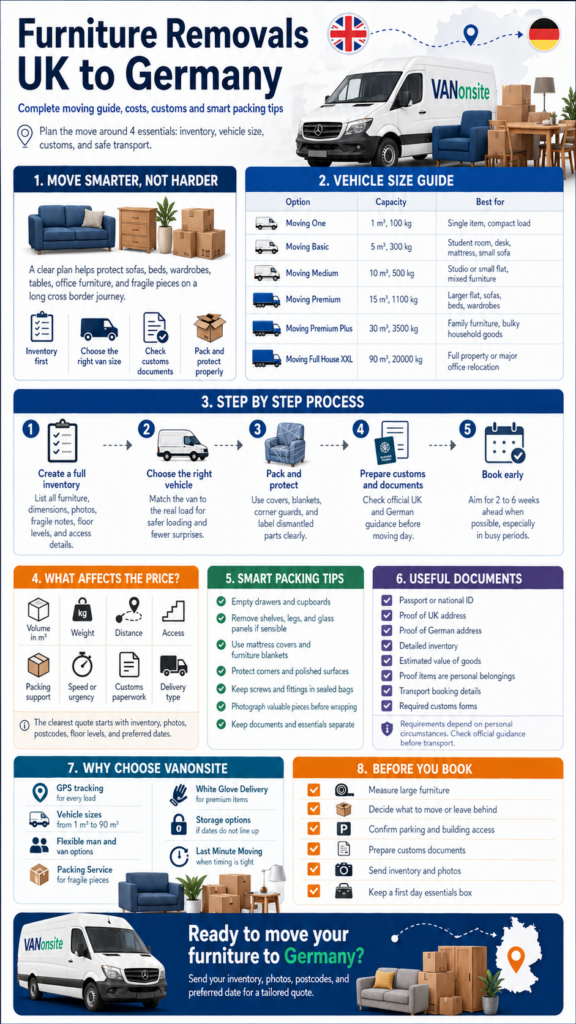
Furniture removals UK to Germany are easier to manage when the move is planned around four decisions: what furniture is going, which van size fits the load, what customs documents may be needed, and which man and van service can move everything safely. For a few items, a 1m3 to 5m3 vehicle may be enough. For a flat, 10m3 to 15m3 often gives more space and safer loading. For larger homes, 30m3 or even 90m3 capacity may be the right choice.
If you are moving furniture from UK to Germany, guessing is the fastest way to create stress. A sofa, wardrobe, dining table, mattress, office desk, or antique cabinet may look simple in a room, but stairs, narrow hallways, ferry routes, customs checks, and long distance handling change everything.
VANonsite helps make furniture removals UK to Germany feel controlled from quote to delivery. Every load is GPS tracked, and the service is built around speed, safety, flexible vehicle sizes, and careful handling for sofas, beds, wardrobes, tables, fragile pieces, student loads, office furniture, and full household relocations.
| Moving need | VANonsite option | Capacity | Best for |
|---|---|---|---|
| Single item or compact load | Moving One | 1m3, 100kg | Chairs, boxes, small furniture, one valuable piece |
| Small room or student move | Moving Basic | 5m3, 300kg | Desk, mattress, boxes, small sofa, compact man and van move |
| Flat furniture move | Moving Medium | 10m3, 500kg | Bed, wardrobe, dining set, appliances, several bulky items |
| Larger flat or part house | Moving Premium | 15m3, 1100kg | Multiple rooms of furniture, larger sofa, bedroom furniture |
| Large house move | Moving Premium Plus | 30m3, 3500kg | Family furniture, bulky pieces, mixed household goods |
| Full property relocation | Moving Full House XXL | 90m3, 20000kg | Complete home, major office move, high volume relocation |
In most cases, the moving furniture from UK to Germany cost depends on volume, weight, distance, access, packing support, delivery speed, and customs preparation. A small man and van load is usually simpler than a full house move, but both need the same thing: a precise inventory and a realistic plan.




Moving Furniture from the UK to Germany Is Personal
A dining table can hold more than plates. It can hold Sunday breakfasts, birthday candles, late night conversations, and the quiet weight of a life built over years. That is why furniture removals UK to Germany rarely feel like a simple transport job. They feel personal.
At the same time, sentiment does not protect a wardrobe from scratches or a mirror from cracks. Moving furniture from UK to Germany needs measuring, packing, careful lifting, the right vehicle, customs awareness, and a reliable route from your UK address to your new German home.
Since Brexit, UK to Germany removals can involve extra customs checks and paperwork. That does not need to become frightening. It simply means your inventory, documents, and transport plan should be clear before moving day. With GPS tracking, a suitable vehicle, and an organised removals team, the journey becomes much calmer.
Why Furniture Removals UK to Germany Need More Planning Than a Local Move
Furniture removals UK to Germany need more care than a local move because the journey is longer, the rules are different, and small mistakes can create delays. A UK to Germany move may involve ferry or Eurotunnel timing, European road routes, customs preparation, delivery access in another country, and furniture that must stay protected for hundreds of miles.
Before anything is lifted, key details should be clear:
- How much furniture is going.
- Which items are fragile, heavy, antique, or oversized.
- Whether large pieces can be dismantled.
- How easy collection and delivery access will be.
- Which vehicle size gives enough room for safe loading.
- Which documents may be required for customs.
Furniture is awkward by nature. Sofas do not behave like boxes. Wardrobes are tall and easy to mark. Glass tables look elegant in a dining room but become nerve wracking on a staircase. Long distance furniture transport needs blankets, straps, corner protection, careful weight distribution, and a loading order that prevents pressure damage.
Customs preparation is another major difference. A clear inventory can help reduce confusion and delay. Instead of writing “furniture,” describe the main items, for example: “used oak dining table, six chairs, one sofa, two wardrobes, personal household goods.”
VANonsite offers GPS tracking for every load, which helps customers avoid the uncomfortable silence that often comes with international removals. When your furniture carries emotional and financial value, visibility brings real peace of mind.
What Is Included in a UK to Germany Furniture Removal Service?
A good UK to Germany furniture removal service should feel clear before moving day begins. You should know what is being collected, how it will be protected, which vehicle is coming, how the route is planned, and what happens once the van reaches your new address in Germany.
With VANonsite, the service can be shaped around the size and nature of your move. Some customers need a quick man and van option for a desk, mattress, sofa, and boxes. Others need a full home relocation with packing support and a larger vehicle.
A furniture removals UK to Germany service may include:
- Collection from your UK home, flat, storage unit, student accommodation, or office.
- Loading support from movers experienced with bulky and fragile furniture.
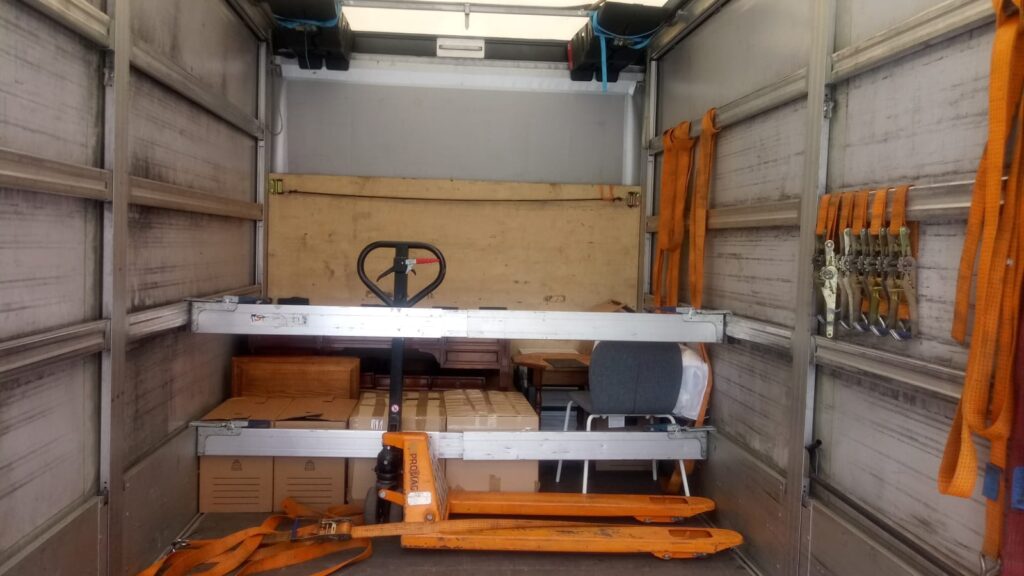
- Protective blankets, straps, wrapping materials, and organised van loading.
- Help with sofas, beds, wardrobes, tables, dressers, cabinets, desks, and chairs.
- European road transport from the UK to Germany.
- GPS tracking during transit.
- Delivery to your new German home, apartment, office, student room, or storage unit.
- Flexible vehicle choices from compact 1m3 loads to major 90m3 relocations.
- Options for student removals, home removals, office removals, storage, packing service, white glove delivery, and last minute moving.
The best service is not only about muscle. It is about judgement. A skilled mover knows when a table leg should come off, when a wardrobe needs corner protection, when a mattress needs a cover, and when a van is too small for the load.
Moving Furniture from UK to Germany: Step by Step
Moving furniture from UK to Germany becomes easier when the process is split into clear stages: list the furniture, choose the vehicle, protect the items, check documents, and book the move before the calendar becomes stressful.
Step 1: Create a Full Inventory
Start with a practical inventory. Write down every large item, including sofas, beds, mattresses, wardrobes, dining tables, desks, chairs, cabinets, bookshelves, mirrors, appliances, boxes, and outdoor furniture. Add rough dimensions, photos, and notes about anything fragile, heavy, antique, or difficult to carry.
Volume is often more important than the number of items. A sofa can take around 1.5m3 to 3m3 depending on its shape. A standard double mattress can take around 0.6m3 to 0.9m3. A dining table with chairs may take around 1m3 to 2.5m3. A tall wardrobe can take more usable van space than expected, especially if it cannot be dismantled.
A strong inventory should include:
- Item name and quantity.
- Approximate dimensions.
- Estimated weight if known.
- Photos of bulky or valuable pieces.
- Notes on disassembly.
- Pickup and delivery floor.
- Lift availability.
- Parking restrictions.
- Fragile materials such as glass, marble, mirrors, or polished wood.
Step 2: Choose the Right Vehicle Size
Furniture has volume, but it also has shape. A wardrobe cannot be folded into a gap. A sofa may not stack neatly. A glass table needs breathing room. The van should be suitable, not simply full.
| If you are moving | Suggested option | Capacity | Why it fits |
|---|---|---|---|
| One item or a few compact pieces | Moving One | 1m3, 100kg | Ideal for single items and light furniture |
| Small room or student move | Moving Basic | 5m3, 300kg | Good for a mattress, desk, boxes, and small furniture |
| Studio or one bedroom flat | Moving Medium | 10m3, 500kg | Better for mixed furniture and boxes |
| Larger flat or partial home | Moving Premium | 15m3, 1100kg | More room for sofas, wardrobes, beds, and appliances |
| Family home relocation | Moving Premium Plus | 30m3, 3500kg | Strong option for substantial household furniture |
| Full house or office move | Moving Full House XXL | 90m3, 20000kg | Built for major relocations and high volume transport |
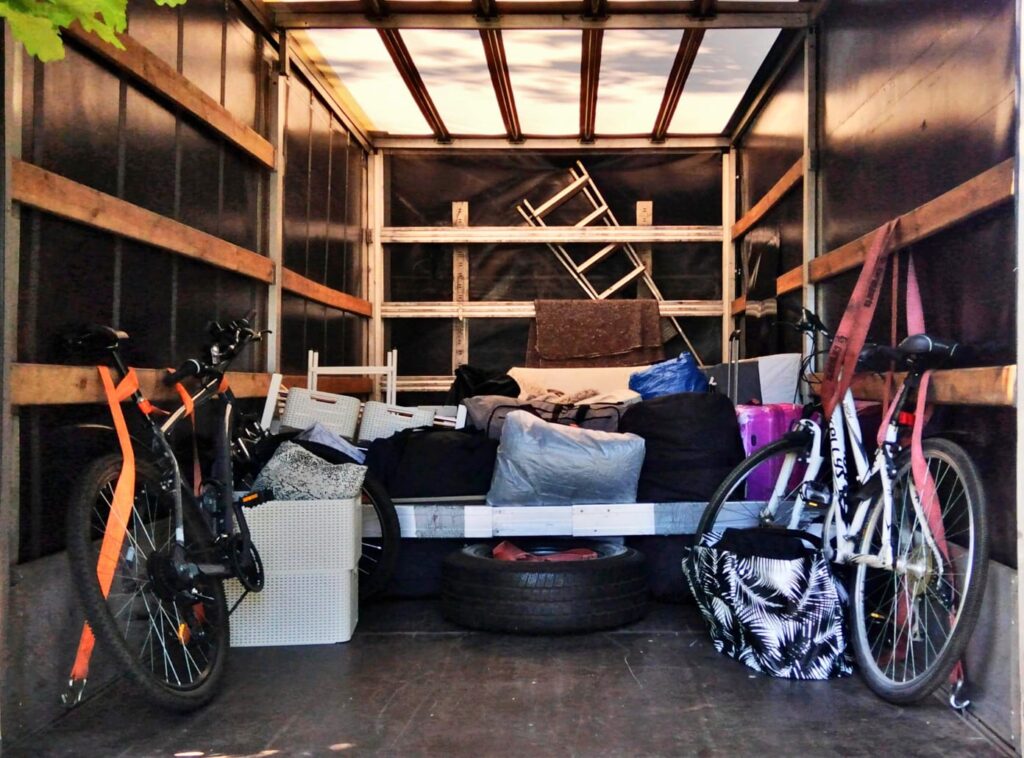
Choosing the right van also helps prevent damage. When a vehicle is too small, items may be stacked too tightly. When it is well matched, your furniture can be loaded with better balance and more control.
Step 3: Plan Packing and Protection
Packing is the shield between your furniture and a long European journey. Start with the most vulnerable pieces: glass panels, mirrors, polished wood, marble tops, antique furniture, designer chairs, mattresses, and sentimental items.
Before collection day:
- Empty drawers and cupboards.
- Remove detachable shelves, legs, and glass panels where sensible.
- Protect corners, handles, and polished surfaces.
- Use mattress covers.
- Label dismantled parts clearly.
- Keep screws and fittings in sealed bags.
- Photograph valuable pieces before packing.
- Tell your mover about fragile, oversized, unusually heavy, or high value items.
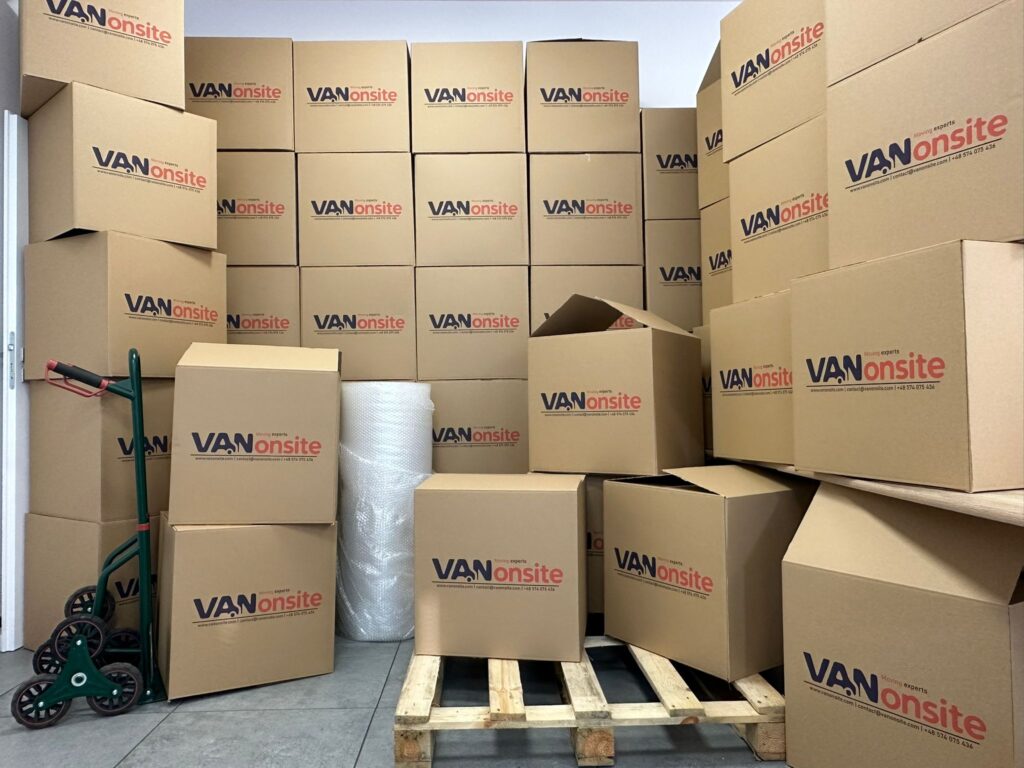
VANonsite Packing Service can be helpful when the move includes fragile furniture, a larger household load, limited time, or pieces that need extra care.
Step 4: Prepare Documents for UK to Germany Customs
Because the UK is outside the EU customs territory, people moving furniture from UK to Germany should check customs requirements before transport. Exact documents can depend on your circumstances, the goods you are moving, whether they are personal household goods, and whether you are transferring your residence to Germany.
Before moving day, check the GOV.UK customs declaration checker, GOV.UK guidance on declaring personal goods you bring into or take out of the UK, German Zoll guidance on transferring residence, and German Zoll information on staying in Germany.
| Document or information | Why it may be useful |
|---|---|
| Passport or national ID | Confirms your identity |
| Proof of UK address | Shows your previous residence |
| Proof of German address | Supports the destination and relocation purpose |
| Detailed inventory | Lists furniture and household goods |
| Estimated value of goods | Helps describe the shipment |
| Proof items are personal belongings | Helps separate household goods from commercial goods |
| Transport booking details | Connects the goods to the planned move |
| Any required customs forms | May be needed depending on your circumstances |
Incomplete paperwork can cause delays, inspections, storage charges, and unnecessary stress. Check official guidance before the van is loaded.
Step 5: Book Early Where Possible
If possible, start planning furniture removals UK to Germany 2 to 6 weeks ahead. This gives you time to confirm the inventory, compare vehicle sizes, prepare documents, arrange packing, and check access at both addresses.
Busy periods include end of month dates, summer moves, student relocation periods, public holidays, and popular work relocation windows. If your move is urgent, VANonsite also offers Last Minute Moving, but clear inventory details and fast document preparation become even more important.


Moving Furniture from UK to Germany Cost: What Affects the Price?
The moving furniture from UK to Germany cost depends on volume, weight, pickup location, delivery city, access, urgency, packing support, customs complexity, and whether you need shared, dedicated, or white glove style transport. A 5m3 student load to Cologne is a different job from a 30m3 family relocation to Munich.
| Cost factor | Why it matters | Impact on price |
|---|---|---|
| Volume in m3 | Larger loads need larger vehicles or more space | High |
| Weight | Heavy furniture affects loading and vehicle suitability | Medium to high |
| Distance | London to Berlin differs from Manchester to Munich | High |
| Access | Stairs, no lift, narrow streets, or parking limits add labour time | Medium |
| Packing | Professional packing reduces damage risk but adds service time | Medium |
| Speed | Last minute delivery can require dedicated planning | Medium to high |
| Customs paperwork | Missing documents can cause delay risk | Medium |
| Delivery type | White glove delivery needs extra care and handling | Medium to high |
A 5m3 move is usually closer to a compact man and van shipment. A 10m3 to 15m3 move often fits a studio, one bedroom flat, or partial household move. A 30m3 move is usually closer to a substantial family relocation. A 90m3 move suits a full home or large office project.
Distance also matters. Moving from London to Cologne is not the same as moving from Edinburgh to Munich. German delivery cities such as Berlin, Hamburg, Frankfurt, Stuttgart, Leipzig, Cologne, and Munich can create different route and access requirements.
To get a stronger quote, send VANonsite:
- Total number of furniture items.
- Approximate volume or dimensions.
- Number of boxes.
- Pickup and delivery postcodes.
- Floor levels and lift availability.
- Parking restrictions.
- Packing requirements.
- Preferred moving date.
- Any urgent timing needs.
A clear quote does more than show the price. It tells you which vehicle is suitable, what support you need, and how to avoid costly surprises.
How Long Do Furniture Removals UK to Germany Take?
Furniture removals UK to Germany can often be organised quickly, but timing depends on load size, UK pickup point, German delivery city, customs preparation, route conditions, and access at both properties. A small furniture move may be collected and loaded in one day. A larger household move usually needs more preparation, especially if packing, dismantling, stairs, parking permits, or multiple rooms are involved.
Germany is not one destination. Delivery to Cologne or Düsseldorf can involve a different journey profile than delivery to Berlin, Hamburg, Munich, Stuttgart, Frankfurt, Leipzig, or Dresden. Distance matters, but so do road restrictions, building rules, delivery windows, and parking space near the property.
| Move type | Typical preparation time | Timing factors |
|---|---|---|
| Single item or small load | 1 to 3 days where availability allows | Item size, access, delivery distance |
| Student or room move | 3 to 7 days where availability allows | Boxes, mattress, desk, accommodation dates |
| One bedroom flat | 1 to 2 weeks recommended | Inventory, packing, access |
| Family home move | 2 to 6 weeks recommended | Volume, customs documents, parking, route planning |
| Full house or office relocation | 3 to 6 weeks recommended | High volume, multiple rooms, heavier furniture |
| Last minute move | As soon as operationally possible | Vehicle availability, urgency, document readiness |
The best way to speed up the process is to remove uncertainty. Send a full furniture list, photos of bulky pieces, postcodes, floor levels, lift details, parking notes, and preferred dates. VANonsite can also help with last minute moving when timing is tight.
Best Furniture to Move from the UK to Germany and What to Reconsider
Not every piece deserves a seat in the van. Some items are worth moving because they are valuable, beautifully made, hard to replace, or deeply sentimental. Others may cost more to transport than they are worth, especially if they are damaged, low value, awkward to dismantle, or unlikely to fit your new German home.
| Worth moving | Think twice before moving |
|---|---|
| Solid wood furniture | Cheap flat pack items that are easy to replace |
| Designer sofas, premium beds, ergonomic chairs | Damaged chipboard wardrobes or unstable shelving |
| Antique, vintage, or sentimental pieces | Low value bulky furniture |
| Quality office furniture | Items that will not fit the new property |
| Dining sets, cabinets, and beds in excellent condition | Furniture with mould, pests, water damage, or structural weakness |
Solid wood, designer, antique, custom made, ergonomic, or sentimental pieces are often strong candidates for transport. Cheap flat pack wardrobes, worn out sofas, broken shelving, and very bulky low value items may be better sold, donated, recycled, or replaced in Germany.
If you are unsure, divide furniture into three groups:
- Must move: valuable, essential, sentimental, or hard to replace.
- Maybe move: useful, but only if space and cost make sense.
- Leave behind: damaged, cheap to replace, too large, or no longer needed.
This makes your quote clearer and can reduce the moving furniture from UK to Germany cost by cutting unnecessary volume before the van is booked.
Packing Tips for Furniture Removals UK to Germany
Good packing protects your furniture from scratches, pressure marks, dust, damp, and movement inside the van. It also saves time because a well prepared sofa, wardrobe, table, or bed can be loaded faster and more safely.
Before moving day:
- Empty drawers, cupboards, and cabinets.
- Remove loose shelves, glass panels, detachable legs, and fragile fittings where possible.
- Photograph valuable items before wrapping.
- Label furniture parts clearly.
- Put screws, bolts, and brackets into sealed bags.
- Wrap corners, legs, handles, and exposed edges.
- Use mattress covers.
- Protect polished wood from friction.
- Keep tools, documents, chargers, toiletries, medication, snacks, and clothes in a separate essentials box.
Packing materials should match the item. Thin plastic alone is rarely enough for long distance furniture transport.
| Item type | Recommended protection | Why it helps |
|---|---|---|
| Sofas and armchairs | Furniture blankets, stretch wrap, corner protection | Reduces fabric marks and pressure damage |
| Mattresses | Mattress cover or sealed protective bag | Protects against dust and moisture |
| Glass tables and mirrors | Bubble wrap, cardboard, edge guards, clear labelling | Reduces breakage risk |
| Wooden furniture | Blankets, soft wrap, corner guards | Protects polished surfaces and edges |
| Wardrobes and cabinets | Empty interior, secured doors, shelves packed separately | Prevents shifting and internal damage |
| Office furniture | Cable management, labelled parts, protected surfaces | Speeds up setup after delivery |
Professional packing from VANonsite can be especially useful for fragile furniture, larger household loads, expensive pieces, or limited time before collection.
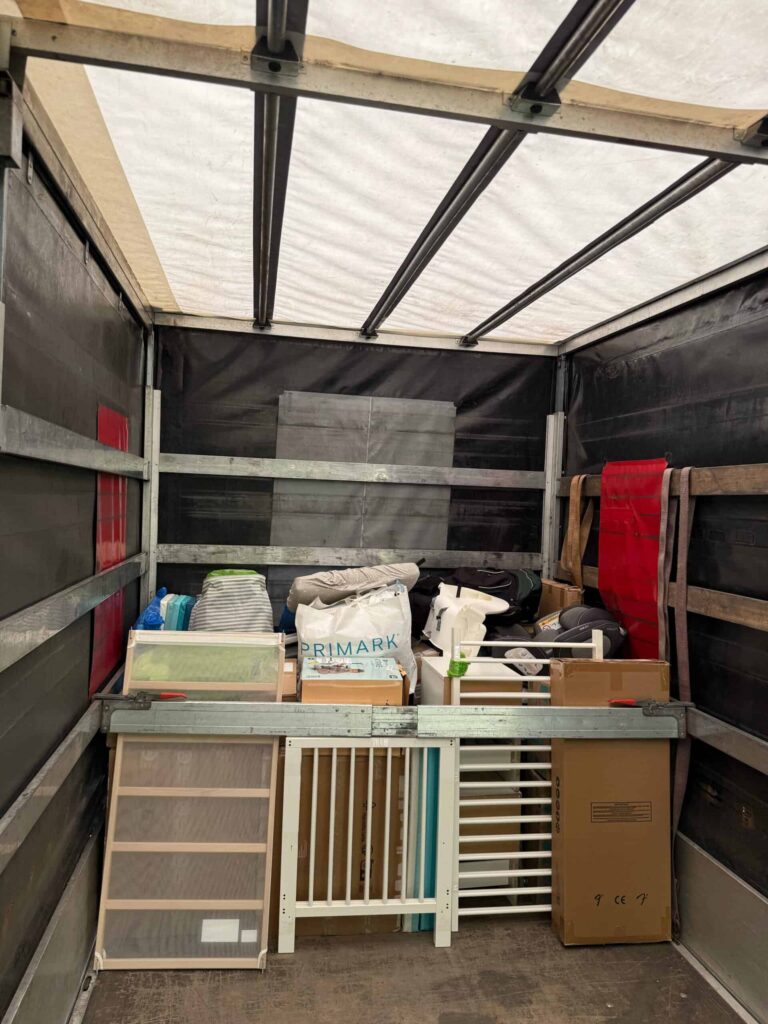
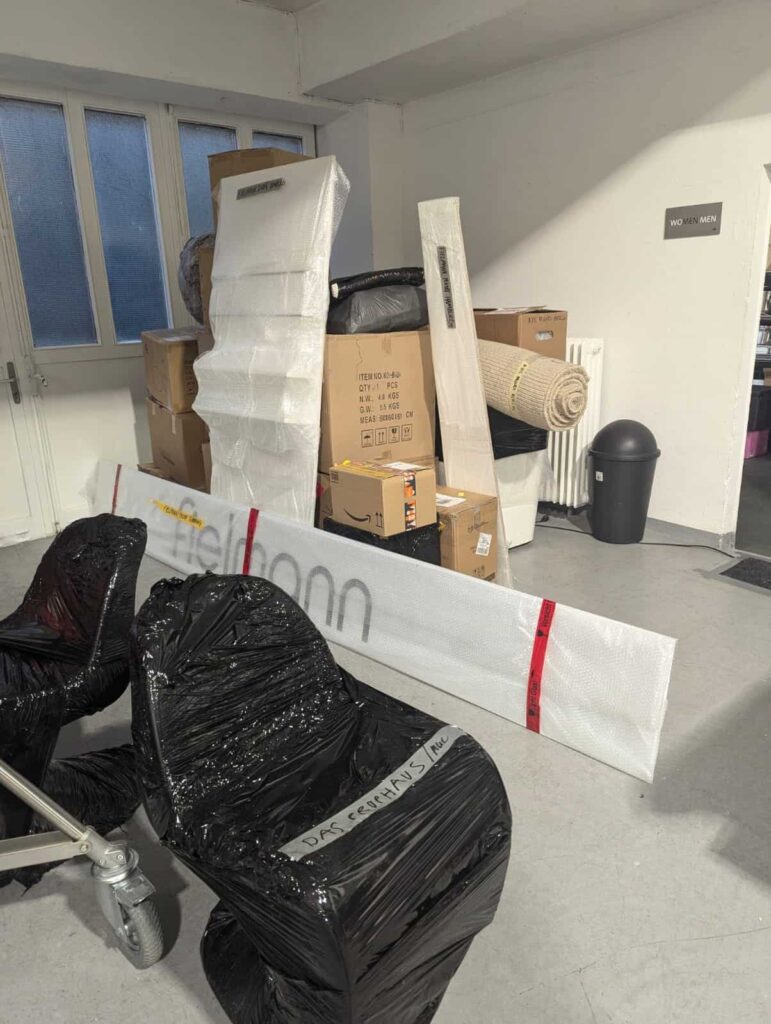
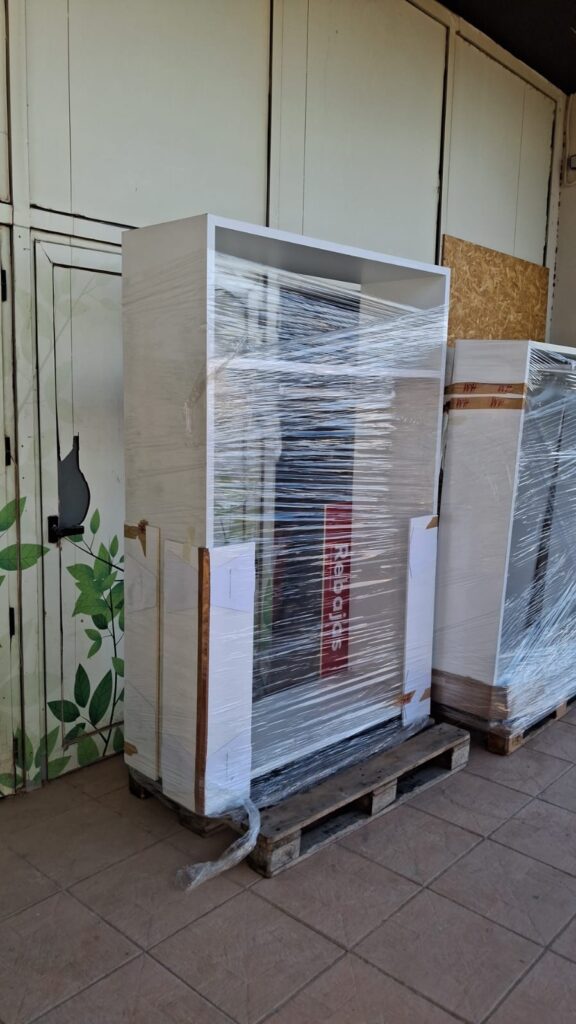
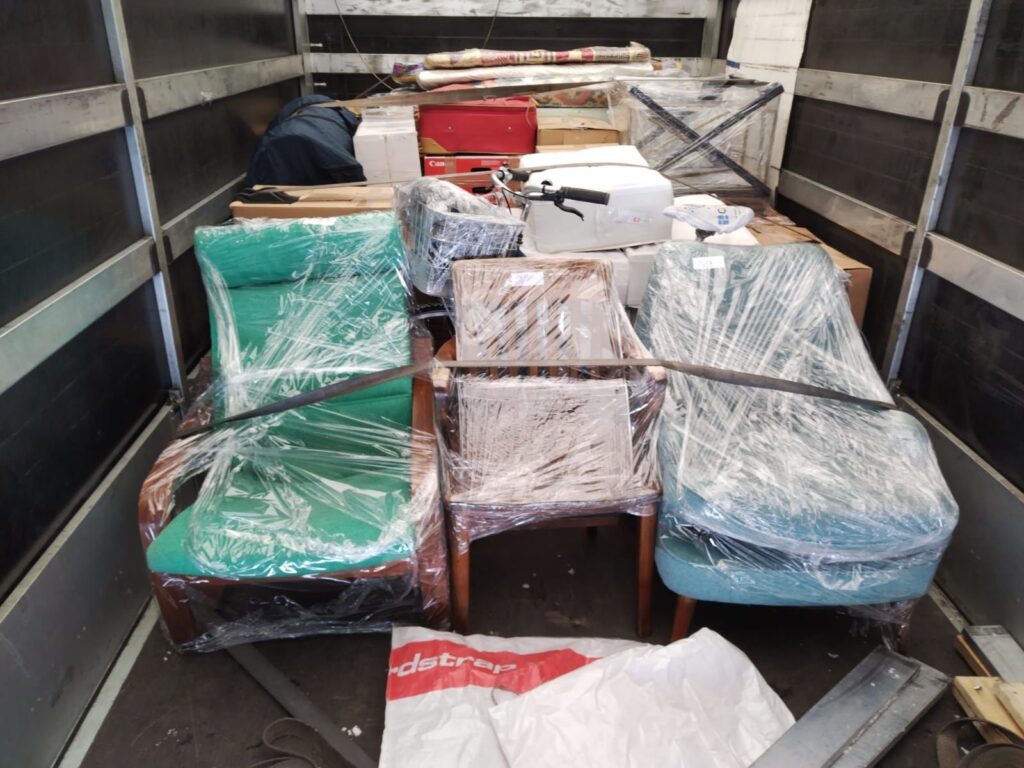
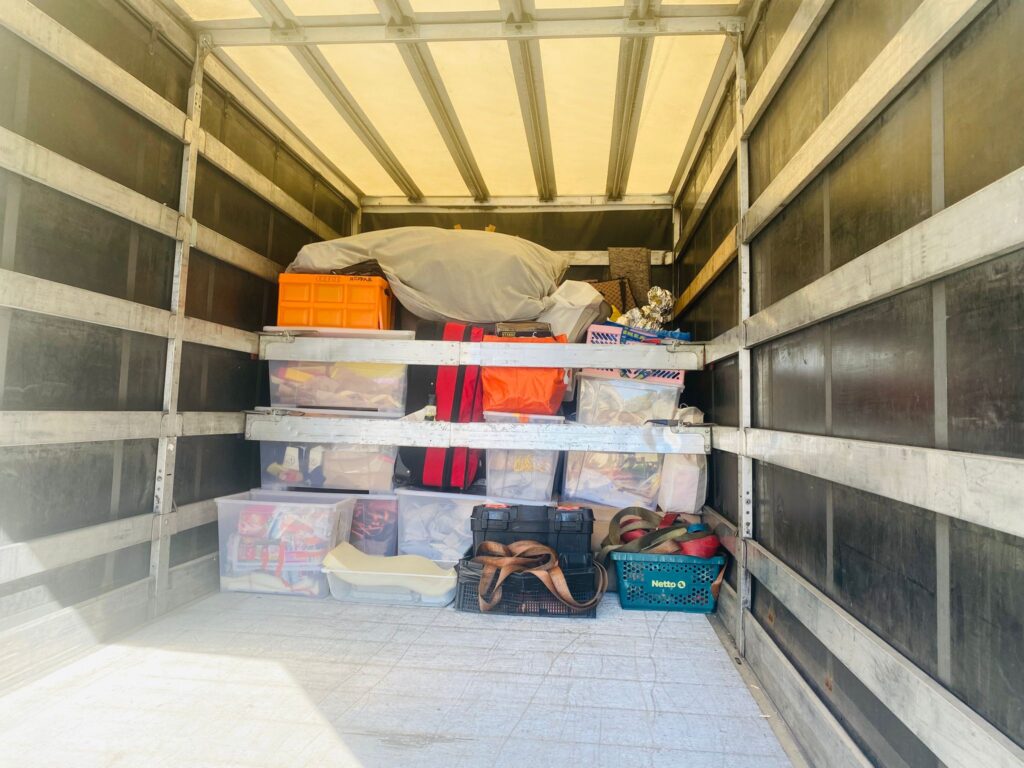

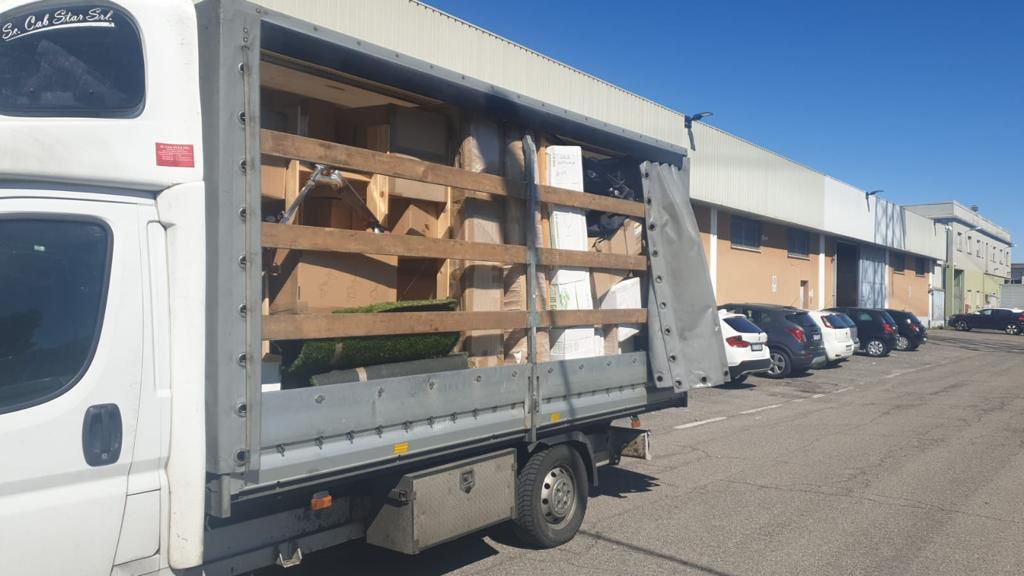
Small Load, Full House, or Last Minute Move: Which Option Fits You?
Furniture removals UK to Germany should match the real shape of the move. A student moving a desk and mattress does not need the same setup as a family relocating a full home.
Small Furniture Move
A small furniture move is often perfect for a man and van service. It can suit students, renters, young professionals, remote workers, and customers sending selected furniture to a new German apartment.
For compact moves, VANonsite options may include:
- Moving One: 1m3, 100kg, suitable for very small loads or single items.
- Moving Basic: 5m3, 300kg, useful for a small room or student essentials.
- Moving Medium: 10m3, 500kg, stronger for a studio, office setup, or several furniture pieces.
Family Home Move
For larger furniture removals UK to Germany, vehicle capacity becomes critical. It is not only about fitting everything inside. It is about loading in the right order, protecting delicate pieces, balancing weight, and avoiding tight packing that can damage corners, surfaces, and frames.
| Move size | VANonsite option | Capacity | Best suited for |
|---|---|---|---|
| Larger flat or partial house | Moving Premium | 15m3, 1100kg | Several rooms, bulky furniture, bedroom sets |
| Family home move | Moving Premium Plus | 30m3, 3500kg | Substantial household furniture and mixed belongings |
| Full household relocation | Moving Full House XXL | 90m3, 20000kg | Complete homes, large properties, major office moves |
Urgent Relocation
If a job start date, tenancy deadline, student accommodation date, or family situation changes suddenly, VANonsite Last Minute Moving can help. Urgent relocation still needs the basics: inventory, addresses, access details, preferred dates, and document checks. The clearer your information, the faster the team can shape a workable option.
Customs and Required Documents When Moving Furniture from UK to Germany
When moving furniture from UK to Germany, customs preparation matters because the UK is no longer inside the EU customs territory. For personal household goods, the exact steps can depend on your relocation status, what you are transporting, how long you have owned the items, whether the goods are for private use, and whether anything is restricted, new, or commercial.
Before moving, check the GOV.UK customs declaration checker, GOV.UK guidance on declaring personal goods, German Customs guidance on transferring residence, and German Customs information on staying in Germany.
| Document or proof | Why it may be needed |
|---|---|
| Passport or national ID | Confirms your identity |
| Inventory list | Shows what furniture and household goods are being moved |
| Estimated values of goods | Helps describe the load |
| Proof of residence change | Supports transfer of residence context where applicable |
| UK address proof | Shows previous residence or collection point |
| German address proof | Confirms destination and relocation purpose |
| Transport booking details | Connects the goods to the planned move |
| Ownership evidence for high value items | Helps show valuable furniture is personal property |
| Purchase documents for newer items | May be useful if items are recent or high value |
| Packing list or box list | Supports the main inventory |
Good paperwork may not be glamorous, but it is one of the strongest tools for calmer furniture removals UK to Germany. Check early, describe items clearly, and avoid vague inventory lines such as “miscellaneous furniture.”
Why Choose VANonsite for Furniture Removals UK to Germany?
VANonsite is built for European moves where timing, care, and communication matter. When your furniture is crossing borders, you do not want vague promises, silent tracking, or a rushed van chosen by guesswork. You want a team that treats the load like it matters.
| VANonsite strength | Why it matters for UK to Germany moves |
|---|---|
| GPS tracking for every load | Gives better visibility and reduces uncertainty |
| Vehicle sizes from 1m3 to 90m3 | Matches compact, medium, large, and full house moves |
| Man and van flexibility | Works well for small furniture loads, students, renters, and urgent moves |
| Packing Service | Protects fragile, bulky, polished, or sentimental furniture |
| White Glove Delivery | Adds extra care for premium or delicate items |
| Home and Office Removals | Supports private relocations and business moves |
| Storage options | Useful when German move in dates do not line up perfectly |
| Last Minute Moving | Helps when deadlines are tight |
Choosing VANonsite is especially sensible if you want GPS tracking, flexible vehicle capacity, support with packing or storage, a quote based on your real inventory, and a move that feels organised rather than improvised.
UK to Germany Furniture Removals Checklist
Use this checklist before booking:
- Measure large furniture.
- Decide what to move, sell, donate, or store.
- Create a full inventory.
- Photograph high value furniture.
- Check UK and German customs guidance.
- Prepare ID and address documents.
- Choose the right VANonsite vehicle size.
- Book packing support if needed.
- Confirm parking and building access at both addresses.
- Keep essentials separate from the main load.
- Track your shipment during transport.
- Inspect furniture after delivery.
A strong checklist turns a stressful international move into a sequence of small, manageable wins.
Common Mistakes to Avoid
Most moving problems start with uncertainty. Avoid these common mistakes:
- Guessing the van size without measuring furniture.
- Forgetting customs documents.
- Packing glass, mirrors, marble, and polished surfaces too casually.
- Leaving wardrobes, drawers, and cabinets full.
- Ignoring parking restrictions at either address.
- Booking too late during peak periods.
- Comparing quotes without checking what is included.
- Choosing the cheapest option when furniture is valuable or sentimental.
- Forgetting an essentials box for the first 24 hours in Germany.
When comparing quotes, check vehicle size, weight and volume allowance, loading support, packing support, GPS tracking, delivery timing, fragile item handling, customs requirements, and possible extra charges for stairs, access, waiting time, or last minute changes.
A smoother move is rarely an accident. It is the result of clear details shared early.
Frequently Asked Questions About Furniture Removals UK to Germany
How Much Do Furniture Removals UK to Germany Cost?
The moving furniture from UK to Germany cost depends on load size, weight, pickup and delivery locations, access, packing support, urgency, customs preparation, and service type. The best way to get an accurate price is to send VANonsite your inventory, photos, postcodes, floor levels, parking notes, and preferred dates.
Can I Use a Man and Van Service for Moving Furniture from UK to Germany?
Yes. A man and van service can be an excellent option for smaller loads, student moves, studio flats, office setups, or selected valuable pieces. VANonsite offers vehicle sizes from 1m3 to 90m3, so the service can match the real scale of your move.
Do I Need Customs Documents When Moving Furniture from UK to Germany?
You may need customs documents because the UK is outside the EU customs territory. Requirements can depend on your situation, goods, ownership period, and whether you are transferring residence. Check GOV.UK and German Zoll guidance before moving day.
How Should I Pack Furniture for a UK to Germany Move?
Empty drawers, remove loose shelves, protect corners, cover mattresses, label dismantled parts, secure screws in sealed bags, and photograph valuable pieces before wrapping. For fragile or high value items, consider VANonsite Packing Service.
Is GPS Tracking Available for Furniture Removals UK to Germany?
Yes. VANonsite offers GPS tracking for every load, giving customers better visibility while furniture travels from the UK to Germany.
What Vehicle Size Do I Need for Moving Furniture from UK to Germany?
A few pieces may fit into 1m3 to 5m3. A studio or small flat may need 10m3. A larger apartment may need 15m3. A family home may require 30m3, while full property or office removals may need up to 90m3.
How Long Do Furniture Removals UK to Germany Take?
Timing depends on load size, route, access, delivery city, customs preparation, packing requirements, and vehicle availability. Smaller moves may be easier to schedule quickly. Larger moves are usually best planned 2 to 6 weeks ahead.
Can VANonsite Move Office Furniture from the UK to Germany?
Yes. VANonsite supports office removals, including desks, chairs, meeting tables, filing cabinets, storage units, screens, and remote work equipment.
Can I Move Only One Piece of Furniture from the UK to Germany?
Yes. A single antique cabinet, designer chair, premium mattress, family table, or valuable desk can be moved if it is worth transporting. Moving One offers 1m3 and 100kg capacity for very small loads or selected items.
Is It Worth Moving Old Furniture from the UK to Germany?
It depends. Solid wood, designer, antique, custom made, ergonomic, or sentimental pieces are often worth moving. Cheap flat pack furniture, damaged wardrobes, unstable shelving, and worn out sofas may be better replaced in Germany.
Ready to Move Your Furniture from the UK to Germany?
Furniture removals UK to Germany do not have to feel like a maze of forms, ferry times, lifting straps, customs questions, and unanswered messages. With the right team, the move becomes measurable: the furniture is listed, protected, loaded, tracked, and delivered with care.
VANonsite is built for European removals where speed, safety, and communication matter. Every load is GPS tracked, and the vehicle range covers everything from a single 1m3 item to a 90m3 full house or office relocation. Whether you need a compact man and van move, packing support, white glove delivery, storage, last minute moving, student removals, home removals, or office removals, the service can be shaped around your real situation.
To get a clearer quote, send VANonsite your UK pickup postcode, German delivery city and postcode, preferred dates, furniture inventory, photos of bulky or fragile items, floor levels, parking notes, and any packing or storage requirements.
If you are still planning the wider relocation, explore VANonsite’s guide to removals to Germany for broader support on moving from the UK to Germany.
Turn the move into a plan, not a panic. Share the details, choose the right vehicle, prepare the documents, and let VANonsite help carry your furniture into the next chapter safely.