
Moving to Switzerland with children is one of those life decisions that feels exciting and enormous at the same time. It can open the door to cleaner streets, excellent public transport, strong schools, mountain weekends and a sense of safety that many parents dream about. Yet behind that bright picture sits a very real list of tasks: residence permits, school enrolment, health insurance, housing, customs paperwork, packing, transport and the emotional wellbeing of your children.
A family relocation is never just about moving boxes. It is about protecting routines while your old life is being dismantled room by room. It is about making sure the right school documents are in your hand luggage, not buried under saucepans. It is about knowing where the children will sleep on the first night. It is about arriving with enough structure to make a new country feel less overwhelming.
The good news is that moving to Switzerland with children can be smooth, safe and surprisingly calm when you plan it properly. Switzerland is organised, reliable and highly family oriented. However, many practical rules depend on the canton or municipality, so preparation matters.
VANonsite supports families moving across Europe with secure transport, fast coordination, GPS tracking for every load and flexible vehicle options. Whether you need a small man and van move for essentials or a full household relocation, the right moving plan helps your family land softly in Switzerland.
TL:DR
- Moving to Switzerland with children is easiest when you organise residence documents, school records, health insurance, housing and removals before moving day.
- Foreign nationals staying in Switzerland for more than 3 months generally need a residence permit, so check the official Swiss guidance here: Swiss residence permits.
- Children in Switzerland usually enter kindergarten around age 4, and compulsory education generally lasts 11 years, although school rules are managed by cantons.
- Families settling in Switzerland must arrange health insurance within 3 months of taking up residence, including cover for children.
- Used household effects may qualify for customs relief if Swiss conditions are met, including previous personal use and continued use after arrival.
- A 72 hour family essentials kit can protect your first days from stress, especially if children need medication, comfort items or school documents quickly.
- VANonsite offers GPS tracked European removals, man and van options, packing support, storage and large capacity vehicles for complete family moves to Switzerland.




Moving to Switzerland With Children: What You Need to Know First
Moving to Switzerland with children is different from a simple adult relocation. Adults can tolerate a few days of disorder. Children often need more rhythm, reassurance and familiar objects. That means the move must be planned around both logistics and emotions.
The most important areas to prepare are residence rules, school enrolment, healthcare, housing and customs. Once those are under control, the physical move becomes easier to organise. If those are left until the last moment, even a well packed van cannot fix the pressure.
Before moving to Switzerland with children, prepare these core items:
- Valid passports or identity cards for every family member
- Birth certificates for children
- Marriage certificate or custody documents where relevant
- Employment contract or proof of income
- Rental agreement or Swiss address confirmation
- School reports and education records
- Vaccination records
- Medical summaries and prescriptions
- Household goods inventory for customs
- A removals quote based on volume, weight, access and delivery timing
Families often underestimate the amount of coordination involved. A child may start school shortly after arrival. A parent may begin a new job within days. A landlord may only allow vehicle access at specific times. A building may have strict lift rules. A customs delay may affect furniture delivery. These details are not dramatic on paper, but they can create real stress when children are tired and hungry in a half empty apartment.
This is where a professional removals partner becomes valuable. VANonsite helps families plan secure European transport with clear vehicle options, careful handling and GPS tracking. For a small shipment, a man and van service can be enough. For a larger family home, a high capacity vehicle may be the smarter choice.
Why Family Moves to Switzerland Need Better Planning
When moving to Switzerland with children, small mistakes can feel bigger than they are. If your own suitcase is delayed, you manage. If your child’s school shoes, medication or favourite blanket are missing, the whole first week can become harder.
A successful family move usually has three layers:
- Legal and administrative preparation
- Transport and packing preparation
- Emotional preparation for children
The first layer is about permits, registration, health insurance, school placement and customs. The second layer is about boxes, furniture, access, loading, delivery and storage. The third layer is about helping children understand what is happening and giving them enough familiarity to feel safe.
Do not treat the move as a single day. Treat it as a timeline. The strongest family relocations begin weeks or months before the van arrives. Parents who plan early can compare schools, check local rules, prepare documents, declutter properly and choose the right removals service instead of accepting a rushed option.
A good relocation plan should answer these questions:
- Which documents must stay with the family during travel?
- Which items must be unpacked first?
- Which furniture needs dismantling?
- Which boxes belong to each child?
- What is the exact access situation at the Swiss address?
- Is parking available for a removals vehicle?
- Is storage needed if the property is not ready?
- What will the children need during the first 72 hours?
- Is the move small enough for man and van transport, or does it require a larger vehicle?
Planning may not sound glamorous, but it creates calm. And calm is priceless during moving to Switzerland with children.
Residence Permits and Legal Documents
For many families, the first serious question is simple: what documents do we need?
Foreign nationals staying in Switzerland for more than 3 months generally need a residence permit. The exact route depends on nationality, employment, study, family status and the reason for moving. Because Switzerland has specific federal and cantonal procedures, families should always check official information before making decisions. The Swiss government provides guidance here: Swiss residence permits.
If you are moving as a family, gather documents early. Some records may take time to request, translate or legalise depending on where you live now.
| Document | Who needs it | Why it matters |
|---|---|---|
| Passport or national ID | Parents and children | Required for entry, identification and registration |
| Birth certificate | Children | Useful for family registration and school matters |
| Marriage certificate | Parents where relevant | Helps prove family relationship |
| Custody documents | Separated or divorced parents | Confirms parental responsibility |
| Employment contract | Working parent | Often needed for residence and housing steps |
| Swiss rental agreement or address | Whole family | Used for local registration |
| School reports | School age children | Helps with class placement |
| Vaccination records | Children | Useful for healthcare and school preparation |
| Medical summaries | Anyone with ongoing care | Supports continuity of treatment |
| Household goods inventory | Whole family | Needed for customs clearance |
Create one physical document folder and one secure digital folder. Keep scans of all important documents. During moving to Switzerland with children, do not put original documents into the moving load. Keep them with you throughout the journey.
A practical family folder should include:
- Identity documents
- Residence related paperwork
- Employment documents
- Housing documents
- School documents
- Medical documents
- Insurance documents
- Customs inventory
- Emergency contacts
This may feel excessive, but it is one of the easiest ways to reduce anxiety. When an office, school or insurer asks for a document, you want to find it in 20 seconds, not after opening 14 boxes.
Customs Rules for Moving Household Goods to Switzerland
Customs is one of the most important topics when moving to Switzerland with children, especially if you are bringing furniture, toys, books, bicycles, clothes, kitchen items and personal belongings.
Used household effects may qualify for customs relief if specific Swiss conditions are met. The Swiss Federal Office for Customs and Border Security explains the rules for moving household effects here: Moving household effects to Switzerland.
In general, families should prepare a clear inventory of what they are moving. The inventory does not need to read like a novel, but it should be organised enough to support customs procedures. Poorly prepared lists can create questions and slow the process.
Your inventory should include:
- Number of boxes
- Furniture items
- Kitchen equipment
- Children’s furniture
- Toys and books
- Clothing
- Bicycles and sports equipment
- Electronics
- Appliances where relevant
- High value or fragile items
- Any items requiring special care
Avoid vague descriptions like “random household things.” Use clear categories. For example, write “children’s books and toys,” “kitchen utensils,” “bedroom furniture,” “clothing,” “home office equipment” and “bicycles.”
Families should also think about loading order. Items needed first in Switzerland should be easy to access. Children’s beds, mattresses, basic kitchen items and first night boxes should not be trapped behind rarely used furniture.
VANonsite can help families match the move to the right vehicle size and service type. This is especially useful when the relocation involves cross border timing, customs documents and multiple family priorities.
Schooling in Switzerland
School is often the emotional centre of moving to Switzerland with children. Parents want their children to feel safe, accepted and academically supported. Children want to know whether they will make friends, understand lessons and fit in.
In Switzerland, compulsory education generally lasts 11 years, and children usually start kindergarten around age 4. Education is managed by cantons, so rules and structures can differ depending on where you live. Families should check the official Swiss overview and then confirm local requirements with the destination canton or municipality: Kindergarten and compulsory education in Switzerland.
School Options for International Families
| School type | Best for | What parents should consider |
|---|---|---|
| Local public school | Long term integration | Local language, catchment area, canton rules |
| International school | Temporary assignments or global curriculum | Fees, waiting lists, admission deadlines |
| Private school | Specific education preferences | Cost, location, curriculum and availability |
| Bilingual school | Smoother language transition | Limited places and early applications |
| Specialist support pathway | Children with additional needs | Documentation and early school contact |
Public schools can be excellent for integration, especially if the family plans to stay long term. Children often learn local languages faster than adults, and school can become the bridge into community life. However, international schools may be better for families staying only a few years or following a specific curriculum.
Parents should contact schools as early as possible. Even if a final address is not confirmed, you can still learn what documents are needed, how placement works and whether language support is available.
School Documents to Bring
Prepare the following before the move:
- Recent school reports
- Teacher references if available
- Details of subjects studied
- Curriculum information
- Special educational needs records where relevant
- Language certificates where available
- Vaccination records
- Passport or identity card copy
- Birth certificate
When moving to Switzerland with children, pack school documents separately from the household load. These papers may be needed before your boxes arrive.
Helping Children Adjust to Swiss School Life
Starting school in a new country is a huge moment. Even confident children can feel nervous when they do not understand the language, the timetable or the playground culture.
Parents can make the transition easier by preparing children in simple, honest steps. Avoid promising that everything will be perfect. Instead, make the unknown more visible.
Before moving, you can:
- Show your child photos of the new town or city
- Look at the school building online if available
- Practise the journey from home to school
- Learn a few useful local phrases together
- Let your child choose a backpack or school item for the new start
- Talk about what may feel different
- Keep old friendships alive through planned calls
- Create a goodbye ritual before leaving
After arrival, routine matters. Keep bedtime stable. Prepare clothes the night before. Walk the school route together. Ask your child specific questions, not just “How was school?” Try questions such as “Who did you sit near?” or “What was the easiest part of today?”
Children often adapt in uneven waves. One week may feel promising. The next may bring homesickness. That is normal. Moving to Switzerland with children is not only a change of address. It is a change of identity, rhythm and belonging.
Health Insurance and Medical Preparation
Healthcare in Switzerland is high quality, but health insurance is mandatory for residents. Families settling in Switzerland must arrange health insurance within 3 months of taking up residence, including cover for children. Official information is available from the Swiss Federal Office of Public Health: Health insurance requirement in Switzerland.
Do not leave healthcare planning until after arrival. Comparing insurers, deductibles and family options takes time. If your child has allergies, asthma, diabetes, epilepsy, a disability or any ongoing treatment, start earlier.
Family Healthcare Checklist
Before moving to Switzerland with children, prepare:
- Vaccination records for each child
- Current prescriptions
- Doctor letters for ongoing conditions
- Medical summaries
- Dental records if relevant
- Allergy information
- Specialist reports
- Health insurance documents from your current country
- Emergency contact list
- A supply of essential medication where legally allowed
After arrival, you may need to choose a paediatrician, dentist, pharmacy and specialist care provider. It is wise to research options near your new address before you need them.
Also prepare a first week medical kit. Include pain relief suitable for children, thermometer, plasters, antiseptic, prescription medication, allergy medication if needed and any medical devices your child uses.
This is not overplanning. It is protection. When a child wakes up ill in a new country, you do not want to start searching for basics at midnight.
Choosing a Family Friendly Place to Live in Switzerland
Switzerland is compact, but family life varies a lot by canton, city, village and neighbourhood. Zurich, Geneva, Basel, Lausanne, Bern, Zug, Lucerne and many smaller towns can offer excellent quality of life. Yet housing can be competitive, especially near international schools, major employers and transport hubs.
When moving to Switzerland with children, do not choose a home only by rent or square metres. Look at daily life. A cheaper apartment may become exhausting if the school run is complicated or storage is poor.
What Families Should Check Before Signing a Lease
| Factor | Why it matters |
|---|---|
| School distance | Shorter mornings reduce stress |
| Public transport | Older children gain independence |
| Playgrounds and green space | Essential for family wellbeing |
| Grocery access | Easier daily routine |
| Paediatrician nearby | Useful during illness |
| Lift access | Important for prams, furniture and tired children |
| Storage space | Bikes, winter clothes and sports gear need room |
| Laundry rules | Some buildings have shared systems |
| Parking and loading access | Crucial for removals delivery |
| Noise expectations | Apartment rules can be strict |
Swiss apartments may have detailed building rules. There may be quiet hours, shared laundry schedules, recycling systems and restrictions on moving times. Check these before the removals vehicle arrives.
For city apartments, a smaller man and van option may be easier for access. For family houses, larger vehicles may work better. For temporary housing, storage may be the smartest choice.
Packing Strategy for Moving to Switzerland With Children
Packing for a family relocation is not about filling boxes quickly. It is about creating an unpacking strategy.
If everything is packed randomly, arrival becomes frustrating. If boxes are labelled by room, priority and owner, the first week becomes much easier.
A strong packing system should include:
- Room labels
- Priority labels
- Child name labels
- Fragile labels
- First night labels
- Customs friendly categories
- A separate documents folder
- A separate valuables bag
Use simple labels such as:
- Open first
- Child bedroom
- School items
- Kitchen day one
- Bathroom essentials
- Winter clothes
- Toys
- Books
- Documents, do not pack
The most useful family packing tool is the 72 hour essentials kit.
The 72 Hour Family Essentials Kit
Keep this kit with you during travel:
- Passports and identity documents
- Residence and housing paperwork
- School documents
- Health insurance notes
- Medication and prescriptions
- Chargers and adapters
- Two changes of clothes per person
- Toiletries
- Pyjamas
- Children’s favourite toy, blanket or book
- Snacks and reusable water bottles
- First aid kit
- Basic cleaning wipes
- One set of bedding
- Baby supplies where needed
- Laptop and work essentials
- Cash and payment cards
The first 72 hours after moving are not about perfection. They are about comfort, sleep, food, hygiene and reassurance. If those are covered, the rest becomes manageable.


What to Let Professionals Pack
Parents are busy before an international move. Between school forms, work transitions, housing tasks and emotional conversations with children, packing can become a late night burden. Professional packing helps protect fragile items and saves time when your energy is already stretched.
Professional support is especially useful for:
- Glassware
- Mirrors
- Artwork
- Lamps
- Children’s beds
- Nursery furniture
- Wardrobes
- Designer furniture
- Musical instruments
- Electronics
- Office equipment
- Kitchen appliances
- Fragile decorative items
VANonsite Packing Service can help families reduce damage risk and speed up preparation. Furniture Removals support larger pieces such as beds, sofas, tables and wardrobes. White Glove Delivery is ideal for delicate, luxury or high value items that need exceptional care.
During moving to Switzerland with children, parents should not have to choose between calming a child and wrapping a mirror at midnight. Professional packing can turn a chaotic week into a controlled one.
Choosing the Right Vehicle Size
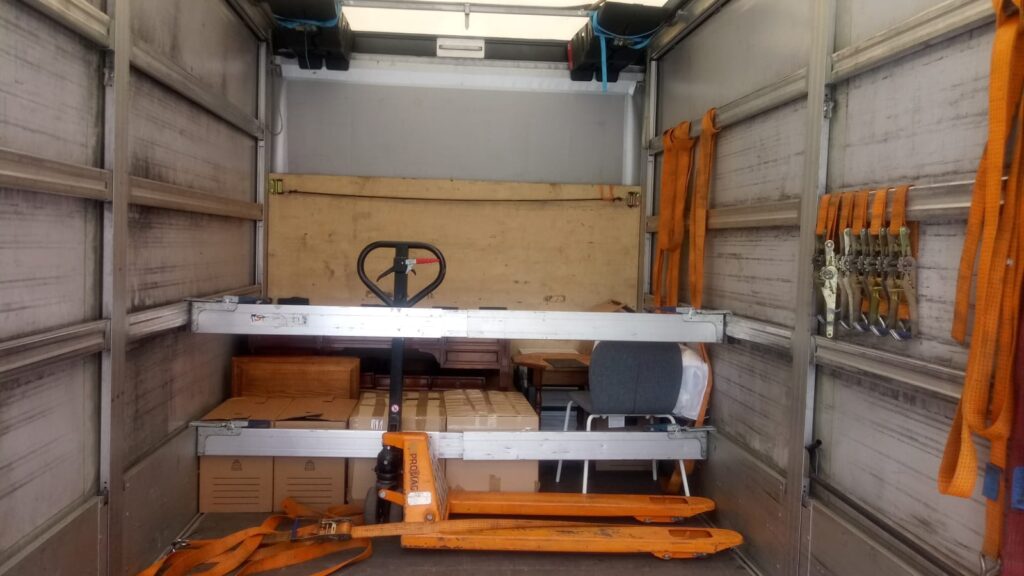
Vehicle size affects cost, timing and stress. Too small, and you may need extra transport. Too large, and access may become harder in narrow Swiss streets or apartment zones.
VANonsite offers flexible options for different move sizes.
| VANonsite option | Capacity | Weight limit | Best for |
|---|---|---|---|
| Moving One | 1 m3 | 100 kg | Small essentials, urgent items or compact load |
| Moving Basic | 5 m3 | 300 kg | Light man and van move, boxes or one small room |
| Moving Medium | 10 m3 | 500 kg | Studio, small apartment or partial relocation |
| Moving Premium | 15 m3 | 1,100 kg | One bedroom flat or selected family furniture |
| Moving Premium Plus | 30 m3 | 3,500 kg | Larger apartment or family relocation |
| Moving Full House XXL | 90 m3 | 20,000 kg | Full household move to Switzerland |
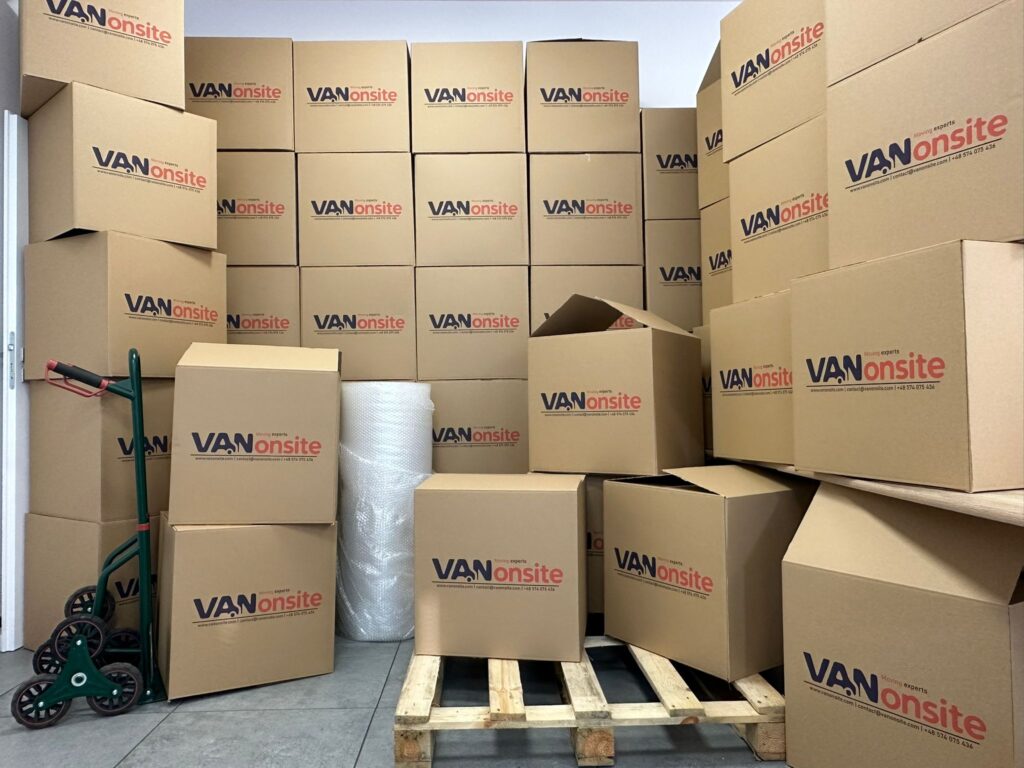
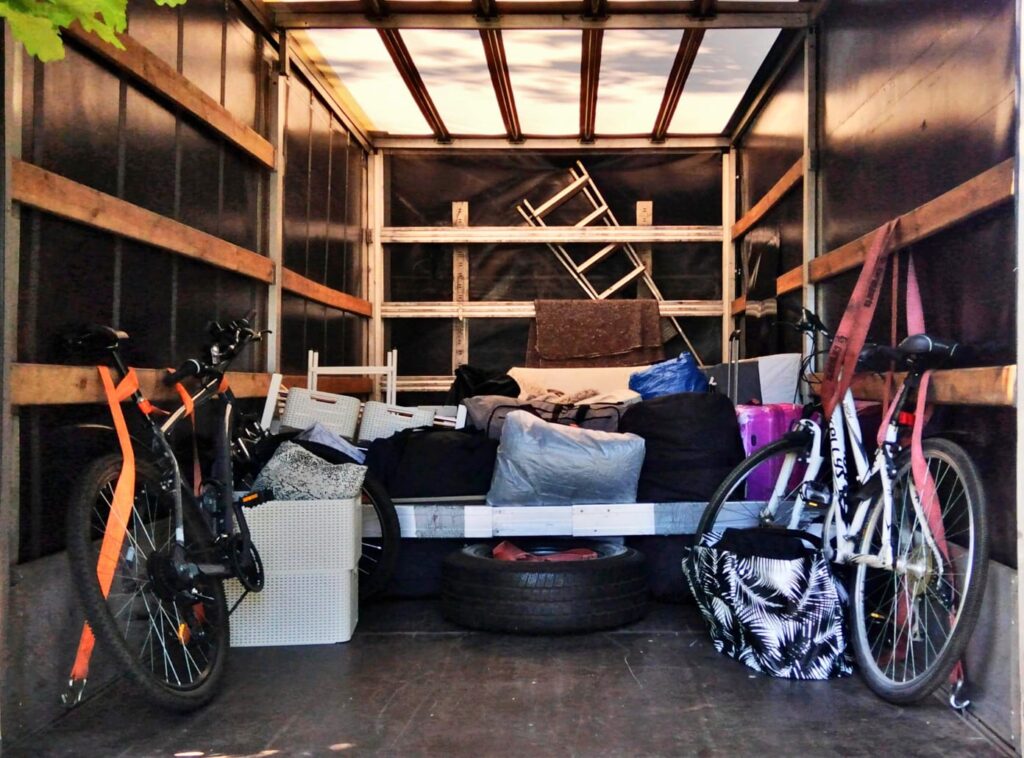
Families often underestimate volume. Children’s items add up quickly: beds, mattresses, toys, books, prams, bikes, sports equipment, clothes, school supplies and sentimental boxes. A family home can contain far more cubic metres than expected.
A professional estimate is worth it. It helps prevent last minute surprises and gives the removals team a better loading plan.
For complete support, families can plan their move through VANonsite removals to Switzerland.
Why GPS Tracking Matters for Parents
One of the hardest parts of moving is uncertainty. You can handle effort when you know what is happening. Silence is what creates anxiety.
When moving to Switzerland with children, GPS tracking is more than a nice feature. It helps parents coordinate arrival, prepare the new home and keep children informed in simple terms.
Parents may need to know:
- When the vehicle will arrive
- Whether the delivery schedule is on track
- When to leave temporary accommodation
- Whether someone must be at the new address
- When to prepare building access
- Whether children’s beds will arrive before bedtime
VANonsite offers GPS tracking for every load, giving families visibility throughout the transport journey. This turns the move from a mystery into a plan.
For children, that can also help. Instead of saying “I do not know where our things are,” parents can say, “The van is on its way, and your bed will arrive soon.” Small certainty can have a big emotional effect.
Moving Day With Children
Moving day can feel like a storm inside the house. Doors stay open. Boxes move fast. Furniture disappears. Adults answer questions while carrying bags. Children may feel excited, ignored, confused or upset.
The goal is to reduce the noise around them.
If possible, arrange childcare during loading hours. If that is not possible, create a safe corner with snacks, toys, headphones, a tablet, books or drawing supplies. Make sure one adult is responsible for the children, not just the move.
Moving Day Checklist
- Keep documents, valuables and medication with you.
- Confirm the delivery address and contact numbers.
- Make sure children’s essentials are not loaded by mistake.
- Photograph valuable furniture before transport.
- Check each room before leaving.
- Keep snacks and drinks outside the packed boxes.
- Label children’s boxes clearly.
- Confirm parking or loading access at both addresses.
- Track the vehicle if GPS tracking is available.
- Set up children’s beds first after delivery.
The first night matters. Even if the kitchen is not perfect and half the boxes are unopened, children should know where they sleep, where their pyjamas are and where their comfort item is.
A careful removals team gives parents space to focus on children rather than constantly managing the load. That is one of the quiet advantages of working with experienced movers.
Storage and Temporary Housing
Not every family move is perfectly aligned. Sometimes the old home must be emptied before the Swiss home is ready. Sometimes the family arrives first and furniture follows later. Sometimes temporary accommodation is too small for all belongings.
Storage can make moving to Switzerland with children much easier.
Storage may be useful if:
- Your permanent home is not ready
- You are staying in temporary accommodation
- You want to move essentials first
- You need time to decide what furniture fits
- You are downsizing
- You are waiting for school or work dates
- You want a calmer unpacking process
A split delivery can also work well. The first load may include beds, clothing, school items, kitchen basics and essential furniture. The second load can bring larger furniture, seasonal items and less urgent belongings.
This is where man and van transport can be practical. A smaller vehicle can move urgent essentials quickly, while the full household move is handled separately.
Cost Factors When Moving to Switzerland With Children
The cost of moving to Switzerland with children depends on the details. A family with a few essential boxes will not pay the same as a full household with furniture, bikes, fragile items and storage needs.
The main cost factors include:
- Distance across Europe
- Total volume in cubic metres
- Total weight
- Vehicle size
- Packing support
- Furniture dismantling and assembly
- Floor level
- Lift availability
- Parking distance
- Customs preparation
- Storage
- Urgency
- Fragile or high value items
- Number of collection or delivery points
A cheap quote can become expensive if it is unclear. Families should be cautious with vague promises, especially for international moves. Ask what is included, how the load is protected, what vehicle size is planned and whether tracking is available.
The best value is not always the lowest number. It is the service that prevents damage, delays and panic. For a family, avoiding chaos has real value.
Suggested Timeline for Moving to Switzerland With Children
A timeline turns a stressful relocation into a series of manageable steps. Ideally, start 3 to 6 months before the move. If your move is urgent, focus first on documents, housing, school and transport.
| Time before move | What to do |
|---|---|
| 3 to 6 months | Research permits, schools, housing, healthcare and canton rules |
| 2 to 3 months | Collect school records, medical documents and removals quotes |
| 6 to 8 weeks | Book removals, confirm accommodation and start decluttering |
| 4 weeks | Prepare customs inventory and confirm vehicle size |
| 2 weeks | Pack non essential items and prepare the 72 hour family kit |
| 1 week | Confirm parking, access, delivery timing and travel documents |
| Moving day | Keep documents, medication and children’s essentials with you |
| First week | Register locally, contact school and begin healthcare setup |
| First 3 months | Finalise health insurance and residence related obligations |
Decluttering deserves special attention. Every item you move costs space, time and energy. Children may resist letting go of old toys, so handle this gently. Let them keep meaningful items, but reduce broken toys, outgrown clothing and duplicate objects before packing.
How VANonsite Supports Family Moves to Switzerland
VANonsite is a strong fit for families who want a secure, visible and carefully organised European move. The company offers high quality transport services with a focus on safety, speed and control.
For parents, the most valuable benefits include:
- GPS tracking for every load
- Flexible vehicle sizes
- Small man and van options
- Full household relocation capacity
- Secure transport across Europe
- Packing support
- Furniture handling
- Storage options
- Fast coordination
- Careful delivery planning
Families can use different services depending on their situation. A small family may need only essentials and boxes moved. A larger household may need beds, wardrobes, office furniture, bicycles and fragile items transported together. Some families may need White Glove Delivery for delicate furniture, while others may need storage because housing dates do not match.
VANonsite can support:
- Home Removals
- Furniture Removals
- Packing Service
- White Glove Delivery
- Storage
- Last Minute Moving
- Office Removals
- Office Furniture Installation
- Student Removals
This flexibility matters because moving to Switzerland with children rarely follows one perfect template. Every family has different timing, volume, access and emotional needs.
Common Mistakes to Avoid
Avoiding mistakes is one of the fastest ways to make your move smoother. The most common problems are usually preventable.
Mistake 1: Packing documents into the moving load
Passports, school papers, medical records, residence documents and housing documents should stay with you. If they are packed into the van, you may lose access when you need them most.
Mistake 2: Underestimating children’s belongings
Children’s items take more space than expected. Beds, toys, bikes, books, clothes, prams and school supplies can add significant volume.
Mistake 3: Ignoring building access
Swiss streets, apartment buildings and parking rules can be strict. Check lift access, loading times and parking permission before moving day.
Mistake 4: Leaving health insurance too late
Health insurance must be arranged within the required timeframe after taking up residence. Start comparing options early, especially if your child has medical needs.
Mistake 5: Assuming school rules are identical everywhere
Swiss education is managed by cantons. Always check the rules in your destination area.
Mistake 6: Not preparing children emotionally
Children need more than logistics. They need explanation, comfort and familiar routines.
Mistake 7: Choosing removals only by price
A low quote can be risky if it lacks clear service details, proper capacity, careful handling or tracking.
Mistake 8: Forgetting a first night plan
Set up beds first. Keep pyjamas, toiletries, medication, bedding and comfort items accessible.
Practical Arrival Checklist for the First Week
The first week in Switzerland can feel intense. You may be dealing with boxes, local registration, school contact, shopping, transport passes, insurance and work. A checklist keeps things from slipping.
During the first week, focus on:
- Local registration steps
- School contact or enrolment
- Health insurance setup
- Paediatrician research
- Public transport routes
- Grocery shopping
- Waste and recycling rules
- Bank and phone arrangements
- Unpacking bedrooms first
- Creating a stable morning routine
- Checking that all delivered items arrived safely
Do not try to make the home perfect in 3 days. Prioritise sleep, food, school readiness and emotional stability. The rest can follow.
For children, unpacking their room early can help. Even if the rest of the home is unfinished, a familiar blanket, books and toys can make the new space feel less strange.
FAQ: Moving to Switzerland With Children
Is Switzerland a good country for families with children?
Yes. Switzerland is known for safety, strong infrastructure, clean cities, good public transport, high quality healthcare and excellent access to nature. It can be expensive, so families should plan housing, insurance and removals costs early.
Do children have to attend school in Switzerland?
Yes. Children living in Switzerland attend compulsory education. The system is managed by cantons, so parents should check local rules for the destination area.
When should I book removals to Switzerland?
For most family moves, booking 6 to 8 weeks ahead is sensible. During summer, school holiday periods and busy end of month dates, earlier booking is better. If plans change quickly, Last Minute Moving may help.
Can VANonsite help with a small man and van move to Switzerland?
Yes. VANonsite offers flexible options, from small loads to full household moves. A man and van service can be ideal for essentials, partial moves, temporary housing or urgent items.
What vehicle size should I choose?
It depends on volume, weight and access. Moving One offers 1 m3 and 100 kg, while Moving Full House XXL offers 90 m3 and 20,000 kg. Families should request a volume estimate rather than guessing.
Do I need health insurance for my children in Switzerland?
Yes. Families settling in Switzerland must arrange health insurance for children within the required 3 month period after taking up residence.
Can used household goods be imported duty free?
Often yes, if Swiss customs conditions are met. Household effects usually need to have been personally used before import and continue to be used after arrival. Check the official customs guidance before moving.
What should children keep with them during the move?
Children should keep comfort items, snacks, a change of clothes, medication, chargers and favourite toys close by. Parents should keep passports, school documents and medical records with them.
Is professional packing worth it for a family move?
For many families, yes. Professional packing can protect fragile items, save time and reduce damage risk. It is especially useful for glassware, furniture, artwork, electronics and nursery items.
What if my Swiss home is not ready on delivery day?
Storage or split delivery can help. Essentials can arrive first, while larger furniture and non urgent items are delivered later.
Final Thoughts: Make Your Family Move to Switzerland Feel Under Control
Moving to Switzerland with children is a major family milestone. It carries excitement, pressure, paperwork and emotion in equal measure. But it does not have to feel chaotic.
The strongest moves are built on clear preparation. Start with documents. Check school requirements. Prepare healthcare records. Understand customs rules. Build a 72 hour essentials kit. Choose the right vehicle size. Keep children involved. Protect comfort items. Plan the first night before you worry about the final decoration.
VANonsite helps families move to Switzerland with secure European transport, GPS tracking, flexible man and van options, packing support, storage and vehicle capacity for everything from a few essentials to a complete household. The service is designed to give families visibility, control and confidence when it matters most.
Your children do not need a flawless move. They need calm parents, familiar objects, safe beds and a sense that the next chapter is not a leap into the unknown.
With the right preparation and the right removals partner, moving to Switzerland with children can become more than a stressful logistics project. It can become the beginning of a stable, exciting and beautifully organised new life.