
Moving from the UK to Ireland can feel refreshingly straightforward. British citizens benefit from the Common Travel Area, which allows them to travel, live and work in Ireland without following the standard immigration route used by many other foreign nationals.
However, the right to live in Ireland is not the same as Irish citizenship.
Irish citizenship for UK citizens is not granted automatically after a certain number of years. Unless you already qualify through an Irish parent, grandparent or another recognised connection, you will usually need to apply for citizenship through naturalisation.
For most adult applicants, the standard route requires five years of legal residence during the nine years before the application. This period must include one full year of continuous residence immediately before applying. The Irish authorities normally permit up to 70 days outside Ireland during that final year, with a possible additional allowance in exceptional circumstances.
The process may sound distant when you are still planning your move, but the evidence required for naturalisation begins accumulating from your first day in Ireland. Rental agreements, bank statements, employment records, utility bills and travel dates can all become crucial several years later.
This guide explains Irish citizenship for UK citizens, how long living in Ireland to get citizenship, which application routes are available and how to prepare for the move. It also covers the practical steps involved in transporting your belongings from the UK and establishing a well-documented life in Ireland.
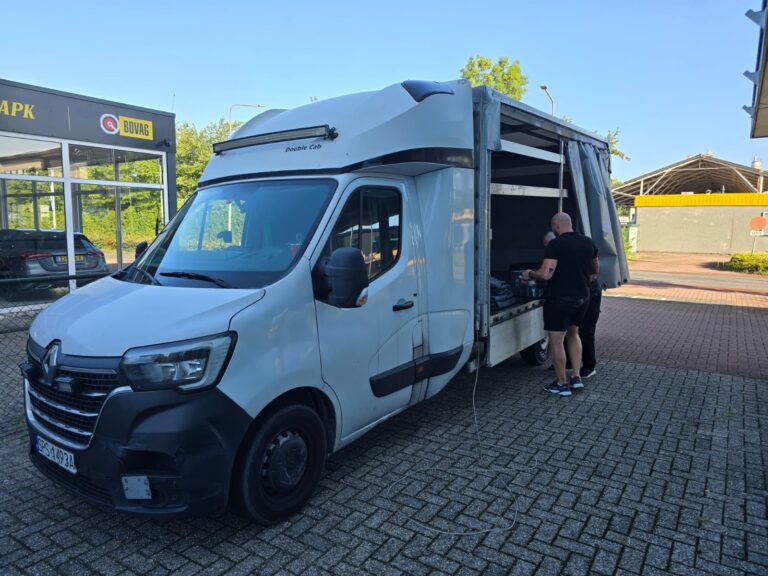
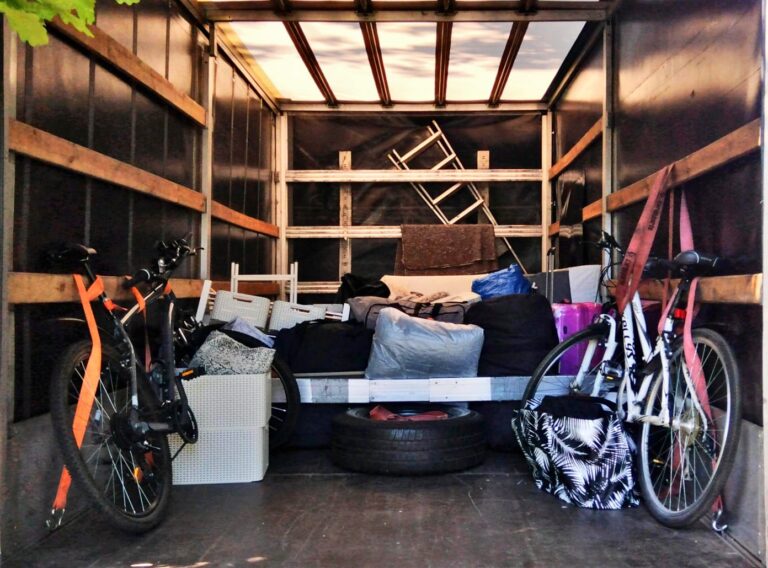
For professional support with the physical relocation, VANonsite provides reliable removals to Ireland, including flexible vehicle sizes, GPS tracking, packing assistance and support with the transport documentation required for international moves.
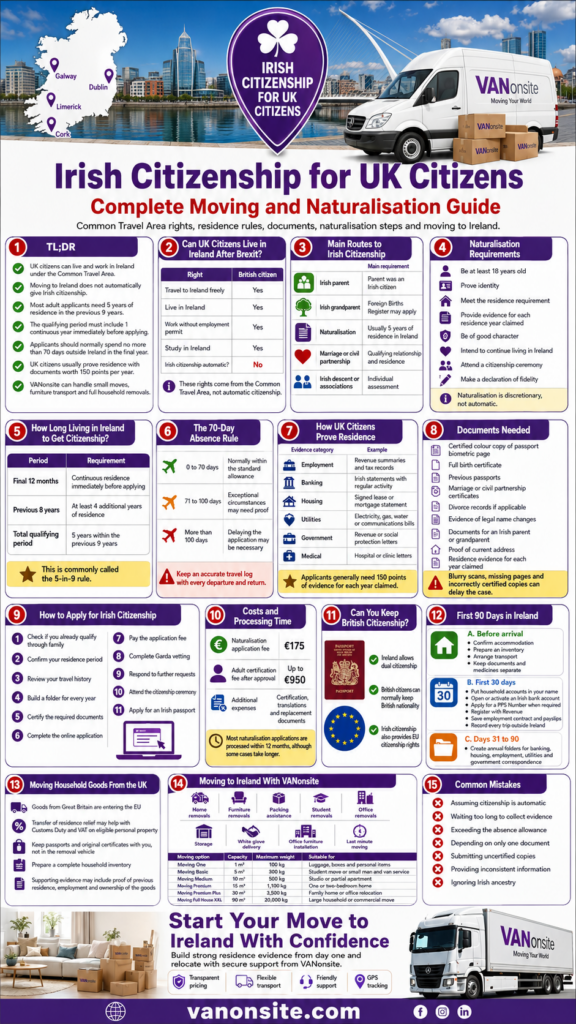
TL:DR
- UK citizens can live and work in Ireland under the Common Travel Area without applying for a standard residence visa.
- Moving to Ireland does not automatically give a British citizen Irish citizenship.
- Most adult naturalisation applicants need five years of residence during the previous nine years.
- The qualifying period must include one continuous year immediately before the application date.
- Applicants should normally spend no more than 70 days outside Ireland during the final qualifying year.
- UK citizens generally prove their residence through documents, with 150 points of evidence required for each year claimed.
- VANonsite can arrange small man and van moves, furniture transport and complete household removals from the UK to Ireland.
Can UK Citizens Live in Ireland After Brexit?
Yes. British citizens can continue to travel to, live in and work in Ireland under the Common Travel Area, commonly known as the CTA.
The Common Travel Area includes:
- Ireland
- The United Kingdom
- The Isle of Man
- The Channel Islands
Within this area, Irish and British citizens can travel freely. UK citizens are also entitled to live and work in Ireland without applying for a standard Irish employment permit or residence visa.
A British passport remains the clearest way to prove your nationality when travelling. Although passport checks may not always take place when arriving from another part of the Common Travel Area, carrying valid photographic identification is sensible.
Does the Common Travel Area Give You Irish Citizenship?
No. CTA rights do not convert automatically into citizenship.
A British citizen can live in Ireland for many years without becoming an Irish citizen. Naturalisation is a separate legal process that requires an application, evidence of residence, identity documents and approval from the Minister for Justice.
This is an important distinction for anyone researching Irish citizenship for UK citizens. Your right to live in Ireland makes relocation easier, but it does not remove the need to satisfy the citizenship requirements.
What About Non-British Family Members?
Different rules can apply when a British citizen moves with a spouse, partner, child or dependent relative who is not British, Irish, Swiss or a citizen of an EEA country.
A non-EEA family member may need a visa, preclearance or another immigration permission before moving. The British citizen’s rights under the Common Travel Area do not automatically provide identical rights to every accompanying relative.
Each person’s immigration position should therefore be checked separately before accommodation, employment and transport are arranged.
Main Routes to Irish Citizenship for UK Citizens
Naturalisation is not the only option. Some British citizens are already Irish citizens or can become citizens through their family history.
Before planning a five-year residence period, investigate whether you have an Irish parent or grandparent.
| Citizenship route | Main requirement | Typical applicant |
|---|---|---|
| Irish parent | A parent was an Irish citizen when the applicant was born | Person with an Irish mother or father |
| Irish grandparent | Registration through the Foreign Births Register may be required | Person with a grandparent born in Ireland |
| Naturalisation | Usually five years of residence in Ireland | UK citizen settled permanently in Ireland |
| Marriage or civil partnership | Qualifying relationship and residence | Spouse or civil partner of an Irish citizen |
| Irish descent or associations | Individual assessment | Person with significant Irish family connections |
Irish Citizenship Through an Irish Parent
You may already be an Irish citizen if one of your parents was an Irish citizen born on the island of Ireland.
In that situation, you may be able to apply directly for an Irish passport instead of completing the naturalisation process. You will usually need civil records proving the connection between you and your Irish parent.
These may include:
- Your full birth certificate
- Your parent’s Irish birth certificate
- Your parents’ marriage certificate, where relevant
- Certified identity documents
- Evidence of any legal name changes
Check your status using the official Irish government citizenship guidance before submitting a naturalisation application.
Irish Citizenship Through an Irish Grandparent
If one of your grandparents was born on the island of Ireland, you may be entitled to apply through the Foreign Births Register.
You will normally need to provide birth, marriage and identity records linking each generation. Once your birth has been entered on the Foreign Births Register, you become an Irish citizen from the date of registration.
Gathering older civil records can take time. Names may be spelled differently across documents, certificates may be missing and some records may need to be replaced. Starting early can prevent months of unnecessary delay.
Irish Citizenship Through Naturalisation
Naturalisation is the principal route for Irish citizenship for UK citizens who do not have a qualifying Irish parent or grandparent.
Most adult applicants need to:
- Be at least 18 years old.
- Prove their identity.
- Meet the residence requirement.
- Submit acceptable evidence for every residence year claimed.
- Be of good character.
- Intend to continue living in Ireland.
- Attend a citizenship ceremony.
- Make a declaration of fidelity to the Irish nation.
Naturalisation is discretionary. Meeting the basic conditions allows you to apply, but it does not create an automatic right to approval.
Citizenship Through Marriage to an Irish Citizen
Marriage to an Irish citizen does not provide immediate citizenship. However, it can reduce the residence requirement.
An applicant generally needs to:
- Have been married to or in a civil partnership with an Irish citizen for at least three years
- Be living with that spouse or civil partner
- Show that the relationship is genuine and continuing
- Have lived legally on the island of Ireland for three of the previous five years
- Include one continuous year of residence immediately before applying
- Provide evidence of joint residence
- Meet the good character requirement
The marriage or civil partnership must still exist when the application is submitted and when citizenship is granted.
How Long Living in Ireland to Get Citizenship?
People asking how long living in Ireland to get citizenship usually want one clear figure: five years.
The calculation is more precise than simply waiting five calendar years.
For the standard naturalisation route, an adult applicant generally needs:
- 365 days of continuous residence immediately before applying
- A further 1,460 days of residence during the preceding eight years
- A total of at least 1,825 or 1,826 days within nine years, depending on leap years
This is commonly described as the five-in-nine rule.
| Period | Residence requirement |
|---|---|
| Final 12 months | Continuous residence immediately before applying |
| Previous 8 years | At least 4 additional years of residence |
| Total qualifying period | 5 years within the previous 9 years |
The additional four years do not always need to be completely consecutive. For example, a person could live in Ireland for several years, spend a period back in the UK and later return. Earlier Irish residence may still count if it falls within the nine-year assessment period and can be documented.
The final year is different. It must run continuously backwards from the date of application.
The 70-Day Absence Rule
Applicants should normally spend no more than 70 days outside Ireland during the 12 months immediately before applying.
An additional allowance of up to 30 days may be considered where the absence resulted from a rare, severe or unavoidable event. This extra allowance is not guaranteed and evidence may be required.
| Days outside Ireland in the final year | Practical position |
|---|---|
| 0 to 70 days | Normally within the standard allowance |
| 71 to 100 days | Exceptional circumstances may need to be proven |
| More than 100 days | Delaying the application may be necessary |
Keep an accurate travel log. Record each departure date, return date, destination and reason for travel.
Frequent weekend trips to the UK can accumulate quickly. Relying on memory five years later is risky, especially when an applicant has used several airports, ferry routes or passports.
Does Living in Northern Ireland Count?
Residence in Northern Ireland does not normally count towards the standard naturalisation requirement for an adult applying based on residence in the Irish State.
A different calculation can apply when the application is based on marriage or civil partnership with an Irish citizen. Under that route, qualifying residence on the island of Ireland may be relevant.
How UK Citizens Prove Residence in Ireland
British citizens do not normally prove their residence through Irish immigration stamps in the same way as many non-EEA nationals.
Instead, UK citizens must submit documentary evidence showing that they were genuinely living in Ireland. The official naturalisation residency calculator specifically directs UK, EU, EEA and Swiss nationals to use residence documents rather than the standard immigration permission calculation.
Useful evidence may include:
- Employment Detail Summaries from Revenue
- Tax records
- Payslips
- Rental agreements
- Mortgage statements
- Electricity, gas and water bills
- Irish bank statements
- Social insurance records
- Medical correspondence
- Government letters
- Residential insurance documents
A rental agreement alone may not be enough. It proves that you rented a property, but not necessarily that you lived there continuously.
A stronger application combines different types of evidence. For example, a tenancy agreement can be supported by bank transactions, employment records and utility bills covering the same year.
The 150-Point Residence Evidence System
Applicants generally need to provide documents worth 150 points for each residence year claimed.
The current system assigns predetermined values to different types of evidence. In many cases, a Type A document is worth 100 points and a Type B document is worth 50 points. The exact combination should be checked against the latest citizenship scorecard.
| Evidence category | Examples | Recommended action |
|---|---|---|
| Employment | Revenue summaries and tax records | Save a copy every year |
| Banking | Irish statements showing regular activity | Use the account for daily transactions |
| Housing | Signed lease or mortgage statement | Keep dated versions |
| Utilities | Electricity, gas, water or communications bills | Place at least one account in your name |
| Government | Revenue or social protection correspondence | Store digital and paper copies |
| Medical | Hospital or clinic letters | Retain documents showing your address |
If you cannot reach 150 points for a particular year, you may be able to submit a Residential Proof Affidavit. It should only be used when the required standard documents are genuinely unavailable. The affidavit must be completed correctly and signed in the presence of an authorised certifier.
Documents Needed for Irish Citizenship
Document preparation should begin when you arrive in Ireland, not when you are ready to submit the application.
Depending on your route, you may need:
- A certified colour copy of your passport biometric page
- Your full birth certificate
- Previous passports
- Marriage or civil partnership certificates
- Divorce records, where applicable
- Evidence of legal name changes
- Documents relating to an Irish parent or grandparent
- Proof of your current address
- Residence evidence for each year claimed
Identity documents and passport copies may need to be certified by an authorised professional. Current passport certification requirements should be checked before uploading the documents.
Possible certifiers can include a practising solicitor, notary public, Commissioner for Oaths or Peace Commissioner, depending on the document and current application rules.
Blurry scans, missing pages and incorrectly certified copies can delay an otherwise strong application.
How to Apply for Irish Citizenship as a UK Citizen
A methodical approach makes the process easier to manage.
1. Check Whether You Already Qualify
Investigate Irish parents and grandparents first. Citizenship through descent may be faster than residence-based naturalisation.
2. Confirm Your Residence Period
Count backwards from your intended application date. Make sure that you satisfy both the five-in-nine rule and the final continuous year.
3. Review Your Travel History
Calculate all absences during the final 12 months. Use booking confirmations, emails, card transactions and passport records to confirm the dates.
4. Build a Folder for Every Year
Create separate folders for housing, employment, banking, utilities and government correspondence. Check that each year reaches the required evidence score.
5. Certify the Required Documents
Use an authorised certifier and follow the current wording and format requirements.
6. Complete the Application
Naturalisation applications can be submitted through the official online system. The portal allows applicants to complete the form, upload documents, make payments and submit the application electronically.
7. Pay the Application Fee
The statutory application fee is currently €175. If the application is successful, an adult applicant may need to pay a certification fee of up to €950.
8. Complete Garda Vetting
You may be asked to complete an electronic vetting process. All addresses, convictions and relevant legal matters must be disclosed truthfully.
9. Respond to Further Requests
Citizenship Division may ask for additional evidence or clarification. Answer within the specified deadline and provide organised, clearly labelled documents.
10. Attend the Citizenship Ceremony
Successful adult applicants must normally attend a citizenship ceremony and make a declaration of fidelity. A person does not become an Irish citizen until the declaration has been made. The certificate of naturalisation is then issued by post.
11. Apply for an Irish Passport
An Irish passport is not issued automatically with citizenship. You can apply after receiving your certificate of naturalisation.
Citizenship Costs and Processing Time
| Stage | Typical amount |
|---|---|
| Naturalisation application fee | €175 |
| Adult certification fee after approval | Up to €950 |
| Additional expenses | Certification, translations and replacement documents |
Most naturalisation applications are processed within 12 months, although individual cases can take longer depending on their complexity and whether additional evidence is required.
A complete application with strong residence evidence is less likely to be delayed by avoidable document requests.
Can You Keep British Citizenship?
Ireland allows dual citizenship. This means a person can become an Irish citizen while remaining a citizen of another country, provided the other country also permits dual nationality.
British citizens can therefore normally retain their British citizenship after becoming Irish citizens.
Irish citizenship also provides EU citizenship rights, including broader opportunities to live, work and study in other European Union countries.
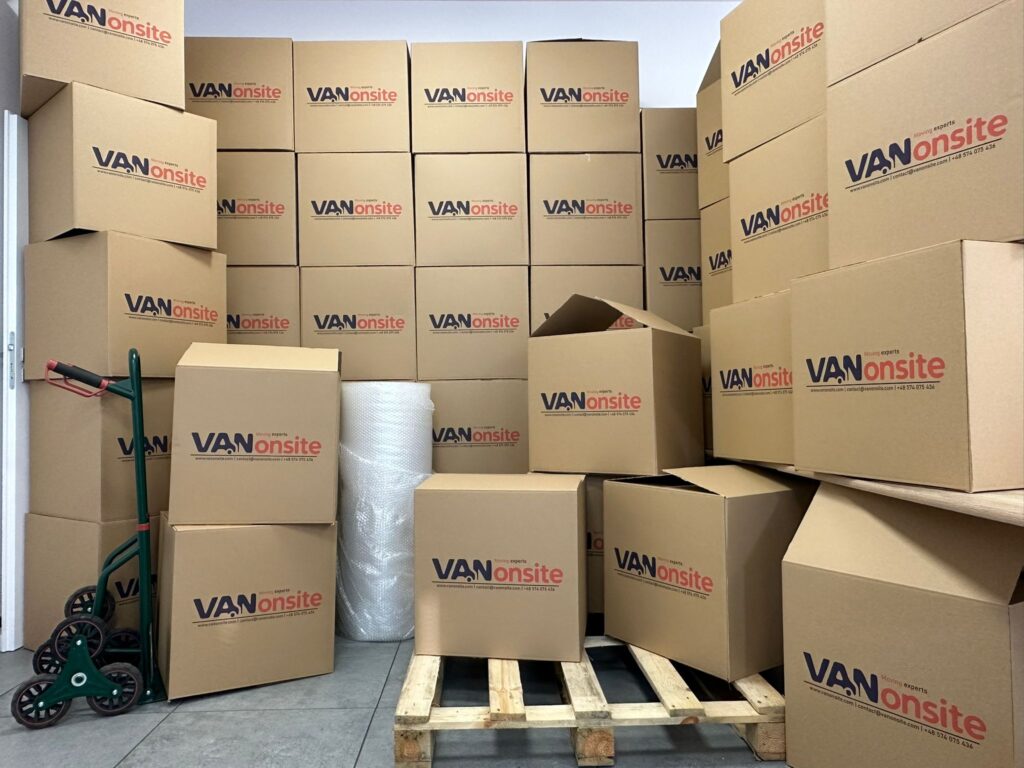


Moving Household Goods From the UK to Ireland
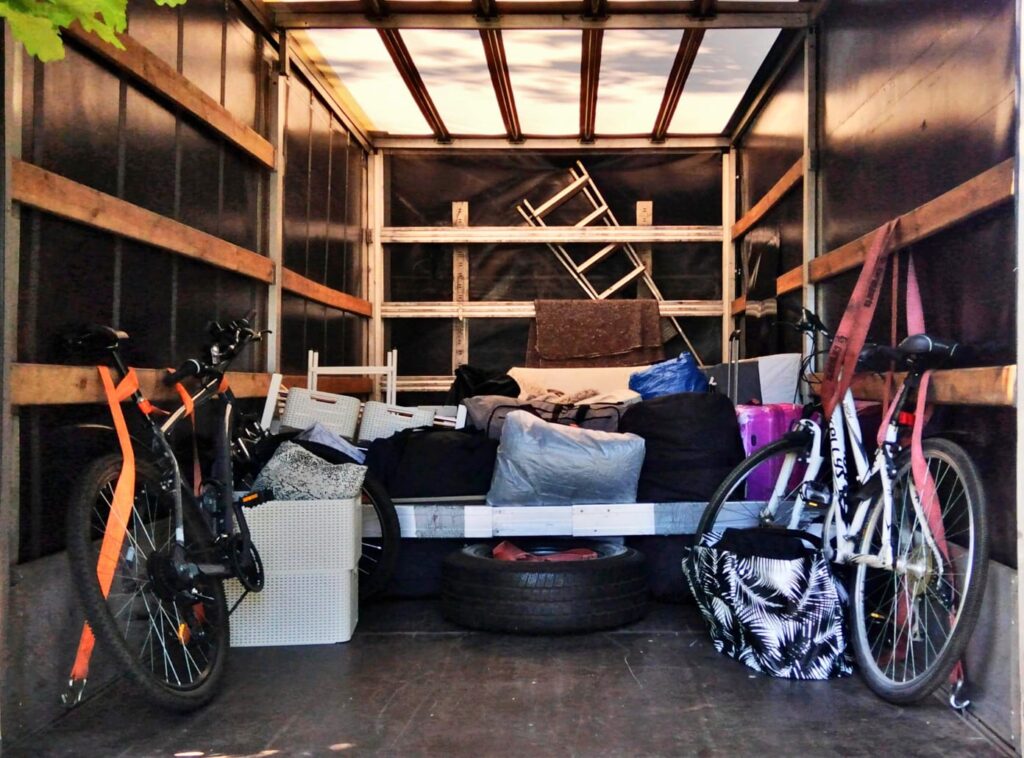
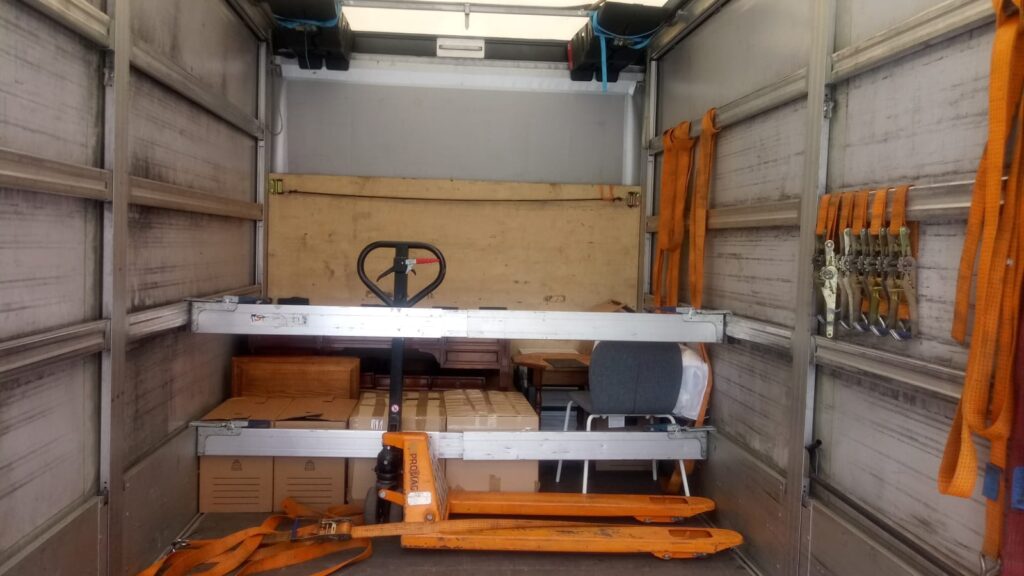
Your citizenship application may be years away, but your documentary residence begins with the move itself.
Before leaving the UK, prepare a secure folder containing:
- Passports
- Birth and marriage certificates
- Employment documents
- Accommodation records
- Medical records and prescriptions
- School records
- Insurance documents
- Vehicle documents
- A complete household inventory
Keep original documents with you rather than placing them in the removal vehicle.
Customs Rules for Moves From Great Britain
When moving from England, Scotland or Wales to Ireland, your belongings are entering the European Union from outside the EU.
People transferring their normal residence to Ireland may qualify for relief from Customs Duty and VAT on eligible personal property and household effects. Relief can potentially cover used furniture, clothing, bicycles, motorcycles and private vehicles, provided the relevant conditions are satisfied.
Supporting evidence may include proof of your previous residence, employment records, property documents and evidence that you owned and used the imported goods before moving.
Revenue advises applicants or their authorised agents to submit the relevant transfer of residence form and supporting documents before the goods arrive.
Your First 90 Days in Ireland
The first three months can create the foundation of your future residence evidence.
Before Arrival
Confirm your accommodation, prepare an inventory and arrange the transport of your belongings. Separate essential documents, medicines and valuables from the main shipment.
During the First 30 Days
After arriving:
- Put household accounts in your name.
- Open or activate an Irish bank account.
- Apply for a PPS Number when required.
- Register with Revenue for employment or tax purposes.
- Save your employment contract and first payslips.
- Keep proof of your moving date and Irish address.
- Start recording every trip outside Ireland.
During Days 31 to 90
Create annual folders for banking, housing, employment, utilities and government correspondence.
Review them every few months. A simple digital archive can prevent an exhausting search for documents when you eventually apply for Irish citizenship.
Moving to Ireland With VANonsite
An international move is not simply a transfer of boxes. It is the moment when your home, routines and personal history cross into a new country.
VANonsite provides professional transport for students, individuals, families and businesses moving between the UK, Ireland and other European destinations.
Customers can use services including:
- Home removals
- Furniture removals
- Packing assistance
- Student removals
- Office removals
- Storage
- White glove delivery
- Office furniture installation
- Last minute moving
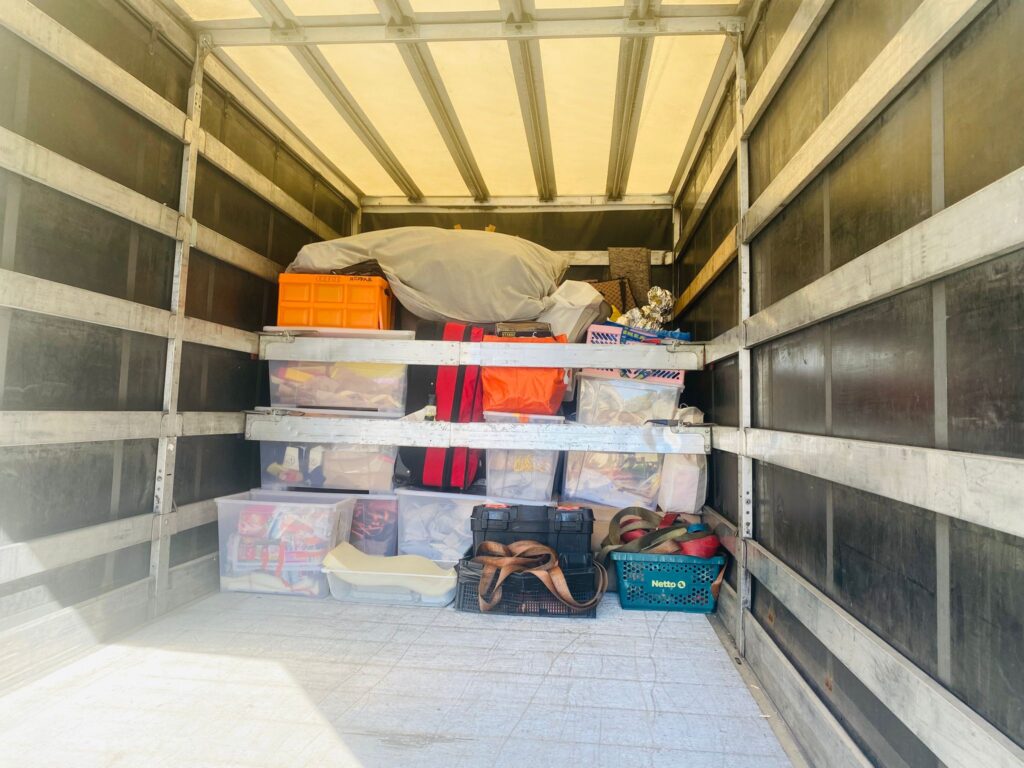
Every load can be tracked using GPS, providing greater visibility throughout the journey. Customers planning removals to Ireland can also choose a vehicle based on the actual volume and weight of their belongings.
| Moving option | Capacity | Maximum weight | Suitable for |
|---|---|---|---|
| Moving One | 1 m³ | 100 kg | Luggage, boxes and personal items |
| Moving Basic | 5 m³ | 300 kg | Student move or small man and van service |
| Moving Medium | 10 m³ | 500 kg | Studio or partial apartment |
| Moving Premium | 15 m³ | 1,100 kg | One or two-bedroom home |
| Moving Premium Plus | 30 m³ | 3,500 kg | Family home or office relocation |
| Moving Full House XXL | 90 m³ | 20,000 kg | Large household or commercial move |
When Is a Man and Van Service Enough?
A man and van service can be a practical option for:
- Boxes and suitcases
- A student room
- A small studio
- Individual furniture items
- A partial household load
- An urgent last-minute move
Larger family homes usually benefit from a dedicated vehicle with predictable capacity and a planned collection and delivery schedule.
VANonsite can help match the vehicle to the dimensions and weight of the shipment, reducing the risk of unexpected changes on moving day.
Common Irish Citizenship Mistakes
Avoiding a few common errors can make Irish citizenship for UK citizens considerably easier.
Assuming Citizenship Is Automatic
Living in Ireland under the Common Travel Area does not automatically produce citizenship after five years.
Waiting to Collect Evidence
Former landlords, employers and banks may be difficult to contact several years later. Save documents when they are issued.
Exceeding the Absence Allowance
Frequent trips to the UK can push the total above 70 days during the final qualifying year.
Depending on One Document
A lease alone may not prove continuous physical residence. Combine housing evidence with banking, employment and utility records.
Submitting Uncertified Copies
Where certification is required, ordinary photocopies may not be accepted.
Providing Inconsistent Information
Names, addresses, dates and travel records should be consistent across every document. Explain genuine discrepancies clearly.
Ignoring Irish Ancestry
An Irish parent or grandparent may provide a more direct citizenship route. Check your family history before waiting five years.
Frequently Asked Questions
Can a UK citizen become an Irish citizen?
Yes. Irish citizenship for UK citizens may be available through birth, descent, marriage, civil partnership, Irish associations or naturalisation.
How long living in Ireland to get citizenship?
Most adult applicants need five years of residence during the previous nine years, including one continuous year immediately before applying.
Can a British citizen live permanently in Ireland?
British citizens can live and work in Ireland under the Common Travel Area. However, living in Ireland does not automatically provide Irish citizenship.
Do UK citizens need an Irish visa?
British citizens do not normally need a visa to live in Ireland. Different rules may apply to accompanying relatives who are not British, Irish, EEA or Swiss citizens.
Do UK citizens need an Irish Residence Permit?
UK citizens living in Ireland under the Common Travel Area do not normally need an Irish Residence Permit solely because of their British nationality.
Can I retain my British passport?
Yes. Ireland allows dual citizenship, so a British citizen can normally retain British nationality after becoming an Irish citizen.
Does residence in Northern Ireland count?
Residence in Northern Ireland does not normally count towards the standard five-year naturalisation route based on residence in the Republic of Ireland. Different provisions may apply to spouses and civil partners of Irish citizens.
How much does Irish citizenship cost?
The application fee is currently €175. A successful adult applicant may then need to pay a certification fee of up to €950.
How long does the application take?
Most naturalisation applications are processed within 12 months, although complex cases can take longer.
Can VANonsite move a small load to Ireland?
Yes. VANonsite offers transport options ranging from a 1 m³ personal shipment to a 90 m³ full household or commercial relocation.
Summary
Irish citizenship for UK citizens is achievable, but it requires planning, evidence and patience.
Most applicants using the standard naturalisation route need five years of residence during the previous nine years. The final year must be continuous, and time spent outside Ireland should normally remain within the permitted allowance.
Before applying, check whether you qualify through an Irish parent or grandparent. If naturalisation is the correct route, begin collecting proof of residence as soon as you move. Save banking records, employment documents, utility bills, housing agreements and travel dates.
A well-organised relocation creates a strong beginning. VANonsite can coordinate packing, transport, customs support and delivery while you focus on employment, housing and building your future in Ireland.