Switzerland is easy to fall in love with from a distance. The mountains look carved from silver. The trains arrive with almost theatrical precision. Cities feel clean, safe and polished, while salaries often look powerful enough to turn relocation into an obvious yes.
Then real life begins.
A rental deposit lands on your budget like a stone. Health insurance becomes a serious monthly cost. Your commune expects registration on time. Customs rules suddenly matter because Switzerland is not simply another EU border crossing. Even a small man and van move can become stressful if the documents, access rules, parking space or delivery timing are not handled properly.
That is why understanding the cons of moving to Switzerland before you relocate is not negative thinking. It is smart preparation. Switzerland can be a magnificent place to live, work, study or build a family, but it rewards people who plan carefully. The country is organised, precise and expensive. If you arrive with romantic expectations only, the first months can feel sharp. If you arrive with a practical plan, the move becomes far calmer.
This guide gives you a clear, honest and useful look at the cons of moving to Switzerland, from living costs and housing pressure to customs, paperwork, language barriers and emotional adjustment. It also shows how to reduce the risks with better planning, the right vehicle size and a professional European removals partner such as VANonsite.
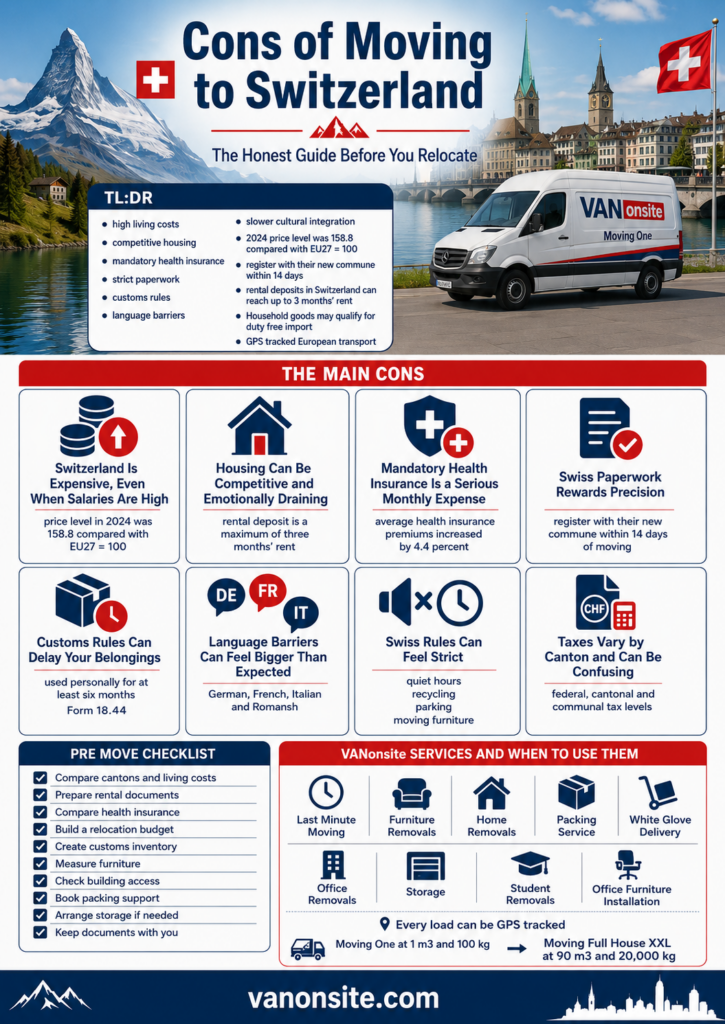
TL:DR
- The biggest cons of moving to Switzerland are high living costs, competitive housing, mandatory health insurance, strict paperwork, customs rules, language barriers and slower cultural integration.
- Switzerland’s 2024 price level was 158.8 compared with EU27 = 100, so everyday spending can feel dramatically higher than in many European countries.
- New residents are generally expected to register with their new commune within 14 days after moving.
- Residential rental deposits in Switzerland can reach up to 3 months’ rent, which makes the first stage of relocation financially demanding.
- Household goods may qualify for duty free import, but customs rules, inventories and personal use requirements must be taken seriously.
- A professional man and van service with GPS tracking can prevent costly moving delays, damage, poor timing and border stress.
- VANonsite supports removals to Switzerland with flexible vehicle sizes, packing services, storage, white glove delivery, office removals, student removals and GPS tracked European transport.




Is Moving to Switzerland Worth It Despite the Cons?
Yes, moving to Switzerland can absolutely be worth it. Many people relocate and stay for years because the country offers rare advantages: safety, strong wages, stable infrastructure, excellent public transport, beautiful landscapes and a high standard of living. For professionals, students, families and business owners, Switzerland can open doors that feel impossible elsewhere.
Still, the cons of moving to Switzerland should not be brushed aside. They are not tiny inconveniences. They are practical realities that can shape your first year.
A person moving from Poland, Portugal, Spain, Italy, Germany, France or the Netherlands may already understand European relocation, but Switzerland has its own rhythm. It is close to the EU, yet different. It is efficient, but formal. It is welcoming in many ways, but not always instantly warm. It pays well, but charges heavily. It looks peaceful, but the preparation can feel intense.
The people who settle best are usually not the ones who expect everything to be perfect. They are the ones who know what to expect and act early.
Before moving, ask yourself:
- Can I afford rent, deposit, insurance and moving costs at the same time?
- Do I understand which permit or registration rules apply to me?
- Have I prepared my customs documents and household inventory?
- Do I know whether my furniture fits my new apartment?
- Have I chosen the right transport option for my load size?
- Do I have a plan if the lease date and delivery date do not match?
- Am I ready for cultural, language and social adjustment?
When these questions are answered early, the cons of moving to Switzerland become manageable. Without preparation, they can turn into expensive surprises.
Switzerland Is Expensive, Even When Salaries Are High
The high cost of living is probably the best known of all the cons of moving to Switzerland. It is also one of the most underestimated.
People often hear that Swiss salaries are strong and assume the financial equation will work itself out. Sometimes it does. A well paid job in Zurich, Basel, Geneva, Lausanne or Zug can create real financial comfort. But the first months can still feel harsh because several major costs arrive together.
You may need to pay a rental deposit. You may need to buy insurance. You may need furniture, temporary accommodation, transport, parking permissions, customs support, storage or packing materials. You may also be paying final bills in your previous country while funding your new Swiss life.
That overlap can be painful.
According to the Swiss Federal Statistical Office, Switzerland’s price level in 2024 was 158.8 index points compared with EU27 = 100. In simple terms, Switzerland is not just slightly more expensive than many European countries. It sits in a different cost category.
Everyday life shows this quickly. A supermarket shop feels heavier. Eating out becomes a decision rather than a habit. Repairs, services, childcare, insurance and transport can all take a serious share of income.
Common cost shocks for newcomers
| Cost area | Why it can feel difficult | Planning tip |
|---|---|---|
| Rent | Popular Swiss cities have high demand | Compare cantons and commute options |
| Deposit | Can reach up to 3 months’ rent | Keep relocation savings separate |
| Health insurance | Mandatory and paid monthly | Compare premiums before arrival |
| Groceries | Everyday baskets are often expensive | Create a realistic weekly food budget |
| Restaurants | Eating out can be costly | Cook more during the first months |
| Childcare | Can be a major family expense | Research local options early |
| Moving costs | Poor planning creates extra charges | Match vehicle size to real volume |
| Storage | Lease dates may not align | Arrange storage before panic starts |
One of the smartest ways to reduce pressure is to avoid waste during the move itself. Paying for too much transport capacity is expensive. Choosing a van that is too small can mean extra trips, stress and delays. Poor packing can lead to damage. Late booking can limit your options.
VANonsite helps customers choose the right vehicle size and service level for the move, whether that means a compact man and van relocation, a student move, a furniture removal or a full house shipment. With GPS tracking on every load, customers also know where their belongings are, which brings a sense of control during a financially tense period.
Housing Can Be Competitive and Emotionally Draining
Housing is another major item on the list of cons of moving to Switzerland. In high demand cities, finding a good apartment can feel like trying to catch a train that only slows down for three seconds.
Zurich, Geneva, Basel, Lausanne, Bern and Zug can be extremely competitive. Good properties may receive many applications. Landlords and agencies often prefer candidates with complete documents, stable income and strong references. For newcomers, this can be frustrating because they may not yet have a Swiss rental history.
A beautiful job offer can suddenly feel less exciting when every apartment viewing is crowded and every landlord asks for another document.
Why the Swiss rental market can be difficult
The Swiss rental market is not impossible, but it is structured. You should expect to prepare carefully. Depending on the property and canton, you may need proof of income, identification, residence status, references, employer confirmation and a clean debt collection extract once you are already in Switzerland.
Residential rental deposits can also be significant. Official Swiss guidance states that for residential rentals, the rental deposit is a maximum of three months’ rent. That means a person renting a CHF 2,500 apartment may need to prepare up to CHF 7,500 for the deposit alone, not including the first rent, insurance, moving costs or furniture.
This creates a cash flow problem for many newcomers. It is not always about whether you can afford life in Switzerland long term. It is about whether you can absorb the first wave of costs.
Housing also affects your moving plan
Your apartment situation shapes your whole relocation.
If your Swiss apartment is not ready, your belongings may need storage. If the building has strict access rules, your man and van team needs to know in advance. If there is no lift, heavy furniture becomes a bigger job. If parking is difficult, the delivery window needs to be planned with precision.
A moving company that does not understand this can create problems. A van arriving late, parking in the wrong place or blocking a narrow Swiss street can turn an already stressful day into a small disaster.
VANonsite offers Home Removals, Furniture Removals, Packing Service and Storage, which can be especially useful when lease dates do not align perfectly. Instead of rushing, customers can plan the move around the reality of Swiss housing.
Mandatory Health Insurance Is a Serious Monthly Expense
Health insurance is one of the cons of moving to Switzerland that many people do not fully understand until they start comparing premiums.
Switzerland has mandatory basic health insurance. It is not something you can simply ignore because you feel healthy. Premiums vary depending on canton, insurer, age, insurance model and deductible. Families need to calculate this carefully because premiums apply across the household.
For 2026, the Federal Office of Public Health reported that average health insurance premiums increased by 4.4 percent. This matters for newcomers because health insurance is not a small side cost. It can be one of the largest fixed monthly expenses after rent.
What makes health insurance confusing?
The system is not necessarily bad. Swiss healthcare is high quality. Access and standards are strong. The problem is that the financial structure can be unfamiliar.
You need to understand:
- Monthly premiums
- Deductibles
- Accident coverage
- Cost sharing
- Basic insurance versus supplementary insurance
- Premium differences between cantons
- Family costs
- What dental care is and is not covered for your situation
For a single professional, health insurance may be manageable. For a family, the numbers can become heavy. For students, it can affect the entire monthly budget. For people arriving without a clear salary cushion, it can be a painful surprise.
This is why moving costs should be controlled. If you already face rent, deposit and insurance, you do not want extra charges caused by poor packing, wrong vehicle choice or delayed delivery.
A reliable man and van service can help reduce avoidable moving costs. VANonsite allows customers to choose from different vehicle sizes, which helps prevent overpaying for unused space or trying to force too much into the wrong load.
Swiss Paperwork Rewards Precision
Paperwork is one of the quieter cons of moving to Switzerland, but it can become stressful very quickly. Switzerland runs on order. That is one reason the country works so well. It is also why newcomers need to respect deadlines and procedures.
If you are moving to Switzerland, your requirements depend on nationality, work status, study plans, family situation and canton. EU and EFTA citizens have different rules from third country nationals. Employees, self employed people, students and family members may also face different requirements.
Useful official pages include:
- Moving to Switzerland
- Swiss residence permits
- EU and EFTA citizens in Switzerland
- Working in Switzerland
New residents are generally expected to register with their new commune within 14 days of moving. Fourteen days sounds generous until you are unpacking, starting a job, arranging insurance, reading rental documents and trying to understand local systems.
Documents to prepare before moving
| Situation | Useful documents or actions | Why it matters |
|---|---|---|
| Employment relocation | Contract, ID, permit related documents | Supports residence and work formalities |
| Student relocation | Admission documents, housing proof, insurance details | Helps with local registration |
| Family relocation | Birth certificates, marriage documents, IDs | May be needed for family registration |
| Household goods import | Inventory, customs forms, proof of relocation | Helps avoid border delays |
| Apartment rental | Contract, deposit proof, income evidence | Supports housing application |
| Vehicle import | Vehicle documents and ownership proof | Rules differ from household goods |
The best method is simple: create a relocation folder. Keep digital copies in cloud storage and paper copies in your hand luggage. Do not pack essential documents inside the moving van. If customs, your commune, landlord or insurer needs a document, you should be able to find it within minutes.
This kind of preparation may not feel exciting, but it is powerful. Switzerland respects clean paperwork.
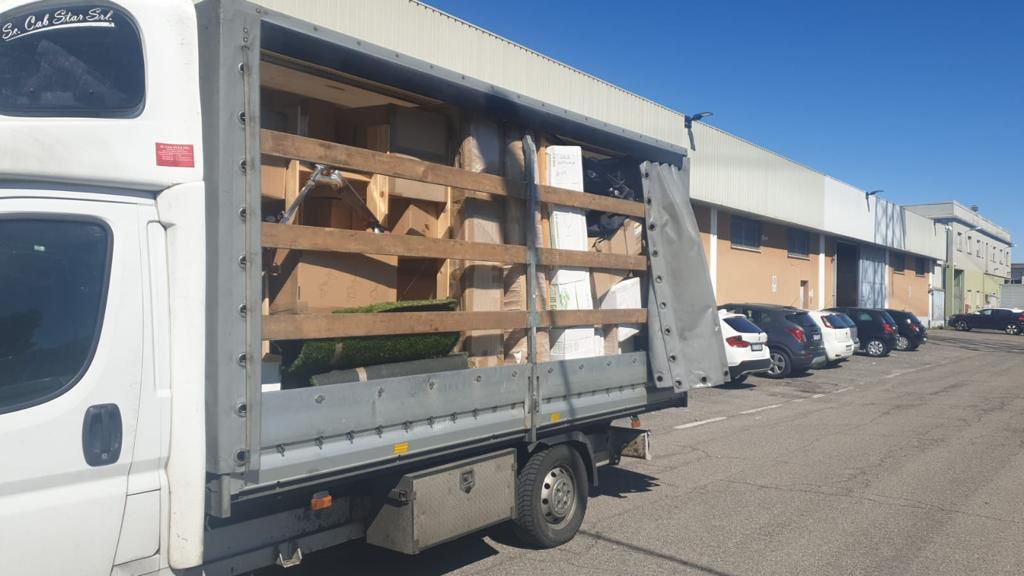
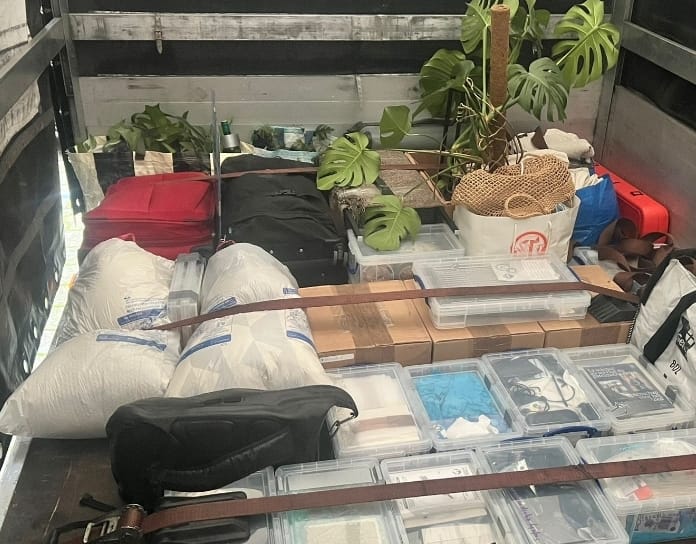
Customs Rules Can Delay Your Belongings
Customs rules are one of the most important practical cons of moving to Switzerland. Many people forget this because Switzerland is surrounded by EU countries. It feels central, accessible and European. But Switzerland is not part of the EU customs union, and that matters when you move household goods.
If you are relocating your domicile to Switzerland, your household effects may qualify for duty free import if the conditions are met. Swiss customs guidance explains that household effects generally include goods used personally for at least six months abroad and intended for continued personal use in Switzerland. Form 18.44 is part of the customs procedure for relocation goods.
Official customs pages include:
What customs officers may care about
They may want to understand what you are bringing, whether the goods belong to you, whether they are used household effects and whether you are genuinely relocating. A vague inventory can slow everything down.
A useful inventory should include clear categories, such as:
- Clothing
- Books
- Kitchenware
- Bed linen
- Personal electronics
- Furniture
- Office equipment
- Sports equipment
- Tools
- Children’s items
- Decorative items
For high value goods, more detail can help. If you are moving art, luxury furniture, antiques, designer lighting, professional equipment or expensive electronics, prepare the paperwork carefully.
Moving mistakes that can create customs stress
| Mistake | Possible result | Better approach |
|---|---|---|
| No inventory | Border delay | Prepare a clear list before loading |
| Recently bought goods mixed with used items | Questions or duties | Separate and declare correctly |
| Documents packed in boxes | Panic at inspection | Keep papers with you |
| Poor timing | Missed customs window | Plan route and schedule |
| Wrong vehicle size | Extra loading or split shipment | Measure volume before booking |
| Unclear ownership | More questions | Keep proof where useful |
This is where a professional man and van service becomes more than transport. It becomes risk management. VANonsite helps customers move across Europe with GPS tracked loads, careful handling and flexible vehicle sizes. For removals to Switzerland, that level of control is not a luxury. It is common sense.
Language Barriers Can Feel Bigger Than Expected
Language is one of the more personal cons of moving to Switzerland. The country has four national languages: German, French, Italian and Romansh. The language you need depends strongly on your canton.
In Zurich, Basel, Bern and many central or eastern areas, German or Swiss German will shape daily life. In Geneva, Vaud and parts of Valais, French is central. In Ticino, Italian matters. In parts of Graubünden, Romansh may appear too.
English can help, especially in international companies, universities, finance, technology and hospitality. But English is not a universal key. Your rental contract, commune letters, health insurance documents, school communication and local notices may be in the local language.
Where language barriers appear first
| Area | Why it can be difficult | Practical tip |
|---|---|---|
| Commune registration | Formal language and local rules | Ask for help if unsure |
| Housing | Contracts and house rules may be complex | Translate before signing |
| Insurance | Terms can be technical | Compare with translated notes |
| Healthcare | Medical vocabulary is stressful | Keep key phrases ready |
| Neighbours | Social rules may be subtle | Learn polite local phrases |
| Moving day | Building access instructions matter | Share instructions with movers |
Language barriers are not only practical. They are emotional. It is tiring to feel intelligent in your own language and suddenly slow in another. It is frustrating to read a letter and understand most of it, but still worry about the missing part. It is strange to stand in a beautiful place and feel slightly outside the room.
This is normal. It does not mean the move is wrong. It means adjustment takes time.
The easiest way to reduce this pressure is to simplify everything else. If your move is organised, your belongings arrive safely and your home is usable quickly, you have more energy for the human side of relocation.
Swiss Rules Can Feel Strict
Swiss order is one reason the country is admired. It is also one of the cons of moving to Switzerland for people used to a more flexible lifestyle.
Apartment buildings may have quiet hours. Recycling can be precise. Some municipalities require specific rubbish bags. Laundry rooms may run on schedules. Sunday noise may be frowned upon. Parking rules can be strict. Moving furniture through shared spaces may require care, protection and permission.
At first, this can feel restrictive. Later, many people begin to appreciate it because the result is calm, clean and predictable daily life.
Rules that may affect your move
Before moving day, check:
- Whether the moving van can park near the entrance
- Whether the building has a lift
- Whether the lift can be used for furniture
- Whether floors or walls need protection
- Whether there are quiet hours
- Whether Sunday or evening delivery is discouraged
- Whether the landlord or building manager requires notice
- Whether narrow streets, height limits or access restrictions apply
A smooth move protects your first impression. New neighbours may not remember your name immediately, but they will remember a chaotic move that blocks the entrance or scratches the stairwell.
VANonsite’s experience with home removals, furniture removals and man and van services helps reduce this risk. Careful loading, clean timing and professional handling are especially valuable in a country where order matters.
Taxes Vary by Canton and Can Be Confusing
Taxes are another factor that belongs in a serious discussion of the cons of moving to Switzerland. The country has federal, cantonal and communal tax levels, and your final situation can vary greatly depending on where you live.
A salary that looks excellent in one canton may feel less impressive once rent, insurance, commuting and tax are added. Some foreign workers may be taxed at source. Others may need to file a tax return. Family status, assets, pension contributions and international income can also affect the picture.
Official information is available here: Tax return in Switzerland
Why this matters before moving
Imagine two people earning similar salaries. One lives in a lower tax canton but pays higher rent. Another lives farther out with lower rent but higher commuting costs. A third has children and faces childcare expenses. A fourth has cross border income or assets.
The headline salary does not tell the whole story.
Before accepting a job offer or choosing a canton, estimate your monthly position with all major costs included:
- Net salary
- Rent
- Rental deposit
- Health insurance
- Commuting
- Taxes
- Groceries
- Childcare, if relevant
- Utilities
- Internet and phone
- Moving and storage costs
- Emergency savings
This is not glamorous work, but it gives you clarity. In Switzerland, clarity is worth money.
Moving With Furniture Is Not Always the Best Choice
Many people assume they should bring everything. Others assume they should sell everything and start again. The smartest answer is usually somewhere in the middle.
Furniture in Switzerland can be expensive, so bringing your own items may save money. But moving heavy or awkward furniture can also increase transport costs. Some items may not fit smaller Swiss apartments, narrow staircases or strict building access rules.
This is one of the more practical cons of moving to Switzerland: the wrong furniture decision can cost you twice. You pay to move an item, then discover it does not fit, does not suit the space or is not worth keeping.
What to bring and what to reconsider
Bring items that are:
- High quality
- Expensive to replace
- Emotionally valuable
- Suitable for your new home
- Already used and part of your household
- Easy enough to transport safely
Reconsider items that are:
- Cheap to replace
- Damaged or worn out
- Too large for Swiss apartments
- Difficult to move through narrow access points
- Poorly suited to your new lifestyle
- Likely to trigger avoidable transport cost
VANonsite vehicle options
| VANonsite option | Volume | Weight limit | Best for |
|---|---|---|---|
| Moving One | 1 m3 | 100 kg | Essentials, boxes, small student loads |
| Moving Basic | 5 m3 | 300 kg | Studio items or light man and van moves |
| Moving Medium | 10 m3 | 500 kg | Small flat with selected furniture |
| Moving Premium | 15 m3 | 1,100 kg | One bedroom apartment or compact home |
| Moving Premium Plus | 30 m3 | 3,500 kg | Larger apartment or office relocation |
| Moving Full House XXL | 90 m3 | 20,000 kg | Full house move or major European relocation |
A good relocation is not about moving everything. It is about moving the right things safely.
VANonsite helps customers match the vehicle to the real size of the move. That can prevent overpaying for unused space or trying to squeeze valuable belongings into a van that is too small.
Last Minute Moving to Switzerland Can Be Expensive
Last minute moves happen. A job offer comes quickly. A university term begins soon. A lease becomes available and you need to act. A family situation changes. Life does not always give you a neat two month planning window.
Still, urgent relocation is one of the riskier cons of moving to Switzerland. The less time you have, the more important each decision becomes.
When people rush, they often make expensive mistakes. They forget customs paperwork. They choose the wrong vehicle size. They pack fragile items badly. They do not check parking access. They fail to separate essential documents. They underestimate the deposit or insurance timeline.
Fast plan for a Switzerland move
- Confirm your Swiss address and move in date.
- Check registration requirements with your commune.
- Prepare your household goods inventory.
- Keep permits, contracts and insurance papers with you.
- Separate fragile, valuable and essential items.
- Choose the correct vehicle size for volume and weight.
- Use GPS tracked transport for visibility.
VANonsite offers Last Minute Moving support for urgent European relocations. This can be especially helpful when you need speed without losing control.
Fast does not need to mean frantic. With the right man and van partner, even a short notice move can feel structured.
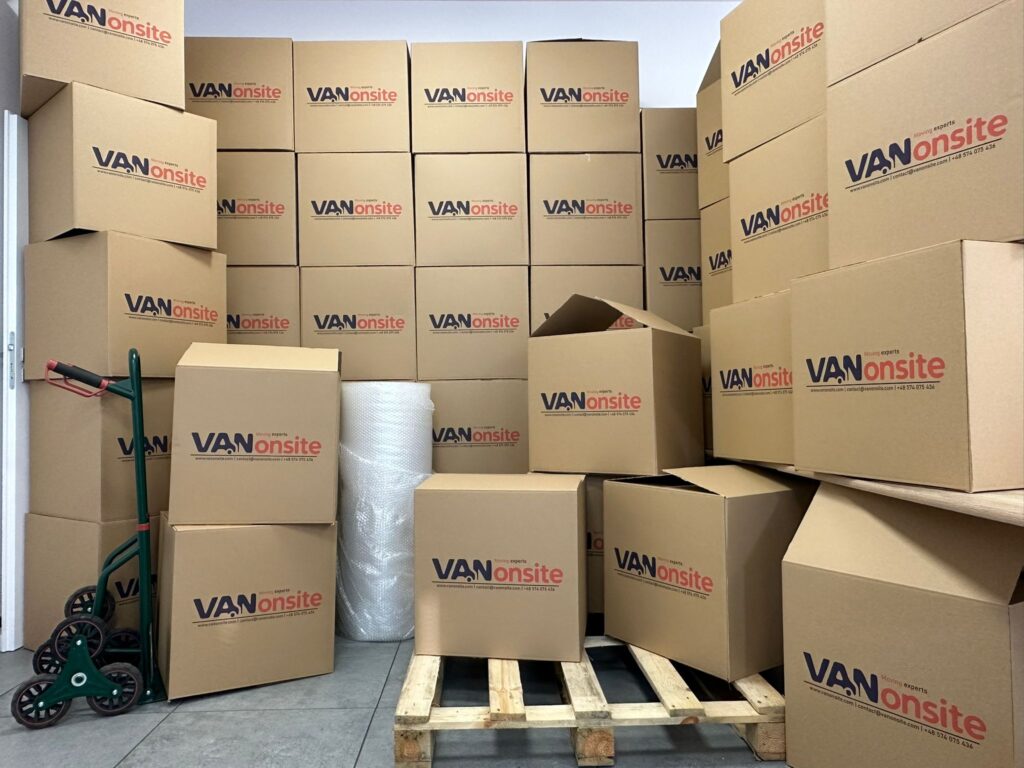
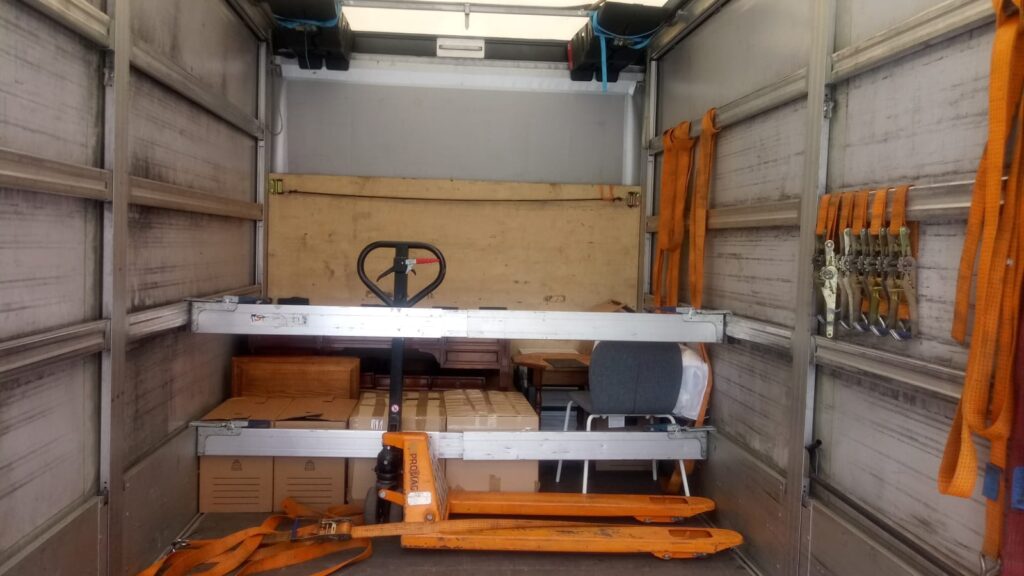


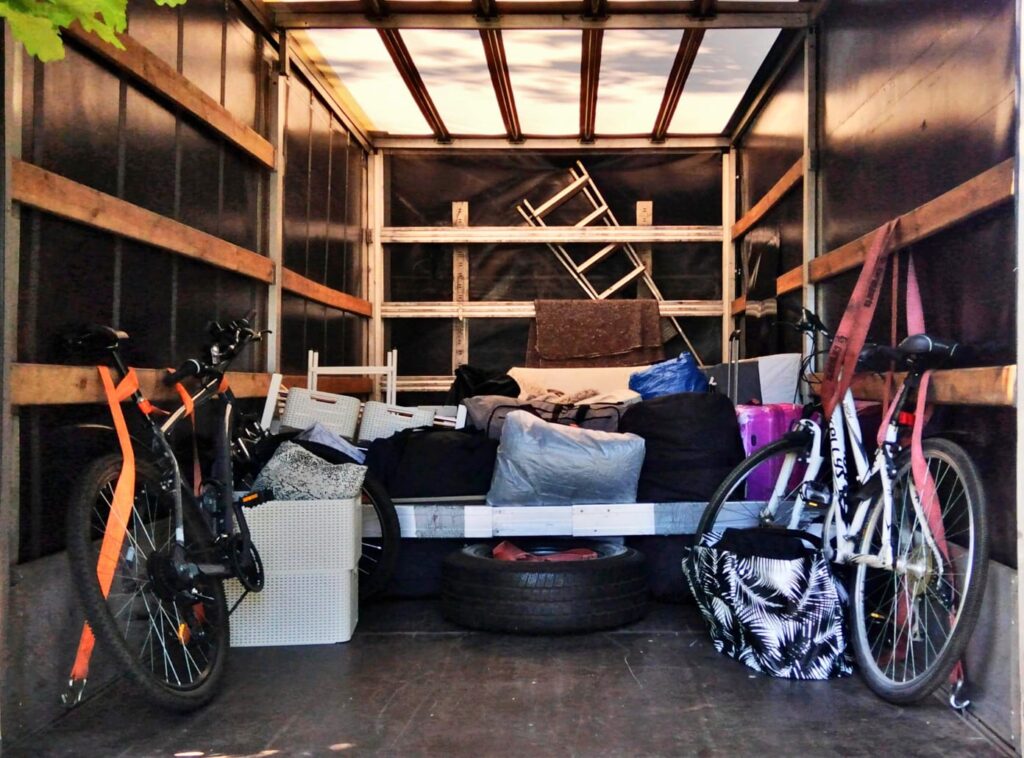
Students Face Their Own Moving Problems
Students often think relocation will be simple because they have fewer belongings. Sometimes it is. A few boxes, clothes, books, kitchen items and a laptop do not require a huge truck.
But student relocation has its own pressure points. Accommodation can be competitive. Budgets are tight. Swiss living costs are high. University deadlines are fixed. Shared flats may have narrow move in windows. International students may need registration, insurance and residence documents.
For students, the cons of moving to Switzerland are often about timing and money rather than volume.
Student moving challenges
| Challenge | Why it matters | VANonsite support |
|---|---|---|
| Small budget | Oversized transport wastes money | Moving One or Moving Basic |
| Tight schedule | Term dates are fixed | Last Minute Moving |
| Shared housing | Access windows may be limited | Timed man and van delivery |
| Fragile electronics | Laptops and screens need care | Packing Service |
| International paperwork | Documents must stay accessible | Clear planning and inventory |
A compact man and van move can be ideal for students because it offers flexibility without unnecessary scale. VANonsite Student Removals are designed for this kind of situation: efficient, practical and matched to smaller loads.
Family Moves Require More Emotional Planning
Moving alone is one thing. Moving with a partner, children, pets or elderly relatives is another. Family relocation multiplies the number of decisions and emotions.
Children may be leaving friends, schools and routines. Parents may be balancing job pressure with administrative tasks. Pets may need travel documents. Everyone may need health insurance. Housing must fit real family life, not just a budget spreadsheet.
This is one of the hidden cons of moving to Switzerland. The country may offer safety, education and stability, but the transition can still feel overwhelming.
Family relocation pressure points
- School registration
- Childcare costs
- Health insurance for each family member
- Larger rental deposit
- Bigger furniture volume
- More documents
- Pet transport rules
- Emotional adjustment
- Temporary housing risks
- Need for storage if move in dates shift
For families, professional packing can be a lifesaver. It reduces the amount of physical work before moving day and helps protect valuable or fragile items. VANonsite Packing Service can support families who need a cleaner, safer process, especially when time and energy are limited.
A family move is not just transport. It is the transfer of daily life.
Office Moves to Switzerland Need Extra Precision
Business relocation deserves special attention. The cons of moving to Switzerland are different when you are moving an office instead of a home.
A delayed sofa is inconvenient. A delayed workstation can stop an employee from working. A damaged desk, missing monitor or poorly installed office layout can affect productivity and reputation. If clients, managers or staff arrive before the office is ready, the move becomes visible in the worst way.
Switzerland’s business culture values punctuality, order and reliability. Your office move should reflect that.
Common office relocation risks
| Risk | Business impact | How to reduce it |
|---|---|---|
| Delayed delivery | Lost work time | Use tracked transport |
| Poor inventory | Missing equipment | Label and list items clearly |
| Furniture damage | Replacement cost | Use professional handling |
| No installation plan | Slow office setup | Book office furniture installation |
| Access issues | Failed delivery window | Confirm building rules |
| Weak communication | Manager stress | Use one clear moving contact |
VANonsite offers Office Removals and Office Furniture Installation, which can help reduce downtime and make the new workspace operational faster.
For companies relocating teams, equipment or executive offices, GPS tracking also gives managers peace of mind. Knowing where the load is can remove a lot of unnecessary anxiety.
White Glove Delivery Matters for Valuable Items
Not every item should be moved like a basic box. Some pieces carry high financial value. Others carry memory. Some are simply too delicate, rare or important to risk.
White Glove Delivery is useful for designer furniture, antiques, artwork, luxury lighting, fragile mirrors, expensive electronics, executive desks and premium interiors. In Switzerland, where replacement costs can be high, careful handling can save far more than it costs.
This is another point that belongs in a guide to the cons of moving to Switzerland. The country is expensive, so damaged goods are expensive too.
When White Glove Delivery makes sense
Use a premium delivery service when:
- The item is fragile
- The item is valuable
- The item is difficult to replace
- The property has delicate floors or walls
- The delivery requires careful timing
- The customer expects a higher service standard
- The item needs more than basic loading and unloading
VANonsite White Glove Delivery is designed for people who want a refined, careful and controlled process. For luxury moves, executive relocations or high value furniture, that extra care brings real comfort.
Cheap transport can become painfully expensive when something precious breaks.
Storage Can Save the Move When Dates Do Not Match
One of the practical cons of moving to Switzerland is that timing does not always line up. Your old lease may end before your Swiss apartment is ready. Your job may start before permanent housing is secured. Your landlord may delay access. Your shipment may need to wait.
This is where storage becomes a strategic tool, not a backup plan.
Storage can help when:
- You move into temporary accommodation first
- Your Swiss rental starts later than expected
- You downsize and need time to decide what to keep
- Your furniture arrives before the property is ready
- You want to avoid rushed decisions
- You are relocating an office in phases
- You need a safer option than improvised local storage
Without storage, people often make poor choices under pressure. They overpay for temporary solutions. They crowd a small apartment. They sell items too quickly. They book a second move.
VANonsite Storage can help bridge the gap between departure and arrival, keeping belongings safe while the customer handles housing, registration or office setup.
Emotional Adjustment Is One of the Hidden Cons
Not every challenge has a receipt. Some of the hardest cons of moving to Switzerland arrive quietly.
Switzerland can feel beautiful and distant at the same time. You may walk beside a lake so clear it looks unreal, then return to an apartment where nobody knows your name. You may admire the calm streets and still miss the messy warmth of home. You may love the order and feel trapped by it in the same week.
That emotional contradiction is normal.
Newcomers often struggle with:
- Slower friendships
- Language fatigue
- Missing family
- Feeling socially invisible
- Pressure to succeed
- Administrative stress
- Weather or seasonal changes
- Smaller social circles
- Feeling like a guest for too long
The solution is not to pretend everything is easy. The solution is to reduce the stress you can control.
A smooth move gives you more energy for the part you cannot rush: belonging. When your belongings arrive safely, your bed is assembled, your documents are in order and your essentials are unpacked, you have a stronger base.
VANonsite cannot make friends for you, but it can make the physical move less chaotic. That matters more than people think.
How to Reduce the Cons of Moving to Switzerland
The cons of moving to Switzerland are real, but many of them can be reduced with preparation. The goal is not to avoid every challenge. That is impossible. The goal is to avoid unnecessary problems.
Pre move checklist
| Task | Best timing | Why it matters |
|---|---|---|
| Compare cantons and living costs | 2 to 3 months before moving | Costs vary by location |
| Prepare rental documents | Before property search | Good apartments move quickly |
| Compare health insurance | Before arrival | Premiums affect monthly budget |
| Build a relocation budget | 6 to 8 weeks before moving | Prevents cash flow shock |
| Create customs inventory | 2 to 4 weeks before moving | Helps border process |
| Measure furniture | Before booking transport | Prevents vehicle size errors |
| Check building access | Before moving day | Avoids failed delivery |
| Book packing support | Before fragile items are packed | Reduces damage risk |
| Arrange storage if needed | As soon as dates are unclear | Prevents rushed decisions |
| Keep documents with you | On moving day | Avoids panic |
For a smoother European relocation, you can plan your removals to Switzerland with VANonsite and choose the vehicle size, packing service, storage option and delivery support that fits your move.
VANonsite Moving Services for Switzerland Relocations
A successful Switzerland move is not about brute force. It is about control, timing and trust.
VANonsite supports customers moving across Europe with a wide range of transport and relocation services. Whether you are moving a few essential boxes, a full apartment, valuable furniture, a student room or an entire office, the service can be matched to your situation.
VANonsite services and when to use them
| Moving challenge | VANonsite service | Why it helps |
|---|---|---|
| Urgent relocation | Last Minute Moving | Fast support when timing is tight |
| Heavy or awkward furniture | Furniture Removals | Safer lifting, loading and transport |
| Full home relocation | Home Removals | Complete household moving support |
| Fragile belongings | Packing Service | Better protection for valuable items |
| Premium items | White Glove Delivery | Careful handling for luxury pieces |
| Company relocation | Office Removals | Less disruption and better coordination |
| Lease date gap | Storage | Safe space between homes |
| University move | Student Removals | Efficient small load transport |
| Workplace setup | Office Furniture Installation | Faster office readiness |
Every load can be GPS tracked, which gives customers a stronger sense of security. When your life is inside a van, visibility matters. It changes the feeling of the move from blind hope to informed control.
VANonsite also offers several vehicle sizes, from Moving One at 1 m3 and 100 kg to Moving Full House XXL at 90 m3 and 20,000 kg. That range makes it easier to choose a service that fits the real scale of the relocation.
Final Verdict: What Are the Real Cons of Moving to Switzerland?
The real cons of moving to Switzerland are practical, financial and emotional.
The country is expensive. Housing can be competitive. Health insurance is mandatory and can be costly. Paperwork must be handled properly. Customs rules matter. Language barriers can slow daily life. Swiss rules can feel strict. Social integration may take longer than expected.
Yet none of this means Switzerland is a bad choice. It means the move deserves respect.
Switzerland can be an extraordinary place to live. It offers safety, stability, beauty, order and opportunity. For many people, the rewards are worth the effort. But the first months are much easier when you arrive prepared rather than dazzled.
Plan your budget. Prepare your documents. Understand customs. Choose your furniture carefully. Check building access. Use a trusted man and van partner. Keep your essential documents close. Build breathing space into the move.
VANonsite helps make removals to Switzerland cleaner, safer and more controlled with GPS tracked loads, flexible vehicle sizes, packing support, storage, white glove delivery and professional European transport.
Because when the move is handled well, you can focus on the life waiting on the other side of the border.
FAQ About the Cons of Moving to Switzerland
What are the biggest cons of moving to Switzerland?
The biggest cons of moving to Switzerland are high living costs, competitive housing, mandatory health insurance, strict paperwork, customs requirements, language barriers and slower cultural integration.
Is Switzerland too expensive for expats?
Switzerland can be expensive for expats, especially in cities such as Zurich, Geneva, Basel, Lausanne and Zug. High salaries can help, but rent, insurance, groceries, deposits, childcare and moving costs should be calculated before arrival.
Do I need a residence permit to move to Switzerland?
Many foreign nationals need a residence permit for longer stays in Switzerland. The exact requirements depend on nationality, employment, study plans and family situation. Always check official Swiss guidance before relocating.
How quickly do I need to register after moving to Switzerland?
New residents are generally expected to register with their new commune within 14 days after moving. Local procedures may vary, so check the rules for your canton and commune.
Can I bring my furniture to Switzerland duty free?
Household goods may qualify for duty free import if Swiss customs conditions are met. In many cases, items should have been used personally for at least 6 months and continue to be used after import.
Is a man and van service enough for moving to Switzerland?
A man and van service can be enough for small and medium moves, especially if the vehicle size is matched correctly. For larger homes, VANonsite also offers bigger options, including Moving Premium Plus and Moving Full House XXL.
Is it better to sell furniture before moving to Switzerland?
It depends on the item. Expensive, high quality or sentimental furniture may be worth moving. Cheap, damaged, oversized or difficult items may be better sold before relocation.
How can I reduce the stress of moving to Switzerland?
Start early, prepare documents, compare health insurance, create a customs inventory, check apartment access, choose the right vehicle size and use GPS tracked professional transport.
How can VANonsite help with removals to Switzerland?
VANonsite helps with removals to Switzerland through GPS tracked transport, flexible vehicle sizes, packing services, storage, furniture removals, student removals, office removals and white glove delivery.