
Moving to Switzerland can feel like stepping into a sharper, cleaner, more beautifully organised version of life. The air seems brighter. The trains run with quiet confidence. The cities feel safe, polished and purposeful. For many people, Switzerland is not just a new address. It is a promise of stability, better work, breathtaking landscapes and a calmer rhythm.
Then the practical reality arrives.
The challenges of moving to Switzerland often begin before the first box is sealed. Customs rules, residence permits, high living costs, housing pressure, commune registration, language differences and strict building access can turn an exciting relocation into a demanding project. Switzerland rewards people who prepare early. It can be wonderfully efficient, but it does not leave much room for guesswork.
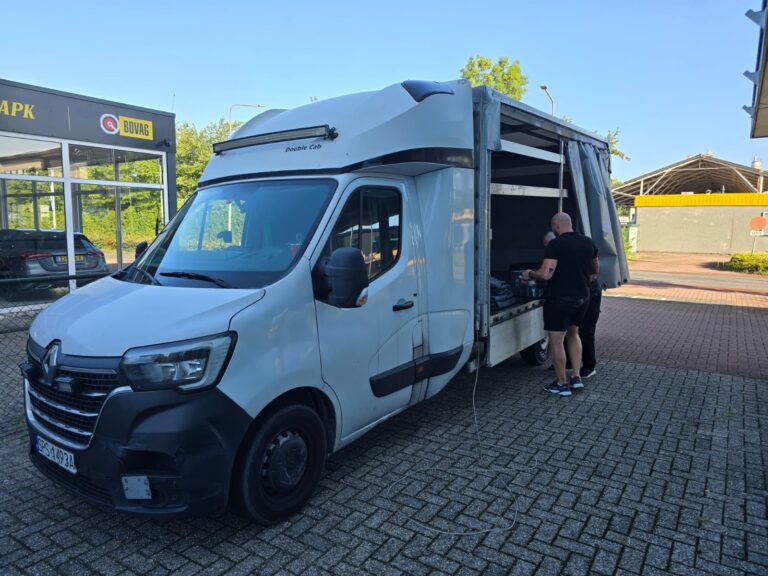
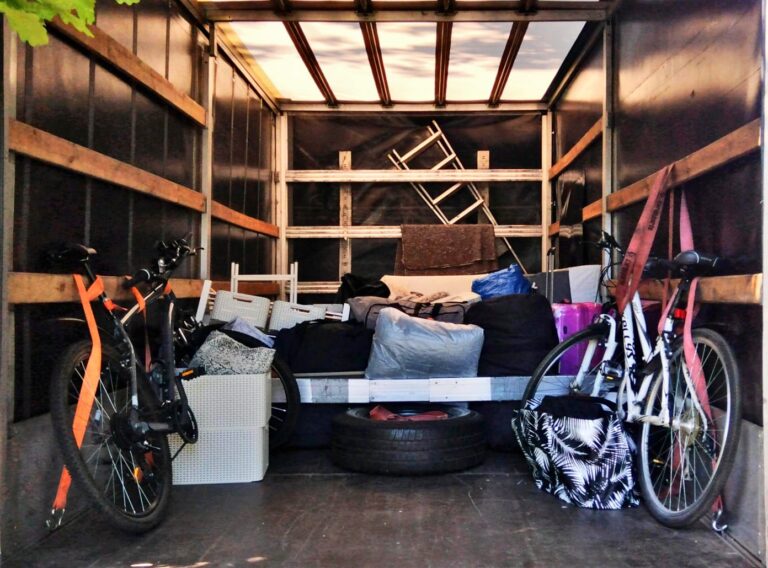
That does not mean the move has to feel overwhelming. With the right plan, the right documents and a reliable transport partner, most moving to Switzerland challenges can be handled with confidence. VANonsite supports European relocations with secure transport, fast coordination, flexible vehicle sizes and GPS tracking for every load. Whether you need a compact man and van move, a full home relocation, furniture removals or business transport, professional removals to Switzerland can make the journey feel safer, clearer and far less stressful.
TL:DR
- The main challenges of moving to Switzerland are customs paperwork, residence permits, local registration, housing competition, high upfront costs, language differences and precise transport planning.
- Switzerland is not in the EU, so household goods should be prepared for customs with a clear inventory, supporting documents and the right forms where required.
- New residents generally need to register with their new commune soon after arrival, so passports, rental documents, permits and customs papers should stay with you, not inside the moving load.
- The first 30 to 60 days can be expensive because rental deposits, temporary accommodation, health insurance, transport, furniture and utilities can arrive at once.
- VANonsite offers vehicle options from 1 m3 to 90 m3, which helps customers choose the right capacity instead of paying for wasted space or risking a second trip.
- A GPS tracked man and van service gives valuable peace of mind during international removals, especially when personal belongings, furniture or office equipment are crossing borders.
- The easiest way to reduce the challenges of moving to Switzerland is to prepare documents early, pack properly, confirm access at both addresses and use an experienced removals provider.




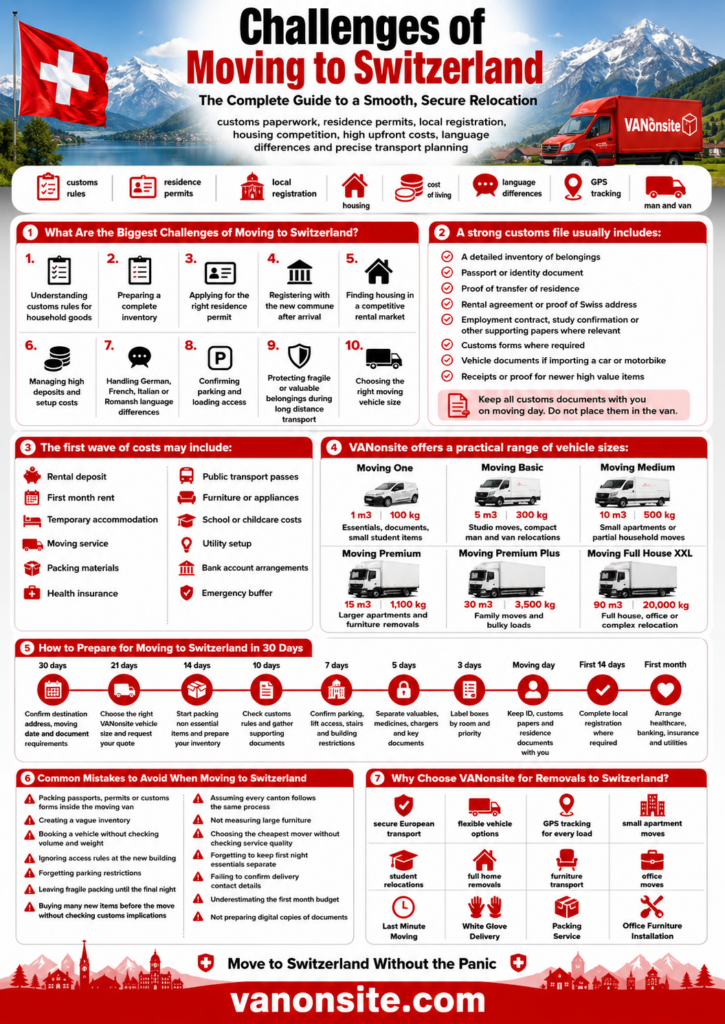
What Are the Biggest Challenges of Moving to Switzerland?
The biggest challenges of moving to Switzerland are not only about distance. They are about precision. A move to Switzerland can involve customs clearance, residence rules, commune registration, high rental costs, strict apartment access and careful vehicle planning. Even a small mistake, such as packing your documents inside a sealed box, can cause unnecessary stress.
Most people face 10 common issues:
- Understanding customs rules for household goods
- Preparing a complete inventory
- Applying for the right residence permit
- Registering with the new commune after arrival
- Finding housing in a competitive rental market
- Managing high deposits and setup costs
- Handling German, French, Italian or Romansh language differences
- Confirming parking and loading access
- Protecting fragile or valuable belongings during long distance transport
- Choosing the right moving vehicle size
These challenges of moving to Switzerland are manageable when they are treated as a sequence. First, check official requirements. Then organise documents. Next, prepare packing and inventory. Finally, book a transport service that understands cross border removals.
Switzerland is not a country where “we will figure it out on the day” is a good strategy. A better approach is simple: prepare once, move once, arrive with control.
Why Moving to Switzerland Is Different from a Standard European Move
At first glance, Switzerland may look like a straightforward European relocation. It shares borders with Germany, France, Italy, Austria and Liechtenstein. Many moves from nearby countries can be completed by road. The distances may be manageable, especially compared with overseas relocations.
Yet the challenges of moving to Switzerland are different because Switzerland has its own customs system, its own administrative structure and strong local rules. It is not an EU member state. Cantons and communes can also shape many everyday procedures, which means local details matter.
A move to Switzerland may involve:
- Customs documentation for household goods
- Proof that you are transferring residence
- Residence or work permit requirements
- Local commune registration
- Rental paperwork and housing deposits
- Vehicle access planning
- Strict building rules
- Parking restrictions
- Fragile item protection
- Possible storage needs
- Delivery timing around work, school or lease dates
This is why a professional man and van service can be more than convenient. It can be the difference between a move that feels improvised and a move that feels controlled. VANonsite combines European transport experience with practical flexibility, offering different vehicle sizes, secure handling and GPS tracking for every load.
When your belongings are crossing borders, visibility matters. You do not want to wonder where your furniture, documents, work equipment or personal memories are. You want clear movement, careful handling and a service that understands the road ahead.
Challenge 1: Swiss Customs Rules Need Careful Preparation
Customs is one of the most important challenges of moving to Switzerland. Many people assume that moving within Europe means loading the van and driving straight to the new address. With Switzerland, that assumption can create problems.
When importing household goods, you should prepare a detailed list of items and check the official requirements before the move. Swiss customs provides guidance on moving household effects, including conditions for importing personal belongings as removal goods. The official procedure also refers to form 18.44 for household effects, which may be required during customs clearance.
A strong customs file usually includes:
- A detailed inventory of belongings
- Passport or identity document
- Proof of transfer of residence
- Rental agreement or proof of Swiss address
- Employment contract, study confirmation or other supporting papers where relevant
- Customs forms where required
- Vehicle documents if importing a car or motorbike
- Receipts or proof for newer high value items
The inventory is especially important. It should be clear, organised and practical. Instead of writing “boxes”, divide items into categories such as kitchenware, clothing, books, electronics, office equipment, furniture and personal items. If you have high value belongings, list them more carefully.
A smart inventory reduces stress at the border. It shows that the move is genuine, prepared and transparent.
Keep all customs documents with you on moving day. Do not place them in the van. A driver may be ready, the route may be perfect and the delivery address may be confirmed, but if the right papers are buried beneath boxes, the whole process can slow down.
VANonsite helps make the transport side smoother by keeping loads secure, organised and GPS tracked. That gives customers a stronger sense of control during one of the most sensitive stages of the move.
Challenge 2: Residence Permits and Local Registration Can Be Time Sensitive
Residence rules are another major part of the challenges of moving to Switzerland. The exact process depends on your nationality, reason for moving, work status, study plans, family situation and expected length of stay.
Official Swiss information on residence permits explains the different permit related procedures. EU and EFTA citizens should also check the State Secretariat for Migration page on living and working in Switzerland, because the applicable conditions depend on the reason for staying in Switzerland.
For people moving for work, study, family life or long term residence, the safest approach is to check requirements before booking the move. Do not leave permit research until the final week.
You may need:
- Passport or national ID card
- Employment contract
- Rental agreement
- University or school confirmation
- Proof of financial means where relevant
- Family documents if moving with a spouse or children
- Passport photos if requested
- Health insurance documents once arranged
- Previous address confirmation where relevant
After arrival, local registration is also important. Swiss guidance on notification of departure and registration explains that people moving should notify the commune of departure and register with the new commune. In general, registration with the new commune is expected within 14 days of the move.
This makes document organisation essential. Create an arrival folder with originals, copies and digital scans. Keep it close during travel. If you are moving as a family, prepare one section for each person.
A relocation can feel chaotic when papers are scattered. It feels sharper and calmer when every document has a place.
Challenge 3: The Cost of Living Can Be a Shock
One of the most emotional challenges of moving to Switzerland is the cost. Switzerland offers excellent infrastructure, high living standards and strong public services, but the first months can feel expensive. Even people with good salaries can be surprised by the upfront pressure.
The first wave of costs may include:
- Rental deposit
- First month rent
- Temporary accommodation
- Moving service
- Packing materials
- Health insurance
- Public transport passes
- Furniture or appliances
- School or childcare costs
- Utility setup
- Bank account arrangements
- Emergency buffer
Many newcomers underestimate the first 30 to 60 days. They budget for transport and rent, but forget the smaller expenses that arrive together. A new SIM card, cleaning products, winter clothing, deposits, food, travel, registration appointments and basic furniture can quickly build a heavy total.
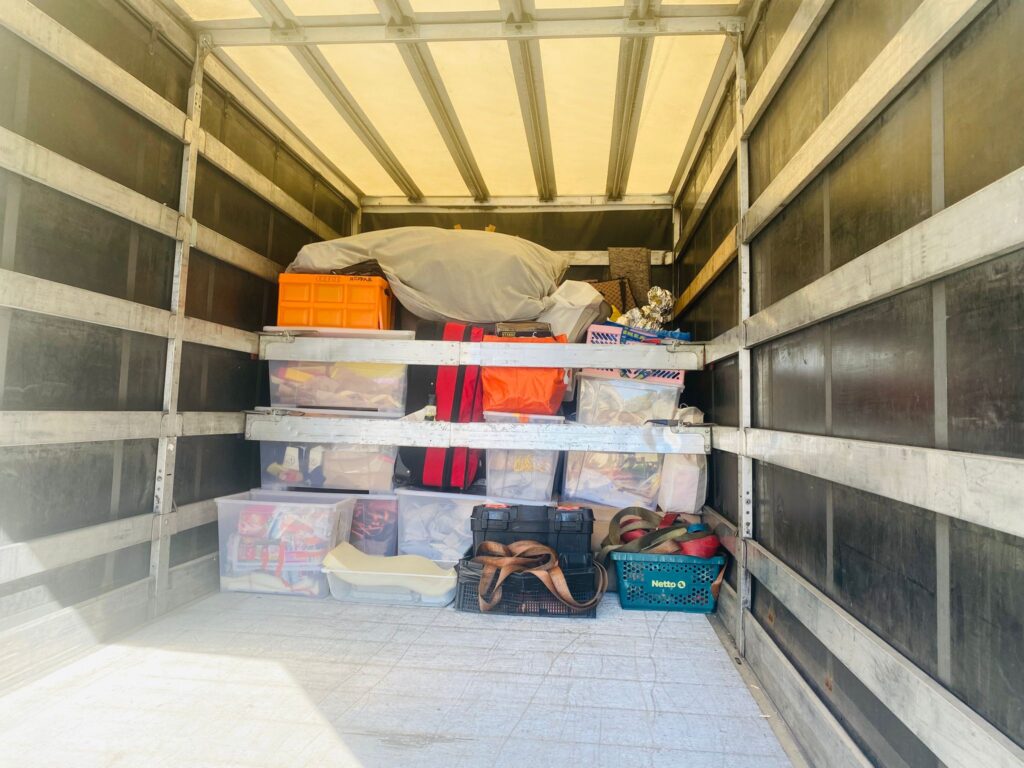
Transport planning can protect part of that budget. Choosing the right vehicle size matters because paying for too much space is wasteful, while booking too little space can mean delays or a second trip.
VANonsite offers a practical range of vehicle sizes:
| VANonsite option | Capacity | Weight limit | Best for |
|---|---|---|---|
| Moving One | 1 m3 | 100 kg | Essentials, documents, small student items |
| Moving Basic | 5 m3 | 300 kg | Studio moves, compact man and van relocations |
| Moving Medium | 10 m3 | 500 kg | Small apartments or partial household moves |
| Moving Premium | 15 m3 | 1,100 kg | Larger apartments and furniture removals |
| Moving Premium Plus | 30 m3 | 3,500 kg | Family moves and bulky loads |
| Moving Full House XXL | 90 m3 | 20,000 kg | Full house, office or complex relocation |
This range allows customers to match the service to the real volume of their move. A student relocating with boxes and essentials may not need a large truck. A family moving beds, wardrobes, office furniture and appliances will need more capacity.
The right fit makes the move feel efficient, not bloated.
Challenge 4: Finding Housing Can Be Competitive
Housing is one of the toughest moving to Switzerland challenges, especially in popular cities such as Zurich, Geneva, Basel, Lausanne, Bern and Zug. Demand can be high, and good apartments may attract many applicants quickly.
This affects the moving process in several ways. You may need temporary accommodation before signing a long term lease. You may need to move into a smaller apartment than expected. You may also have to accept strict building rules, narrow access or limited delivery slots.
Before signing a lease, ask practical questions:
- Is there a lift?
- How wide are the stairs?
- Can a removal van park outside?
- Is the street narrow or restricted?
- Are weekend moves allowed?
- Are there quiet hours?
- Does the building require protective coverings?
- Is there a loading bay?
- Can large furniture fit through the entrance?
- Are there access codes or concierge rules?
These questions may feel boring during an apartment search, but they can save a moving day. A beautiful apartment becomes stressful if the sofa cannot pass the stairwell or the van cannot stop near the entrance.
For bulky items, VANonsite Furniture Removals can help protect pieces during loading, transport and delivery. For full relocations, Home Removals can give the move a more complete structure.
If the property has strict access, a man and van service can be useful for smaller loads because it may be more flexible in tight urban spaces. The goal is not just to arrive in Switzerland. The goal is to get your belongings into the home safely.
Challenge 5: Language and Canton Differences Can Slow Things Down
Switzerland has four national languages: German, French, Italian and Romansh. In practice, the language you need depends on the canton and commune. Zurich will not feel like Geneva. Geneva will not feel like Lugano. Local forms, rental documents, school information and administrative letters may arrive in a language you do not speak well.
This is one of the quieter challenges of moving to Switzerland. It does not always look serious at first, but it can create delays. A misunderstood email can affect a viewing, delivery time, commune appointment or parking instruction.
Before moving day, prepare key details in writing:
- Full pickup address
- Full delivery address
- Contact person at both addresses
- Phone numbers with country codes
- Floor number
- Lift details
- Staircase restrictions
- Parking instructions
- Access codes
- Preferred delivery window
- Emergency contact
- Any local language notes
Send these details to the moving team before the move. Clarity saves time and prevents rushed decisions.
If your destination commune communicates in a language you do not know, consider preparing translated copies of essential documents or asking for local support. Switzerland is highly organised, but it expects you to follow local processes carefully.
Challenge 6: Transport Logistics Require Precision
Switzerland is a country of mountains, border crossings, clean city centres and strict local order. Transport logistics can therefore become one of the most practical challenges of moving to Switzerland.
A move may involve:
- Long distance European driving
- Border timing
- Customs offices
- City access restrictions
- Parking limitations
- Narrow streets
- Weather changes
- Mountain routes
- Building delivery rules
- Coordinated loading and unloading
A professional man and van move to Switzerland is not just about driving from A to B. It is about timing, protection and communication. The driver needs the right information. The customer needs confidence. The belongings need to be loaded safely and delivered without drama.
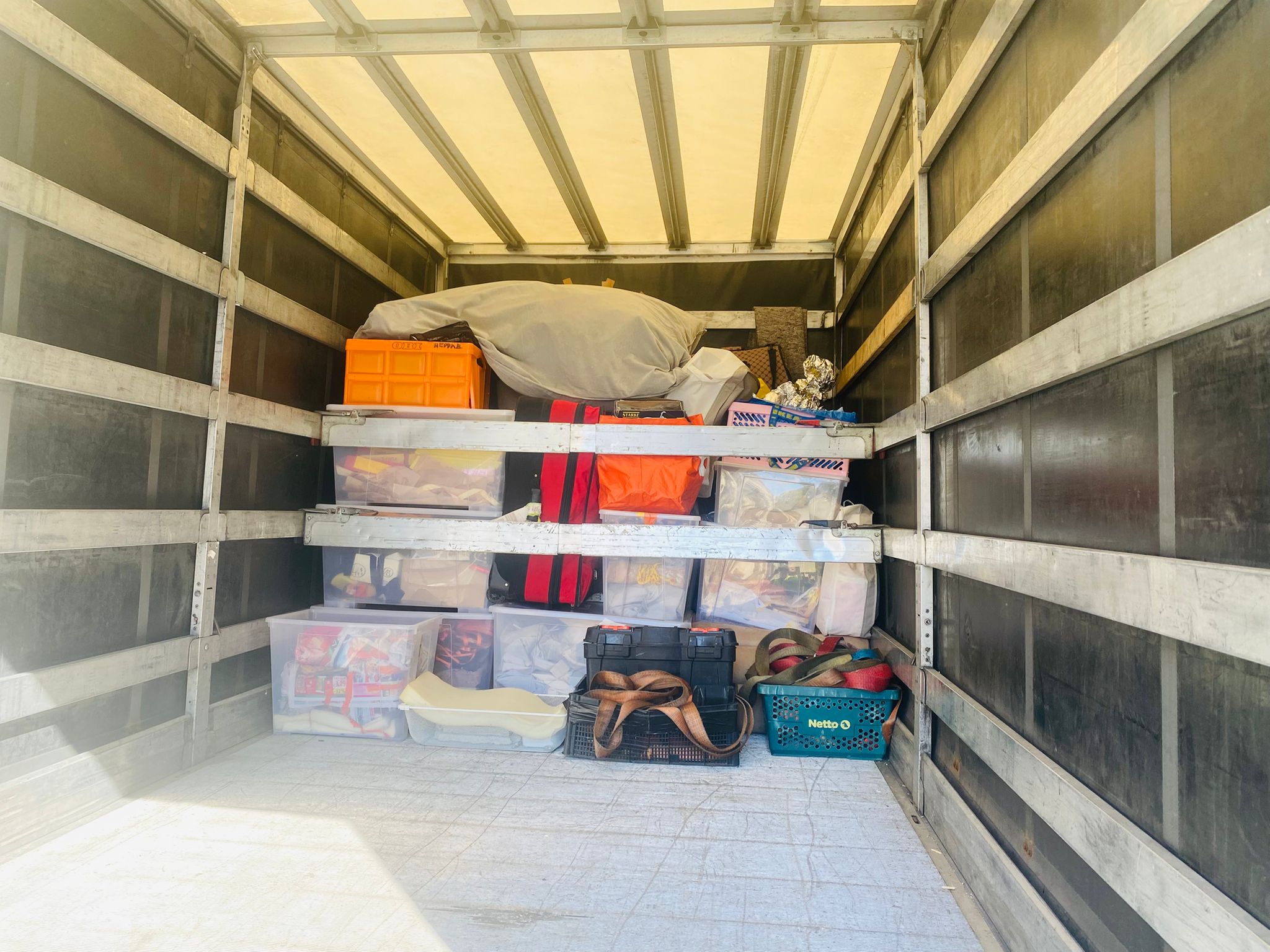
VANonsite offers GPS tracking for every load, which is a powerful advantage during international removals. Instead of wondering where the van is, customers can follow the journey. That visibility reduces anxiety, especially when the load contains personal memories, valuable furniture, business equipment or essential student belongings.
Transport is the heartbeat of the relocation. When it is steady, the whole move feels calmer.
Challenge 7: Packing Standards Must Be Higher for International Moves
Packing for an international move is different from packing for a local move. The distance is longer. The handling is more serious. The load may face vibration, weather changes, customs timing and tighter stacking. Weak boxes and loose wrapping can quickly become expensive mistakes.
This is one of the challenges of moving to Switzerland that people often notice too late. On the final night, everything suddenly looks fragile. Glassware, mirrors, screens, lamps, frames, office equipment and kitchen items all need proper protection.
Items that deserve special care include:
- Mirrors
- Glass tables
- Artwork
- Monitors
- Televisions
- Computers
- Lamps
- Musical instruments
- Designer chairs
- Kitchenware
- Fragile decorations
- Heirlooms
- Important files
- Office electronics
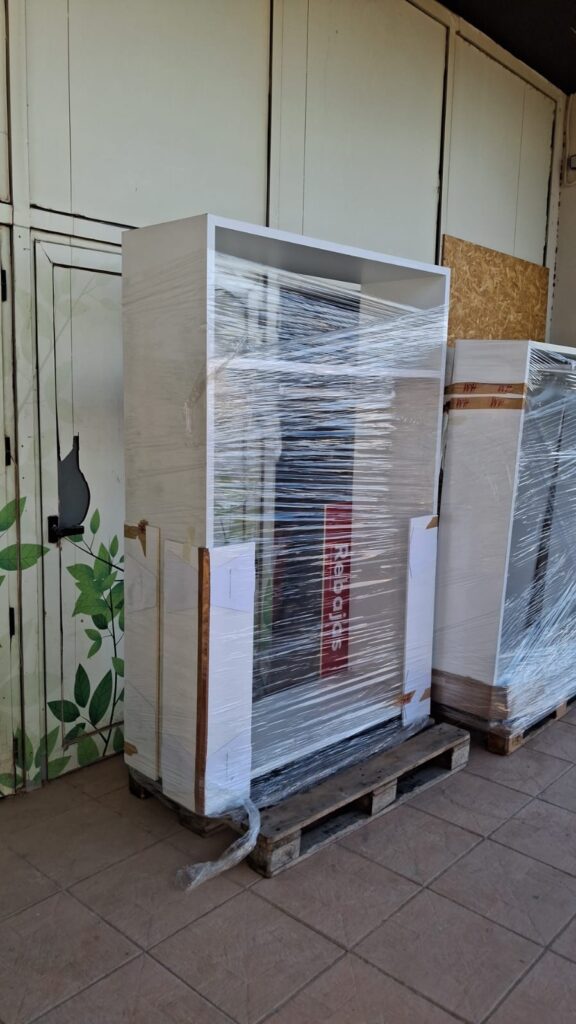
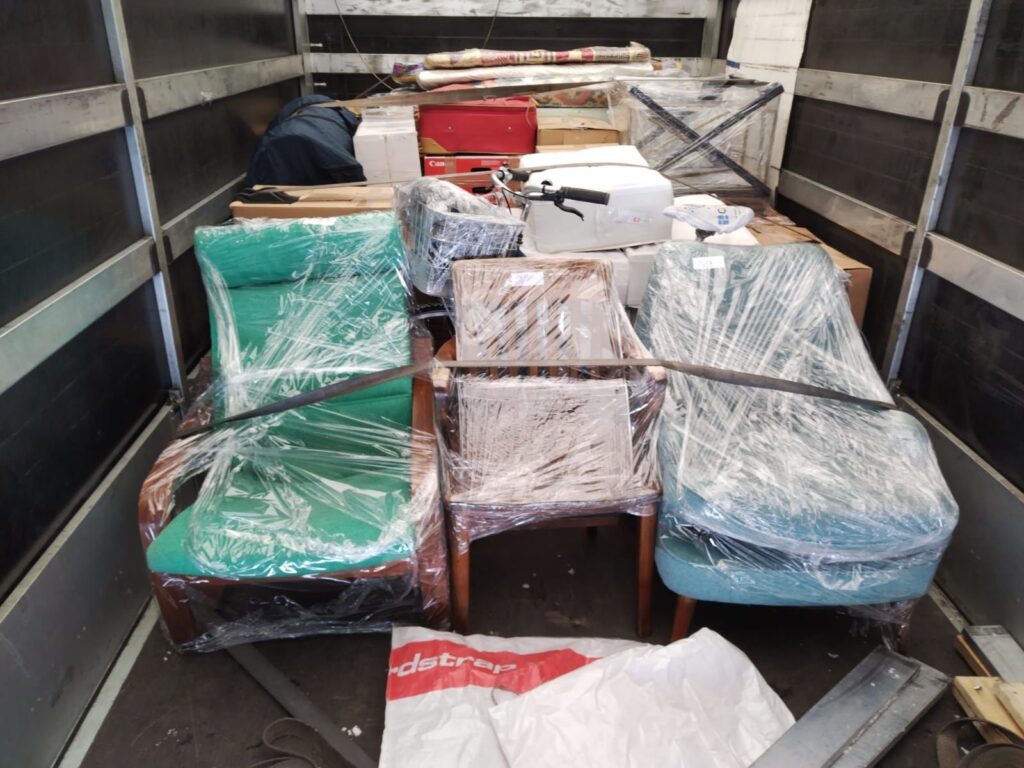
VANonsite Packing Service can help customers protect fragile and valuable items before long distance transport. Professional packing is not only about neat boxes. It is about shock absorption, labelling, stacking logic and peace of mind.
Good packing also makes unloading faster. When each box is labelled by room and priority, the new home becomes easier to organise. Instead of digging through 20 identical boxes for a kettle, you know where the essentials are.
A cheap box can ruin an expensive item. Strong packing is quiet protection.


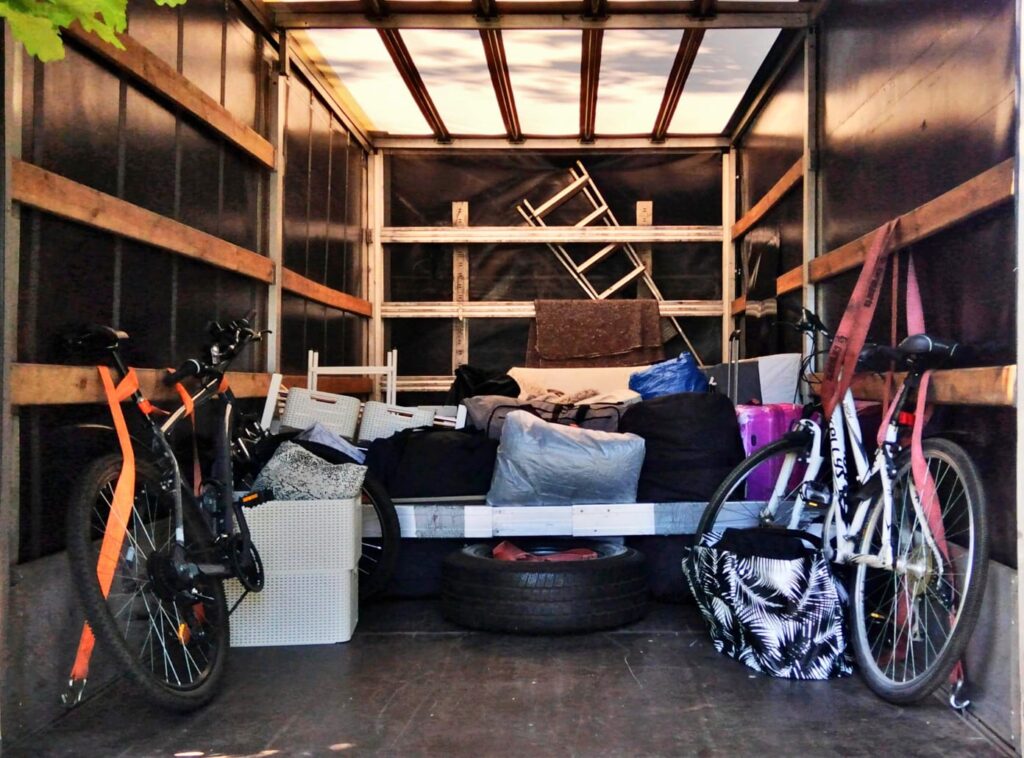
Challenge 8: Furniture Removals Can Be Tricky in Swiss Buildings
Furniture removals are another common source of stress. Swiss apartments can be elegant and efficient, but older buildings, narrow staircases and strict shared spaces can make delivery difficult.
The challenges of moving to Switzerland become more physical when large furniture is involved. A wardrobe may need dismantling. A sofa may need careful angling through a tight entrance. A glass table may require extra protection. Designer furniture may need premium handling.
| Furniture challenge | Risk | Better solution |
|---|---|---|
| Narrow staircase | Scratches, delays or failed delivery | Measure access before moving day |
| Heavy wardrobe | Wall damage or injury | Use trained movers |
| Glass furniture | Cracks or chips | Add specialist protection |
| Designer pieces | High replacement cost | Choose premium handling |
| Large sofa | Entrance problems | Check doorways and turns |
| Office desks | Lost working time | Plan dismantling and setup |
For valuable or delicate pieces, White Glove Delivery can provide a higher level of care. It is a smart option for premium furniture, fragile items, artwork or pieces with strong emotional value.
Furniture is not just material. It is the shape of home. When it arrives safely, the new place starts feeling familiar faster.
Challenge 9: Office Moves Need More Than Transport
For businesses, the challenges of moving to Switzerland are tied to continuity. A delayed home move is stressful. A delayed office move can affect work, clients, staff and revenue.
An office relocation may include:
- Desks
- Chairs
- Monitors
- Computers
- Meeting room furniture
- Filing cabinets
- Printers
- IT equipment
- Reception items
- Storage units
- Cables and accessories
- Sensitive documents
The order of delivery matters. The labelling system matters. The installation plan matters. If the first working day in Switzerland begins with missing chairs and tangled cables, the relocation has not been properly planned.
VANonsite Office Removals can support business customers who need secure and structured transport. When furniture needs to be assembled or positioned correctly, Office Furniture Installation can reduce downtime and help teams settle faster.
A business move should feel like turning a key, not searching through chaos.
Challenge 10: Students Need Flexibility and Budget Control
Students face their own version of the challenges of moving to Switzerland. The load may be smaller, but the pressure can be intense. University dates, shared accommodation, budget limits and international travel plans often leave very little room for error.
A student move may include:
- Clothes
- Books
- Laptop and electronics
- Bedding
- Small furniture
- Kitchen items
- Study materials
- Personal documents
- Sports equipment
- Musical instruments
A compact man and van option can be ideal for this kind of relocation. VANonsite Student Removals can help students move without paying for a vehicle that is far too large for their belongings.
Depending on the volume, Moving One at 1 m3 or Moving Basic at 5 m3 may be suitable. This gives students a practical way to move essentials while keeping costs under control.
Student moves also need smart packing. Documents, laptop, chargers, medication, bank cards, keys and university papers should travel with the student, not inside the main load.
Challenge 11: Healthcare, Banking and Insurance Add More Admin
The move does not finish when the boxes arrive. After delivery, new residents still need to deal with healthcare, banking, insurance, phone contracts, utilities, school matters and local appointments.
This stage is one of the most draining challenges of moving to Switzerland because people are already tired. The physical move is complete, but the administrative move continues.
Before you leave, prepare a digital folder with:
- Passport or ID scans
- Rental contract
- Employment contract
- Study confirmation
- Birth certificates where relevant
- Marriage documents where relevant
- Health documents
- Insurance papers
- Customs inventory
- Vehicle documents
- Important phone numbers
- Emergency contacts
Also keep paper copies in your arrival folder. A phone battery can die. A printed document can save the day.
Once in Switzerland, prioritise the essentials first: registration, health insurance, banking, transport, utilities and communication. Everything feels easier when your basic systems are working.
Challenge 12: Moving With a Vehicle Needs Separate Planning
Some people relocate to Switzerland with a car or motorbike. This can be useful for families, rural living or frequent travel, but it adds another layer of administration.
Swiss customs guidance on household effects includes information about vehicles, and official Swiss information also explains vehicle registration. The important point is simple: do not assume your car follows the same process as your boxes.
Vehicle related planning may include:
- Customs requirements
- Proof of ownership
- Registration documents
- Insurance
- Technical requirements
- Canton procedures
- Number plates
- Timelines after arrival
If you are moving both household goods and a vehicle, check requirements early. A car can be a valuable part of your new life, but only if the paperwork is handled properly.
Challenge 13: Last Minute Moving Can Increase Pressure
Sometimes a move to Switzerland happens quickly. A job offer arrives. A lease begins. A family situation changes. A university place is confirmed. Suddenly, the timeline is no longer comfortable.
Last minute relocation is one of the sharper challenges of moving to Switzerland because every decision is compressed. You still need documents, customs preparation, packing, transport, access details and delivery coordination. You simply have less time to do it.
VANonsite offers Last Minute Moving support for customers who need fast, secure transport. A short timeline does not have to mean careless planning. The key is to focus on essentials:
- Confirm what must be moved
- Choose the correct vehicle size
- Prepare documents immediately
- Create a basic inventory
- Pack fragile items properly
- Keep personal papers with you
- Share exact access details
- Use GPS tracked transport
Speed is valuable only when it is controlled. A rushed move can still be safe when the plan is clear and the transport team is reliable.
How to Prepare for Moving to Switzerland in 30 Days
A timeline can turn the challenges of moving to Switzerland into manageable steps. Even if you have less than 30 days, the structure below helps you prioritise.
| Time before move | What to do |
|---|---|
| 30 days | Confirm destination address, moving date and document requirements |
| 21 days | Choose the right VANonsite vehicle size and request your quote |
| 14 days | Start packing non essential items and prepare your inventory |
| 10 days | Check customs rules and gather supporting documents |
| 7 days | Confirm parking, lift access, stairs and building restrictions |
| 5 days | Separate valuables, medicines, chargers and key documents |
| 3 days | Label boxes by room and priority |
| Moving day | Keep ID, customs papers and residence documents with you |
| First 14 days | Complete local registration where required |
| First month | Arrange healthcare, banking, insurance and utilities |
This timeline works because it separates urgent tasks from emotional noise. Instead of carrying the whole move in your head, you give every task a place.
Common Mistakes to Avoid When Moving to Switzerland
Many relocation problems are predictable. That means they can be prevented.
Avoid these common mistakes:
- Packing passports, permits or customs forms inside the moving van
- Creating a vague inventory
- Booking a vehicle without checking volume and weight
- Ignoring access rules at the new building
- Forgetting parking restrictions
- Leaving fragile packing until the final night
- Buying many new items before the move without checking customs implications
- Assuming every canton follows the same process
- Not measuring large furniture
- Choosing the cheapest mover without checking service quality
- Forgetting to keep first night essentials separate
- Failing to confirm delivery contact details
- Underestimating the first month budget
- Not preparing digital copies of documents
The cheapest decision can become expensive when it causes delays, damage or confusion. A Swiss move deserves preparation, not panic.
Why Choose VANonsite for Removals to Switzerland?
The biggest challenges of moving to Switzerland often come from uncertainty. Where is the van? Will customs go smoothly? Is the load safe? Did we book the right size? Can everything arrive on time?
VANonsite helps reduce that uncertainty with secure European transport, flexible vehicle options and GPS tracking for every load. Customers can choose from compact man and van solutions, larger home removals, office removals, packing support, furniture removals, storage options, student removals and premium delivery services.
VANonsite is a strong choice for:
- Small apartment moves
- Student relocations
- Full home removals
- Furniture transport
- Office moves
- Last minute moving
- White glove delivery
- Packing support
- Large European relocations
- Secure tracked transport
The company offers vehicle sizes from 1 m3 to 90 m3, with weight limits from 100 kg to 20,000 kg. That flexibility matters because every relocation is different. A single professional moving for work does not need the same vehicle as a family relocating a full home. A student does not need the same service as a business moving office furniture.
VANonsite treats removals as more than transport. A move carries your daily life, your routines, your memories and your next chapter. That deserves care.
Final Checklist Before Moving to Switzerland
Before moving day, complete this checklist:
- Check residence and permit requirements.
- Review official Swiss customs guidance.
- Prepare a detailed inventory.
- Keep passports and key documents with you.
- Confirm your Swiss address.
- Choose the right VANonsite vehicle size.
- Book packing help for fragile items if needed.
- Label boxes clearly.
- Measure large furniture.
- Confirm parking and building access.
- Prepare first night essentials.
- Share contact details with the moving team.
- Track your load during transport.
- Register locally after arrival where required.
- Arrange healthcare, insurance, banking and utilities.
A successful move to Switzerland is not about luck. It is about removing surprises one by one.
FAQ: Challenges of Moving to Switzerland
What is the hardest part of moving to Switzerland?
The hardest part is usually managing customs, residence requirements, housing pressure and high upfront costs at the same time. Transport also becomes stressful when access, packing and vehicle size are not planned early.
Do I need customs documents when moving household goods to Switzerland?
Yes, you should check Swiss customs requirements and prepare a detailed inventory when moving household goods to Switzerland. Official guidance from the Swiss Federal Office for Customs and Border Security explains the process for importing household effects.
Can I use a man and van service for moving to Switzerland?
Yes. A man and van service can be a smart option for smaller moves, student relocations, partial loads and urgent transport. VANonsite offers several vehicle sizes, so the service can be matched to your belongings.
How much van space do I need for removals to Switzerland?
It depends on your load. VANonsite offers options from Moving One at 1 m3 and 100 kg to Moving Full House XXL at 90 m3 and 20,000 kg. Smaller moves may suit a compact man and van option, while families or offices may need larger transport.
Is Switzerland difficult to move to?
Switzerland is not impossible to move to, but it requires preparation. The main challenges include customs, permits, registration, housing, language differences, cost and careful transport planning.
Why is GPS tracking useful during removals to Switzerland?
GPS tracking gives customers visibility during the journey. Instead of wondering where the load is, you can follow the transport and feel more in control. This is especially useful for long distance European removals.
What should I keep with me during the move?
Keep your passport, ID, permit documents, rental contract, customs inventory, medication, chargers, keys, bank cards, laptop and first night essentials with you. Do not pack these items inside the main moving load.
What is the best way to reduce stress when moving to Switzerland?
Start early, prepare documents, create an inventory, choose the right vehicle size and use a reliable removals provider. Professional packing, GPS tracking and clear access planning can remove many of the most stressful moments.
Move to Switzerland Without the Panic
The challenges of moving to Switzerland are real. Customs rules can feel strict. Housing can be competitive. Costs can sting. Documents can pile up. Delivery access can be more complicated than expected.
Yet none of this has to overshadow the excitement of starting a new life.
With clear documents, careful packing, the right vehicle and GPS tracked transport, your relocation becomes lighter and more predictable. VANonsite helps customers move across Europe with secure handling, flexible service options and the kind of visibility that makes a long distance move feel calmer.
From a compact man and van relocation to a full house or office move, VANonsite can support your journey with speed, care and confidence.
Plan your removals to Switzerland with VANonsite and move from the first box to the final delivery with clarity, security and peace of mind.