
The cost of living in Switzerland for expats cannot be reduced to one honest national total. Housing is address-specific, health-insurance premiums depend on the person and premium region, and tax changes by canton and commune. A useful 2026 budget therefore starts with the exact household, job location and intended address—not a copied “average expat” basket.
This guide shows how to calculate the recurring monthly budget after you have settled. It deliberately keeps deposits, temporary accommodation, initial purchases and the physical removal separate. Those belong in our guide to first-month costs when moving to Switzerland.
Cost of living in Switzerland for expats: the short answer
Most households should build the answer from seven recurring lines: net housing, compulsory health insurance, food, transport, utilities and communications, childcare or education where relevant, and personal spending. Calculate tax and payroll deductions before deciding how much income is genuinely available. Then add a reserve instead of treating every remaining franc as disposable.
| Budget line | Use this source | Avoid this shortcut |
|---|---|---|
| Housing | Signed lease or three comparable current listings | A national rent average |
| Health insurance | Official premium comparison for each person | Multiplying one adult average by the family |
| Tax and payroll | Employer calculation and official tax calculator | Comparing gross salaries |
| Transport | The actual commute and current fare product | A generic “monthly transport” number |
| Food and services | Your normal basket priced on the same date | A tourist or restaurant-heavy basket |
| Childcare | Offers and subsidy rules for the home commune | A countrywide estimate |
Calculate your recurring Swiss budget
Start with monthly net income in Swiss francs. Subtract costs that cannot be postponed: rent and contract charges, insurance, childcare, debt and the commute required for work. Then add food, communications, personal spending and savings. Keep annual bills in the calculation by dividing them into a monthly provision. This avoids a budget that looks comfortable until an annual travelcard, insurance excess or tax payment arrives.
| Monthly worksheet | Your verified amount | Source and date |
|---|---|---|
| Net household income | CHF ____ | Employer/payroll calculation |
| Rent and recurring property charges | CHF ____ | Lease |
| Basic health insurance | CHF ____ | Quotes for every household member |
| Food and household supplies | CHF ____ | Your live basket |
| Required commute | CHF ____ | Current route and fare product |
| Utilities, internet and mobile | CHF ____ | Contracts/offers |
| Childcare or education | CHF ____ | Provider and commune |
| Personal spending and subscriptions | CHF ____ | Recent statements |
| Monthly reserve and savings | CHF ____ | Household decision |
Run three versions: a committed budget using signed amounts, a likely budget using current offers, and a stress case for higher housing, insurance or childcare. A move is financially robust when the stress case still leaves a workable margin.

Housing: compare an address, not a city reputation
Housing usually dominates the recurring budget, but “Zurich rent” or “Geneva rent” is still too broad. Compare properties with the same room count, usable area, furnishing, condition, lease type, transport connection and included charges. A lower rent can be poor value if it creates an expensive commute or requires a car.
The official City of Zurich rent tool reports medians, quantiles and confidence intervals by defined housing groups. That methodology is useful beyond Zurich: a median is a reference point, not a quote, and uncertainty grows when the geographic or property segment becomes smaller. For a decision, use the signed lease or comparable live listings near the actual workplace.
- Confirm which utilities and building charges are included.
- Price the door-to-door commute at the days per week actually required.
- Check whether a parking space is compulsory or separately rented.
- Separate the refundable deposit from normal monthly rent.
- Budget any unavoidable overlap with the previous home on the first-month page, not here.
Health insurance is a visible household bill
Basic health insurance is generally compulsory for people settling in Switzerland and is paid as a separate premium. The Federal Office of Public Health states that the average premium in 2026 is CHF 393.30 per month; its published adult average is CHF 465.30. These are national averages, not quotations. Premiums vary by age, canton or premium region, insurer, model and deductible.
Use the current FOPH 2026 premiums guidance and the official comparison tools it links to. Calculate every family member separately. Then add a reserve for the selected deductible and cost sharing; choosing a high deductible only to make the monthly premium look smaller can leave the cash-flow plan exposed.
Gross salary is not the spending budget
Compare employment offers on monthly net cash, not headline annual salary. Ask for a written breakdown of salary, bonus conditions, pension and payroll deductions, relocation support and any benefits that replace household spending. If the offer is in another currency, use one dated exchange-rate assumption for both income and costs.
Swiss tax includes federal, cantonal and municipal components, so the intended address affects the result. The Federal Tax Administration provides an official tax calculator and cantonal comparison. Use it for scenarios, then obtain professional advice when residence status, self-employment, investments, pensions or cross-border work make the situation complex.
After tax and payroll deductions, subtract the essential budget and calculate both the amount and percentage left for savings. A higher salary can still produce a weaker result if housing, childcare and commuting consume the increase.
Transport: price the real commute
Do not assume that every expat needs a car or that one national travelcard is automatically economical. Enter the home and workplace into a timetable, count required journeys and compare local, point-to-point, modular, Half Fare and GA options. Include walking time and the reliability of connections, not only the ticket price.
SBB’s current travelcard comparison explains which products fit local, regional and national use. It notes that some travelcards can become worthwhile from roughly two commuting days a week, depending on distance and fare networks. Treat that as a prompt to calculate your route, not as a guarantee.
If a car is essential, budget the whole system: purchase or lease, parking at home and work, insurance, fuel or charging, maintenance, tyres, registration and depreciation. Comparing a train pass with fuel alone understates the car.
Food, utilities and services: build one live basket
Price the products and services your household actually uses. A useful food basket contains the same quantities, brands or quality levels and dietary needs. Add cleaning products and personal care rather than calling the total “groceries”. Record the date, because promotions and seasonal purchases can distort a single shop.
For utilities, read the lease first. Heating, water or building charges may be included, billed as advances or settled separately. Price electricity, internet and mobile services from offers available at the address. Keep streaming, cloud storage, software and gym memberships in a separate subscriptions line so small recurring charges remain visible.
Restaurants, coffee, sports and weekend travel belong in the budget, but they should not be mixed into essential food or transport. Separating them makes the plan adjustable without pretending that normal social life costs nothing.
Families: childcare can change the decision
A family budget cannot be produced by multiplying a single-person total. Children can change housing size, health-insurance premiums, childcare, school choices, transport and work patterns. Ask providers for current offers and check subsidy rules with the authority responsible for the intended commune. Eligibility and net cost can differ even between nearby addresses.
Compare the household after childcare, not one salary in isolation. A role with higher gross pay may be less attractive if it requires full-time care, a larger city apartment and two long commutes. Employer contributions to relocation, temporary housing, childcare or education should be confirmed in writing before they are entered as savings.
Zurich, Geneva, Basel, Bern or Lausanne?
The strongest city is the one that gives the household the best relationship between net income, housing, commute and required services. Zurich may offer a deep professional market but demands address-level housing research. Geneva’s international employment base must be weighed against the exact housing search and cross-border implications. Basel can suit pharmaceutical and research roles, while Bern may create a different commute and housing balance. Lausanne decisions often depend on the workplace, language and regional transport.
| City comparison | Evidence to collect |
|---|---|
| Net income | Employer payroll scenario and official tax calculation for the address |
| Housing | Three suitable live properties with all recurring charges |
| Commute | Door-to-door time, days per week and current fare product |
| Family services | Availability, offers and applicable local support |
| Language and routine | Workplace, school, healthcare and administrative needs |
| Resilience | Remaining monthly cash under the stress scenario |
Keep relocation costs outside the monthly comparison
A residential deposit, temporary accommodation, travel, customs preparation, removals and essential setup can create a large cash requirement before normal spending begins. Combining those items with recurring costs produces a misleading “average month”. Use the dedicated first-month guide for that liquidity calculation.
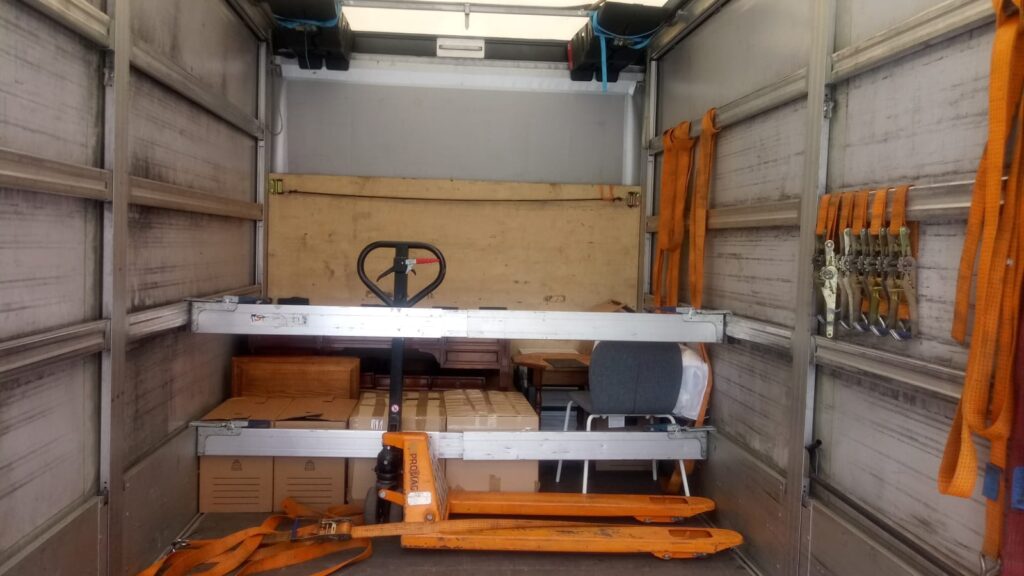
For the physical move, VANonsite calculates from the route and the load rather than an invented national average. Enter the collection and delivery addresses, date and inventory below. The form’s established fields and calculation are unchanged.

For service scope and route planning, see removals to Switzerland. A dedicated or Last-Minute service can sometimes support delivery in 1–3 days, but only when availability, route and crossing, access, documents and the agreed collection slot align.
Annual and irregular costs that monthly averages hide
A monthly budget should include provisions for expenses that do not arrive monthly. Depending on the household, these can include insurance cost sharing, annual travel products, licence or registration payments, school activities, professional subscriptions, travel home, dental care, winter equipment and maintenance. Add only lines that apply, but do not omit a predictable cost because its invoice arrives later.
Currency exposure also matters when savings, debt or family commitments remain in pounds, euros or another currency. Use a dated exchange rate and test a less favourable rate rather than assuming today’s conversion will hold. Keep the original-currency obligation visible alongside its Swiss-franc planning value.
Review the budget after the first full pay cycle and again after three months. Replace offers with real invoices, compare expected and actual food or transport spending, and move genuine annual obligations into a dedicated reserve. This turns the budget from a pre-move estimate into a working household system. Do not use a good first month as proof that every season will cost the same; heating, travel, childcare schedules and insurance usage can change the pattern. Record the reason for every material variance so the next forecast improves instead of merely copying the previous total and makes future decisions more defensible.
Frequently asked questions
How much does an expat need each month in Switzerland?
There is no reliable total without the household and address. Add verified rent, insurance quotes for each person, the real commute, food basket, utilities, childcare and personal spending. Calculate net income and keep an explicit reserve.
What is the biggest recurring cost?
Housing is often the largest line, but childcare or family insurance can materially change the result. Compare complete household scenarios instead of ranking categories in isolation.
Is the 2026 health-insurance average my expected premium?
No. The FOPH average is a national reference. Your premium depends on age, premium region, insurer, model and deductible. Obtain a quotation for every household member and budget potential cost sharing.
Should the removal be included in monthly living costs?
No. It is a one-off relocation cost. Keep it in the first-month cash-flow plan and use a route-and-volume estimate rather than spreading an arbitrary moving average across the normal budget.
Build the budget before choosing the address
A strong Swiss budget is traceable: every important figure has a source, date and owner. Compare addresses using the same household assumptions, calculate net income, separate one-off relocation cash and test a less favourable scenario. That process gives a clearer answer than any national average—and a safer basis for deciding what to move.