
Switzerland citizenship requirements usually include long term legal residence, a C permit, successful integration, language ability and respect for Swiss law. For ordinary naturalisation, many foreign nationals need 10 years of residence before they can apply. However, the journey rarely begins with the citizenship form. It begins much earlier, often with a suitcase, a rental contract, a work opportunity and a careful move across Europe.
Moving to Switzerland is not only a change of address. It is a serious life decision. You are entering a country where order, punctuality, local rules and documentation matter. Your first weeks can shape your confidence for years. That is why your relocation should feel controlled from the beginning.
VANonsite supports people moving to Switzerland with secure European transport, flexible vehicle sizes and GPS tracking for every load. Whether you need a compact man and van move, a full home relocation or careful furniture transport, a calm arrival gives you space to focus on the bigger goal: building a stable life that may one day support your Swiss citizenship application.
TL:DR
- Switzerland citizenship requirements for ordinary naturalisation usually include 10 years of residence and a C permit.
- Applicants must prove successful integration, language ability, familiarity with Swiss life and respect for Swiss law.
- Cantons and communes may set additional rules, so local requirements can differ.
- Before citizenship, you must first move legally, register correctly and keep your residence documents organised.
- When moving to Switzerland, prepare identity documents, permit papers, rental documents, insurance details and an inventory of household goods.
- VANonsite offers secure removals to Switzerland, GPS tracked transport and man and van options for students, families, professionals and offices.
- A well planned relocation can make your first Swiss weeks smoother, safer and far less stressful.
Switzerland Citizenship Requirements: Quick Answer
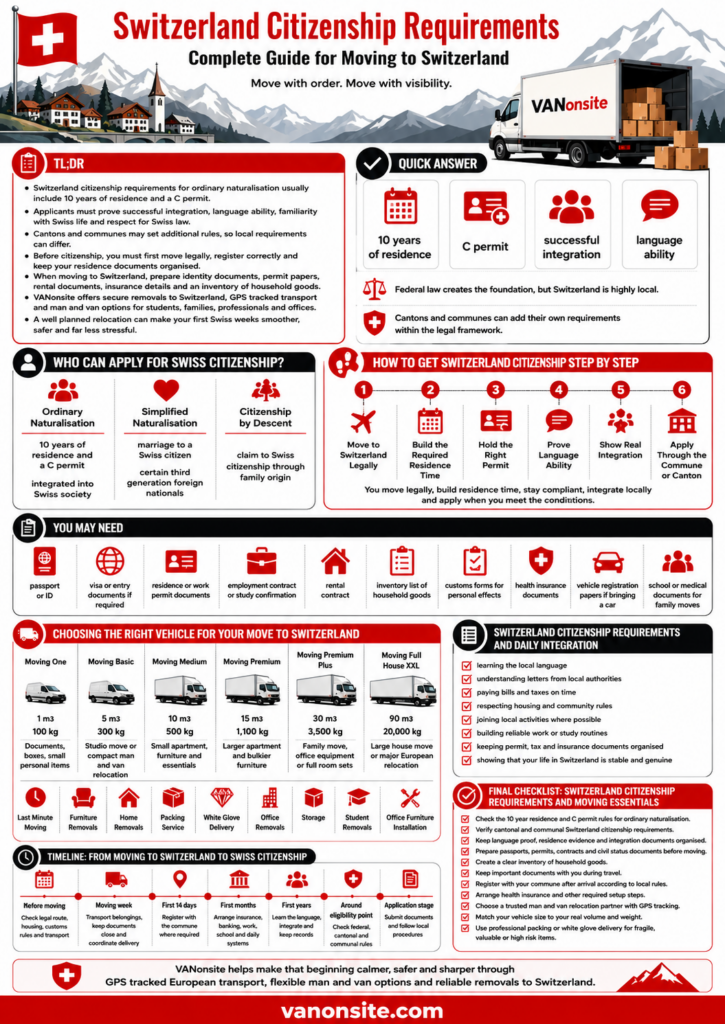
The core Switzerland citizenship requirements are clear, although the full process can be demanding. For ordinary naturalisation, foreign nationals generally need to have lived in Switzerland for 10 years and hold a permanent residence permit, known as a C permit. They must also show that they are integrated, able to communicate in a Swiss national language and familiar with Swiss daily life.
Federal law creates the foundation, but Switzerland is highly local. Cantons and communes can add their own requirements within the legal framework. This means the process may vary depending on where you live. Your application experience in Zurich, Geneva, Basel, Lausanne or a smaller commune may not be identical.
For official guidance, check the Swiss State Secretariat for Migration page on ordinary naturalisation and the ch.ch guide to naturalisation in Switzerland.
If you are still planning your relocation, citizenship may feel far away. Still, the first step matters. Legal residence, accurate registration, tidy paperwork and safe transport can all support a more stable start. VANonsite’s removals to Switzerland service helps make that first step easier, especially when you are moving valuable furniture, work equipment or your entire household.
Who Can Apply for Swiss Citizenship?
Swiss citizenship can be acquired through different routes. The right path depends on your residence history, family situation and legal status. For most people moving to Switzerland from another European country, ordinary naturalisation is the route that matters most.
Ordinary Naturalisation
Ordinary naturalisation is the standard path for many foreign residents. The most important Switzerland citizenship requirements for this route include 10 years of residence and a C permit. Applicants must also show that they are integrated into Swiss society.
Integration is not just a formal word. It can include language skills, respect for public order, financial reliability, knowledge of local customs and participation in everyday Swiss life. In simple terms, Switzerland wants to see that your life is genuinely rooted in the country.
This is why good record keeping matters. From the day you arrive, keep copies of rental contracts, permits, employment documents, tax papers, insurance confirmations and language certificates. During an international relocation, these documents should travel with you, not disappear into an unlabelled moving box.
Simplified Naturalisation
Simplified naturalisation may apply in specific cases, such as marriage to a Swiss citizen or certain third generation foreign nationals. It can be more direct than ordinary naturalisation, but it is not automatic. Applicants still need to meet legal conditions.
If your situation involves marriage, family origin or a special status, check the current rules through the Swiss State Secretariat for Migration before making assumptions.
Citizenship by Descent
Some people may have a claim to Swiss citizenship through family origin. This is separate from the usual route for foreign residents who move to Switzerland and later apply through naturalisation. If you believe this may apply to you, confirm your case with the relevant Swiss authority or Swiss representation abroad.
How to Get Switzerland Citizenship Step by Step
If you are asking how to get switzerland citizenship, the answer is not one form or one appointment. It is a structured journey. You move legally, build residence time, stay compliant, integrate locally and apply when you meet the conditions.
1. Move to Switzerland Legally
The first step is lawful residence. Depending on your nationality and situation, you may move for work, study, family reunification, retirement, private means or another recognised reason.
Official Swiss information on residence permits explains the main permit topics. If you plan to work, ch.ch also provides guidance on working in Switzerland as a foreign national.
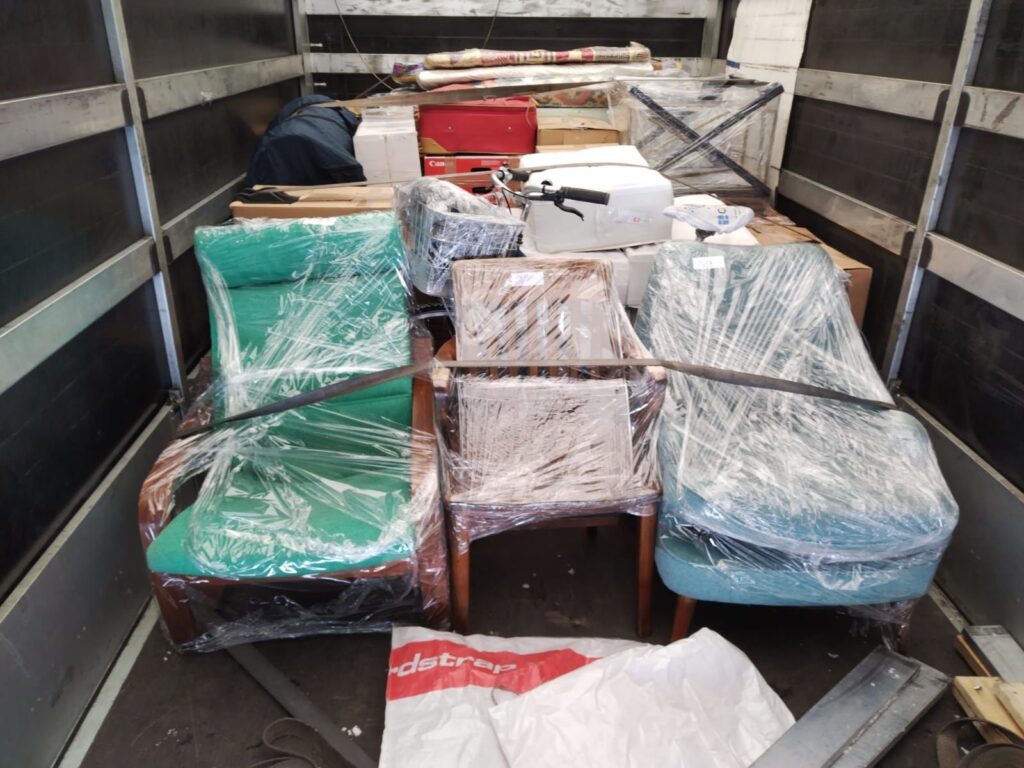
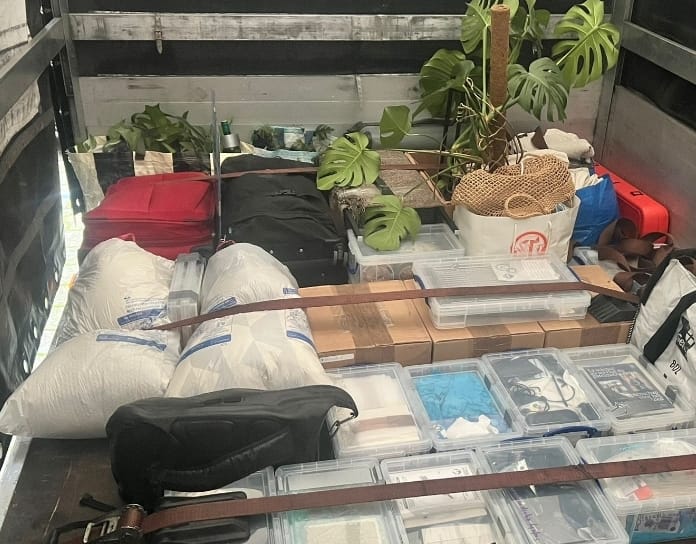
A serious moving plan supports this stage. When your belongings arrive safely, your documents are accessible and your delivery is traceable, you begin with clarity instead of chaos. VANonsite provides man and van transport across Europe with GPS tracking for every load, which helps you coordinate the move around your rental date, work start date and registration duties.
2. Build the Required Residence Time
For ordinary naturalisation, the well known benchmark is 10 years of residence. Some time periods may be counted differently in specific situations, so applicants should always verify the rules with their canton or commune.
The key idea is stability. Switzerland citizenship requirements are built around the question of whether you have created a real, lasting life in the country. This does not happen overnight. It is built through work, community, language, housing, tax compliance and daily responsibility.
3. Hold the Right Permit
A C permit is generally required for ordinary naturalisation. This makes your permit history important. Missed renewals, unclear status or lost documents can create unnecessary pressure later.
Keep digital scans and physical copies of every important permit document. During your move, keep these papers close. A dining table can travel in a van. Your passport, residence documents, civil status papers and employment contract should stay with you.
4. Prove Language Ability
Language is one of the strongest signs of integration. Switzerland has four national languages: German, French, Italian and Romansh. The language relevant to your case usually depends on where you live.
This requirement is practical, not decorative. Language helps you speak to the commune, understand official letters, manage insurance, follow building rules and build trust with neighbours. The State Secretariat for Migration provides information on language requirements, including recognised proof for immigration and naturalisation procedures.
5. Show Real Integration
Integration is central to Switzerland citizenship requirements. It can include respecting Swiss law, paying taxes and bills, joining local life, understanding Swiss customs and being familiar with the country’s institutions.
A clean relocation can help more than people expect. If your furniture, work tools, documents and personal items arrive safely, your energy can go into language, work and community. If the move goes badly, your first weeks may be consumed by damage claims, missing boxes and expensive replacements.
6. Apply Through the Commune or Canton
Ordinary naturalisation applications are usually submitted through the commune or canton of residence. Local rules can affect document lists, interviews, tests, fees and waiting times.
Before applying, ask your commune for the current checklist. A strong file is precise, complete and calm. Guesswork is risky, especially when local rules matter.
How Can You Get Swiss Citizenship After Moving from Another European Country?
If you are wondering how can you get swiss citizenship after relocating from another European country, the answer begins with legal and practical stability. Citizenship comes later. First, you need the right permit, a registered address, compliant documents and a life that can be proven on paper.
Before moving, prepare:
- valid passport or national identity document
- employment, study or family documents
- visa or permit papers if required
- rental agreement or housing confirmation
- inventory list of household goods
- customs documents where relevant
- insurance documents
- vehicle papers if importing a car
- copies of certificates and translations where needed
Swiss official guidance on moving to Switzerland explains formalities for bringing furniture and personal belongings across the border. ch.ch also explains notification of departure and registration, including the general expectation to register with the new commune within 14 days of moving.
This is where VANonsite can make the relocation feel more manageable. With GPS tracked transport, flexible vehicle sizes and practical man and van options, you can plan delivery around housing access, commune registration, building rules and your first working days.
Required Documents for Switzerland Citizenship and Relocation
Documents are the silent engine of the whole process. When they are organised, everything feels lighter. When they are missing, small tasks can become expensive problems.
Documents Often Needed for Naturalisation
Exact document lists vary by canton and commune. However, people preparing for Switzerland citizenship requirements should usually expect to organise documents such as:
- passport or national identity document
- valid residence permit, often a C permit for ordinary naturalisation
- proof of residence history
- civil status documents
- birth or marriage certificates where relevant
- language certificate or accepted language proof
- evidence of integration
- tax related confirmations where requested
- debt or enforcement register extracts where requested
- criminal record related documents where requested
- official application forms from the commune or canton
Because requirements can differ locally, always check the current list with your commune or canton. For federal level information, use the official pages on ordinary naturalisation and becoming a Swiss citizen.
Documents Often Needed When Moving to Switzerland
For the move itself, create a separate folder and keep it with you during travel. You may need:
- passport or ID
- visa or entry documents if required
- residence or work permit documents
- employment contract or study confirmation
- rental contract
- inventory list of household goods
- customs forms for personal effects
- health insurance documents
- vehicle registration papers if bringing a car
- school or medical documents for family moves
Do not pack these deep inside a box. Your furniture can wait at delivery. Your official papers cannot.
Moving to Switzerland Before Citizenship: What You Need to Do First
A move to Switzerland should be planned like a precise project. Not cold, not complicated, just controlled.
You need to align your rental handover date, work or study start date, transport pickup, delivery access, customs needs, commune registration, insurance setup and possible storage. If you are moving with children, pets, office equipment or fragile furniture, the plan becomes even more important.
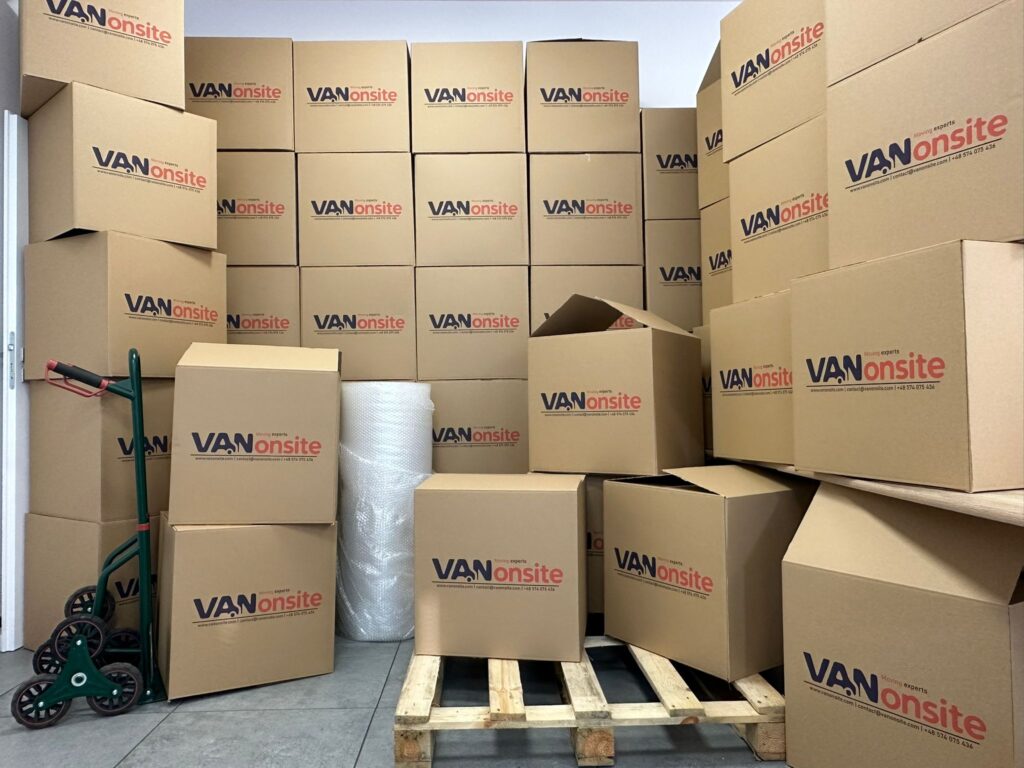
VANonsite helps bridge this gap with European moving services that can scale to the size of your relocation. A student with 10 boxes does not need the same solution as a family moving a full apartment. A company relocating office furniture has different priorities than a couple sending delicate items to a new home in Geneva or Zurich.
Choosing the Right Vehicle for Your Move to Switzerland
The right vehicle is not only about volume. It is about pressure, timing and peace of mind. Too small, and the move becomes a stressful puzzle. Too large, and you may pay for space you do not need.
| VANonsite option | Capacity | Weight limit | Best for |
|---|---|---|---|
| Moving One | 1 m3 | 100 kg | Documents, boxes, small personal items |
| Moving Basic | 5 m3 | 300 kg | Studio move or compact man and van relocation |
| Moving Medium | 10 m3 | 500 kg | Small apartment, furniture and essentials |
| Moving Premium | 15 m3 | 1,100 kg | Larger apartment and bulkier furniture |
| Moving Premium Plus | 30 m3 | 3,500 kg | Family move, office equipment or full room sets |
| Moving Full House XXL | 90 m3 | 20,000 kg | Large house move or major European relocation |
VANonsite can support different relocation needs, including Last Minute Moving, Furniture Removals, Home Removals, Packing Service, White Glove Delivery, Office Removals, Storage, Student Removals and Office Furniture Installation.
That range matters. Moving one room, an office or a full house requires different handling, different space and different timing. A professional setup reduces wasted capacity, avoidable delays and the exhausting uncertainty that often comes with international moves.

Why GPS Tracking Matters During a Switzerland Move
International moving can feel like handing your life to the road. GPS tracking changes that feeling.
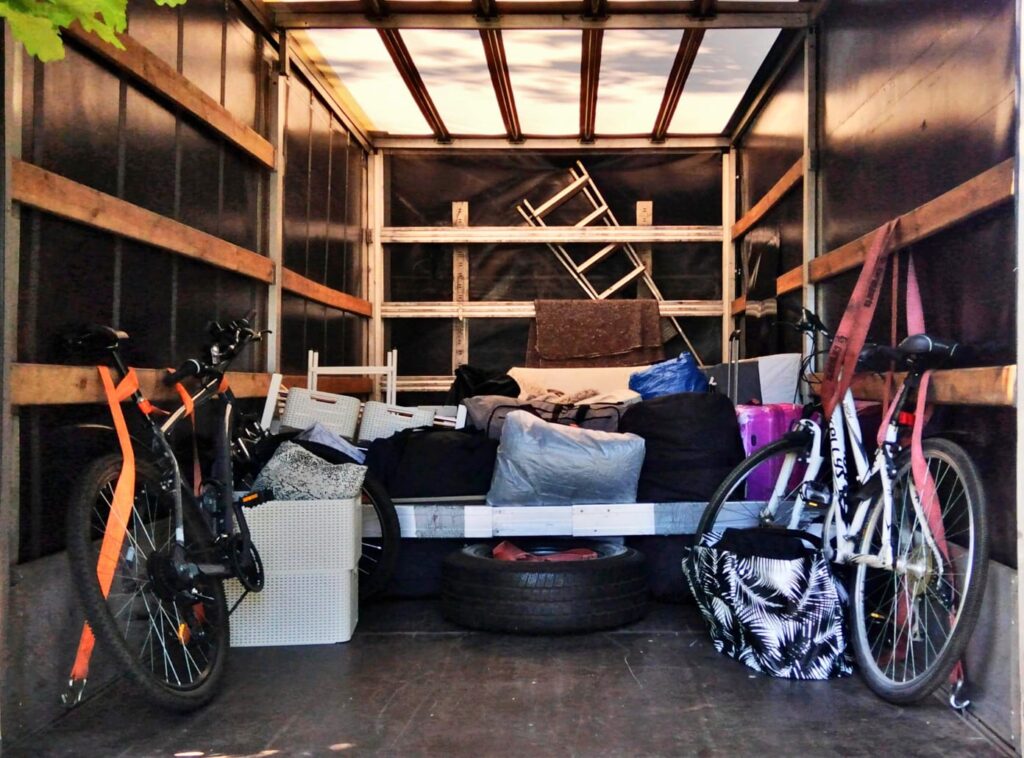
With GPS tracked transport, your load is visible during the journey. You can coordinate arrival, plan handover and reduce guesswork. This matters in Switzerland, where building access, parking rules, lift reservations and rental handovers may need careful timing.
GPS tracking is especially valuable for high value furniture, business equipment, family belongings and urgent man and van moves. It gives the relocation a traceable rhythm. Instead of waiting in silence, you know where your shipment is and can plan your next step.
Switzerland Citizenship Requirements and Daily Integration
Swiss citizenship is not only about living in the country for a number of years. It is about becoming part of the rhythm of local life.
That rhythm may feel subtle at first. You learn how your commune communicates. You discover how seriously recycling is treated. You notice quiet hours, building rules, public transport habits and the careful order of everyday life. Over time, these small details become familiar.
This is where Switzerland citizenship requirements become personal. Integration is built through steady actions:
- learning the local language
- understanding letters from local authorities
- paying bills and taxes on time
- respecting housing and community rules
- joining local activities where possible
- building reliable work or study routines
- keeping permit, tax and insurance documents organised
- showing that your life in Switzerland is stable and genuine
A good move will not make you Swiss. But it can help you arrive ready. When your belongings are protected and delivered properly, you can invest your energy into integration rather than emergency fixes.
How to Get a Switzerland Citizenship Without Costly Mistakes
Many people search how to get a switzerland citizenship because they want a simple answer. The truth is more detailed. You need the right residence route, strong documentation, local awareness and patience.
The biggest mistake is ignoring local rules. Switzerland citizenship requirements are shaped by federal law, but cantons and communes can add their own conditions. Never assume that a friend’s experience in another canton will match your own.
Another mistake is treating the move as separate from the citizenship journey. Your relocation creates the first practical layer of your Swiss life: address, registration, insurance, customs documents, rental papers and local routines. If your arrival is chaotic, you may spend weeks fixing problems that could have been avoided.
A third mistake is packing important documents with furniture. Passports, permits, contracts, birth certificates, marriage certificates, insurance papers and customs documents should stay with you during travel.
Finally, do not choose transport only by the lowest price. A cheap move can become expensive if the load is delayed, damaged or impossible to trace. For a country like Switzerland, where timing and order matter, GPS tracking and professional handling offer real peace of mind.
Timeline: From Moving to Switzerland to Swiss Citizenship
| Stage | What happens | Why it matters |
|---|---|---|
| Before moving | Check legal route, housing, customs rules and transport | Prevents border, permit and arrival stress |
| Moving week | Transport belongings, keep documents close and coordinate delivery | Protects the most fragile phase of relocation |
| First 14 days | Register with the commune where required | Creates local administrative stability |
| First months | Arrange insurance, banking, work, school and daily systems | Builds a functioning life in Switzerland |
| First years | Learn the language, integrate and keep records | Supports future naturalisation readiness |
| Around eligibility point | Check federal, cantonal and communal rules | Confirms whether you can apply |
| Application stage | Submit documents and follow local procedures | Turns preparation into a formal citizenship process |
The journey is long, but it does not need to feel chaotic. Start with the move. Start with the documents. Start with a plan.
For a smoother first step, explore VANonsite’s dedicated removals to Switzerland service.
Why Choose VANonsite for a Move to Switzerland?
When your long term goal is Swiss citizenship, your first move should feel controlled, not improvised.
VANonsite offers secure European transport for people moving homes, furniture, offices, student rooms and valuable items across borders. The service is built around practical reassurance: GPS tracking for every load, flexible vehicle sizes and careful handling.
That combination matters because relocation is emotional. Your belongings are not just objects. They are your mattress after an exhausting first day, your desk for a new job, your child’s favourite chair, your kitchen boxes, winter coats, books and business equipment.
VANonsite helps protect that beginning.
The company’s services include home removals, furniture removals, packing, white glove delivery, office removals, storage, student removals, office furniture installation and man and van transport for smaller European moves.
The result is a relocation service that can scale with your life. Small move. Family move. Office move. Premium delivery. Urgent transport. VANonsite gives you options without drowning the process in confusion.
Final Checklist: Switzerland Citizenship Requirements and Moving Essentials
Before you move, check your legal route. Before you apply, check your local naturalisation rules. Between those two moments, build a life that is organised, stable and easy to prove.
Use this checklist as your starting point:
- Confirm whether ordinary or simplified naturalisation may apply to you.
- Check the 10 year residence and C permit rules for ordinary naturalisation.
- Verify cantonal and communal Switzerland citizenship requirements.
- Keep language proof, residence evidence and integration documents organised.
- Prepare passports, permits, contracts and civil status documents before moving.
- Create a clear inventory of household goods.
- Keep important documents with you during travel.
- Register with your commune after arrival according to local rules.
- Arrange health insurance and other required setup steps.
- Choose a trusted man and van relocation partner with GPS tracking.
- Match your vehicle size to your real volume and weight.
- Use professional packing or white glove delivery for fragile, valuable or high risk items.
FAQ About Switzerland Citizenship Requirements
What are the main Switzerland citizenship requirements?
The main Switzerland citizenship requirements for ordinary naturalisation usually include 10 years of residence, a C permit, successful integration, language ability, familiarity with Swiss life and respect for Swiss law and security. Cantons and communes may add extra requirements.
How to get Switzerland citizenship as a foreign resident?
To understand how to get switzerland citizenship, start with legal residence. You need to live in Switzerland lawfully, build the required residence period, maintain the right permit, integrate locally, prove language ability and apply through the competent commune or canton when eligible.
How can you get Swiss citizenship after moving to Switzerland?
If you are asking how can you get swiss citizenship after moving, the answer starts with stability. Secure your residence status, register properly, keep clean documentation, learn the local language and build a real life in your Swiss community.
How to get a Switzerland citizenship if you are married to a Swiss citizen?
Marriage to a Swiss citizen may make simplified naturalisation possible, but it does not make citizenship automatic. You still need to meet the relevant legal conditions and should check the latest rules through the Swiss State Secretariat for Migration.
Do you need a C permit for Swiss citizenship?
For ordinary naturalisation, a C permit is generally required. It is one of the most important Switzerland citizenship requirements for many foreign residents.
Can VANonsite help with the citizenship application?
VANonsite does not handle citizenship applications or legal advice. It supports the practical first step: moving your belongings safely to Switzerland with professional transport, GPS tracking and flexible man and van options.
Why is a secure move important if citizenship takes years?
Because the citizenship journey begins with your first stable days in Switzerland. A secure move helps protect your documents, furniture, work tools and personal items. It gives you order at the moment when your new life needs it most.
Start Your Move to Switzerland with Confidence
Swiss citizenship is not a quick signature. It is a long, serious journey built through residence, language, integration and trust. But your first step can be clear.
Move with order. Move with visibility. Move with a team that understands that your belongings are not just cargo. They are the beginning of your Swiss life.
VANonsite helps make that beginning calmer, safer and sharper through GPS tracked European transport, flexible man and van options and reliable removals to Switzerland.