Working and living in Switzerland is one of the most attractive choices for people who want higher salaries, safer cities, clean streets, strong public services, and a more stable European lifestyle. Switzerland can feel precise from the first day. Trains run on time, paperwork matters, appointments are respected, and even renting an apartment can feel like a serious professional process.
Yet working and living in Switzerland is not a casual move. The country rewards preparation. If you want to stay longer than 3 months, work legally, register with your local commune, rent a flat, arrange health insurance, and move your household goods across the border, you need a clear plan before arrival.
Your relocation logistics matter just as much as your job contract. A rushed move can create stress, extra costs, damaged furniture, or border delays. With professional removals to Switzerland, VANonsite helps individuals, students, families, and businesses move safely across Europe. The company offers GPS tracking for each load, flexible vehicle sizes, packing support, storage, and practical man and van options for small, medium, and full household moves.
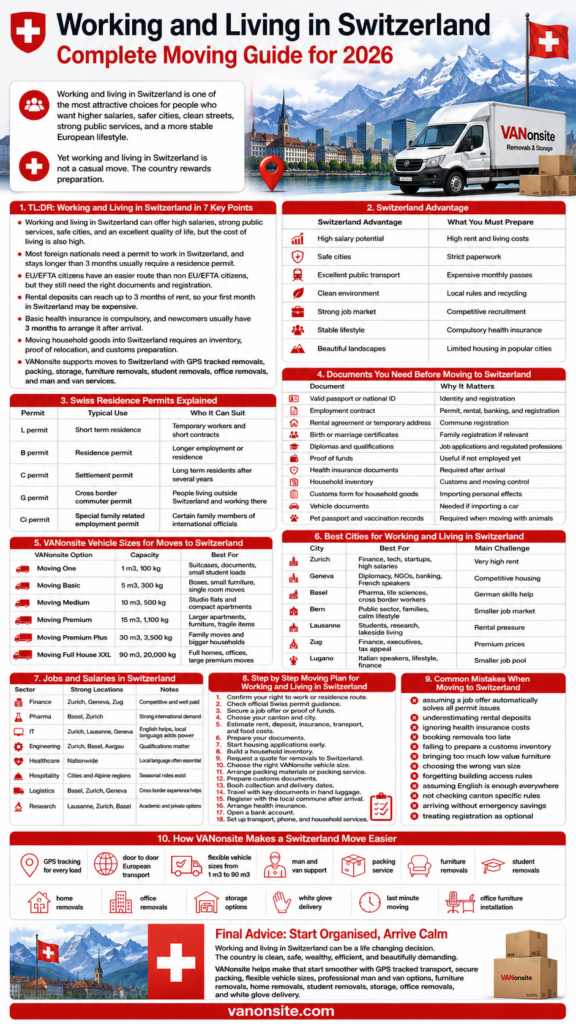
TL:DR: Working and Living in Switzerland in 7 Key Points
- Working and living in Switzerland can offer high salaries, strong public services, safe cities, and an excellent quality of life, but the cost of living is also high.
- Most foreign nationals need a permit to work in Switzerland, and stays longer than 3 months usually require a residence permit.
- EU/EFTA citizens have an easier route than non EU/EFTA citizens, but they still need the right documents and registration.
- Rental deposits can reach up to 3 months of rent, so your first month in Switzerland may be expensive.
- Basic health insurance is compulsory, and newcomers usually have 3 months to arrange it after arrival.
- Moving household goods into Switzerland requires an inventory, proof of relocation, and customs preparation.
- VANonsite supports moves to Switzerland with GPS tracked removals, packing, storage, furniture removals, student removals, office removals, and man and van services.




Is Working and Living in Switzerland Worth It?
Working and living in Switzerland is worth it if you value stability, structure, safety, and strong earning potential. Switzerland is not the cheapest place to start again, but it can be one of the most rewarding countries in Europe for people who plan carefully.
The country has a powerful economy, global companies, excellent transport, beautiful landscapes, and a famously resilient labour market. The Swiss gross monthly median wage was CHF 7,024 in 2024, which makes Switzerland attractive for skilled workers, specialists, and ambitious professionals. However, salary is only one part of the story. Rent, health insurance, childcare, food, deposits, transport, and moving costs can take a large share of your income.
The best way to understand working and living in Switzerland is simple: high reward, high preparation. You can build a brilliant life there, but you should not arrive with vague plans, missing documents, or a van packed without a proper inventory.
| Switzerland Advantage | What You Must Prepare |
|---|---|
| High salary potential | High rent and living costs |
| Safe cities | Strict paperwork |
| Excellent public transport | Expensive monthly passes |
| Clean environment | Local rules and recycling |
| Strong job market | Competitive recruitment |
| Stable lifestyle | Compulsory health insurance |
| Beautiful landscapes | Limited housing in popular cities |
For many people, the most stressful part is not the job itself. It is the move. When your furniture, documents, work equipment, clothes, and personal belongings are crossing borders, you need visibility and control. VANonsite gives customers GPS tracking for every load, which makes the journey more transparent and less stressful.
Can Foreigners Work and Live in Switzerland?
Yes, foreigners can work and live in Switzerland, but the rules depend on nationality, job type, length of stay, and purpose of residence. This is one of the most important parts of working and living in Switzerland because a job offer alone does not always solve every legal requirement.
Most foreign nationals require permission to work. If you plan to stay for more than 3 months, you generally need a residence permit. The route is usually easier for EU/EFTA citizens than for people from outside the EU/EFTA area, but no one should treat the process as automatic.
For official information, check ch.ch: Working in Switzerland as a foreign national and SEM: Working in Switzerland.
EU/EFTA Citizens
For EU/EFTA citizens, working and living in Switzerland is usually more straightforward. Free movement rules make access easier, but you still need to follow Swiss procedures. Your employment contract, length of work, and residence situation matter.
If you have a contract lasting at least 12 months or an unlimited contract, you may qualify for a B EU/EFTA residence permit. This permit is usually valid for 5 years if the conditions are met. Shorter contracts may lead to different permit types.
Helpful official page: SEM: EU/EFTA citizens living and working in Switzerland.
UK Citizens
UK citizens are no longer treated in the same way as EU/EFTA citizens. Working and living in Switzerland as a UK national can involve stricter requirements, employer involvement, cantonal approval, and quotas. If you are moving from the UK, check the latest rules before accepting a role, resigning from your current job, or booking transport.
This is especially important if you plan to bring furniture, a car, pets, tools, or business equipment. Your legal move and your physical move should be planned together.
Non EU/EFTA Citizens
For non EU/EFTA citizens, working and living in Switzerland is usually more selective. Swiss employers often need to show that they could not find a suitable candidate from Switzerland or the EU/EFTA area. Qualifications, salary, experience, and the economic value of the role can all matter.
This route is often used by highly qualified professionals, senior managers, researchers, specialists, and people in shortage sectors. Before moving, check the official rules and ask your employer which canton will process the application.
Helpful official page: SEM: Residence for non EU/EFTA nationals.
Swiss Residence Permits Explained
Residence permits are central to working and living in Switzerland. The permit you need depends on your nationality, contract, stay length, and personal situation.
| Permit | Typical Use | Who It Can Suit |
|---|---|---|
| L permit | Short term residence | Temporary workers and short contracts |
| B permit | Residence permit | Longer employment or residence |
| C permit | Settlement permit | Long term residents after several years |
| G permit | Cross border commuter permit | People living outside Switzerland and working there |
| Ci permit | Special family related employment permit | Certain family members of international officials |
Permit names can look simple, but details vary. Switzerland is federal, so cantons play an important role. Two people with similar jobs can still face different local procedures if they move to different cantons.
For current permit guidance, use ch.ch: Permits for living in Switzerland.
Documents You Need Before Moving to Switzerland
Paperwork can make or break your relocation. Working and living in Switzerland becomes far easier when your documents are ready before your moving day.
Keep paper copies and digital copies. Store scans in a secure folder, but carry originals during travel. Landlords, employers, banks, local offices, and insurance providers may all ask for documents at different stages.
| Document | Why It Matters |
|---|---|
| Valid passport or national ID | Identity and registration |
| Employment contract | Permit, rental, banking, and registration |
| Rental agreement or temporary address | Commune registration |
| Birth or marriage certificates | Family registration if relevant |
| Diplomas and qualifications | Job applications and regulated professions |
| Proof of funds | Useful if not employed yet |
| Health insurance documents | Required after arrival |
| Household inventory | Customs and moving control |
| Customs form for household goods | Importing personal effects |
| Vehicle documents | Needed if importing a car |
| Pet passport and vaccination records | Required when moving with animals |
If you are preparing documents for working and living in Switzerland, start with official sources. Useful government pages include ch.ch: Working in Switzerland, ch.ch: Permits for living in Switzerland, and FDFA: Entry and stay in Switzerland.
Moving Household Goods to Switzerland
Moving household goods is one of the most practical parts of working and living in Switzerland. It sounds simple: load the van, cross the border, unload the boxes. In reality, Switzerland is outside the EU customs area, so preparation matters.
You should create a detailed inventory of your belongings. Group items clearly: furniture, kitchenware, clothes, books, electronics, tools, sports equipment, children’s items, office furniture, and fragile goods. The more precise your list is, the easier the customs process becomes.
According to Swiss customs guidance, personal effects imported as removal goods must meet certain conditions. In many cases, items should have been used personally before the move and should continue to be used after importation. For customs information, check BAZG: Moving household effects.
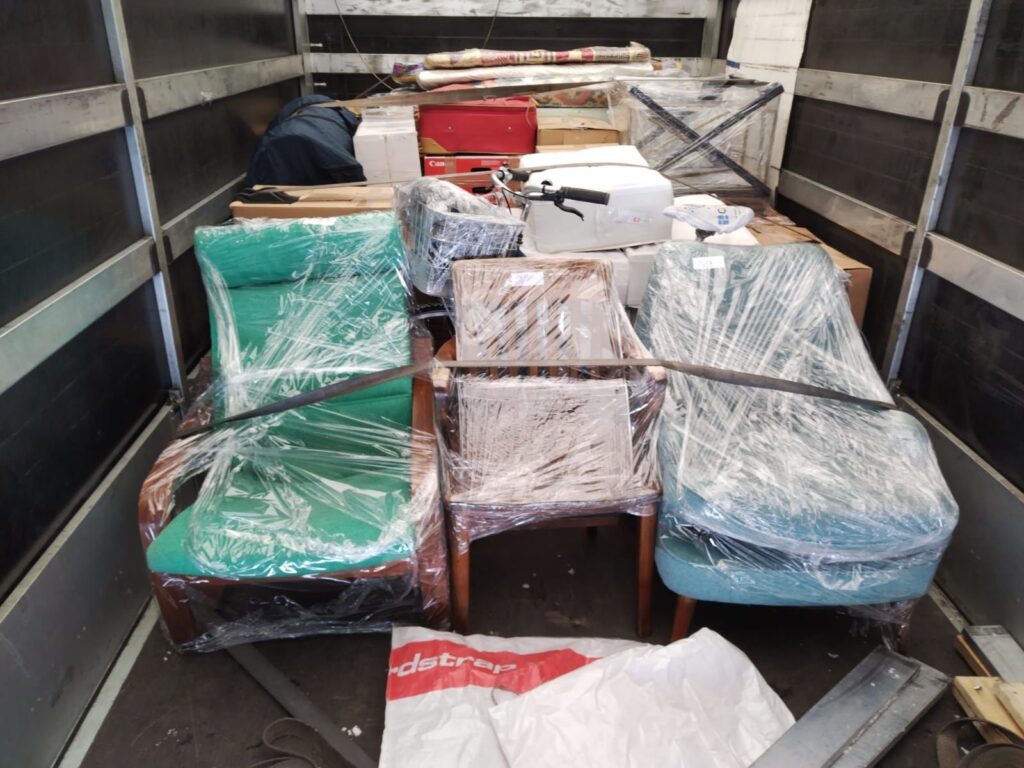
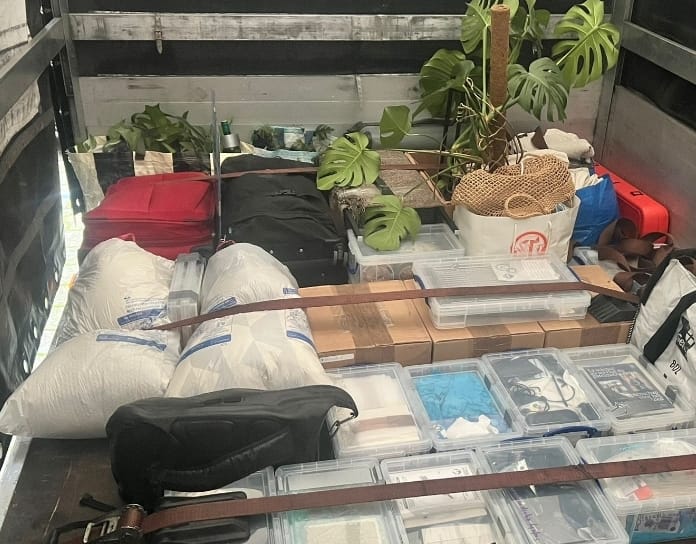
A professional man and van service can be a major advantage here. VANonsite helps clients plan the volume, protect fragile items, load efficiently, and move with GPS tracking. This is especially useful if you are starting work soon after arrival and cannot afford delays, damage, or confusion at the border.
VANonsite Vehicle Sizes for Moves to Switzerland
Choosing the right vehicle is not only about price. It affects loading time, access, protection, delivery planning, and overall comfort. Swiss streets can be narrow, mountain routes can be demanding, and apartment access can be strict. A small studio move needs a different setup than a full family relocation.
| VANonsite Option | Capacity | Best For |
|---|---|---|
| Moving One | 1 m3, 100 kg | Suitcases, documents, small student loads |
| Moving Basic | 5 m3, 300 kg | Boxes, small furniture, single room moves |
| Moving Medium | 10 m3, 500 kg | Studio flats and compact apartments |
| Moving Premium | 15 m3, 1,100 kg | Larger apartments, furniture, fragile items |
| Moving Premium Plus | 30 m3, 3,500 kg | Family moves and bigger households |
| Moving Full House XXL | 90 m3, 20,000 kg | Full homes, offices, large premium moves |
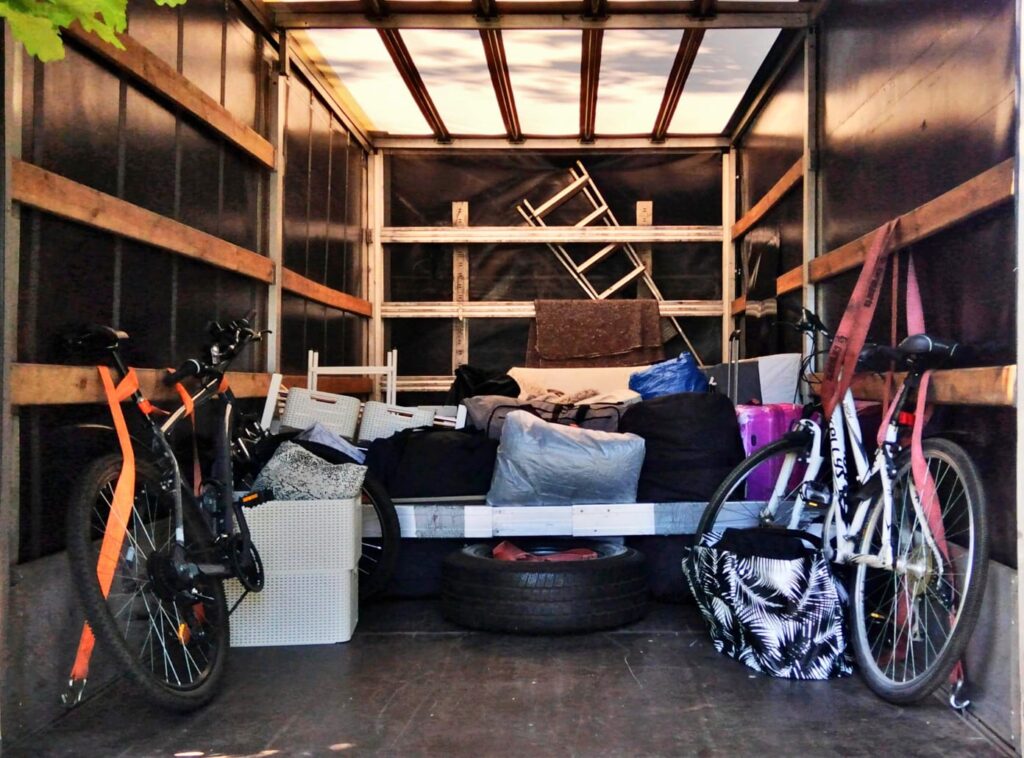
For working and living in Switzerland, this range is valuable because not every relocation is a full house move. Some people move with 12 boxes and a desk. Others bring a whole home, children’s furniture, bicycles, wardrobes, and office equipment.
VANonsite can also support specific needs through Furniture Removals, Home Removals, Packing Service, White Glove Delivery, Office Removals, Student Removals, and Office Furniture Installation.
Cost of Living in Switzerland
Working and living in Switzerland can look financially impressive on paper. Then the first rent deposit arrives. Then health insurance. Then transport passes, food bills, furniture costs, and registration tasks appear. Switzerland is manageable when planned, but painful when underestimated.
Residential rental deposits can be up to 3 months of rent. New residents also need to arrange health insurance, usually within 3 months. These two costs alone can make the first stage of relocation feel heavy.
| Cost Category | What to Expect |
|---|---|
| Rent | High in Zurich, Geneva, Zug, Lausanne, and Basel |
| Rental deposit | Up to 3 months of rent |
| Health insurance | One of the biggest fixed monthly costs |
| Public transport | Reliable but not always cheap |
| Food | Higher than much of Europe |
| Eating out | Expensive, especially in major cities |
| Childcare | Often a major family cost |
| Moving costs | Depends on distance, volume, and service level |
The smartest approach is to build a relocation budget with 3 layers: arrival costs, monthly costs, and an emergency buffer. If you are moving for a job, compare your salary with rent in the exact canton, not only with the national average.
Best Cities for Working and Living in Switzerland
Switzerland is compact, but every city feels different. Choosing the right location can shape your salary, language needs, rent, commute, and social life.
| City | Best For | Main Challenge |
|---|---|---|
| Zurich | Finance, tech, startups, high salaries | Very high rent |
| Geneva | Diplomacy, NGOs, banking, French speakers | Competitive housing |
| Basel | Pharma, life sciences, cross border workers | German skills help |
| Bern | Public sector, families, calm lifestyle | Smaller job market |
| Lausanne | Students, research, lakeside living | Rental pressure |
| Zug | Finance, executives, tax appeal | Premium prices |
| Lugano | Italian speakers, lifestyle, finance | Smaller job pool |
Zurich is powerful and fast. Geneva feels international and polished. Basel is excellent for life sciences. Bern offers a calmer rhythm. Lausanne attracts students and researchers. Lugano brings a warmer, Italian speaking atmosphere.
For working and living in Switzerland, the best city is not always the most famous one. It is the city where your salary, rent, commute, language, and lifestyle fit together.
Jobs and Salaries in Switzerland
Switzerland attracts skilled workers because its economy is diverse, precise, and global. People planning working and living in Switzerland often look first at finance or technology, but the market is broader.
Strong sectors include banking, IT, cybersecurity, pharmaceuticals, engineering, healthcare, logistics, hospitality, education, research, international organisations, construction, and skilled trades.
| Sector | Strong Locations | Notes |
|---|---|---|
| Finance | Zurich, Geneva, Zug | Competitive and well paid |
| Pharma | Basel, Zurich | Strong international demand |
| IT | Zurich, Lausanne, Geneva | English helps, local language adds power |
| Engineering | Zurich, Basel, Aargau | Qualifications matter |
| Healthcare | Nationwide | Local language often essential |
| Hospitality | Cities and Alpine regions | Seasonal roles exist |
| Logistics | Basel, Zurich, Geneva | Cross border experience helps |
| Research | Lausanne, Zurich, Basel | Academic and private options |
The Swiss salary level is one of the biggest reasons people consider working and living in Switzerland. However, do not judge an offer only by the gross number. Calculate take home pay, rent, insurance, pension deductions, commuting, tax, food, and childcare.
A good Swiss salary should give you more than survival. It should give you stability, savings, and breathing room. Before accepting a job, ask whether you can afford rent in the exact city, how much insurance will cost, whether your commute is realistic, and whether you can still save after fixed costs.
Renting a Home in Switzerland
Renting is one of the toughest parts of working and living in Switzerland. The best apartments receive many applications, and landlords often expect a complete file.
A typical rental application may include:
- passport or national ID
- residence permit or permit application proof
- employment contract
- salary confirmation
- employer letter
- references
- completed application form
- debt extract if already resident in Switzerland
Many Swiss apartments are unfurnished. That can be a shock if you are arriving with only suitcases. It also means that bringing your own furniture can make financial sense, especially if your current items are good quality.
A man and van service is often perfect for smaller apartment moves. If you are moving a desk, bed, wardrobe, boxes, kitchen equipment, bicycles, or work setup, VANonsite can help you avoid the cost and waste of buying everything again.
Registration After Arrival
Once you arrive, registration becomes a priority. In many cases, newcomers need to register with the local commune or residents office. Do not delay this step because it connects to your permit, address, bank, insurance, and employer records.
A simple arrival order looks like this:
- Confirm your address.
- Prepare your passport or ID.
- Bring your employment contract.
- Bring your rental agreement or housing confirmation.
- Visit the local commune or residents office.
- Apply for the correct permit.
- Arrange compulsory health insurance.
- Open a bank account.
- Update your employer and local services.
For official information, use ch.ch: Permits for living in Switzerland.
Working and living in Switzerland becomes easier when you respect the Swiss rhythm: prepare, book, arrive on time, keep documents, and follow instructions.
Health Insurance in Switzerland
Health insurance is compulsory for residents. New arrivals usually have 3 months to arrange basic health insurance. It is not a small detail. It can become one of your biggest monthly expenses after rent.
Premiums vary by canton, age, insurance model, deductible, and provider. A healthy adult may choose a higher deductible to reduce monthly premiums, but that also means higher out of pocket costs when treatment is needed.
Useful official page: ch.ch: Health insurance costs.
If you are moving with family, calculate insurance for every person, not only for the main worker. If you are starting a job quickly after arrival, ask your employer about accident insurance and payroll deductions.
Banking, Taxes, and Everyday Admin
Switzerland runs on efficient admin. It may feel strict at first, but once everything is set up, daily life becomes smoother.
You may need to arrange:
- Swiss bank account
- salary payment details
- health insurance
- mobile phone contract
- public transport pass
- local tax details
- pension and social security deductions
- household insurance
- internet connection
- Serafe radio and TV fee if applicable
Taxes vary by canton and commune. This is why working and living in Switzerland can feel very different in Zurich, Zug, Geneva, Bern, or Ticino. A higher salary in one canton may not always mean a better final budget after rent and tax.
Keep every important document. Switzerland is not a place where you want to search for a missing contract 2 hours before an appointment.
Language: Do You Need German, French, or Italian?
Switzerland has 4 national languages: German, French, Italian, and Romansh. English is common in international companies, but it is not a replacement for local language skills in everyday life.
| Region | Main Language |
|---|---|
| Zurich, Basel, Bern, Lucerne | German or Swiss German |
| Geneva, Lausanne, Neuchatel | French |
| Ticino and Lugano | Italian |
| Some areas of Graubunden | Romansh and German |
For working and living in Switzerland long term, language gives you freedom. It helps with landlords, doctors, schools, neighbours, local offices, and social life. English can get you hired in a global company, but local language helps you belong.
Moving to Switzerland With Family
Working and living in Switzerland with family can be wonderful, but it needs deeper planning. Children, schools, childcare, health insurance, and larger housing can change the budget quickly.
Family relocation should include school research by canton and commune, childcare cost planning, family health insurance, larger apartment search, birth and marriage certificates, family reunification documents if relevant, furniture planning, and storage backup if housing dates do not align.
| Family Need | Why It Matters |
|---|---|
| School place | Rules differ by canton and commune |
| Larger apartment | Supply can be limited |
| Childcare | Can be expensive |
| Family documents | Needed for registration |
| Furniture transport | Saves money and comfort |
| Storage | Useful during housing gaps |
A family move can involve 30 m3 or more if you bring beds, wardrobes, desks, toys, bicycles, kitchen items, and outdoor equipment. VANonsite Moving Premium Plus or Moving Full House XXL can support larger relocations, while GPS tracking keeps the journey visible.
Student Life in Switzerland
Students choose Switzerland for strong universities, research, safety, and international networks. Working and living in Switzerland as a student is different from moving as a full time employee. Budgets are tighter, rooms are smaller, and timing matters because semester dates are fixed.
Students often need permit documents, university confirmation, proof of funds, health insurance, a room contract, small furniture, boxes, laptop equipment, books, and sometimes a bike or sports gear.
For smaller student loads, Moving One or Moving Basic can be enough. VANonsite also offers Student Removals for people who want a practical, safe, and affordable route into Swiss student life.
Many students search for a living and working in switzerland pdf because they need a checklist, not a long book. A printable plan helps you track documents, dates, transport, housing, and arrival tasks.
Living and Working in Switzerland PDF: What Should It Include?
A useful living and working in switzerland pdf should be practical, short, and action focused. It should not be a glossy brochure full of vague inspiration. It should help you move.
A strong PDF checklist should include:
- nationality based permit route
- job search steps
- document checklist
- rental budget
- health insurance reminder
- customs inventory template
- moving quote checklist
- packing timeline
- arrival week schedule
- local registration steps
- emergency contacts
- canton specific notes
If you create your own living and working in switzerland pdf, add one page just for moving logistics. Include collection address, delivery address, building access, floor number, lift details, parking restrictions, fragile items, and exact inventory.
Living and Working in Switzerland Book: Is It Still Useful?
A living and working in switzerland book can be useful if you want deeper cultural context. Books often explain habits, manners, social norms, local expectations, and daily life in a calmer way than online articles.
However, for permits, insurance, customs, and official rules, a book can age quickly. Switzerland changes forms, procedures, thresholds, and local processes. Use a book for understanding the country. Use official websites for decisions.
| Resource | Best For | Limitation |
|---|---|---|
| Living and working in switzerland book | Culture and lifestyle | May become outdated |
| Official Swiss websites | Current rules | Can feel fragmented |
| Online relocation guide | Practical planning | Must be checked against official sources |
| VANonsite advice | Transport and moving logistics | Focused on relocation support |
The best approach is to combine all 4. Read for context, verify with official sources, plan with a checklist, and book transport with a company that understands international removals.

What to Bring to Switzerland and What to Leave Behind
Working and living in Switzerland does not mean you should bring everything. Swiss homes can be smaller than expected, and storage space may be limited. Moving low value bulky items can cost more than replacing them.
Bring items that are useful, valuable, personal, or expensive to rebuy:
- quality furniture
- ergonomic office chair
- work equipment
- winter clothing
- kitchen essentials
- children’s items
- bicycles
- sports equipment
- documents
- sentimental items
- fragile premium pieces
Consider leaving behind damaged wardrobes, cheap bulky furniture, very old appliances, duplicate kitchen items, furniture that may not fit, restricted items, and things you have not used for 12 months.
If you own valuable furniture, artwork, designer pieces, antiques, instruments, or delicate electronics, White Glove Delivery can be a smart choice. Protection matters when one scratch can ruin a piece emotionally and financially.
Customs and Household Effects
Customs preparation is a key part of working and living in Switzerland. Switzerland is not in the EU customs union, so you need to treat the border seriously.
For household effects, prepare:
- detailed inventory
- proof of relocation
- passport or ID
- work contract or rental contract
- customs form if required
- vehicle information
- pet documents if applicable
- car documents if importing a vehicle
For official customs guidance, check BAZG: Moving household effects and BAZG: Moving to Switzerland procedure.
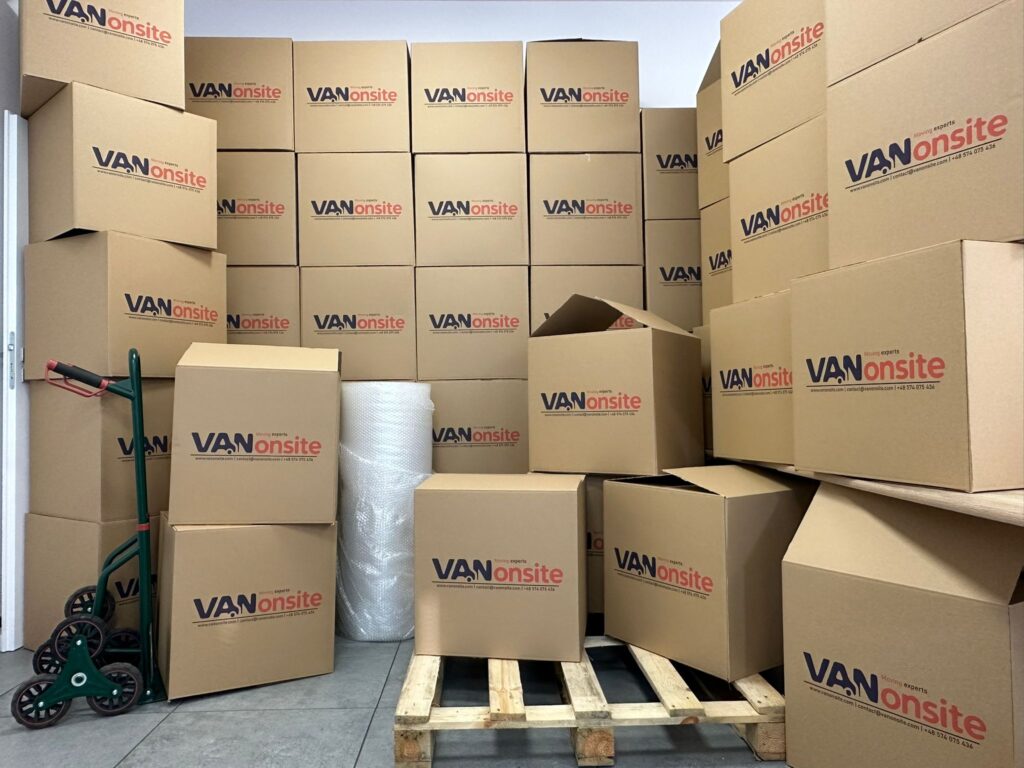
A professional man and van move can help you avoid chaotic packing. If boxes are labelled, grouped, and listed properly, customs and unloading become much smoother.
How VANonsite Makes a Switzerland Move Easier
When your life is packed into boxes, silence feels expensive. You want to know where your belongings are, when they will arrive, and whether everything is protected. VANonsite builds that confidence through structure.
VANonsite supports moves to Switzerland with GPS tracking for every load, door to door European transport, flexible vehicle sizes from 1 m3 to 90 m3, man and van support, packing service, furniture removals, student removals, home removals, office removals, storage options, white glove delivery, last minute moving, and office furniture installation.
This is not only about carrying boxes. It is about arriving ready to work, register, settle, and breathe. For people serious about working and living in Switzerland, reliable removals are part of the plan, not an afterthought.
Step by Step Moving Plan for Working and Living in Switzerland
Use this practical order of action:
- Confirm your right to work or residence route.
- Check official Swiss permit guidance.
- Secure a job offer or proof of funds.
- Choose your canton and city.
- Estimate rent, deposit, insurance, transport, and food costs.
- Prepare your documents.
- Start housing applications early.
- Build a household inventory.
- Request a quote for removals to Switzerland.
- Choose the right VANonsite vehicle size.
- Arrange packing materials or packing service.
- Prepare customs documents.
- Book collection and delivery dates.
- Travel with key documents in hand luggage.
- Register with the local commune after arrival.
- Arrange health insurance.
- Open a bank account.
- Set up transport, phone, and household services.
Working and living in Switzerland becomes far easier when each step is done in order. The country is demanding, but it is also predictable. Preparation pays back quickly.
Common Mistakes When Moving to Switzerland
A Swiss move can go wrong because of small errors. One missing document, one underestimated cost, or one badly packed van can create a chain of problems.
Avoid these mistakes:
- assuming a job offer automatically solves all permit issues
- underestimating rental deposits
- ignoring health insurance costs
- booking removals too late
- failing to prepare a customs inventory
- bringing too much low value furniture
- choosing the wrong van size
- forgetting building access rules
- assuming English is enough everywhere
- not checking canton specific rules
- arriving without emergency savings
- treating registration as optional
The most painful mistakes are usually preventable. Ask questions early. Keep records. Choose a transport partner that understands international removals.
Pros and Cons of Working and Living in Switzerland
Working and living in Switzerland can be exceptional, but it is not perfect. The country offers calm, money, structure, and beauty. It also demands discipline, punctuality, and financial realism.
| Pros | Cons |
|---|---|
| High salary potential | High cost of living |
| Safe cities | Expensive housing |
| Reliable transport | Strict administration |
| Strong healthcare | Costly insurance |
| Beautiful nature | Competitive job market |
| Stable economy | Language barriers |
| International companies | Canton differences |
| Clean public spaces | Many rules and procedures |
Switzerland is not a soft landing for everyone. But for organised people, it can be a powerful place to build a career, raise a family, study, save money, and enjoy Europe from a clean, connected, breathtaking base.
FAQ About Working and Living in Switzerland
Is working and living in Switzerland easy for EU citizens?
It is easier for EU/EFTA citizens than for non EU/EFTA citizens, but it is not automatic. You still need to follow registration rules, permit procedures, employment conditions, and local requirements.
Do I need a job before moving to Switzerland?
A job makes the process much stronger, especially if you plan to work immediately. Some people move for study, family, or private means, but each route has its own requirements. Check official Swiss guidance before moving.
How much money should I save before moving to Switzerland?
You should plan for rent, deposit, health insurance, transport, food, registration costs, moving costs, and an emergency buffer. Because rental deposits can reach up to 3 months of rent, your first month can be expensive.
Can I move furniture to Switzerland?
Yes, you can move furniture to Switzerland, but you should prepare an inventory and check customs rules for household effects. VANonsite offers furniture removals, packing support, and GPS tracked transport.
Is a man and van service enough for Switzerland?
Yes, a man and van service can be enough for small and medium moves, especially if you are moving boxes, suitcases, desks, chairs, small furniture, or student belongings. For larger homes, VANonsite can provide bigger vehicle options.
What is the best city for working and living in Switzerland?
Zurich is strong for finance and tech, Geneva for NGOs and banking, Basel for pharma, Bern for stability, Lausanne for students and research, and Zug for finance and executives. The best city depends on your job, rent, language, and lifestyle.
Should I download a living and working in switzerland pdf?
A living and working in switzerland pdf can be useful if it contains a document checklist, permit route, moving inventory, rental budget, customs steps, and arrival schedule.
Is a living and working in switzerland book useful?
A living and working in switzerland book can help you understand culture and daily life. For current permit, customs, and insurance rules, official websites are safer.
Why choose VANonsite for removals to Switzerland?
VANonsite offers GPS tracked removals, careful loading, flexible vehicle sizes, packing services, storage, furniture removals, student removals, office removals, white glove delivery, and reliable man and van support across Europe.
Final Advice: Start Organised, Arrive Calm
Working and living in Switzerland can be a life changing decision. The country is clean, safe, wealthy, efficient, and beautifully demanding. It gives a lot, but it expects preparation in return.
Before you move, organise your permit route, documents, job contract, rental plan, health insurance, customs inventory, and transport. Do not leave the physical move until the last moment. Your belongings are part of your new start.
VANonsite helps make that start smoother with GPS tracked transport, secure packing, flexible vehicle sizes, professional man and van options, furniture removals, home removals, student removals, storage, office removals, and white glove delivery.
Planning your move? Get a tailored quote for removals to Switzerland with VANonsite and arrive ready for your next chapter.