
Moving abroad can feel like standing on a train platform with your whole life packed into labelled boxes. There is anticipation in the air. There is adrenaline too. Yet there is also the pressure of paperwork, customs, dates, furniture, keys, and the quiet fear that one missed detail could throw everything off balance. That emotional mix is real, especially when you are moving from UK to Germany for work, family, study, or a fresh start.
The reassuring part is this: the move does not have to feel chaotic. With the right structure, the right timing, and the right support, moving to Germany from UK becomes far easier to manage than many people expect. What feels overwhelming at the start often becomes surprisingly clear once you understand what really shapes the relocation.
That includes much more than the route itself. Timing, customs, vehicle size, paperwork, and packing all matter. So do stair access, parking restrictions, fragile furniture, and whether the load is a few boxes or a full household. When those details are ignored, the move becomes stressful and expensive very quickly. When they are handled early, the process feels calmer, faster, and far more controlled.
That is exactly why the right moving partner matters so much. VANonsite helps make moving from UK to Germany smoother with secure transport, GPS tracking on every load, flexible vehicle sizes, and service options for homes, offices, furniture, students, and part-load relocations. Whether you need a lighter man and van setup or a fuller removals service, the goal stays the same: keep the move safe, efficient, and far less exhausting.
This guide gives you fast, useful answers. You will see what affects the cost, how long the move usually takes, which documents matter most, and how to plan the relocation in a way that protects both your budget and your peace of mind.
TL:DR
- Moving from UK to Germany becomes much easier when the move is planned early and the service matches the real size of the load.
- Costs usually depend on volume, route, access conditions, and the level of support you book.
- Smaller relocations may work well with a flexible man and van setup because it keeps the move lean and cost-effective.
- Larger moves need accurate volume planning and the right vehicle size to avoid delays, wasted space, or costly corrections.
- Packing quality directly affects safety, timing, and the overall moving experience.
- Customs and documents matter because the UK is outside the EU, so paperwork should never be left until the last minute.
- VANonsite offers secure, GPS-tracked transport and flexible service options for different move sizes and priorities.




What to Know Before Moving from UK to Germany
Before anything is booked, it helps to understand one simple truth: moving from UK to Germany is about much more than transport alone. A route may look simple on the map, yet the real success of the move depends on a number of practical details working together at the right time. Customs, property access, timing, and packing all shape the experience in very real ways.
That is why moving to Germany from UK should be treated as a properly planned relocation, not a last-minute booking. A move can go wrong even on a familiar route if the paperwork is incomplete, the vehicle is too small, or nobody has checked whether the collection address has restricted parking or difficult stair access. By contrast, a well-organised move often feels far more manageable than expected.
One of the biggest differences comes down to scale. Small and large relocations need different service models. A lighter move with boxes, essentials, and a few pieces of furniture may be ideal for a man and van solution. A larger move with beds, wardrobes, sofas, appliances, and fragile items needs more structure, more volume, and often more labour. Trying to fit a larger home move into a smaller setup is one of the fastest ways to create stress, delay, and unnecessary cost.
It also helps to look beyond the boxes. Customs paperwork matters because the UK is outside the EU. Packing matters because badly protected items can turn a hopeful relocation into a damaging one. Access matters because an awkward hallway or limited parking can slow everything down. Timing matters because rushed moves rarely stay smooth for long.
The easiest way to think about service choice is this:
- Best for lighter moves: man and van
- Best for full home moves: home removals
- Best for bulky items: furniture removals
- Best for premium pieces: white glove delivery
Early planning lowers both cost and stress because it gives you the time to measure properly, prepare documents, sort what you are taking, and choose the right service before problems appear. That is what turns moving from UK to Germany from a stressful unknown into a process you can actually control.
Cost of Moving from UK to Germany
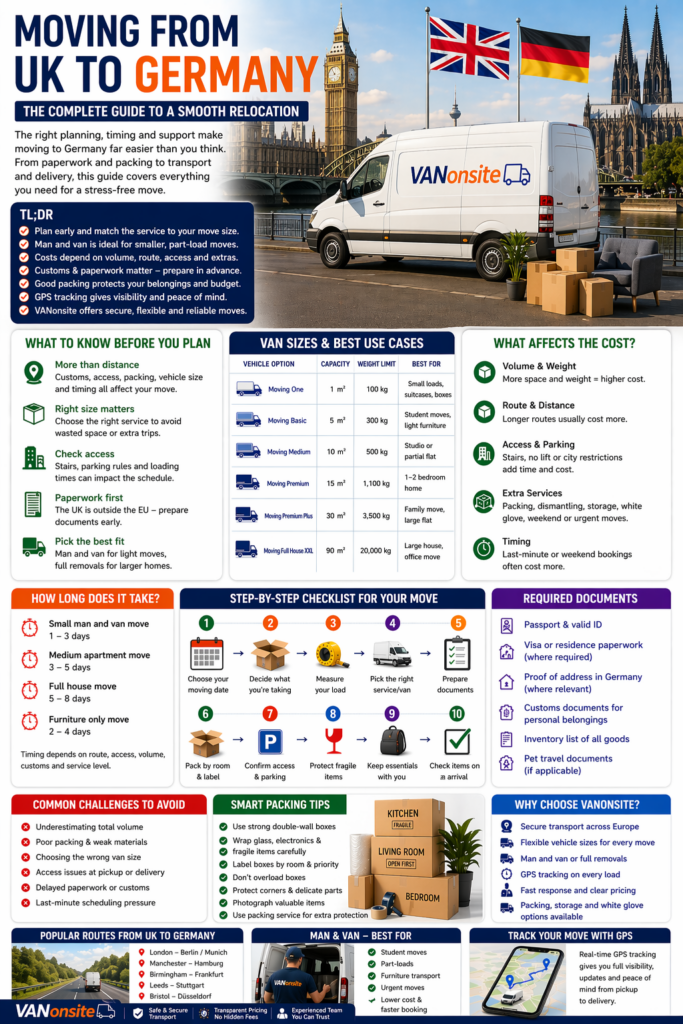
For most people, price is the first real pressure point. Before the move even begins, you want a number that makes sense and a process that does not feel like a financial trap. The truth is that the cost of moving from UK to Germany depends on the real size and complexity of the move, not just the route itself. Distance matters, of course. However, volume, access, labour, timing, and the level of service often shape the quote just as much.
A light relocation with a few boxes, a desk, and essential items will usually cost far less than a full household move packed with furniture, appliances, mirrors, and delicate belongings. That is why honest volume planning matters so much. If the move is underestimated, the quote can rise through extra labour, a second trip, or a last-minute vehicle change. If it is overestimated, you can end up paying for empty space.
The strongest starting point is to match the load to the right vehicle:
| Vehicle Option | Best For | Capacity | Weight Limit |
|---|---|---|---|
| Moving One | Small essentials, a few boxes | 1 m3 | 100 kg |
| Moving Basic | Student move, small furniture | 5 m3 | 300 kg |
| Moving Medium | Studio flat or part-load move | 10 m3 | 500 kg |
| Moving Premium | 1 to 2 bedroom move | 15 m3 | 1100 kg |
| Moving Premium Plus | Family relocation | 30 m3 | 3500 kg |
| Moving Full House XXL | Large full house move | 90 m3 | 20000 kg |
This table makes one thing very clear. The cost of moving from UK to Germany is closely tied to how much you are actually taking. A person moving 8 boxes and a chair does not need the same service structure as a family relocating an entire three-bedroom home. Vehicle size changes loading time, manpower, route planning, and the overall shape of the job.
Several factors influence the final price:
- total volume in cubic metres
- weight of the load
- UK pickup location and German destination
- access conditions at both properties
- number of movers needed
- dismantling and reassembly
- packing support
- storage needs
- urgent or weekend bookings
- fragile or premium items
Each of these affects workload in a practical way. A move from central London to Munich with timed parking, long carries, and stair access will not be priced like a straightforward move from a suburban house to Cologne. The same applies if you add professional packing, furniture dismantling, storage, or special handling for premium items.
This is also why the cheapest-looking quote is not always the best-value move. A low number can look attractive right up until the vehicle is too small, the timing is unrealistic, or fragile pieces are not protected properly. In many cases, the right vehicle and support level save more over the full journey because they prevent damage, delay, and expensive corrections.
For lighter relocations, a man and van service can be a sharp, cost-effective solution. For medium and larger moves, a fuller removals setup usually delivers better value because it is built around the real demands of the job. The smartest move is not simply the cheapest on paper. It is the one that fits cleanly from the start.
How Long Does Moving to Germany from UK Usually Take?
Time matters almost as much as money. Once the move becomes real, people want to know when life will feel settled again, when the van will arrive, and how long they will be living among stacked boxes and half-open suitcases. The reassuring answer is that moving to Germany from UK can often be handled efficiently, but timing depends on several details, not just the mileage.
Many routes can be completed smoothly when the move is properly prepared. Still, access, load size, document readiness, packing quality, and service level all shape the schedule. A move with clear paperwork and a well-organised load can feel fast and controlled. A move with rushed packing, awkward access, or vague inventory details can slow down before the vehicle even leaves the UK.
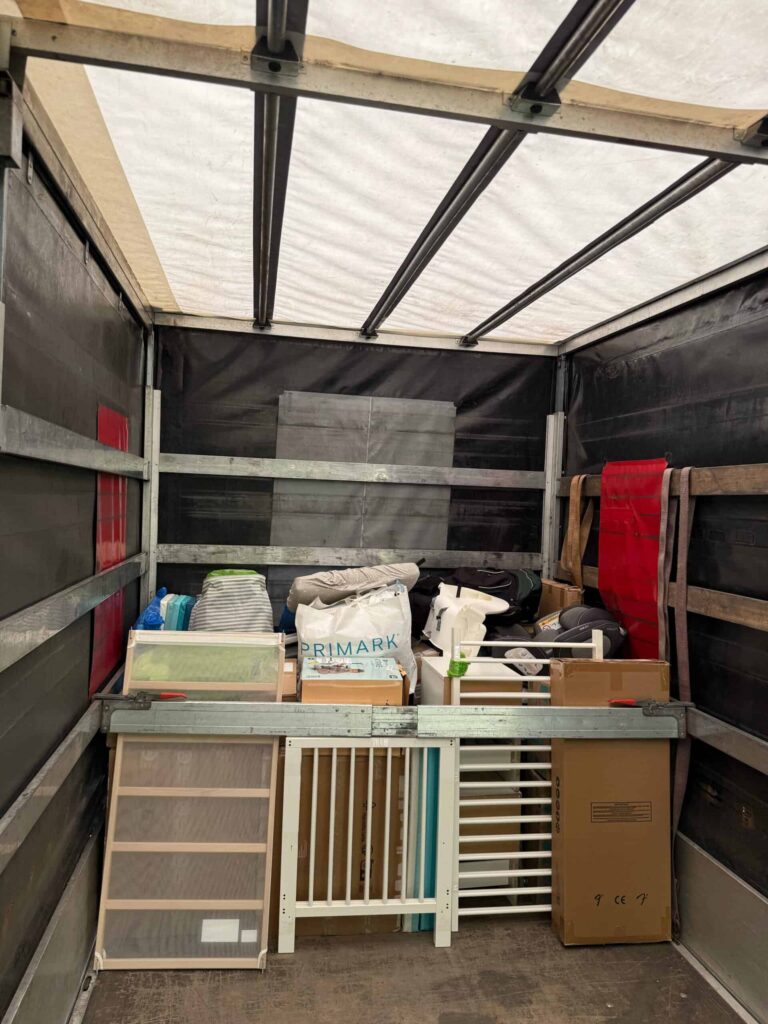
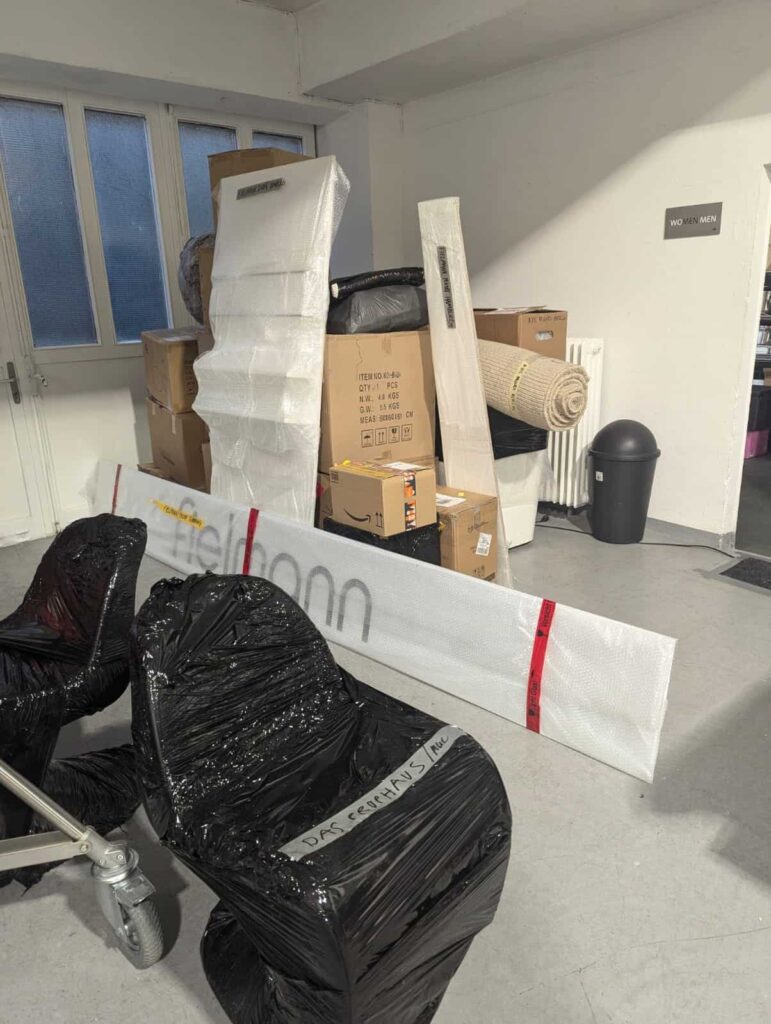
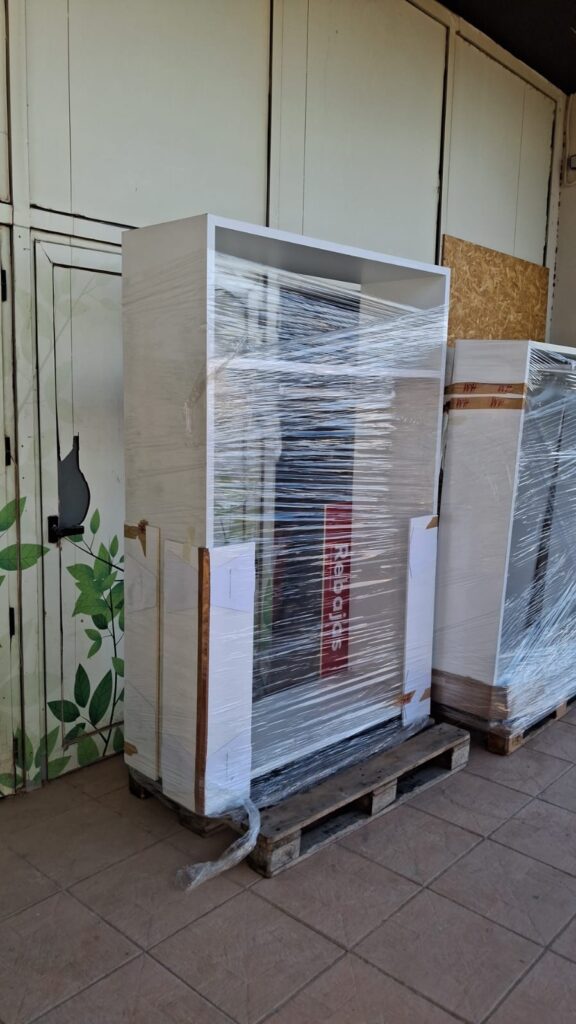
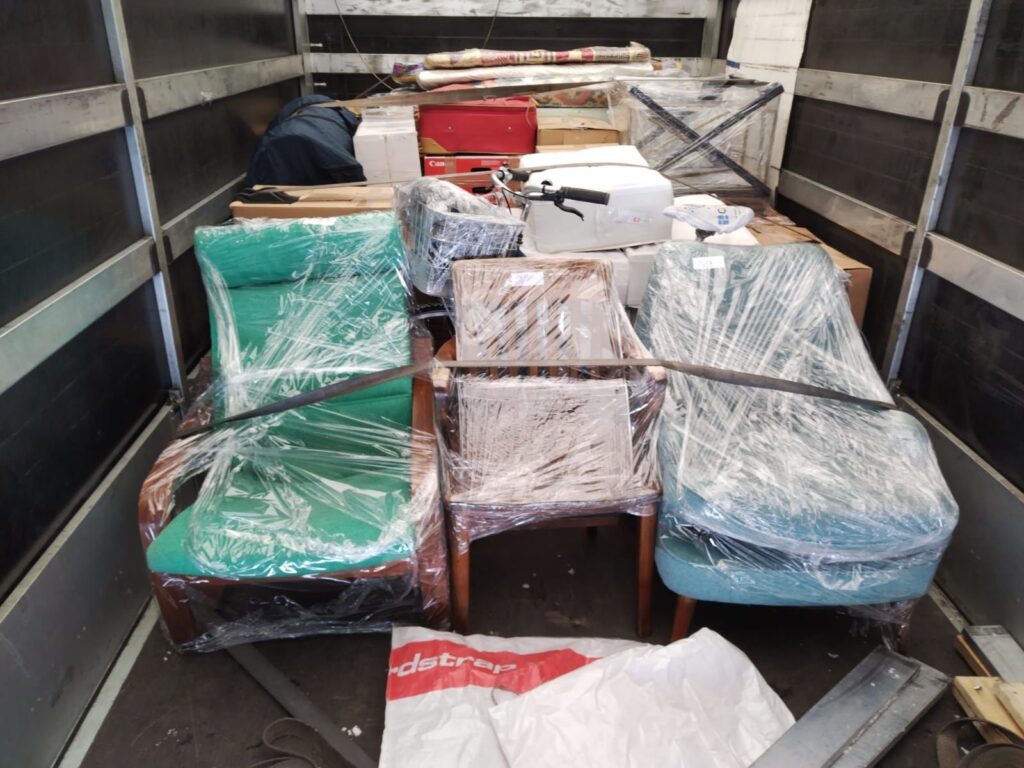
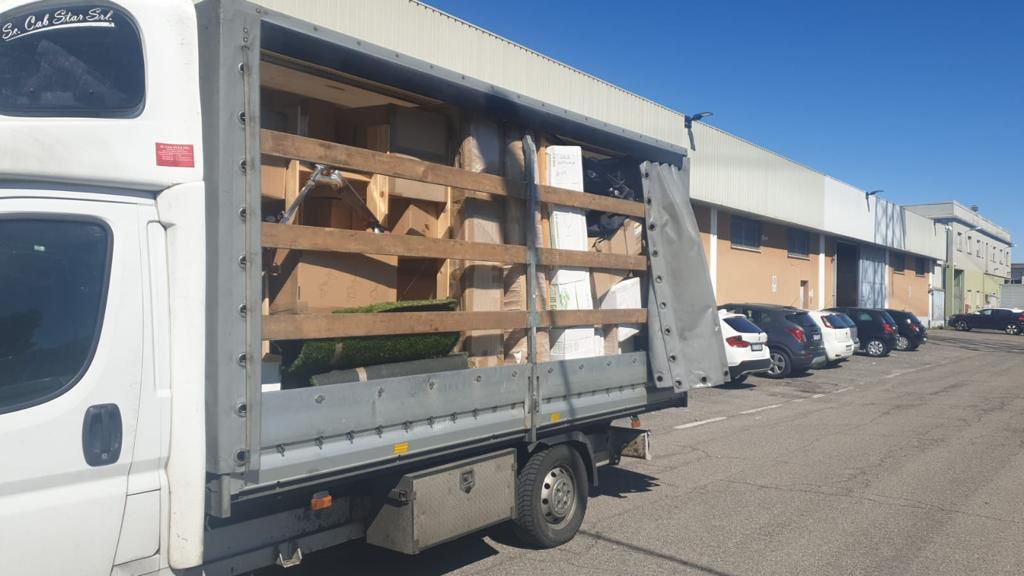
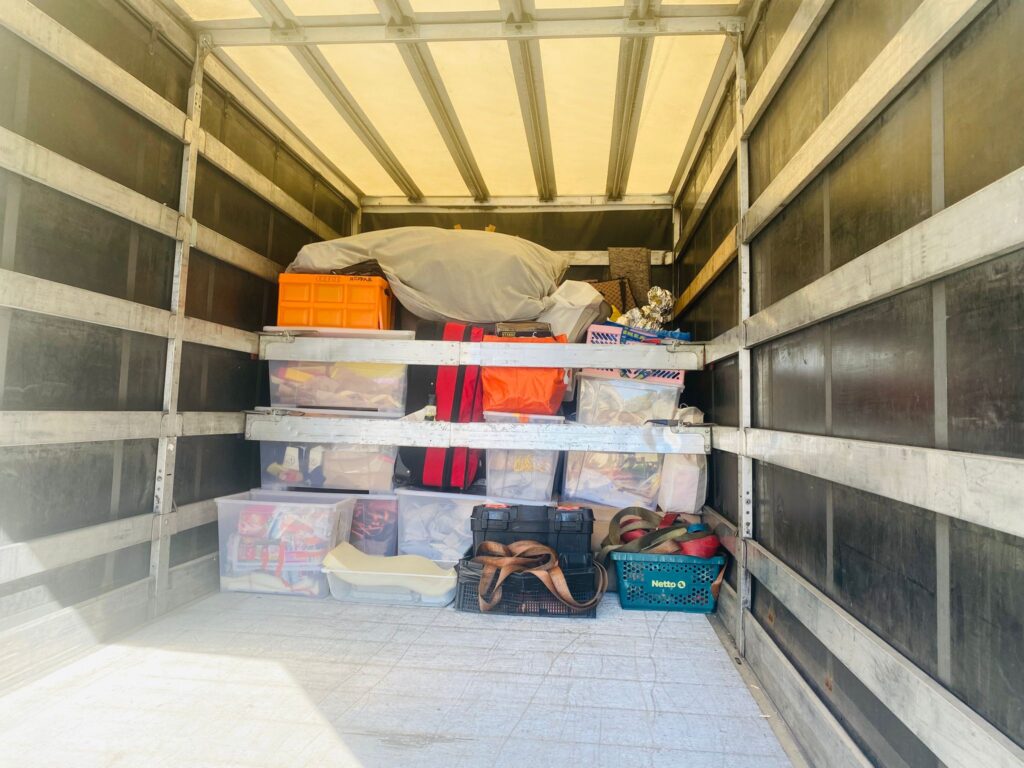
Smaller relocations are usually the quickest. A man and van move with boxes, essentials, and selected pieces of furniture often moves faster because loading is lighter and the setup is simpler. Larger home relocations take longer for an obvious reason: there is more to lift, more to protect, and more to coordinate.
This matters even more when the load includes wardrobes, beds, white goods, mirrors, electronics, or valuable furniture. Fragile or premium pieces may need slower handling. That extra care can add time, yet it usually pays off in better protection and far fewer headaches later.
As a practical rule of thumb, timing often looks like this:
- Small man and van move: often the fastest option
- Medium household move: more loading and planning time
- Full home or office move: may require staged timing
- Delicate items: slower handling, better protection
Customs preparation and packing can also affect the schedule more than many people realise. If documents are incomplete, inventory details are unclear, or the belongings are packed in a rushed way, the move can tighten very quickly. By contrast, when the paperwork is ready and the load is organised properly, the process feels more fluid and much easier to manage.
So while moving from UK to Germany can often be handled efficiently, the strongest timeline is not always the fastest one on paper. It is the one built around the real move, with enough care to protect your belongings, your budget, and your peace of mind.

Required Documents for Moving from UK to Germany
Paperwork is often the part people dread most, yet it is also one of the strongest ways to protect the move from delay and confusion. When documents are ready early, the relocation feels far more controlled. When they are left too late, even a well-planned move can start to wobble. That is why this part matters so much when you are moving from UK to Germany.
Because the UK is outside the EU, this route involves more customs and admin checks than many people expect. That does not mean the process has to feel intimidating. It simply means you should prepare the right documents early and rely on official guidance rather than assumptions, forum comments, or outdated advice.
In most cases, you should make sure these essentials are ready before moving day:
- a valid passport and identity documents
- visa or residence paperwork where relevant
- proof of address in Germany where needed
- customs paperwork for personal belongings if applicable
- an inventory list for transported items
- pet travel documents if relevant
A dedicated document folder can make an enormous difference. Keep both printed and digital copies of your key papers together so you are not searching through taped boxes for something urgent. That small step often saves a surprising amount of stress.
Do you need customs clearance when moving from UK to Germany?
In many cases, yes. Because the UK is outside the EU, customs and document checks matter much more than they do on EU-only routes. That is one of the key differences people notice when moving to Germany from UK after Brexit.
The exact paperwork can vary depending on your situation, how long you are staying, and what you are transporting. A household move with personal belongings is different from a commercial shipment. A long-term relocation may involve different supporting documents from a short stay. That is why it is so important to use official sources.
The safest pages to check are:
Before the move begins, it is wise to confirm a few practical details:
- whether your passport is valid for the move and residence process
- whether your visa or residence status requires extra paperwork
- whether your personal belongings need customs declarations or supporting documents
- whether your German address details are complete and correct
- whether your pets need vaccination records, microchip details, or travel certificates
If you are moving household belongings, an inventory list is especially useful. It creates structure, helps support customs checks when needed, and gives both you and the removals team a much clearer overview of what is being transported.
The simplest way to keep the admin side manageable is to prepare early, keep documents easy to access, and check official guidance instead of guessing. That is what helps moving from UK to Germany feel organised rather than overwhelming.
Step-by-Step Checklist for Moving to Germany from UK
The smoothest moves rarely happen by accident. They happen because the right decisions are made in the right order. That is exactly why a checklist matters. It turns a huge relocation into a sequence of clear, manageable steps and gives the whole move a much calmer structure.
Here is a practical checklist for moving to Germany from UK:
- Choose your moving date
Start with the anchor point. Once the date is fixed, every other decision becomes easier to organise. - Decide what you are taking
Separate essentials from items you can sell, donate, store, or replace. This reduces volume, cost, and clutter. - Measure your load properly
Count boxes, estimate cubic volume, and measure bulky furniture honestly. Accurate sizing protects the budget. - Pick the right removals service or man and van option
Smaller moves may suit a man and van setup, while larger home relocations need more space and structure. - Prepare documents early
Passport, customs paperwork, address details, and residence-related documents should be ready well before the move. - Pack room by room and label clearly
This speeds up loading, delivery, and unpacking while reducing confusion. - Confirm access and parking rules
Check stair access, parking limits, loading restrictions, and any building-specific requirements at both addresses. - Protect fragile furniture and electronics
Mirrors, screens, ceramics, and delicate surfaces need proper wrapping and careful positioning. - Keep essentials with you
Documents, medication, chargers, toiletries, keys, and first-night basics should stay separate from the main load. - Check the load on arrival
Review the key items first so you can settle in with more confidence and less stress.
Careful preparation often makes the move faster, calmer, and more cost-effective. Instead of reacting to problems in a rush, you create structure early. And that is exactly what helps moving from UK to Germany feel like a controlled transition rather than a scramble.
Choosing the Right Service for Your Move
Choosing the right service is one of the smartest decisions you will make during the whole relocation. It shapes the cost, the speed, the handling quality, and the overall stress level from the first lift to the final delivery. When you are moving from UK to Germany, the smartest option is not simply the one that sounds cheapest or most convenient. It is the one that genuinely fits the size, complexity, and urgency of the move.
Some relocations are small, fast, and relatively light. Others involve a full household, premium furniture, office equipment, or awkward access conditions that demand more structure. That is why a one-size-fits-all approach rarely works well. A student moving a few boxes and a chair does not need the same support as a family relocating a full home or a company moving workstations and equipment.
VANonsite offers a service structure built around those real differences:
| Need | Best VANonsite Service | Why It Helps |
|---|---|---|
| Fast small move | Last Minute Moving / man and van style option | Quick and flexible |
| Household relocation | Home Removals | Better for full home setups |
| Furniture-only transport | Furniture Removals | Safer for bulky items |
| Premium or delicate items | White Glove Delivery | Extra care and precision |
| Office relocation | Office Removals | Better planning for business moves |
| Packing support | Packing Service | Saves time and reduces breakage risk |
| Transition gap | Storage | Useful when move-in timing changes |
| Student relocation | Student Removals | Flexible and budget-aware |
For smaller moves, a man and van style option or Last Minute Moving can be a powerful choice because it keeps the setup agile, practical, and budget-aware. This works especially well for lighter relocations, student moves, and part-load transport where speed and flexibility matter more than a large removals structure.
For larger residential moves, Home Removals gives a much stronger framework. It is designed for full home setups, heavier furniture, and the extra coordination that bigger cross-border relocations usually demand. If the move is centred on selected bulky pieces rather than a full household, Furniture Removals offers a more precise fit.
Some items deserve a higher level of care from the start. Mirrors, designer furniture, delicate finishes, and premium interiors often justify the added attention of White Glove Delivery. Likewise, Packing Service can save time and sharply reduce breakage risk when the load is fragile or the schedule is tight.
For students, Student Removals provide a more flexible structure, while business customers often need the continuity and route planning built into Office Removals. If there is a timing gap between collection and move-in, storage can also become a valuable buffer rather than an afterthought.
For the route itself, removals to Germany is the most relevant internal page to explore further. It supports the destination-specific intent of the article and connects the advice directly to the service.
The right service should feel like relief, not friction. When the support level matches the move honestly, moving to Germany from UK becomes smoother, clearer, and much easier to manage from start to finish.
Why a Man and Van Service Works Well for Smaller Moves to Germany
For smaller relocations, a man and van service often feels like the sweet spot between affordability and reliability. It keeps the move light, flexible, and practical while still giving enough structure to move important belongings safely across borders.
This is why man and van works especially well for students, solo relocations, couples with lighter loads, and customers who only need to move boxes plus a modest amount of furniture. When the relocation is built around essentials rather than a full household, there is no reason to create a larger removals setup than the move actually needs.
It can also be faster. Smaller loads usually mean simpler loading, fewer handling stages, and more flexibility around dates and access conditions. That makes a real difference when time is tight or the budget does not leave much room for overbooking labour and space.
A man and van service is particularly useful when:
- you are moving a student load or solo setup
- you only need to transport boxes and selected essentials
- the move includes a modest amount of furniture
- you want a lighter, more flexible relocation to Germany
- keeping the service cost-effective matters strongly
That said, it only works well when the load genuinely fits the model. For a full family home, a bulky multi-room relocation, or a more complex office move, trying to keep everything inside a smaller setup can create delays, extra trips, and expensive corrections.
For the right type of relocation, though, man and van can be an excellent solution. It keeps moving from UK to Germany agile, practical, and far easier to manage without sacrificing professionalism or control.


Packing Tips for Moving from UK to Germany
Packing can look like the easiest part of a move until it starts going wrong. A split box, a chipped table edge, or a missing charger on the first night can turn a promising relocation into a draining, expensive mess. That is why good packing matters so much when you are moving from UK to Germany. It protects not only your belongings, but also the speed, cost, and smoothness of the whole journey.
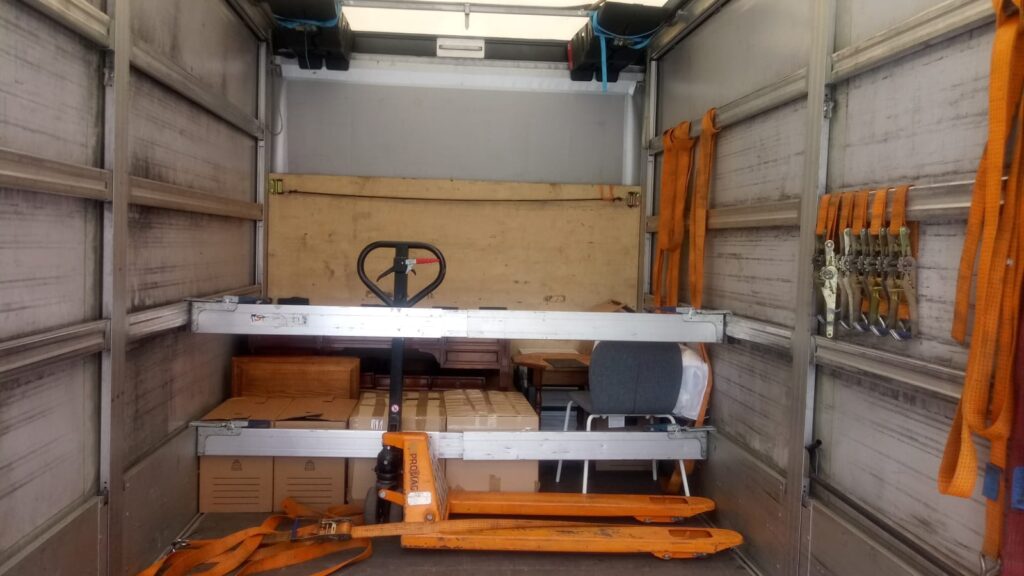
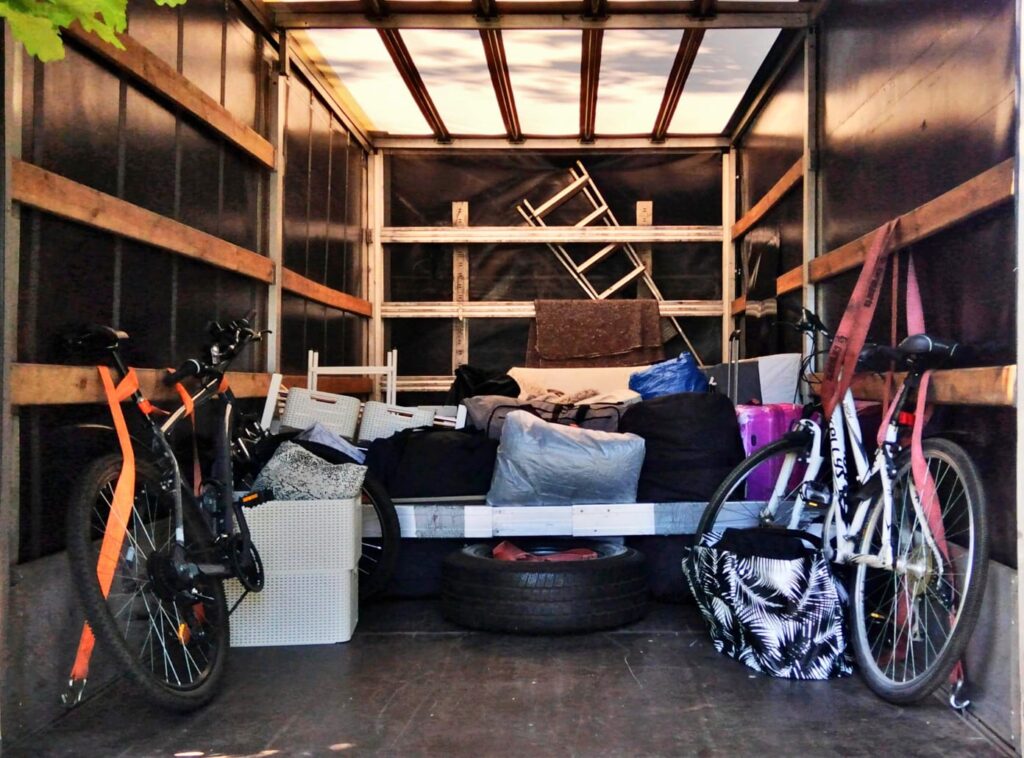
The first rule is simple: pack for movement, not just for storage. A box that survives a weekend in the hallway may not survive lifting, stacking, road transport, unloading, and a second carry through stairwells or narrow entrances. Strong boxes matter because international moves place repeated pressure on every item inside the load.
Fragile items need far more than a quick layer of paper. Glass, ceramics, electronics, and decorative pieces should be wrapped separately with enough cushioning to absorb vibration and impact. Heavy items should never sit on top of fragile ones. Premium furniture, mirrors, and polished surfaces need extra protection because cross-border transport can punish corners, edges, and finishes very quickly when packing is rushed.
Labels are another small detail with a huge payoff. A clearly marked box speeds up loading, supports smoother unloading, and makes unpacking far less chaotic. When every box shows the room, basic contents, and priority level, the whole move starts to feel more controlled.
A few practical habits make a major difference:
- use smaller boxes for books
- wrap glass and electronics carefully
- label by room and priority
- photograph valuable items before loading
- keep documents and chargers with you
- use professional packing for premium furniture, mirrors, or artwork
Essentials should always be kept separate from the main load. Documents, chargers, medication, toiletries, keys, and first-night items should travel with you, not disappear into the back of the van. That one choice can spare you a surprising amount of stress once you arrive.
When the move includes delicate pieces, valuable belongings, or a tight schedule, Packing Service can be a very smart upgrade. Professional packing saves time, reduces breakage risk, and brings consistency at exactly the stage where rushed decisions usually create the biggest problems.
Good packing is not about perfection. It is about removing avoidable risk before the move even starts. And for moving to Germany from UK, that kind of preparation pays off more than most people realise.
Common Challenges When Moving to Germany from UK
Most stressful moves do not go wrong because of the route itself. They go wrong because small details are missed until they become expensive problems. That is especially true when moving to Germany from UK, where timing, customs, packing, and access all have the power to create friction very quickly if they are underestimated.
One of the most common mistakes is underestimating total volume. People remember wardrobes, sofas, and beds, yet forget how fast smaller items multiply. Boxes, lamps, office gear, kitchenware, bedding, and all the contents of drawers can push a move beyond the planned space much faster than expected.
Poor packing creates another layer of risk. Weak boxes, rushed wrapping, exposed furniture surfaces, and badly balanced loads can all lead to breakage or scratches. This is where a move becomes expensive in more than one way. Damage costs money, but it also drains energy and sours the whole relocation experience.
Access issues are another frequent problem. Narrow staircases, limited parking, strict building rules, loading windows, and awkward entrances can all slow a move down sharply. A pickup that looked simple on paper can become labour-heavy and time-consuming very quickly if these details are not checked in advance.
Then there is paperwork. Delayed documents, unclear inventory details, or customs confusion can make the move feel uncertain at the worst possible moment. Add last-minute scheduling pressure, and everything starts to tighten. Once the timetable shrinks, stress tends to grow fast.
The most common challenges usually include:
- underestimating total volume
- poor packing
- access issues at pickup or delivery
- delayed paperwork or customs confusion
- last-minute scheduling pressure
- fragile item damage caused by rushed handling
The reassuring part is that most of these problems are preventable. They do not need heroic solutions. They need early planning, honest sizing, clear communication, and the right support level. That is what keeps moving from UK to Germany from feeling chaotic and helps it stay controlled instead.
Why Customers Value GPS-Tracked Transport
One of the most unsettling moments in any international move comes after collection. Once the van pulls away, many people start to feel the same quiet tension. Where are my belongings now? Is everything on schedule? When should I be ready on the other side? That uncertainty is exactly why GPS-tracked transport matters so much when you are moving from UK to Germany.
GPS tracking gives customers something deeply valuable: visibility. Instead of feeling as though the move disappears into a blank space between pickup and arrival, you have a clearer sense of progress. That visibility changes the emotional rhythm of the whole relocation. The move feels less unknown, less fragile, and much easier to plan around.
This becomes especially important when your relocation is linked to tenancy dates, apartment access windows, key handovers, or work start times. When timing matters, stronger visibility creates better decisions. It helps you prepare for arrival with more calm and far less guesswork.
GPS tracking brings several practical advantages:
- clearer visibility during transport
- better planning for arrival
- more confidence for valuable loads
- stronger communication and timing clarity
That extra clarity matters even more when the load includes premium furniture, electronics, sentimental pieces, or fragile household items. When your belongings are crossing borders, reassurance is not a minor detail. It becomes part of the service itself.
It also improves communication. Better visibility supports more accurate updates, and more accurate updates make the overall customer experience feel stronger from beginning to end. Instead of vague delivery windows, the move feels transparent and easier to trust.
This is one of the quiet strengths behind VANonsite. GPS tracking on every load helps make moving to Germany from UK feel more controlled, more visible, and far less stressful at the exact moment customers need that confidence most.
Who Can Benefit Most from Moving from UK to Germany Services?
This route is not designed for one type of customer only. In reality, moving from UK to Germany can look completely different depending on the person, the property, and the reason for the move. Some people relocate for work. Others are moving for family, study, lifestyle, or a new beginning that has been waiting for the right moment. That is exactly why flexibility matters so much.
These services can be especially useful for:
- families moving into a new home
- professionals relocating for work
- students moving with limited loads
- couples starting a new chapter abroad
- offices moving equipment and furniture
- expats shipping selected belongings
- people moving furniture only
Families often need more space, more coordination, and more protection because the move usually includes larger volume and tighter timing. Professionals relocating alone may need something faster and leaner. Students often benefit from a lighter man and van setup because the load is smaller and the budget is more sensitive.
Couples starting a new chapter abroad often fall somewhere in the middle. They may not need a full-scale household removals structure, yet they still need enough space, planning, and care to move essentials safely. Office moves carry a different type of pressure again, because timing, continuity, and equipment handling all matter at once.
Then there are expats and furniture-only customers who may not be relocating an entire home at all. Some simply need a safe, reliable way to move selected belongings. Others want a professionally managed route for a few large or valuable pieces.
Different move types need different service levels. That is exactly why flexibility matters. The strongest support for moving to Germany from UK is never built around one rigid formula. It is shaped around the real needs of the customer, the size of the load, and the practical demands of the move.
Why Choose VANonsite for Moving from UK to Germany?
Choosing a moving partner is about more than booking a van and a date. It is about trusting someone with your schedule, your belongings, your documents, and the small details that decide whether the move feels smooth or exhausting. When you are moving from UK to Germany, that trust matters even more because cross-border relocations leave less room for guesswork.
This is where VANonsite stands out in a reassuring, practical way. The company combines fast and secure transport, GPS tracking on every load, flexible vehicle sizes, and service options that fit everything from smaller student moves to full home and office relocations. That balance matters because no two moves look the same.
Some customers need a light man and van setup for a compact relocation. Others need a more structured service for a family move, premium furniture, office equipment, or fragile items that require greater care. VANonsite is built to support both ends of that spectrum without forcing every customer into the same model.
Another major strength is clarity. When a moving service is transparent, the whole process feels easier to trust. Customers know what type of vehicle fits the load, how the route is being handled, and what level of support is available before, during, and after collection. That becomes especially valuable when the move includes customs preparation, restricted access windows, or time-sensitive delivery.
VANonsite also gives customers room to shape the move around real needs rather than assumptions. Optional packing, storage, and white glove support make it easier to handle complex, delicate, or time-sensitive relocations without adding unnecessary friction.
In practical terms, VANonsite is:
- flexible for small and large relocations
- built for speed without sacrificing care
- transparent and practical in how the service works
- suitable for both standard and premium moves
For customers moving to Germany from UK, that combination of speed, visibility, flexibility, and secure handling creates real peace of mind. It helps turn a move that could feel chaotic into something much more structured, reliable, and manageable.
Final Thoughts on Moving from UK to Germany
Moving to Germany does not have to feel chaotic when the planning is right. What usually makes the difference is not luck. It is preparation, realistic timing, the right vehicle size, and a service that genuinely matches the move instead of creating new problems around it.
That is why the strongest relocations are rarely built on guesswork. They are built on clear decisions made early: what you are taking, how much space you really need, what documents matter, and what kind of support will make the move safer and smoother. When those pieces come together, moving from UK to Germany feels far more manageable than many people expect.
For some people, the best option will be a lighter man and van service. For others, it will be a more structured removals setup with packing help, extra space, or specialist handling. Either way, the smartest result comes from matching the service to the real move rather than forcing the move into the wrong shape.
VANonsite helps make that easier with flexible vehicle sizes, secure transport, GPS tracking, and service options built for homes, offices, furniture, students, and part loads. That is what turns a stressful relocation into a more confident and controlled transition.
Request your tailored moving quote today, find the right vehicle size for your move, and plan your relocation with a trusted removals partner.
Frequently Asked Questions About Moving from UK to Germany
How much does moving from UK to Germany cost?
The final cost usually depends on the size and weight of the load, the collection and delivery locations, access conditions, and any extra services such as packing, storage, or dismantling furniture. Smaller moves usually cost less, while larger household relocations need more space, more labour, and more planning.
How long does moving to Germany from UK take?
Many moves can be completed efficiently, but the exact timing depends on route, move size, property access, customs readiness, and the level of care needed for the load. Smaller moves often move faster, while full household or office relocations usually need more loading and coordination time.
Is a man and van service enough for my move?
In many cases, yes. A man and van service can work very well for student relocations, part loads, box-only transport, and smaller furniture moves. It is often the most practical option when the relocation is modest in size and does not require a full removals setup.
Do I need customs paperwork to move from the UK to Germany?
In many cases, yes. Because the UK is outside the EU, customs-related paperwork is often an important part of the move. The exact documents depend on your situation and what you are transporting, so it is wise to check official sources such as Make it in Germany, German Customs, and GOV.UK before moving day.
Can I book packing help for moving from UK to Germany?
Yes. Professional packing support can make the move safer, faster, and much easier to manage, especially when fragile furniture, electronics, mirrors, artwork, or premium items are involved. It also helps reduce the risk of avoidable damage during loading and delivery.
What size van do I need for my move?
That depends on how much you are taking. Smaller moves may suit Moving One at 1 m3 or Moving Basic at 5 m3, while studio and part-load relocations may fit Moving Medium at 10 m3. Larger household moves may require Moving Premium at 15 m3, Moving Premium Plus at 30 m3, or even Moving Full House XXL at 90 m3 for full-scale family relocations.