
Moving to the Republic of Ireland? If your destination is Dublin, Cork, Galway, Limerick or elsewhere in the Republic rather than Northern Ireland, use our UK to Ireland removals guide. The destinations follow different route and customs contexts, so confirm the full address before requesting a quote.
England to Northern Ireland removals require more planning than a standard move between two mainland cities. Your belongings must travel by road, cross the Irish Sea by ferry and then continue to your new address in Northern Ireland. With the right removal company, however, the process can remain clear, controlled and surprisingly straightforward.
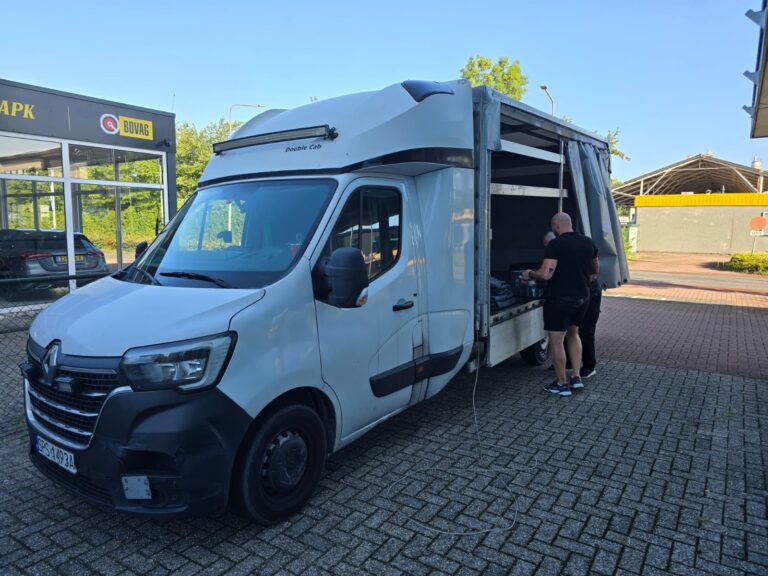
VANonsite coordinates collection, loading, ferry transport and final delivery as one organised service. Whether you are moving a few boxes, a student room, valuable furniture, a busy office or an entire family home, the service can be adapted to the size and complexity of your relocation.
Every shipment can be monitored through GPS tracking, giving you greater visibility throughout the journey. Professional packing, dismantling, furniture assembly, storage and white glove handling can also be arranged when required.
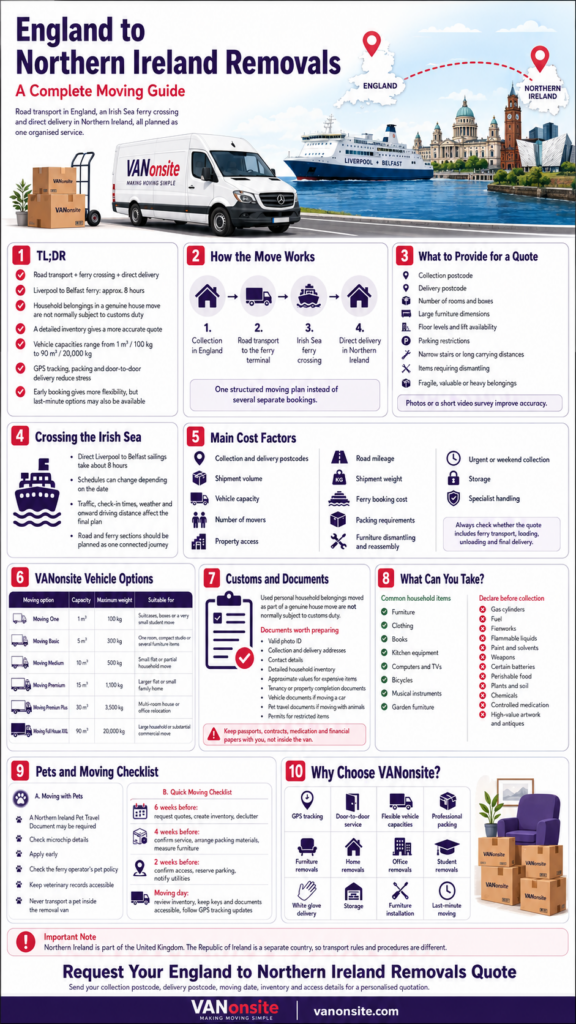
TL:DR
- England to Northern Ireland removals combine road transport in England, an Irish Sea ferry crossing and direct delivery in Northern Ireland.
- The Liverpool to Belfast ferry route takes approximately eight hours, although total transport time depends on the collection and delivery locations.
- Personal household belongings moved as part of a genuine house move are not normally subject to customs duty.
- A detailed inventory helps you select the correct vehicle and receive a more accurate quotation.
- VANonsite offers capacities from 1 m³ and 100 kg to 90 m³ and 20,000 kg.
- GPS tracking, professional packing and door-to-door delivery reduce uncertainty throughout the move.
- Early booking gives you greater flexibility, although last-minute and man and van options may also be available.




How Do England to Northern Ireland Removals Work?
Most removals from England to Northern Ireland follow four main stages:
- Collection from your home, flat, student accommodation, office or storage unit
- Road transport to the selected ferry terminal
- Ferry transport across the Irish Sea
- Direct delivery to the destination in Northern Ireland
Although England and Northern Ireland are both part of the United Kingdom, the sea crossing introduces additional logistics. The removal company must coordinate driving distance, ferry schedules, commercial vehicle requirements, driver hours and delivery access.
A specialist service brings these elements together. Instead of arranging a van, loading team, ferry booking and local delivery separately, you receive one structured moving plan.
VANonsite can collect belongings from locations across England, including London, Manchester, Birmingham, Liverpool, Leeds, Bristol, Newcastle, Sheffield, Nottingham and surrounding areas. Delivery can be arranged to Belfast, Lisburn, Newry, Bangor, Derry or Londonderry, Armagh, Coleraine, Ballymena and other Northern Irish destinations.
Collection at Your Property in England
Successful removals from England to Northern Ireland begin long before the van arrives.
The removal team needs accurate information about your property, belongings and access conditions. Loading a ground-floor house with private parking is very different from collecting furniture from a fourth-floor flat on a narrow London street.
Before requesting a quotation, provide:
- The full collection postcode
- The full delivery postcode
- The number of rooms
- The estimated number of boxes
- Large furniture dimensions
- Floor levels at both addresses
- Lift availability
- Parking restrictions
- Narrow staircases or doorways
- Long carrying distances
- Items requiring dismantling
- Fragile, valuable or unusually heavy belongings
Photographs or a short video survey can make the estimate much more accurate. They help the moving team identify difficult access, bulky furniture and items that may need specialist protection.
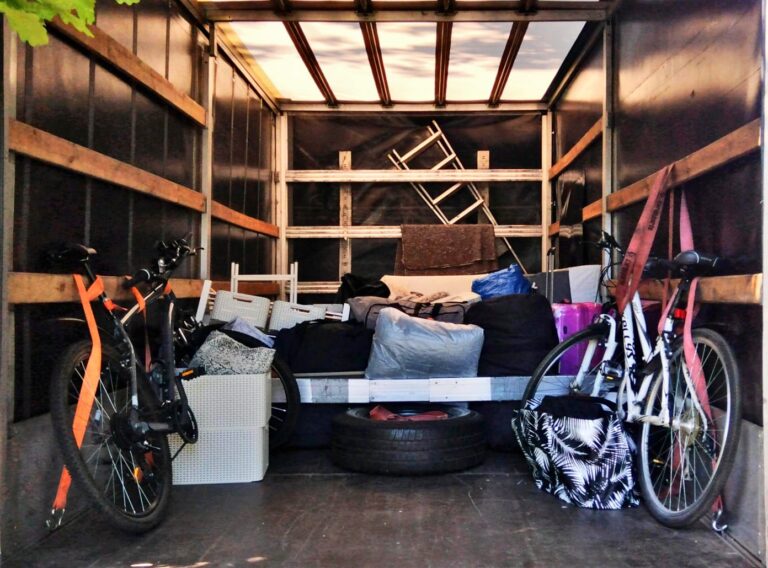
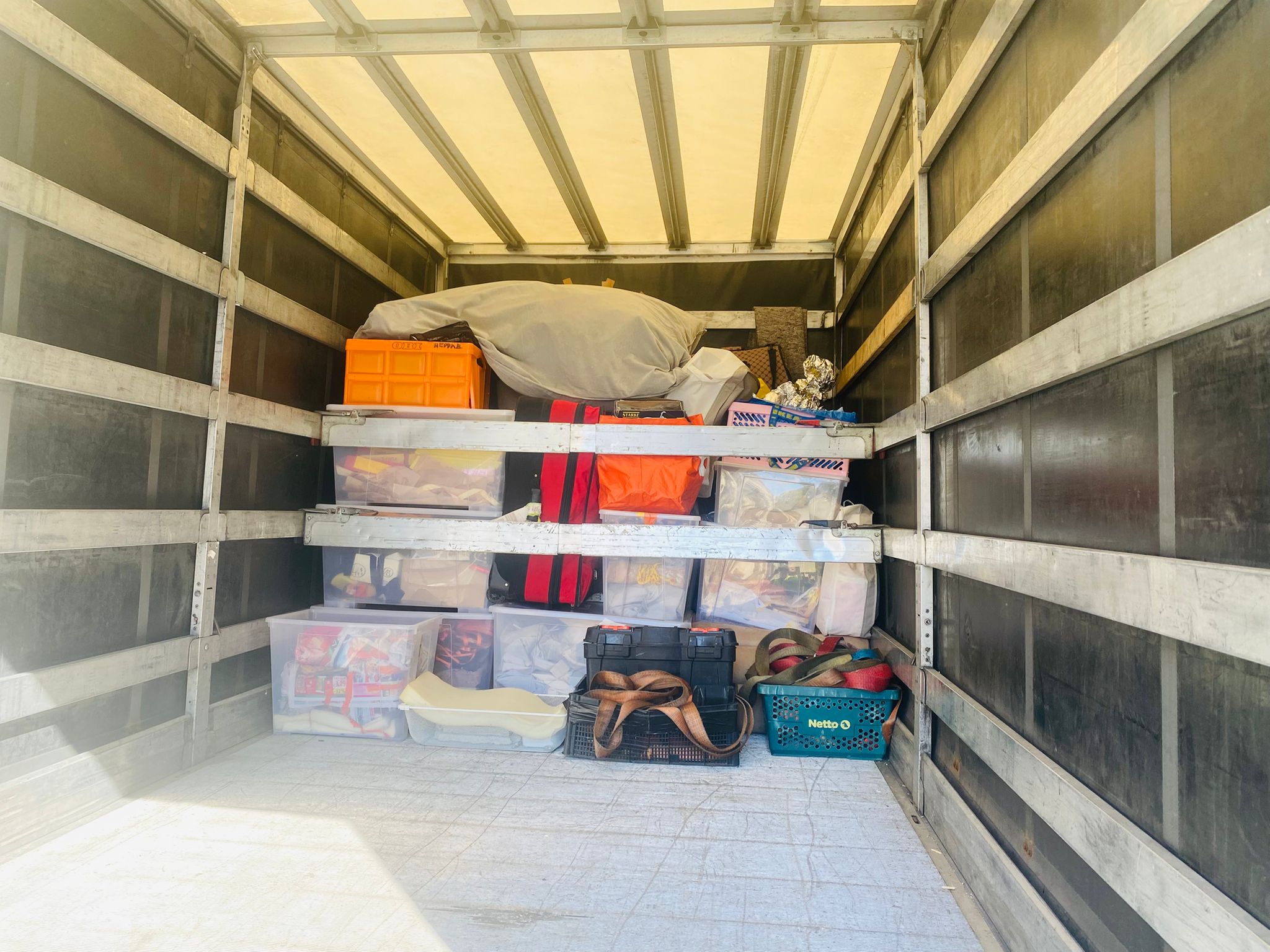
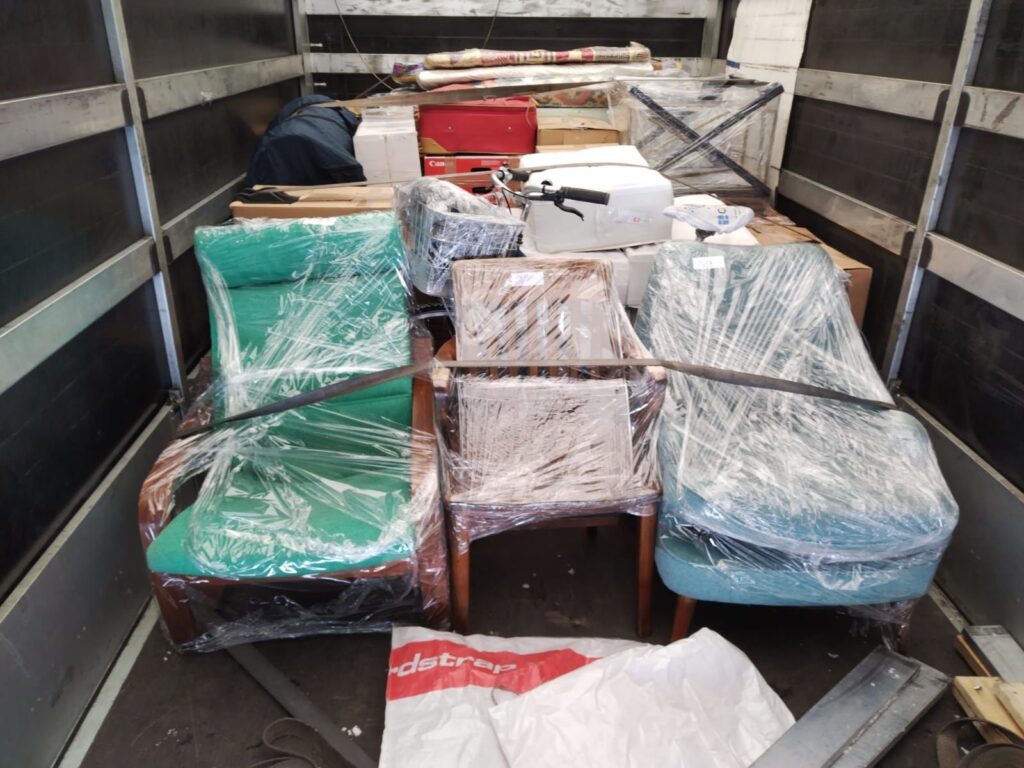
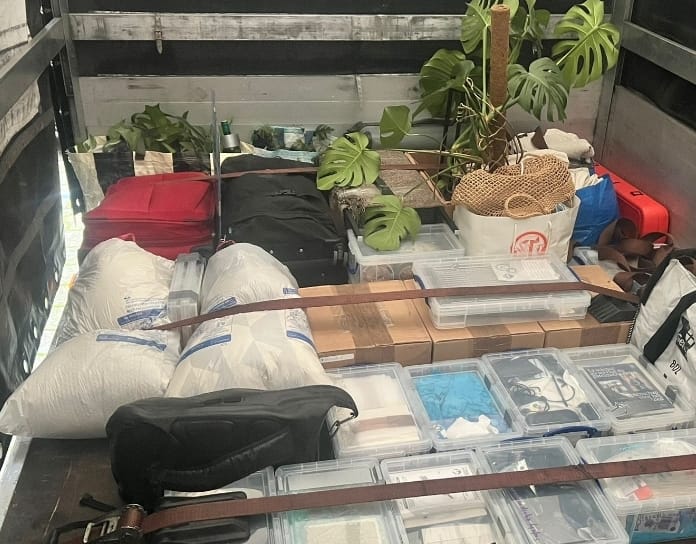
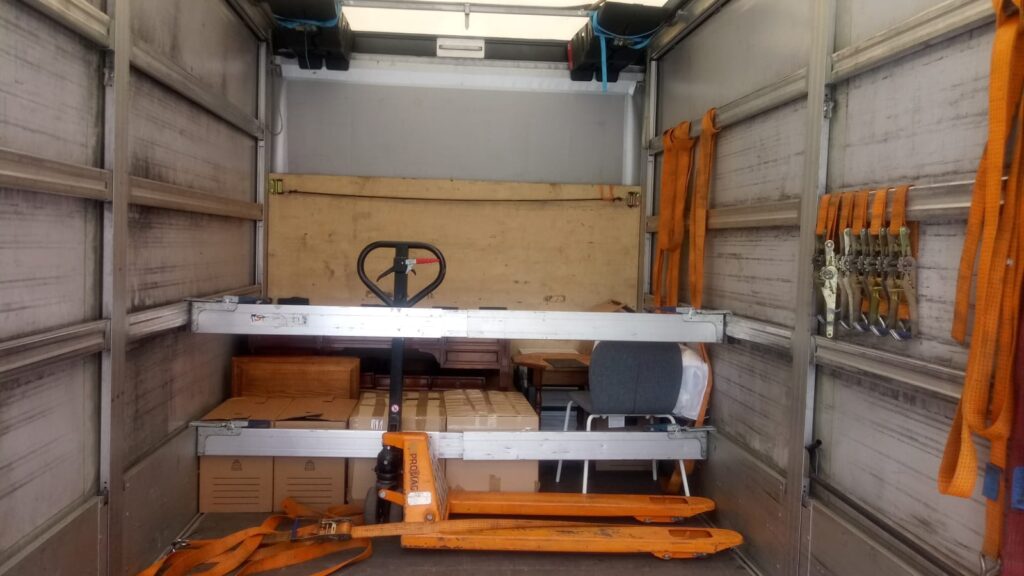
On collection day, furniture can be wrapped in protective blankets and secured inside the vehicle. Mattresses, mirrors, televisions and delicate surfaces may require additional covers, corner protection or specialist packaging.
Good preparation reduces loading time and lowers the risk of damage. It also helps prevent unexpected charges caused by undisclosed access problems.
Crossing the Irish Sea
The ferry crossing is one of the most important elements of England to Northern Ireland removals.
The direct Liverpool to Belfast route offers day and night sailings and takes approximately eight hours. The exact schedule can change, so the final route should always be confirmed for your specific moving date.
Depending on the collection point, vehicle size and ferry availability, the removal company may consider different route combinations. The shortest route on a map is not always the fastest or most efficient. Traffic, ferry check-in times, sailing schedules and onward driving distance can influence the final plan.
Weather may also affect ferry operations. A professional moving schedule should therefore include realistic timing rather than an overly narrow delivery promise.
VANonsite plans the road and ferry sections as one connected journey. This gives customers a clearer understanding of the collection window, transit period and expected delivery date.
Delivery in Northern Ireland
After leaving the ferry, the van continues to the final address in Northern Ireland.
The delivery service may involve straightforward unloading, or a more complete moving package that includes:
- Carrying boxes into the correct rooms
- Positioning furniture
- Reassembling beds, tables and wardrobes
- Unwrapping selected items
- Removing used packing materials
- Installing office furniture
- Coordinating access with an estate agent or landlord
Before delivery, confirm whether the destination has restricted parking, narrow access, steps, height limits or an allocated unloading time.
If you are moving into a flat, check whether the lift is large enough for your furniture. Measure doorways, staircases and corridors before moving day. A sofa that fitted comfortably into your previous home may not pass through the entrance of the new property.
How Much Do England to Northern Ireland Removals Cost?
There is no universal price for removals England to Northern Ireland. The total depends on the route, shipment volume, weight, ferry charges, labour and optional services.
The most important cost factors are:
- Collection and delivery postcodes
- Total road mileage
- Shipment volume in cubic metres
- Total shipment weight
- Vehicle capacity
- Ferry booking cost
- Number of movers required
- Packing requirements
- Access at both properties
- Furniture dismantling and reassembly
- Urgent, weekend or evening collection
- Storage requirements
- Specialist handling
A small man and van relocation will usually cost less than a full household move requiring several movers, extensive packing and a 30 m³ vehicle.
What should be included in a quotation?
| Cost element | What it may include |
|---|---|
| Vehicle and mileage | Road transport from collection to port and from port to delivery |
| Ferry transport | Commercial vehicle and driver crossing |
| Labour | Loading, carrying and unloading |
| Packing materials | Boxes, tape, blankets, covers and protective materials |
| Packing service | Professional preparation of household or office belongings |
| Access requirements | Parking, stairs, waiting time or long carrying distances |
| Assembly | Dismantling and rebuilding furniture |
| Storage | Temporary storage before or after transport |
| Specialist handling | Antiques, artwork, glass, designer furniture or delicate equipment |
Always check whether the quotation includes the ferry, loading, unloading and final delivery. A suspiciously cheap offer may exclude an essential part of the journey.
A detailed inventory is the best protection against unexpected costs. Include every sofa, wardrobe, appliance, bicycle, box and garden item. Underestimating the volume may result in insufficient vehicle space or the need for an additional journey.
Choosing the Right VANonsite Vehicle
VANonsite offers several vehicle options for UK to Northern Ireland removals.
| Moving option | Capacity | Maximum weight | Suitable for |
|---|---|---|---|
| Moving One | 1 m³ | 100 kg | Suitcases, boxes or a very small student move |
| Moving Basic | 5 m³ | 300 kg | One room, a compact studio or several furniture items |
| Moving Medium | 10 m³ | 500 kg | A small flat or partial household move |
| Moving Premium | 15 m³ | 1,100 kg | A larger flat or small family home |
| Moving Premium Plus | 30 m³ | 3,500 kg | A multi-room house or office relocation |
| Moving Full House XXL | 90 m³ | 20,000 kg | A large household or substantial commercial move |
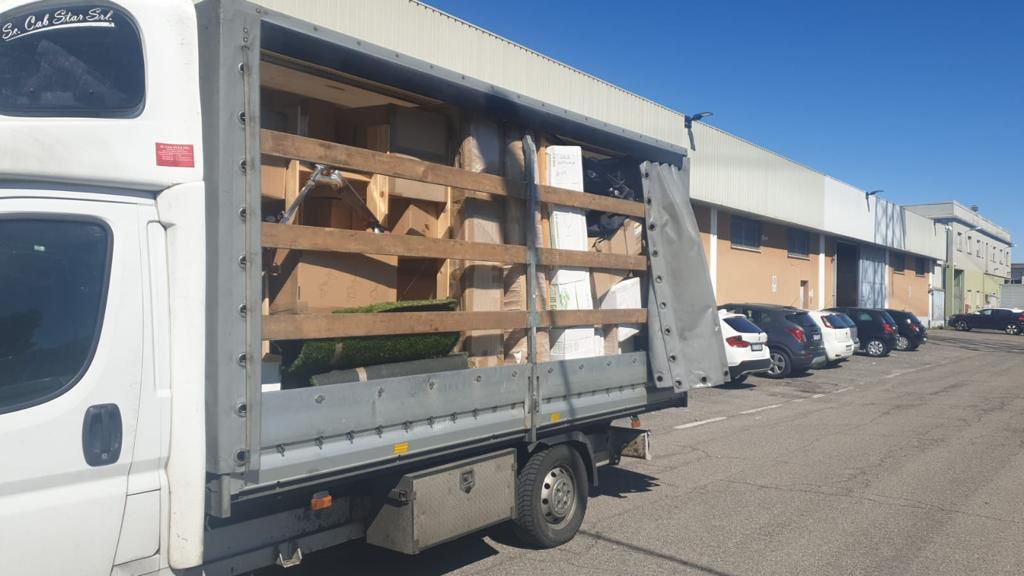
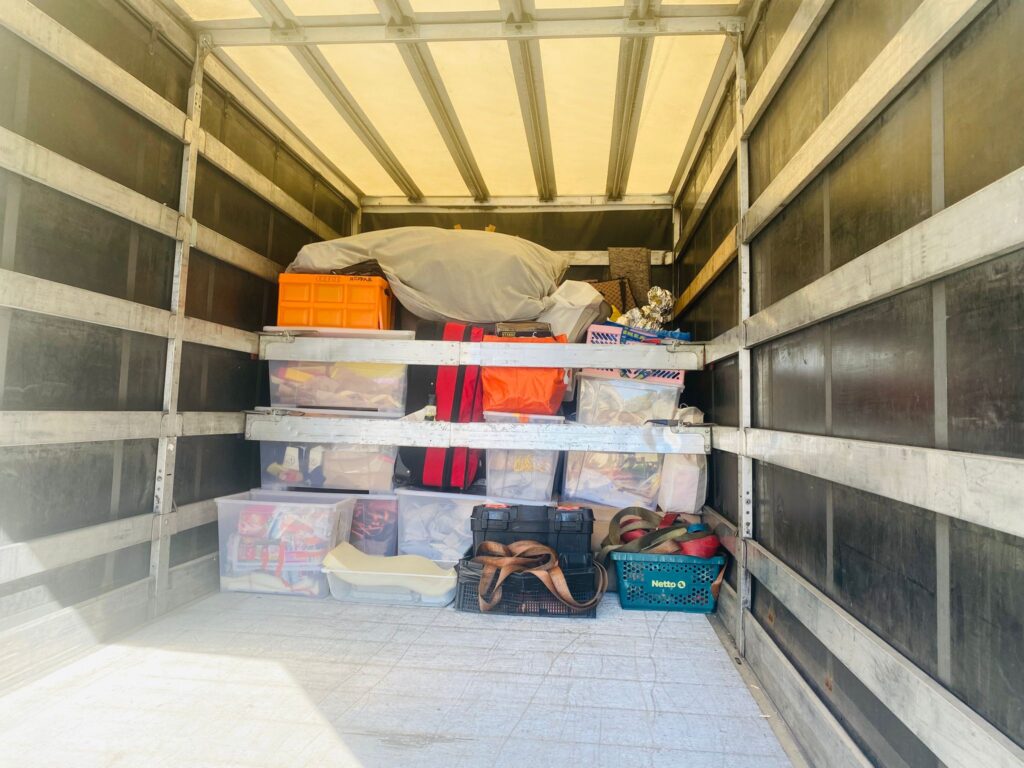
The smallest option can work well for luggage, boxes and limited personal belongings. In contrast, house removals from England to Northern Ireland may require 15 m³, 30 m³ or more.
Volume and weight must be assessed together. Books, tools and filing cabinets may occupy little space but create a heavy load. Sofas, mattresses and wardrobes take up considerable space without necessarily reaching the vehicle’s weight limit.
How to Estimate Moving Volume
You do not need to calculate every item with perfect mathematical accuracy. However, a structured inventory can greatly improve your quotation.
Start by listing belongings room by room.
Living room
- Sofa and armchairs
- Coffee table
- Television and stand
- Shelving
- Cabinets
- Lamps
- Rugs
- Packed boxes
Bedroom
- Bed and mattress
- Wardrobe
- Chest of drawers
- Bedside tables
- Desk
- Chair
- Clothing boxes
Kitchen
- Table and chairs
- Microwave
- Small appliances
- Cookware
- Crockery
- Food boxes
- Fridge or freezer
Other areas
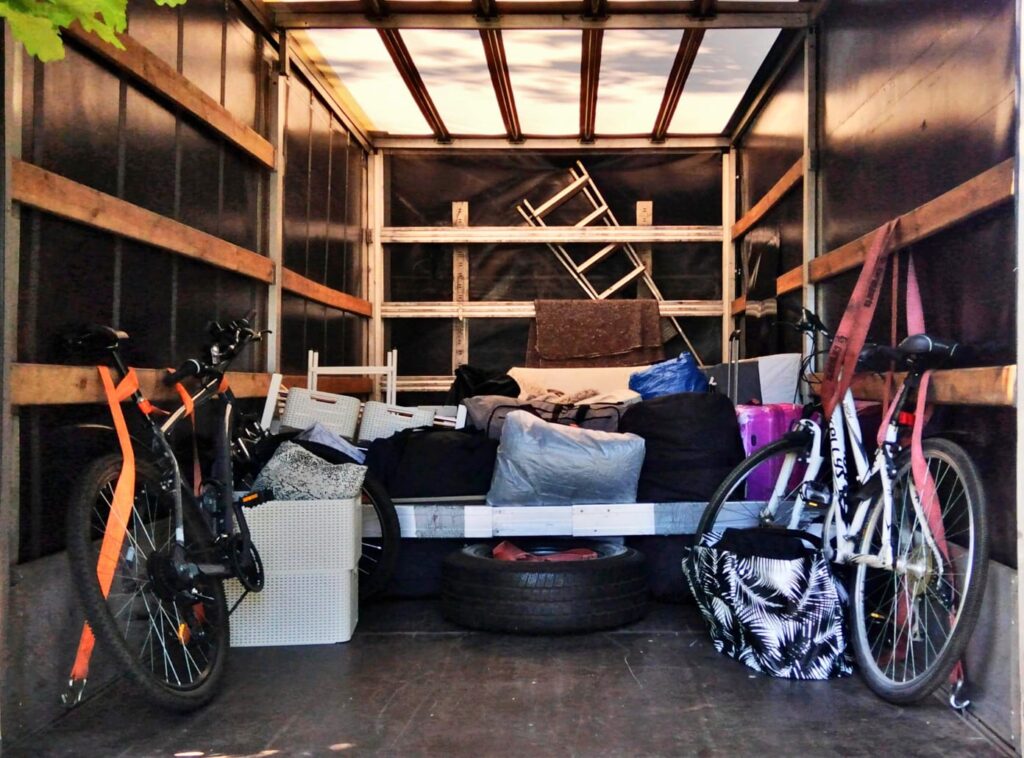
- Bicycles
- Garden furniture
- Tools
- Sports equipment
- Office equipment
- Garage contents
- Storage boxes
Send photographs of bulky pieces and include dimensions whenever possible. Large modular sofas, American-style refrigerators and solid wardrobes deserve special attention.
Decluttering before finalising the inventory can also lower the cost. There is little value in paying to transport broken furniture, unused appliances or boxes that have remained unopened for years.
Customs Rules for Moving to Northern Ireland
Northern Ireland is part of the UK, but movements of goods from Great Britain can be affected by specific rules under the Windsor Framework.
According to current UK government guidance, personal belongings moved from Great Britain to Northern Ireland as part of a genuine house move are not normally subject to customs duty. However, a professional carrier may still have operational responsibilities and may need to complete relevant transport declarations.
You can review the official guidance on moving your home from Great Britain to Northern Ireland.
Documents worth preparing
For house removals from England to Northern Ireland, prepare:
- Valid photo identification
- Full collection and delivery addresses
- Contact details
- A detailed household inventory
- Approximate values for expensive items
- Proof of ownership for unusual high-value goods
- Tenancy or property completion documents
- Vehicle documents when relocating a car
- Pet travel documents when moving with animals
- Relevant permits for restricted items
Keep essential documents with you. Do not pack passports, contracts, medication or financial papers inside the removal van.
Personal belongings and commercial goods
Used furniture, clothing, books, kitchenware and other personal effects are normally straightforward when they form part of a genuine home move.
Commercial goods may be treated differently. These can include:
- Products intended for resale
- New business stock
- Commercial samples
- Tools used for business
- Retail fixtures
- Office equipment owned by a company
- Large quantities of identical products
Tell the removal company when the shipment includes commercial items. Correct classification helps prevent delays and documentation problems.
What Can You Take to Northern Ireland?
Most ordinary household belongings can be transported, including:
- Furniture
- Clothing
- Books
- Kitchen equipment
- Televisions and computers
- Decorations
- Bicycles
- Musical instruments
- Toys
- Garden furniture
- Personal possessions
Some items may be prohibited by the removal company, ferry operator or transport regulations.
Declare the following before collection:
- Gas cylinders
- Fuel
- Fireworks
- Flammable liquids
- Paint and solvents
- Weapons
- Certain batteries
- Perishable food
- Plants and soil
- Chemicals
- Controlled medication
- High-value artwork
- Antiques
Never hide questionable items inside sealed boxes. Undeclared hazardous materials can put the vehicle, ferry crew and entire shipment at risk.
House Removals from England to Northern Ireland
A full household relocation can involve hundreds of individual items. Without a clear system, boxes reach the wrong rooms, fixings go missing and fragile belongings become vulnerable.
Professional home removals can include planning, collection, protection, transport and final delivery.
For a smoother move, divide your belongings into four categories:
- Items to transport
- Items to sell
- Items to donate
- Items to recycle or dispose of
This simple process can reduce volume and make unpacking easier.
Furniture removals
Large furniture needs more than free space inside a van. It must be protected from movement, pressure and surface damage.
VANonsite furniture removals can be arranged for complete households or individual items such as:
- Sofas
- Beds
- Wardrobes
- Dining tables
- Cabinets
- Desks
- Designer furniture
- Antique pieces
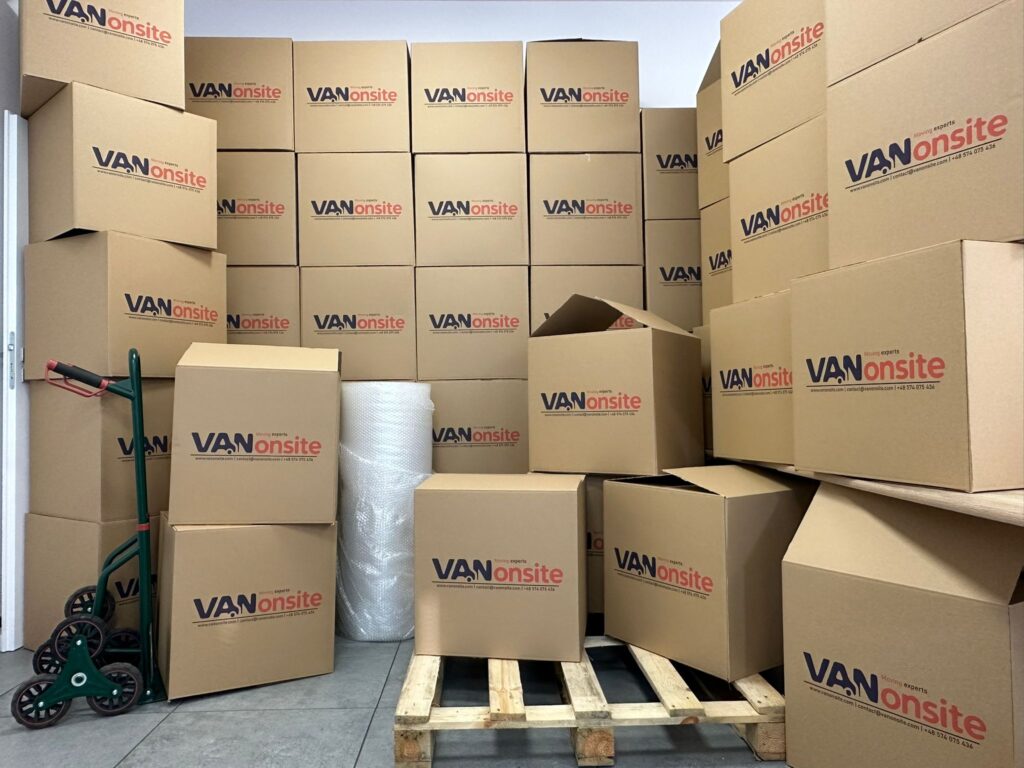
Some furniture may need to be dismantled before loading. Screws, brackets and fittings should be stored in labelled bags and attached to the correct item.
Packing services
Professional packing services are particularly useful for long-distance removals from England to Northern Ireland.
A packing team can use:
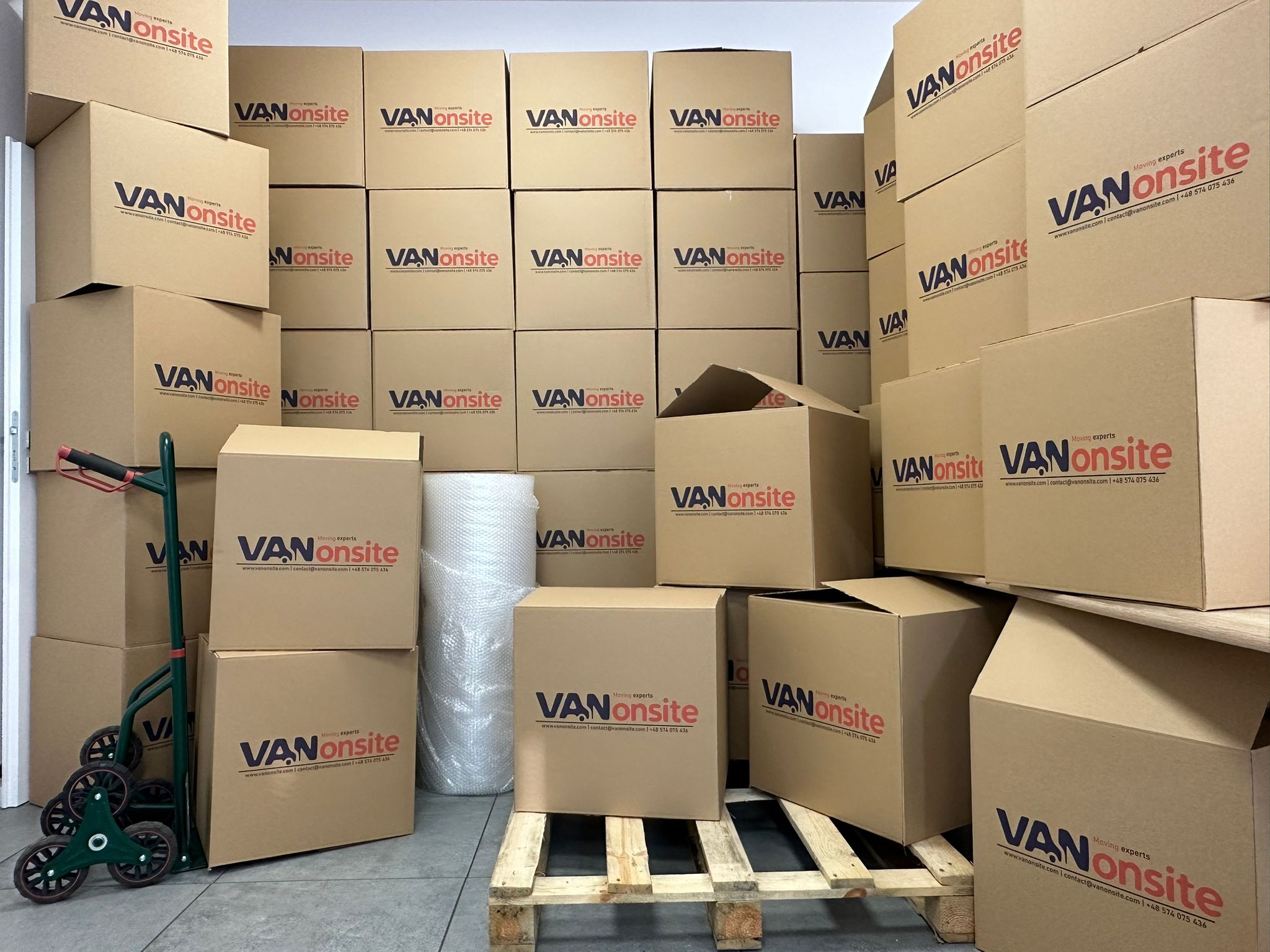
- Double-wall boxes
- Wardrobe cartons
- Protective blankets
- Mattress covers
- Bubble wrap
- Stretch film
- Corner protectors
- Specialist packaging for fragile goods
Every box should be labelled with its contents and destination room. Labels such as “Kitchen, fragile glassware” are much more useful than “Miscellaneous.”
Man and Van from England to Northern Ireland
A man and van service can be a flexible option for smaller moves.
It may suit:
- A student moving to Belfast
- A studio flat relocation
- Boxes and suitcases
- Several pieces of furniture
- A job-related move
- A partial household relocation
- Collection from storage
- An urgent move
This is still a long-distance service, not a simple local van journey. The provider must account for the ferry, mileage, loading security and delivery schedule.
VANonsite student removals can help students move clothing, books, computers, bicycles, kitchen equipment and compact furniture without paying for unnecessary capacity.
Office Removals to Northern Ireland
Office moves demand precision. A delayed desk may be inconvenient, but delayed servers, monitors or essential workstations can disrupt an entire company.
Professional office removals may include:
- Desks and office chairs
- Computers and monitors
- Filing cabinets
- Archive boxes
- Reception furniture
- Meeting room equipment
- Retail fixtures
- Printers
- IT equipment
Create a numbered inventory and label equipment by department or employee. Sensitive documents and data storage devices should receive additional protection.
VANonsite also provides office furniture installation, helping businesses rebuild workstations and position furniture according to the new floor plan.
White Glove Delivery for Valuable Items
Some possessions require a higher level of care.
Antiques, artwork, glass tables, designer furniture and delicate instruments may benefit from white glove delivery.
White glove support can include:
- Enhanced protective packaging
- Careful carrying
- Controlled placement
- Unpacking
- Assembly
- Removal of used packaging
- Additional surface protection
Tell the removal company about valuable objects at the quotation stage. This allows the team to prepare suitable materials, lifting equipment and vehicle space.

Moving to Northern Ireland with Pets
People travelling from Great Britain to Northern Ireland with a dog, cat, ferret or assistance dog may need a Northern Ireland Pet Travel Document. The animal must also meet current identification requirements.
Official information is available through the Northern Ireland Pet Travel Document service.
Before travelling:
- Confirm that the pet’s microchip can be read
- Apply for the required document early
- Check the ferry operator’s pet policy
- Reserve pet-friendly facilities
- Carry water and food
- Keep veterinary records accessible
- Use a secure carrier when appropriate
- Never transport a pet inside the removal van
Six-Week Moving Checklist
Six weeks before moving
- Request quotations
- Create a room-by-room inventory
- Declutter the property
- Confirm your moving date
- Review tenancy or completion dates
- Check school and employment arrangements
Four weeks before moving
- Confirm the removal service
- Arrange packing materials
- Start packing non-essential items
- Measure large furniture
- Review pet travel requirements
- Arrange storage if needed
Two weeks before moving
- Confirm access at both addresses
- Reserve parking
- Pack important documents separately
- Notify utility providers
- Prepare an essentials box
- Dispose of prohibited goods safely
Forty-eight hours before moving
- Confirm contact numbers
- Label every box
- Defrost relevant appliances
- Photograph valuable belongings
- Charge your phone and power bank
- Separate items travelling with you
On moving day
- Check cupboards, lofts and garages
- Record meter readings
- Review the inventory
- Keep keys and documents accessible
- Confirm the destination address
- Follow GPS tracking updates
Northern Ireland Is Not the Republic of Ireland
Northern Ireland forms part of the United Kingdom. The Republic of Ireland is a separate country and a member of the European Union.
This difference affects customs procedures, route planning and transport documentation.
| Route | Type of move | General context |
|---|---|---|
| England to Northern Ireland | Great Britain to Northern Ireland | UK move with specific goods movement rules |
| England to Republic of Ireland | UK to EU | International relocation involving EU customs procedures |
Customers moving to Dublin, Cork, Galway, Limerick or another destination in the Republic should read the VANonsite guide to removals to Ireland.
Common Moving Mistakes
Even a well-planned relocation can become stressful when essential details are overlooked.
Avoid these common mistakes:
- Underestimating the total volume
- Forgetting heavy items in a garage or loft
- Booking too close to the moving date
- Using weak second-hand boxes
- Overloading cartons
- Failing to label fragile items
- Ignoring parking restrictions
- Packing important documents in the van
- Forgetting the ferry element
- Hiding restricted goods
- Assuming Northern Ireland and the Republic of Ireland follow identical rules
- Choosing a quote without checking what it includes
Another frequent mistake is focusing only on price. A low quotation offers little value if it excludes the ferry, unloading, protection or final delivery.
Why Choose VANonsite?
VANonsite provides structured England to Northern Ireland removals for shipments of many sizes.
GPS tracking
GPS tracking gives you greater visibility while your belongings travel through England, across the Irish Sea and onward to the final destination.
Flexible vehicle capacities
With options from 1 m³ to 90 m³, you can choose a vehicle that matches the size and weight of your shipment.
Door-to-door service
The journey can be coordinated from the collection property to the delivery address, reducing the need to work with several separate providers.
Additional support
Customers can combine transport with:
- Packing
- Furniture removals
- Home removals
- Office removals
- Student removals
- White glove delivery
- Storage
- Furniture installation
- Last-minute moving
Professional preparation
Protective materials, accurate planning and secure loading are especially important when belongings must complete both a road journey and a ferry crossing.
Frequently Asked Questions
How much do England to Northern Ireland removals cost?
The price depends on distance, shipment volume, weight, ferry charges, labour and optional services. The most accurate quote is based on postcodes, an inventory, photographs and access details.
How long do removals from England to Northern Ireland take?
The Liverpool to Belfast ferry crossing takes approximately eight hours. Total transport time also includes collection, driving to the port, check-in, unloading from the ferry and final delivery.
Do I pay customs duty on household belongings?
Personal belongings moved as part of a genuine house move are not normally subject to customs duty. A professional carrier may still need to complete relevant transport procedures.
Can VANonsite move one piece of furniture?
Yes. Smaller vehicle options can accommodate individual furniture items, depending on their dimensions, weight and access conditions.
Can I track my belongings?
Yes. VANonsite offers GPS tracking, helping customers monitor the progress of their shipment.
Can you pack my home?
Yes. Full or partial packing can be arranged depending on the size and complexity of the move.
Do you provide student removals?
Yes. A compact man and van service can suit students moving boxes, books, computers, clothing and smaller furniture.
Can you arrange an urgent move?
Last-minute moving may be possible, depending on vehicle capacity, driver availability and ferry space.
Can you dismantle furniture?
Furniture dismantling and reassembly can be included when agreed before collection.
Request Your England to Northern Ireland Removals Quote
England to Northern Ireland removals do not need to become an exhausting chain of separate bookings and uncertain delivery times.
VANonsite can coordinate collection, secure loading, ferry transport and final delivery through one clear moving plan. With flexible van sizes, GPS tracking and optional packing or installation support, the service can be adapted to anything from a single furniture item to a complete family home.
To receive an accurate quotation, provide:
- Collection postcode
- Delivery postcode
- Preferred moving date
- Inventory or photographs
- Estimated number of boxes
- Furniture dimensions
- Floor and access details
- Packing requirements
- Additional services required
Plan your move with confidence. Request a personalised quote for England to Northern Ireland removals and choose a service built around your belongings, timetable and destination.