
Living in Northern Ireland vs England means choosing between two parts of the United Kingdom that share a currency, language and many legal structures, yet can feel remarkably different in everyday life.
Northern Ireland often offers more space for your money, easier access to nature and a calmer pace of life. England provides a much larger employment market, more extensive public transport and a wider choice of cities, universities and international connections.
Housing is usually the most important difference. Average rents and property prices in Northern Ireland are generally lower than in England, although costs vary significantly between Belfast, smaller Northern Irish towns, London and regional English cities. A family looking for a three-bedroom home may find Northern Ireland highly attractive, while a specialist professional may have access to more career opportunities in England.
The right decision depends on your salary, occupation, commuting needs, family situation and preferred lifestyle. This guide compares living in Northern Ireland vs England through housing, employment, everyday costs, healthcare, education, transport and quality of life. It also explains living and working in Northern Ireland, cross-border employment and how to organise your move.
TL:DR
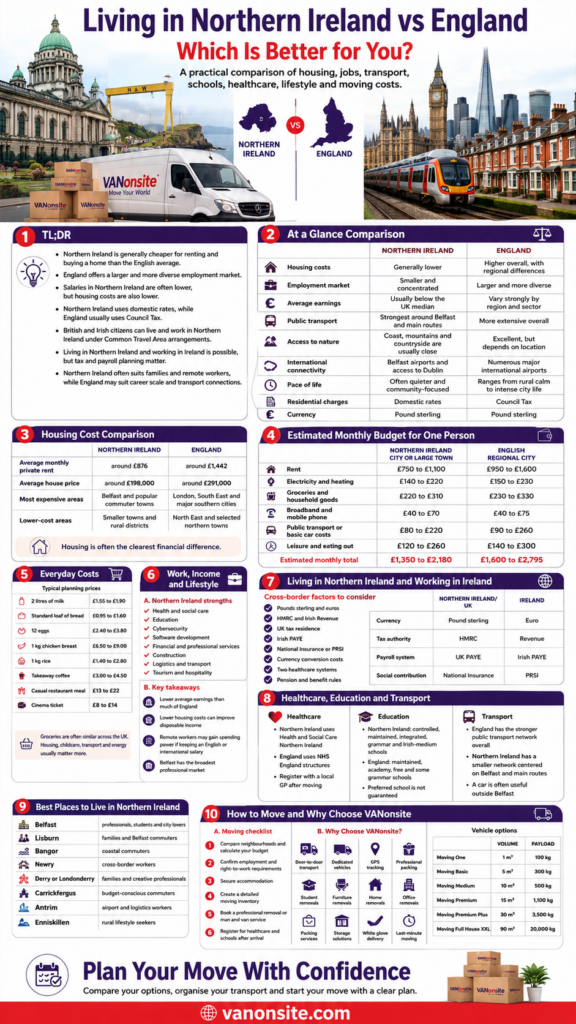
- Northern Ireland is generally cheaper for renting and buying a home than the English average.
- England offers a larger and more diverse employment market, especially for specialist professions.
- Salaries in Northern Ireland are often lower, but reduced housing costs can improve disposable income.
- Northern Ireland uses domestic rates, while homes in England are normally subject to Council Tax.
- British and Irish citizens can live and work in Northern Ireland under Common Travel Area arrangements.
- Living in Northern Ireland and working in Ireland is possible, but tax, payroll and remote working rules require careful planning.
- Northern Ireland often suits families, remote workers and people seeking space, while England may be better for career scale and transport connections.




Is Northern Ireland or England Better to Live In?
Northern Ireland may be the better choice if you value affordable property, compact cities, beautiful landscapes and a strong sense of community. England may suit you better if your priorities include specialist employment, frequent international travel, extensive rail services or access to several large cities.
However, national averages can be misleading. Life in London is very different from life in Newcastle, rural Lincolnshire or a small town in Cumbria. Northern Ireland also contains major contrasts between central Belfast, coastal commuter areas and rural counties.
| Factor | Northern Ireland | England |
|---|---|---|
| Housing costs | Generally lower | Higher overall, with major regional differences |
| Employment market | Smaller and concentrated | Larger and more diverse |
| Average earnings | Usually below the UK median | Vary strongly by region and sector |
| Public transport | Strongest around Belfast and main routes | More extensive overall |
| Access to nature | Coast, mountains and countryside are usually close | Excellent, but depends on location |
| International connectivity | Belfast airports and access to Dublin | Numerous major international airports |
| Pace of life | Often quieter and more community-focused | Ranges from rural calm to intense city life |
| Cross-border employment | Possible with the Republic of Ireland | No comparable land-border option |
| Residential charges | Domestic rates | Council Tax |
| Currency | Pound sterling | Pound sterling |
The most useful comparison is not simply salary versus salary. You should examine how much money remains after rent, transport, childcare, utilities and other essential expenses.
A higher salary in England can quickly lose its advantage if you pay considerably more for accommodation and commuting. Meanwhile, a slightly lower salary in Northern Ireland may still support a comfortable lifestyle if housing costs are manageable.
Cost of Living in Northern Ireland vs England
Housing creates the clearest difference in the cost of living in Northern Ireland vs England. Groceries sold by national supermarket chains may be similarly priced, but rent or mortgage payments can vary by hundreds of pounds each month.
Recent official data has shown average rent and property prices in Northern Ireland to be significantly below the English average. However, Belfast is more expensive than many smaller Northern Irish towns, and some parts of northern England may compete closely with Northern Ireland on affordability.
Housing cost comparison
| Housing indicator | Northern Ireland | England |
|---|---|---|
| Average monthly private rent | Around £876 | Around £1,442 |
| Average house price | Around £198,000 | Around £291,000 |
| Most expensive areas | Belfast and popular commuter towns | London, South East and major southern cities |
| Lower-cost areas | Smaller towns and rural districts | North East and selected northern towns |
The difference between average rents can represent several thousand pounds over a year. For a household trying to save for a deposit, pay for childcare or reduce debt, that saving can be transformative.
Nevertheless, cheaper property does not automatically guarantee lower overall spending. A rural home may require two cars, longer journeys and higher heating costs. A city-centre apartment may cost more in rent but reduce the need for daily driving.
Estimated monthly budget for one person
The figures below are practical planning ranges rather than fixed prices.
| Monthly expense | Northern Ireland city or large town | English regional city |
|---|---|---|
| Rent | £750 to £1,100 | £950 to £1,600 |
| Electricity and heating | £140 to £220 | £150 to £230 |
| Groceries and household goods | £220 to £310 | £230 to £330 |
| Broadband and mobile phone | £40 to £70 | £40 to £75 |
| Public transport or basic car costs | £80 to £220 | £90 to £260 |
| Leisure and eating out | £120 to £260 | £140 to £300 |
| Estimated monthly total | £1,350 to £2,180 | £1,600 to £2,795 |
Actual costs will depend on property type, location, heating system and personal habits. Central Belfast can exceed the upper Northern Ireland estimate, while some English towns may fall below the regional city range.
Everyday products and household items
Food and household essentials are often similarly priced because many of the same supermarket chains operate throughout the UK.
| Everyday item | Typical planning price |
|---|---|
| 2 litres of milk | £1.55 to £1.90 |
| Standard loaf of bread | £0.95 to £1.60 |
| 12 eggs | £2.40 to £3.80 |
| 1 kg of chicken breast | £6.50 to £9.00 |
| 1 kg of rice | £1.40 to £2.80 |
| 1 kg of apples | £1.80 to £3.00 |
| Butter | £1.90 to £3.00 |
| Laundry detergent | £4.00 to £9.00 |
| Toilet paper, 9 rolls | £4.00 to £7.50 |
| Shampoo | £1.50 to £5.00 |
| Household cleaning spray | £1.25 to £3.50 |
| Takeaway coffee | £3.00 to £4.50 |
| Casual restaurant meal | £13 to £22 |
| Cinema ticket | £8 to £14 |
Promotions, product quality and package sizes can change these figures. Still, the weekly grocery basket is unlikely to create the largest financial difference between living in Northern Ireland vs England. Housing, childcare, transport and energy are usually more influential.
Housing in Northern Ireland Compared with England
Northern Ireland can be particularly attractive to first-time buyers and families seeking larger homes. In many locations, the same budget that buys a small English flat may secure a house with extra bedrooms, parking or outdoor space.
Rental demand can still be intense, especially in Belfast, Lisburn, Bangor and popular commuter areas. Well-presented properties may receive several applications soon after being advertised.
Renting in Northern Ireland
Before signing a tenancy agreement, confirm:
- Whether domestic rates are included in the rent.
- How much deposit and advance rent are required.
- Which appliances and furniture are included.
- Whether the property uses gas, oil or electric heating.
- Who is responsible for gardens and shared areas.
- Whether parking is available.
- The property’s energy performance.
- The notice period and tenancy conditions.
Prepare an inventory and take photographs on the day you move in. Record the condition of floors, walls, furniture, appliances and windows. This evidence can help prevent disputes when the tenancy ends.
Domestic rates vs Council Tax
Northern Ireland does not use the same Council Tax system as England. Residential properties are generally subject to domestic rates based on the capital value of the property.
England uses Council Tax bands, with charges determined by local authorities.
Tenants should not assume that domestic rates are included in the advertised rent. Always ask the landlord or letting agent for written confirmation.
Official information is available through:
Buying a home
The advertised sale price is only one part of the budget. Buyers should also consider:
- Mortgage deposit
- Solicitor’s fees
- Property survey
- Mortgage valuation
- Stamp Duty Land Tax where applicable
- Building insurance
- Moving costs
- Repairs and renovation
- Furniture and appliances
- Domestic rates or Council Tax
Although property is generally cheaper in Northern Ireland, prices in desirable areas can rise quickly. Buyers should compare recent local transactions instead of relying only on national averages.




Living and Working in Northern Ireland
Living and working in Northern Ireland can provide a compelling balance between manageable housing costs, short urban journeys and access to expanding industries.
Belfast has the broadest professional market. Other towns and cities offer employment in healthcare, manufacturing, education, construction, logistics, retail, tourism and food production.
Important employment sectors include:
- Health and social care
- Public administration
- Education
- Cybersecurity
- Software development
- Financial and professional services
- Advanced manufacturing
- Construction
- Logistics and transport
- Tourism and hospitality
- Food and drink production
- Renewable energy
Average earnings in Northern Ireland are usually lower than the wider UK median. However, the difference should be considered alongside housing and commuting costs.
A worker earning slightly less but saving £400 each month on rent may have more disposable income than someone with a higher salary in an expensive English city.
Remote workers may be in a particularly strong position. Retaining an English or international salary while living in Northern Ireland can increase spending power. However, the employer should approve the arrangement, especially when contracts, payroll or home-working policies are involved.
Right to work in Northern Ireland
British and Irish citizens benefit from Common Travel Area arrangements. These rights generally allow them to live, work and study in the UK and Ireland without obtaining a standard work visa.
Other nationalities may require UK immigration permission before working in Northern Ireland.
Useful official resources include:
Confirm your immigration and employment status before accepting a job, signing a long tenancy or arranging a permanent move.
Living in Northern Ireland and Working in Ireland
Living in Northern Ireland and working in Ireland is possible and relatively common in border areas. Newry, Derry, Strabane, Armagh and Enniskillen can provide practical access to employment in the Republic of Ireland.
This arrangement may offer attractive salaries or specialist career opportunities. However, it also introduces additional administrative responsibilities.
A cross-border worker may need to deal with:
- Pounds sterling and euros
- HMRC and Irish Revenue
- UK tax residence
- Irish PAYE
- National Insurance or PRSI
- Currency conversion costs
- Two healthcare systems
- Pension and benefit rules
Tax and payroll
Tax treatment depends on where you live, where you physically perform your work and how your employment is organised.
Employment carried out in Ireland may fall within Irish payroll and tax rules, even when the employee lives in Northern Ireland. At the same time, a UK tax resident may need to report foreign income to HMRC.
Double taxation agreements can provide relief when the same income falls within both tax systems. However, the exact outcome depends on individual circumstances.
Hybrid work makes the position more complicated. Someone working three days in Dublin and two days from home in Newry may face different rules from an employee who works entirely at an Irish workplace.
Before accepting a cross-border role:
- Confirm where your duties will be performed.
- Ask how the employer will operate payroll.
- Establish your UK tax residence.
- Check whether Irish PAYE, USC and PRSI apply.
- Review National Insurance and social security obligations.
- Ask how remote-working days will be recorded.
- Calculate currency conversion fees.
- Obtain professional cross-border tax advice.
Official information is available from HMRC and Irish Revenue.
Currency and commuting
| Issue | Northern Ireland | Republic of Ireland |
|---|---|---|
| Currency | Pound sterling | Euro |
| Tax authority | HMRC | Revenue |
| Payroll system | UK PAYE | Irish PAYE |
| Social contribution | National Insurance | PRSI |
| Healthcare structure | Health and Social Care NI | Irish public and private system |
A salary paid in euros should be converted using a realistic exchange rate. Banking and currency conversion fees can reduce the final amount received.
Test the commute during normal working hours before accepting a role. A journey that appears quick on a map may become draining in peak traffic.
Healthcare in Northern Ireland vs England
Both Northern Ireland and England provide publicly funded healthcare, but they are organised differently.
Northern Ireland operates through Health and Social Care Northern Ireland, while England uses NHS England and local service structures.
After moving to Northern Ireland, contact a GP practice that covers your new address. The practice must also be accepting new patients.
Useful preparation includes:
- Registering with a local GP
- Transferring repeat prescriptions
- Bringing an initial supply of essential medication
- Requesting important medical records
- Finding a local dentist
- Updating emergency contact details
- Checking access to specialist services
Further information is available through the official Northern Ireland GP guidance.
Education and Childcare
Families should investigate schools before choosing a property. Catchment areas, admission rules and transport can strongly influence daily life.
Northern Ireland has controlled, maintained, integrated, grammar and Irish-medium schools. This structure may feel different from the academy, maintained school and free school system found in England.
| Education issue | Northern Ireland | England |
|---|---|---|
| School applications | Education Authority process | Local council or admission authority |
| Main school types | Controlled, maintained, integrated, grammar and Irish-medium | Maintained, academy, free and some grammar schools |
| Curriculum | Northern Ireland Curriculum | National Curriculum or academy curriculum |
| Preferred school guaranteed | No | No |
| School transport | Based on eligibility | Local authority rules |
Before moving, prepare birth certificates, passports, school reports, special educational needs documentation, proof of address and vaccination records.
Childcare should also be included in the monthly budget. A cheaper home may not create meaningful savings if suitable childcare is unavailable or requires a long journey.
Transport and Connectivity
England has the stronger public transport network overall. It offers more railway routes, metropolitan systems and large international airports.
Northern Ireland has a smaller network. Belfast has buses, Glider routes and rail connections, while trains and coaches link several major towns. Rural areas can be difficult without a car.
A car is particularly useful when you:
- Live outside Belfast
- Work irregular shifts
- Commute across the border
- Have children
- Visit rural areas regularly
- Live far from a train station
Northern Ireland is served by Belfast International Airport and George Best Belfast City Airport. Many residents also use Dublin Airport for a wider selection of international flights.
Ferry connections are valuable for people moving with cars, pets or large amounts of luggage. They are also central to professional household removals from England.

Best Places to Live in Northern Ireland
| Location | Best suited to | Main advantage |
|---|---|---|
| Belfast | Professionals, students and city lovers | Largest employment and entertainment market |
| Lisburn | Families and Belfast commuters | Strong road and rail access |
| Bangor | Coastal commuters | Seaside lifestyle near Belfast |
| Newry | Cross-border workers | Access to Belfast and Dublin |
| Derry or Londonderry | Families and creative professionals | Culture and access to County Donegal |
| Carrickfergus | Budget-conscious commuters | Coastal setting and transport links |
| Antrim | Airport and logistics workers | Practical connectivity |
| Enniskillen | Rural lifestyle seekers | Lakes, countryside and quieter living |
Belfast is usually the first choice for professional opportunities, universities and entertainment. However, rental competition can be strong.
Newry is particularly attractive for people living in Northern Ireland and working in Ireland. Its position between Belfast and Dublin creates access to both employment markets.
Bangor offers coastal living within commuting distance of Belfast, while Enniskillen suits people who value scenery and a slower pace.
Pros and Cons of Living in Northern Ireland vs England
Advantages of Northern Ireland
- Lower average housing costs
- Easy access to countryside and coast
- Compact cities
- Strong community atmosphere
- Cross-border employment opportunities
- More affordable family homes in many areas
- A calmer pace of life
Potential disadvantages
- Smaller specialist job market
- Lower average earnings
- Limited rural public transport
- Fewer direct international flights
- Greater reliance on cars
- More complex arrangements for cross-border workers
- Competitive rental demand in Belfast
Advantages of England
- Vast employment market
- More specialist roles
- Extensive rail and airport networks
- Greater choice of universities
- More major cities and cultural events
- Stronger public transport in many urban areas
Potential disadvantages
- High rents in many cities
- Expensive property in southern England
- Long commuting times
- High childcare costs
- Congestion and parking charges
- Major regional affordability differences
How to Move from England to Northern Ireland
A clear moving plan can prevent delays, damage and unnecessary expense.
- Choose your destination and compare neighbourhoods.
- Calculate your monthly living budget.
- Confirm employment and right-to-work requirements.
- Secure accommodation.
- Create a detailed moving inventory.
- Measure furniture, stairways and entrances.
- Decide what to move, sell, donate or store.
- Book a professional removal or man and van service.
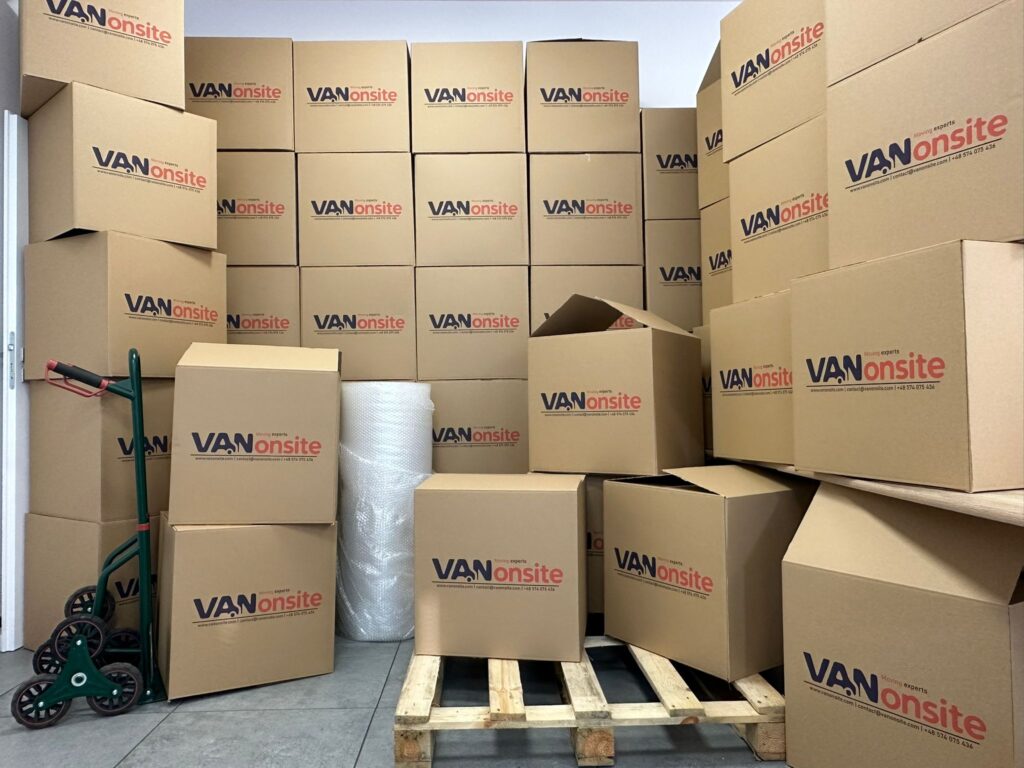
- Arrange suitable packing materials.
- Confirm ferry and delivery logistics.
- Update your address with banks, insurers and public services.
- Register for healthcare and schools after arrival.
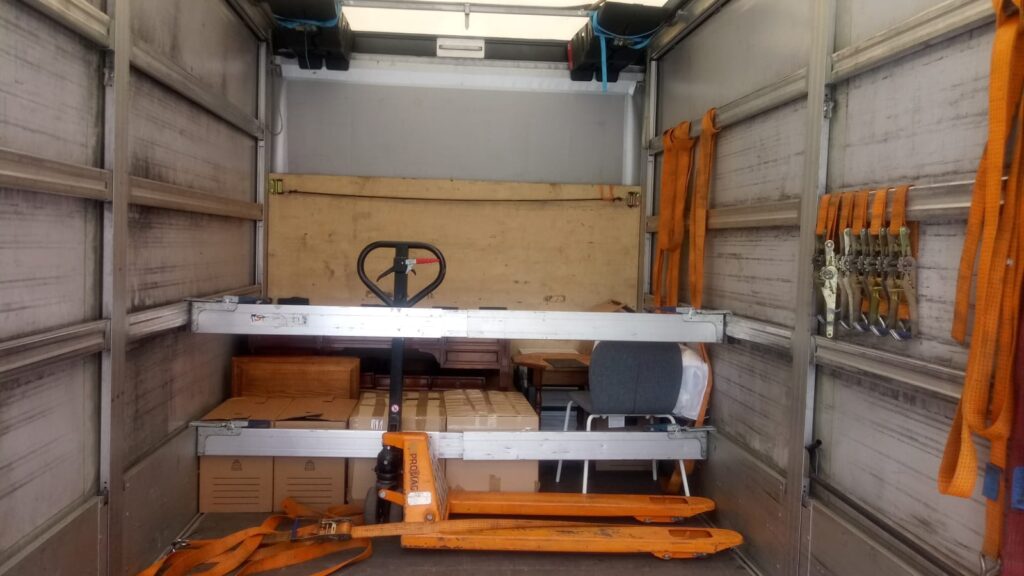
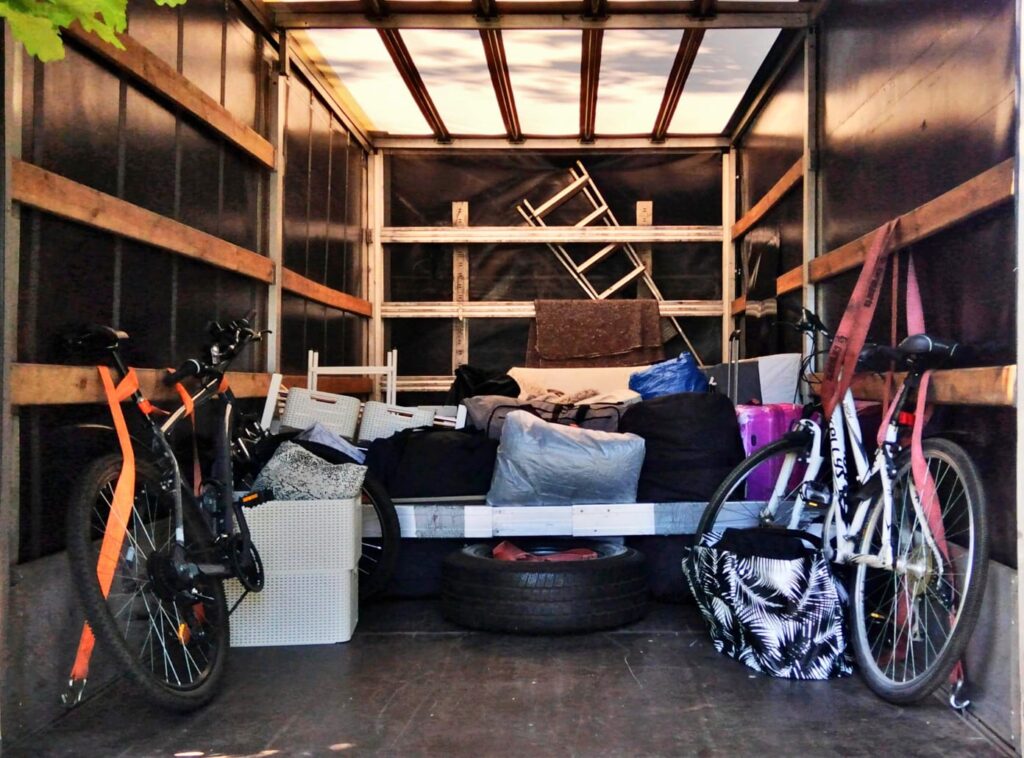
Do not select a vehicle only by the number of rooms in your home. Weight matters as much as volume. Books, appliances and solid furniture can reach a vehicle’s weight limit quickly.
People planning transport to the island can also review VANonsite’s service for removals to Ireland.
Moving to Northern Ireland with VANonsite
A move across the Irish Sea requires careful coordination. Collection access, ferry schedules, weather and delivery timing can all affect the journey.
VANonsite supports student relocations, small man and van moves, furniture transport, full household removals and office moves. Customers can also request professional packing services, home removals, furniture removals and student removals.
Real-time GPS tracking allows customers to follow the shipment throughout the route, providing reassurance while valuable belongings travel by road and ferry.
| Moving option | Volume | Maximum weight | Suitable for |
|---|---|---|---|
| Moving One | 1 m³ | 100 kg | Boxes, luggage or a very small student move |
| Moving Basic | 5 m³ | 300 kg | Compact man and van relocation |
| Moving Medium | 10 m³ | 500 kg | Studio or small flat |
| Moving Premium | 15 m³ | 1,100 kg | One or two-bedroom home |
| Moving Premium Plus | 30 m³ | 3,500 kg | Larger family move |
| Moving Full House XXL | 90 m³ | 20,000 kg | Complete house or commercial relocation |
The correct option should be selected using an accurate inventory. Ten cubic metres of lightweight furniture is very different from ten cubic metres of books, tools and appliances.
Professional packing also reduces the risk of damage. Mirrors, electronics, artwork and delicate furniture require secure protection throughout loading, ferry transit and final delivery.
Frequently Asked Questions
Is Northern Ireland cheaper to live in than England?
Northern Ireland is generally cheaper for housing. Average rent and property prices are below the English average, although groceries and national retail prices may be similar.
Is Belfast cheaper than England?
Belfast is cheaper than London and many cities in southern England. However, some towns in northern England may offer comparable or lower costs.
Can I live in Northern Ireland and work in Ireland?
Yes. Many people commute across the border, but tax residence, payroll, social insurance, currency conversion and remote-working arrangements should be checked carefully.
Do people in Northern Ireland pay Council Tax?
No. Northern Ireland uses domestic rates based on the capital value of residential property.
Can an Irish citizen live and work in Northern Ireland?
Irish citizens can generally live and work in the UK under Common Travel Area arrangements.
Do I need a car in Northern Ireland?
A car is not always essential in central Belfast. It is much more useful in rural areas, smaller towns and for cross-border commuting.
Is Northern Ireland good for families?
Northern Ireland can be an excellent choice for families seeking space, access to nature and a community-focused lifestyle. School availability, childcare and commuting should still be checked before choosing a location.
How much does it cost to move from England to Northern Ireland?
The price depends on distance, total volume, weight, access conditions, ferry arrangements, packing services and urgency. A small man and van move will cost less than a complete household relocation.
Final Verdict: Living in Northern Ireland vs England
Living in Northern Ireland vs England presents a clear trade-off.
Northern Ireland is attractive for people seeking lower average housing costs, compact cities, striking scenery and a calmer pace of life. It can be particularly appealing to families, remote workers and people with personal or professional links to Ireland.
England remains stronger for employment scale, specialist careers, public transport and international connectivity. It also provides a much wider range of locations, from global cities to affordable northern towns.
The best decision should be based on your net income, housing costs, childcare, transport, career plans and preferred lifestyle. Do not rely on rent figures alone. Calculate what remains after every essential expense.
Once the decision is made, careful transport planning can turn a demanding relocation into a controlled and predictable process. VANonsite provides GPS-tracked moving solutions for student relocations, furniture, offices, small loads and complete households, helping your belongings reach their destination safely while you focus on starting your new life.