
Moving to Switzerland as a couple can feel like opening the door to a sharper, brighter version of everyday life. Clean streets. Powerful salaries. Trains that actually arrive on time. Lakes that look almost unreal. Mountain weekends. Safer cities. A sense that things work.
Then the first rent quote arrives.
Switzerland is one of Europe’s most desirable countries, but it is also one of the most expensive. Rent can feel fierce. Health insurance is mandatory. Groceries cost more than many newcomers expect. And before daily life even starts, a couple may need to pay a rental deposit, first month’s rent, moving costs, furniture, insurance and registration expenses.
So, what is the real cost of living for a couple in Switzerland?
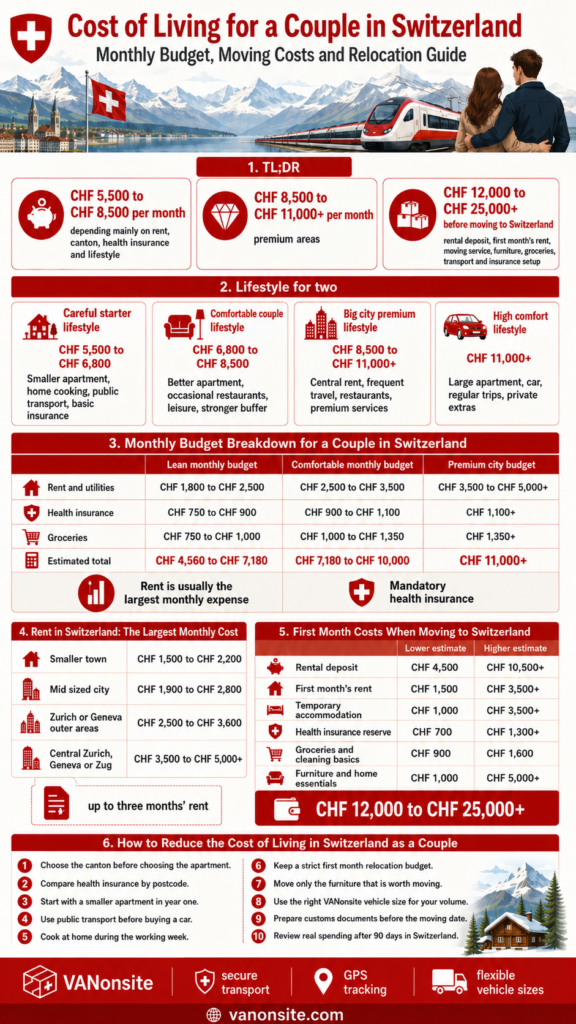
A practical monthly budget for two usually starts at around CHF 5,500 to CHF 6,800 for a careful lifestyle outside the most expensive city centres. A more comfortable couple’s budget sits closer to CHF 6,800 to CHF 8,500. In Zurich, Geneva, Zug or central Lausanne, the cost of living for a couple in Switzerland can climb to CHF 8,500 to CHF 11,000+ per month, especially with a larger apartment, frequent travel, restaurants and a car.
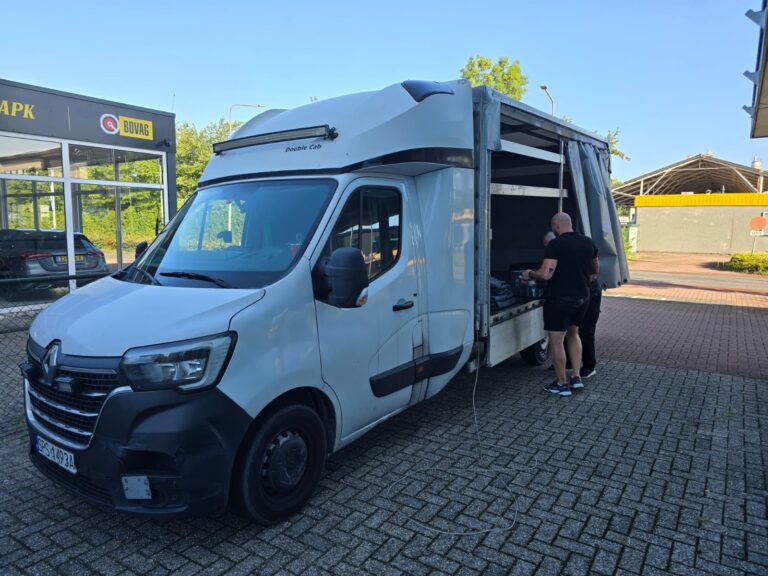
The good news is simple: Switzerland becomes far less intimidating when the numbers are clear. If you plan the budget, choose the right canton and move only what is worth moving, relocation becomes controlled rather than chaotic. A reliable man and van service such as VANonsite can also protect the moving part of the budget with secure transport, GPS tracked loads and flexible vehicle sizes for different volumes.
For a dedicated relocation option, see VANonsite’s service for removals to Switzerland.
TL:DR
- A realistic cost of living for a couple in Switzerland is usually CHF 5,500 to CHF 8,500 per month, depending mainly on rent, canton, health insurance and lifestyle.
- In Zurich, Geneva, Zug or other premium areas, a couple may need CHF 8,500 to CHF 11,000+ per month for a comfortable lifestyle.
- Rent is usually the largest monthly expense, with many couples paying around CHF 1,700 to CHF 3,500+ depending on location and apartment size.
- Mandatory health insurance can cost a couple around CHF 750 to CHF 1,100+ per month, depending on canton, age, deductible and provider.
- The first month is expensive because of the rental deposit, first rent payment, moving service, furniture, groceries, transport and insurance setup.
- A couple should ideally prepare CHF 12,000 to CHF 25,000+ before moving to Switzerland, especially when renting privately.
- A professional man and van service with GPS tracked transport, such as VANonsite, can make the move safer, faster and easier to control financially.




How Much Money Does a Couple Need to Live in Switzerland?
Most couples need at least CHF 5,500 per month to live modestly in Switzerland. This budget can work in smaller towns or outer areas if the couple controls rent, cooks at home and uses public transport instead of owning a car.
For a more comfortable lifestyle, the realistic figure is usually CHF 6,800 to CHF 8,500 per month. This allows for a better apartment, stronger insurance choices, occasional restaurants, fitness, leisure and a healthier savings buffer.
In the most expensive locations, the cost of living for a couple in Switzerland can move much higher. Zurich, Geneva, Zug and central Lausanne are attractive, international and convenient, but they can drain a weak budget quickly.
| Lifestyle for two | Estimated monthly budget | What it usually includes |
|---|---|---|
| Careful starter lifestyle | CHF 5,500 to CHF 6,800 | Smaller apartment, home cooking, public transport, basic insurance |
| Comfortable couple lifestyle | CHF 6,800 to CHF 8,500 | Better apartment, occasional restaurants, leisure, stronger buffer |
| Big city premium lifestyle | CHF 8,500 to CHF 11,000+ | Central rent, frequent travel, restaurants, premium services |
| High comfort lifestyle | CHF 11,000+ | Large apartment, car, regular trips, private extras |
The biggest mistake is calculating only monthly expenses. A couple moving to Switzerland must also prepare for arrival costs. The first month can be dramatically more expensive than a normal month because several large payments arrive together.
Why Switzerland Feels So Expensive
Switzerland is expensive because the whole system runs at a high standard. Wages are strong, infrastructure is polished, housing demand is intense and services are usually reliable. The country offers serious value, but that value has a price.
For newcomers, the shock often comes from three areas:
- Rent and rental deposits
- Mandatory health insurance
- Groceries, transport and first month setup costs
The cost of living for a couple in Switzerland also depends strongly on canton and city. A couple in St. Gallen, Fribourg, Jura or Valais may spend much less than a couple in Zurich or Geneva. Even a 20 to 40 minute train ride from a major city can reduce rent by hundreds or thousands of francs per month.
Switzerland rewards precision. If you prepare your budget, apartment search, insurance comparison, customs documents and moving inventory before arrival, you avoid expensive improvisation. This is where VANonsite can help. A secure man and van move with GPS tracking gives couples a clear transport solution instead of a stressful patchwork of rented vans, rushed packing and uncertain delivery times.
Monthly Budget Breakdown for a Couple in Switzerland
A strong relocation plan starts with a realistic monthly budget. The table below shows how costs can look for two adults.
| Category | Lean monthly budget | Comfortable monthly budget | Premium city budget |
|---|---|---|---|
| Rent and utilities | CHF 1,800 to CHF 2,500 | CHF 2,500 to CHF 3,500 | CHF 3,500 to CHF 5,000+ |
| Health insurance | CHF 750 to CHF 900 | CHF 900 to CHF 1,100 | CHF 1,100+ |
| Groceries | CHF 750 to CHF 1,000 | CHF 1,000 to CHF 1,350 | CHF 1,350+ |
| Restaurants and cafés | CHF 150 to CHF 350 | CHF 350 to CHF 700 | CHF 700+ |
| Public transport | CHF 160 to CHF 450 | CHF 450 to CHF 700 | CHF 700+ |
| Phones and internet | CHF 100 to CHF 180 | CHF 180 to CHF 250 | CHF 250+ |
| Household items | CHF 150 to CHF 300 | CHF 300 to CHF 500 | CHF 500+ |
| Leisure and fitness | CHF 200 to CHF 500 | CHF 500 to CHF 900 | CHF 900+ |
| Savings buffer | CHF 500 to CHF 1,000 | CHF 1,000 to CHF 2,000 | CHF 2,000+ |
| Estimated total | CHF 4,560 to CHF 7,180 | CHF 7,180 to CHF 10,000 | CHF 11,000+ |
The table shows why rent matters so much. If a couple keeps housing costs under control, the whole budget becomes easier. If rent is too high, every other decision feels tighter.
A couple should also remember that advertised rent may not include every charge. Utilities, heating, building costs, internet and local taxes can affect the real monthly picture. Before signing, check what is included and what is paid separately.
Rent in Switzerland: The Largest Monthly Cost
Rent is usually the largest part of the cost of living for a couple in Switzerland. A couple may be looking for a 2 room, 2.5 room or 3.5 room apartment, depending on local naming, canton and lifestyle. If both partners work from home, a separate office corner can become a serious quality of life upgrade.
| Location type | Typical monthly rent for a couple | Good to know |
|---|---|---|
| Smaller town | CHF 1,500 to CHF 2,200 | Best for careful budgets |
| Mid sized city | CHF 1,900 to CHF 2,800 | Good balance of cost and access |
| Zurich or Geneva outer areas | CHF 2,500 to CHF 3,600 | Competitive, but practical |
| Central Zurich, Geneva or Zug | CHF 3,500 to CHF 5,000+ | Premium lifestyle, premium pressure |
The rental deposit is another major point. In Switzerland, the deposit for a residential rental can be up to three months’ rent. If your apartment costs CHF 2,600 per month, the deposit may reach CHF 7,800. Add the first month’s rent, temporary accommodation and moving costs, and the first payment wave can feel brutal.
This is why many couples choose a practical first apartment instead of a dream apartment. After 6 to 12 months, once you understand salaries, taxes, transport and real spending, you can upgrade with far more confidence.
Health Insurance: Mandatory and Often Underestimated
Health insurance is not optional in Switzerland. Anyone settling in the country must arrange compulsory health insurance within the required deadline. For a couple, this is one of the most important fixed monthly costs.
The price depends on the canton, age, deductible, insurer and insurance model. Some couples choose a higher deductible to lower monthly premiums. Others prefer more flexibility and accept a higher monthly payment.
| Health insurance cost for two | Estimated monthly amount |
|---|---|
| Lower premium setup | CHF 700 to CHF 850 |
| Typical couple estimate | CHF 850 to CHF 1,050 |
| Higher premium setup | CHF 1,050 to CHF 1,300+ |
| Optional supplementary cover | CHF 50 to CHF 250+ extra |
This part of the cost of living for a couple in Switzerland surprises many people from countries with tax funded healthcare. In Switzerland, you pay the premium yourself. You also need to understand deductibles, co payments and what your basic policy includes.
A smart approach is to compare insurance before moving. Do not leave it for a tired first week surrounded by boxes. Keep at least one month of premiums in your arrival budget and check options based on the canton where you will actually live.
Groceries and Eating Out
Food in Switzerland can be excellent, fresh and painfully expensive if you shop without a plan. A couple that cooks at home can stay in control. A couple that eats out often will feel the budget tighten quickly.
| Food style | Monthly cost for two | What it looks like |
|---|---|---|
| Careful home cooking | CHF 750 to CHF 1,000 | Meal planning, supermarket offers, simple lunches |
| Balanced lifestyle | CHF 1,000 to CHF 1,400 | Home cooking plus cafés and weekend meals |
| Restaurant heavy lifestyle | CHF 1,500 to CHF 2,300+ | Frequent dining out, work lunches, premium groceries |
Small habits matter. Saving CHF 20 per day by cooking at home, planning lunch and avoiding impulse shopping can save around CHF 600 per month. That money can cover transport, part of the health insurance bill or a chunk of the moving budget.
Restaurants are not the enemy. They are part of enjoying Switzerland. The trick is to treat them as planned pleasure, not daily leakage.
Transport: Public Transport, Car or Both?
Swiss public transport is one of the country’s greatest strengths. It is clean, reliable and deeply connected. For many couples, it removes the need for a car, especially in Zurich, Basel, Bern, Geneva, Lausanne and well connected towns.
Still, transport needs its own line in the budget.
| Transport option | Monthly estimate for two | Best for |
|---|---|---|
| Local public transport | CHF 160 to CHF 350 | City couples with short commutes |
| Regional travel | CHF 350 to CHF 700 | Couples commuting between towns |
| Heavy national train use | CHF 650+ | Frequent intercity travellers |
| One car | CHF 600 to CHF 1,200+ | Rural homes, weekend flexibility |
| Car plus public transport | CHF 900 to CHF 1,600+ | Higher comfort, higher cost |
A car gives freedom, but it also brings insurance, fuel, parking, maintenance, tyres and repairs. In some cities, parking alone can become a painful monthly cost. Before buying a car, many couples should test daily life with public transport for 60 to 90 days.
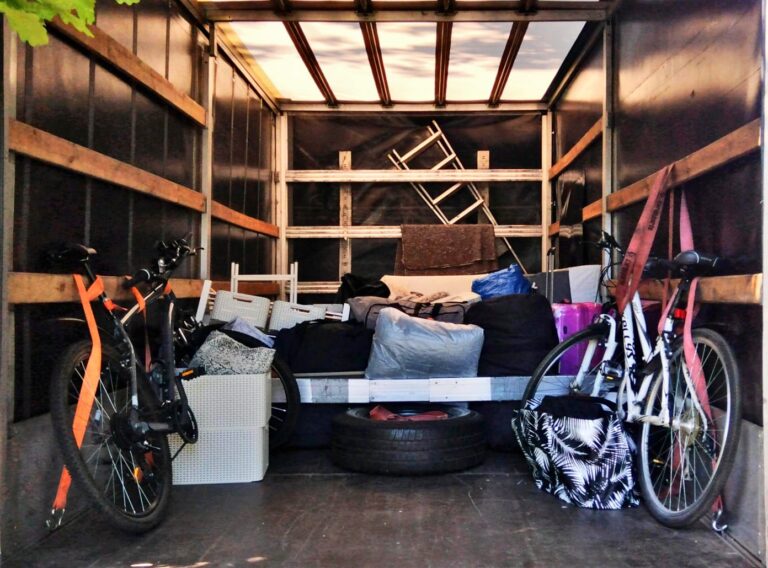
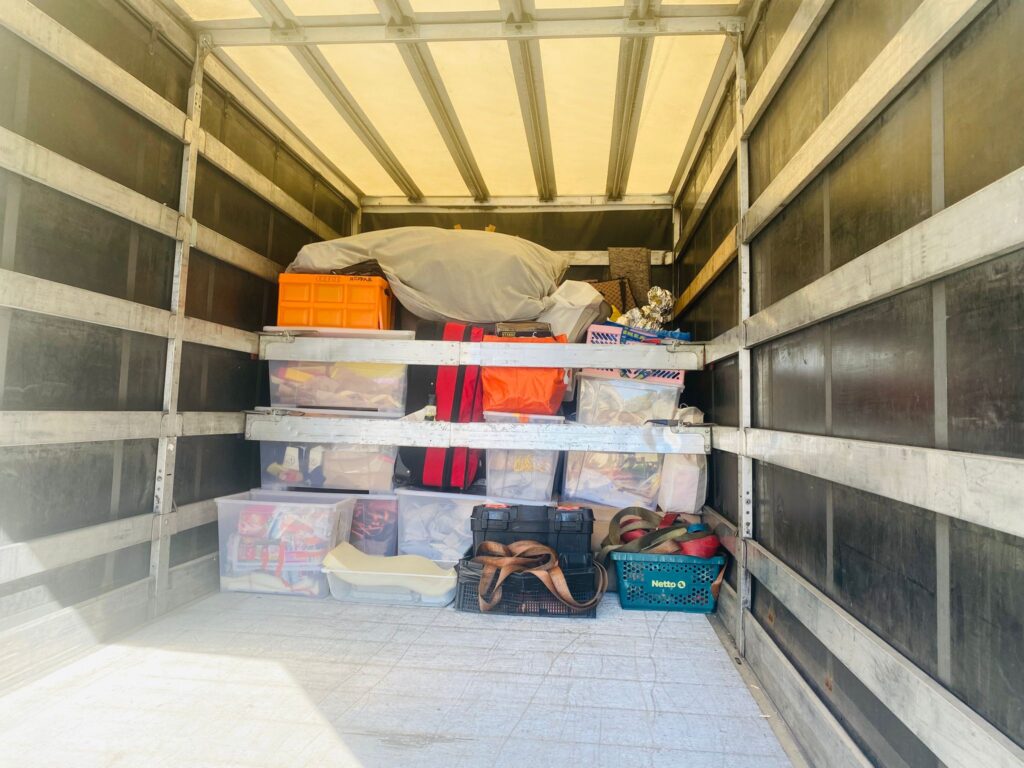
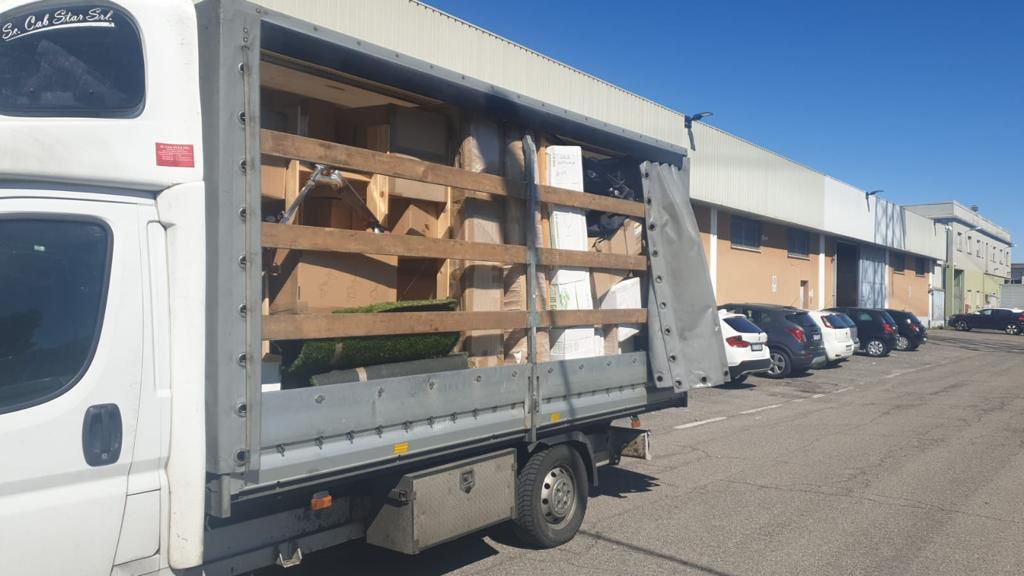
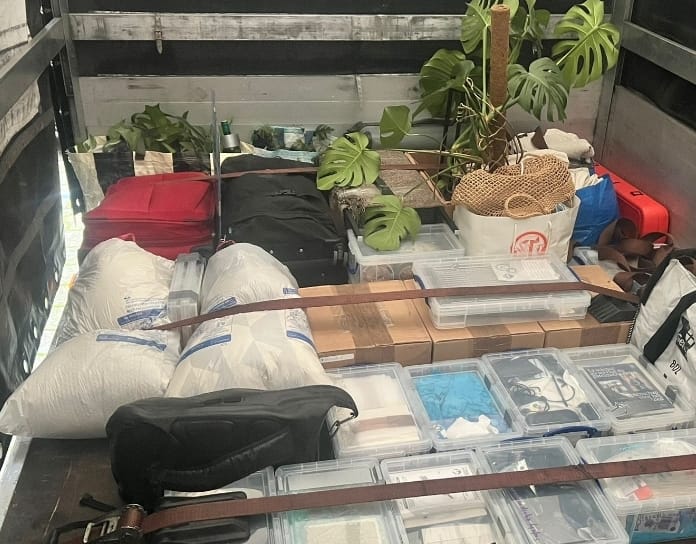
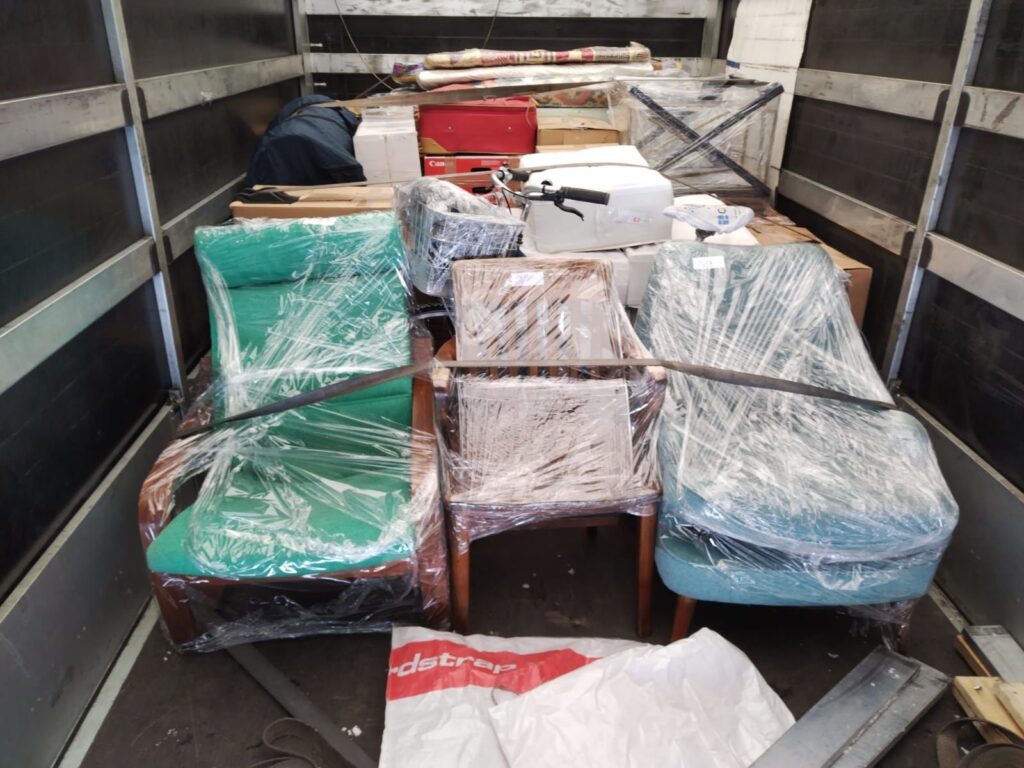
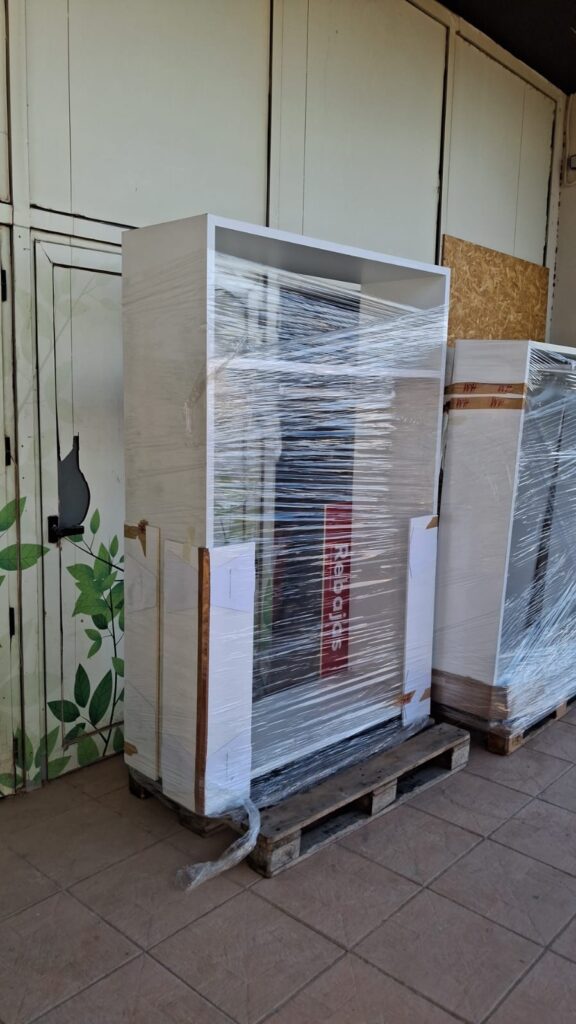
For the relocation itself, daily transport is not enough. Moving furniture, boxes, bicycles, office equipment and fragile personal items across Europe is a different job. A professional man and van service is built for that moment, especially when timing, loading, safety and route reliability matter.
First Month Costs When Moving to Switzerland
The monthly cost of living for a couple in Switzerland is only half the story. The first month can be much more expensive because large payments arrive together.
| First month item | Lower estimate | Higher estimate |
|---|---|---|
| Rental deposit | CHF 4,500 | CHF 10,500+ |
| First month’s rent | CHF 1,500 | CHF 3,500+ |
| Temporary accommodation | CHF 1,000 | CHF 3,500+ |
| Health insurance reserve | CHF 700 | CHF 1,300+ |
| Groceries and cleaning basics | CHF 900 | CHF 1,600 |
| Furniture and home essentials | CHF 1,000 | CHF 5,000+ |
| Public transport or car setup | CHF 250 | CHF 1,500+ |
| Moving service | Depends on distance and volume | Depends on distance and volume |
A realistic arrival buffer for a couple is often CHF 12,000 to CHF 25,000+. This does not mean you will spend that amount every month. It means you can survive the first wave without panic.
Moving costs depend on your starting country, distance, volume, access conditions, urgency and whether packing is included. VANonsite helps couples avoid paying for the wrong transport setup by offering several vehicle sizes. Each load can be GPS tracked, which matters when your everyday life is travelling across borders.
VANonsite Vehicle Sizes for Moving to Switzerland
Choosing the right van size can save money and stress. Too small, and you risk delays or a second trip. Too large, and you may pay for unused space. VANonsite offers several transport options for different couple profiles.
| VANonsite option | Capacity | Best for |
|---|---|---|
| Moving One | 1 m3, 100 kg | Documents, fragile items, a few boxes |
| Moving Basic | 5 m3, 300 kg | Student move, small room, light couple move |
| Moving Medium | 10 m3, 500 kg | Boxes, clothes, small furniture |
| Moving Premium | 15 m3, 1,100 kg | One bedroom apartment move |
| Moving Premium Plus | 30 m3, 3,500 kg | Full apartment with furniture |
| Moving Full House XXL | 90 m3, 20,000 kg | Large home, office or complex relocation |
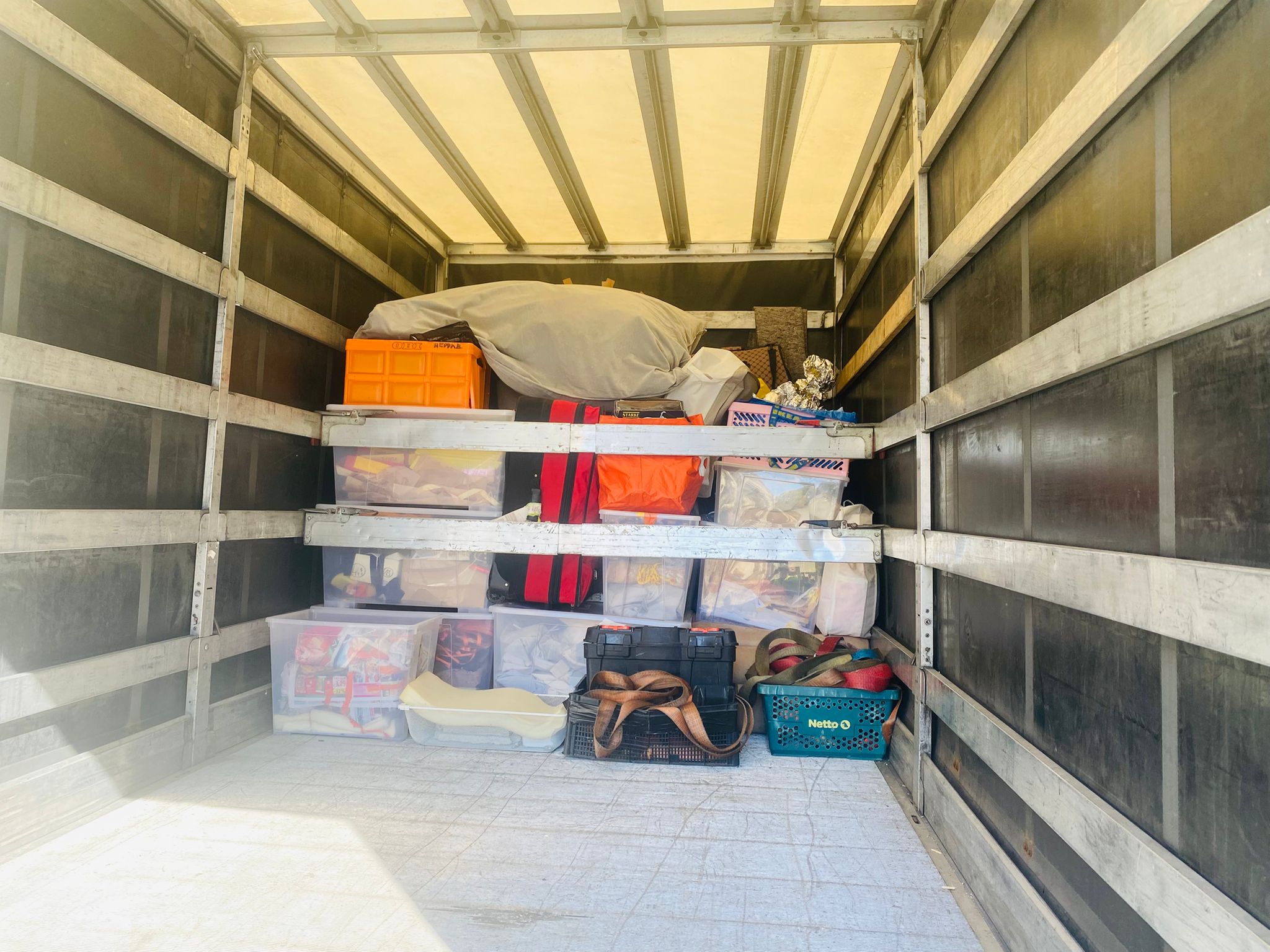
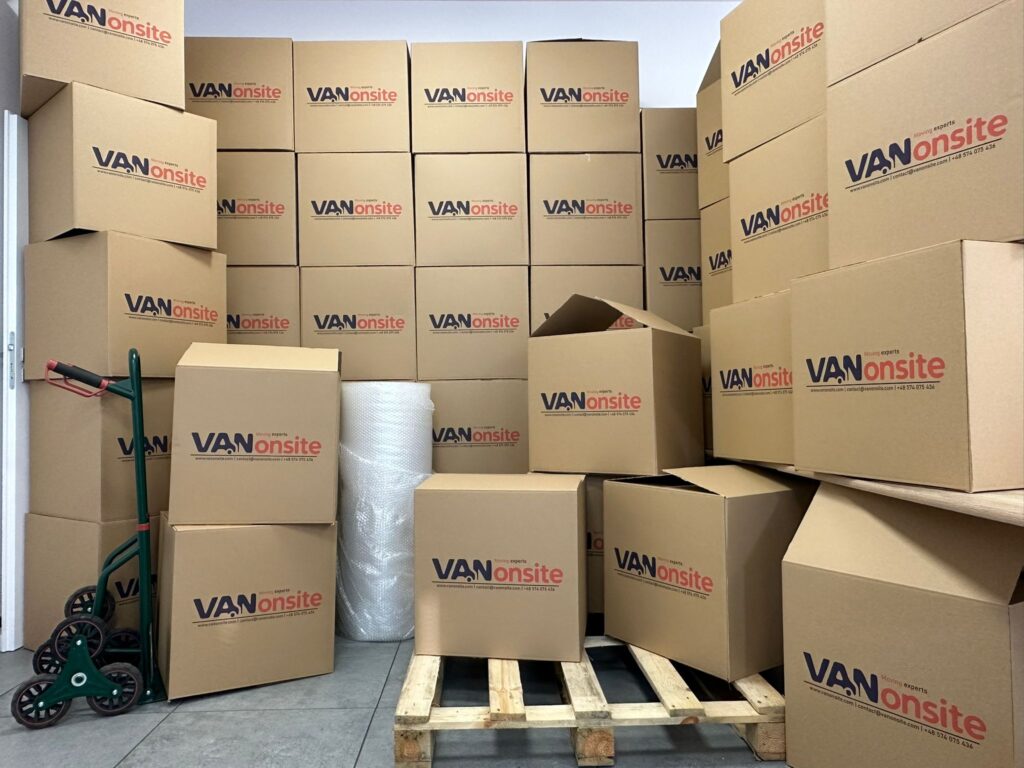
For many couples, Moving Medium or Moving Premium is the practical sweet spot. If you are bringing a bed, wardrobes, desks, kitchen items and many boxes, Moving Premium Plus may be more suitable. If your relocation is urgent, Last Minute Moving can be a valuable rescue option.
VANonsite also supports Furniture Removals, Home Removals, Packing Service, White Glove Delivery, Office removals, Storage, Student Removals and Office Furniture Installation. This makes the service useful not only for couples moving into a first apartment, but also for professionals relocating with home office equipment or premium furniture.
Documents Needed When Moving to Switzerland
Swiss administration is not chaotic, but it is precise. Couples should prepare documents before moving day, not after arrival. The smoother your paperwork, the easier your first weeks become.
| Step | Documents or action | Official source |
|---|---|---|
| Residence and work status | Passport or ID, employment contract, permit route | SEM: living and working in Switzerland |
| Commune registration | ID, rental contract, address confirmation, possible employment documents | ch.ch: notification of departure and registration |
| Health insurance | Choose mandatory basic insurance after taking residence | FOPH: health insurance for residents |
| Rental agreement | Lease, deposit details, additional charges, house rules | ch.ch: rental and leasing agreements |
| Household goods import | Inventory list, proof of relocation, form 18.44 | Swiss Customs: moving household effects |
| Duty free relocation import | Used personal goods, continued use after import | Swiss Customs: relocation import procedure |
If your household effects have been personally used for at least six months and will continue to be used in Switzerland, they may qualify for duty free import under Swiss customs conditions. An accurate inventory matters. List furniture, boxes, electronics and personal goods clearly.
A professional man and van provider can help keep transport organised, but customs documents remain your responsibility. Prepare them early, print copies and keep digital backups.
Moving Timeline for Couples
A calm timeline reduces expensive mistakes. Switzerland is not a place where you want to improvise every step.
| Time before moving | What to do |
|---|---|
| 12 weeks before | Choose canton, estimate salary, set monthly budget |
| 10 weeks before | Research rents, compare city options, check commute times |
| 8 weeks before | Request moving quote, estimate volume, start inventory |
| 6 weeks before | Prepare documents, shortlist apartments, plan customs paperwork |
| 4 weeks before | Confirm accommodation, compare health insurance, book transport |
| 2 weeks before | Pack essentials, label boxes, organise parking and access |
| Moving week | Keep passports, contracts, medicine and valuables separate |
| First 14 days | Register with the commune where required |
| First 3 months | Finalise mandatory health insurance |
| First 12 months | Review housing, insurance, transport and driving licence needs |
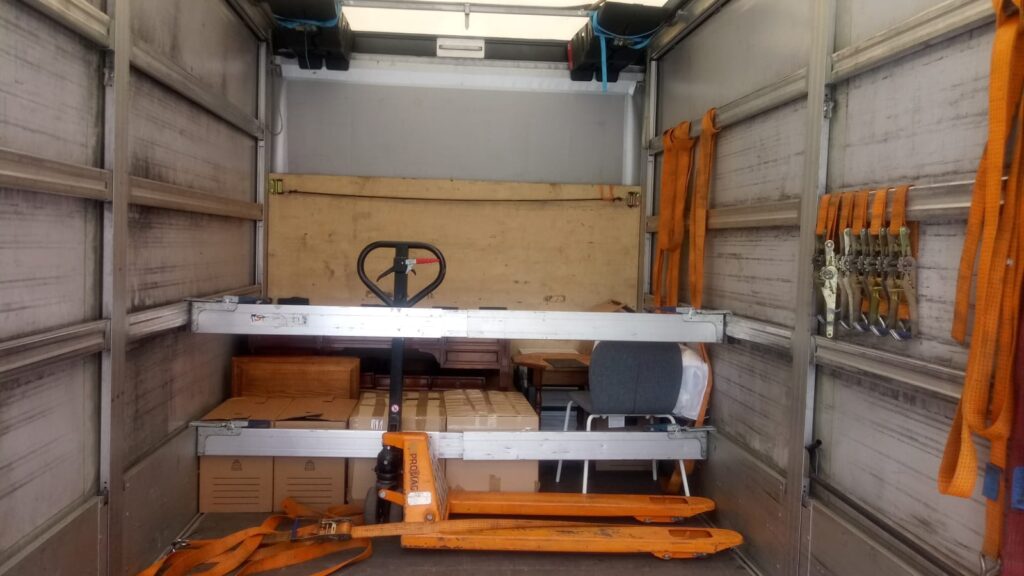
This timeline gives each decision breathing room. It also helps VANonsite match your load with the right vehicle and schedule.


Best Places to Live in Switzerland for Different Couple Budgets
The cost of living for a couple in Switzerland can change dramatically by location. Choosing the right place is one of the strongest financial decisions you can make.
| Couple profile | Good location strategy | Why it works |
|---|---|---|
| Budget conscious couple | Smaller towns in Jura, Neuchâtel, Valais or St. Gallen | Lower rents, calmer pace |
| Career focused couple | Zurich, Basel, Geneva, Zug | Strong job access, international companies |
| Remote working couple | Well connected scenic towns | More space, better lifestyle balance |
| Cross border lifestyle | Areas near France, Germany or Italy | Flexible shopping and travel options |
| Student couple | University towns with smaller apartments | Better access to campuses and shared services |
| Luxury focused couple | Zurich lake area, Zug, Geneva, Lausanne | Premium housing and lifestyle |
Do not choose a city only because it is famous. Choose it because your salaries, commute, language, apartment size and daily habits fit the place. A smaller town with a brilliant train connection can feel like a secret advantage.
How to Reduce the Cost of Living in Switzerland as a Couple
You cannot make Switzerland cheap, but you can make it controlled. A couple that plans well can save thousands of francs per year.
- Choose the canton before choosing the apartment.
- Compare health insurance by postcode.
- Start with a smaller apartment in year one.
- Use public transport before buying a car.
- Cook at home during the working week.
- Keep a strict first month relocation budget.
- Move only the furniture that is worth moving.
- Use the right VANonsite vehicle size for your volume.
- Prepare customs documents before the moving date.
- Review real spending after 90 days in Switzerland.
The cost of living for a couple in Switzerland becomes easier to handle when you separate fixed costs from emotional spending. Fixed costs are rent, health insurance and transport. Emotional spending is the tired takeaway, the rushed furniture purchase, the expensive temporary solution and the oversized apartment chosen under pressure.
VANonsite can help reduce relocation stress by keeping the moving part clear. Secure transport, GPS tracking and flexible load options are not just conveniences. They are budget protection.
Should You Move Furniture or Buy New in Switzerland?
This depends on the quality, size and emotional value of your furniture. Some items are absolutely worth moving. Others may cost more to transport than to replace.
| Item type | Move it or buy in Switzerland? | Why |
|---|---|---|
| Quality bed and mattress | Often move | Expensive to replace well |
| Cheap flat pack wardrobe | Compare first | May not justify transport space |
| Ergonomic office chair | Often move | Good chairs are costly |
| Sofa | Depends on size and value | Measure carefully |
| Kitchenware | Usually move | Easy to pack, useful immediately |
| Sentimental furniture | Move | Emotional value matters |
| Large fragile items | Use professional handling | Risk is higher without support |
If you already own strong furniture, moving it can protect your setup budget. If you own only low value pieces, a smaller man and van move with boxes, essentials and personal items may make more sense.
The best answer comes from volume. Once you know your cubic metres and weight, VANonsite can help match your load to the right vehicle.
Sample Monthly Budgets for Three Couple Scenarios
Scenario 1: Careful couple in a smaller town
| Category | Monthly cost |
|---|---|
| Rent and utilities | CHF 2,000 |
| Health insurance | CHF 800 |
| Groceries | CHF 850 |
| Transport | CHF 250 |
| Phones and internet | CHF 140 |
| Leisure | CHF 350 |
| Household and clothing | CHF 250 |
| Savings buffer | CHF 800 |
| Total | CHF 5,440 |
This couple lives well, but watches spending. They cook most meals, avoid car ownership and choose practicality over prestige.
Scenario 2: Comfortable couple near a major city
| Category | Monthly cost |
|---|---|
| Rent and utilities | CHF 2,900 |
| Health insurance | CHF 950 |
| Groceries | CHF 1,100 |
| Transport | CHF 550 |
| Phones and internet | CHF 200 |
| Restaurants and leisure | CHF 800 |
| Household and clothing | CHF 400 |
| Savings buffer | CHF 1,200 |
| Total | CHF 8,100 |
This is a balanced lifestyle. There is room for comfort, short trips, good food and savings, but spending still needs structure.
Scenario 3: Premium city couple
| Category | Monthly cost |
|---|---|
| Rent and utilities | CHF 4,500 |
| Health insurance | CHF 1,150 |
| Groceries | CHF 1,400 |
| Transport or car | CHF 1,000 |
| Phones and internet | CHF 250 |
| Restaurants and leisure | CHF 1,500 |
| Household and clothing | CHF 700 |
| Savings buffer | CHF 2,000 |
| Total | CHF 12,500 |
This lifestyle is comfortable, polished and expensive. It can be sustainable with strong salaries, but risky if based on guesswork.
Is Switzerland Worth It for a Couple?
Yes, for the right couple and the right plan. Switzerland can offer remarkable safety, clean infrastructure, high earning potential, beautiful nature and a lifestyle that feels stable. But it is not forgiving if you arrive without a budget.
The cost of living for a couple in Switzerland is high because the country operates at a high standard. Trains work. Streets are clean. Public services are organised. Apartments are usually well maintained. Salaries can be powerful. The value is real, but it must be planned.
For couples moving from another European country, the move itself should not be an afterthought. Your belongings, work equipment, furniture and personal items are part of your new start. VANonsite offers a secure way to move them, with flexible vehicle sizes, GPS tracking and practical man and van support.
FAQ: Cost of Living for a Couple in Switzerland
What is the average cost of living for a couple in Switzerland?
The average cost of living for a couple in Switzerland usually ranges from CHF 5,500 to CHF 8,500 per month. In expensive cities such as Zurich, Geneva or Zug, a couple may need CHF 8,500 to CHF 11,000+ for a comfortable lifestyle.
Is CHF 6,000 per month enough for a couple in Switzerland?
CHF 6,000 per month can be enough for a careful couple in a smaller town or outer area. It may feel tight in Zurich, Geneva, Zug or Lausanne if rent is high. The key is keeping housing costs under control.
How much should a couple save before moving to Switzerland?
A couple should ideally save CHF 12,000 to CHF 25,000+ before moving. This helps cover the rental deposit, first month’s rent, moving service, temporary accommodation, health insurance, groceries and furniture.
What is the biggest expense for couples in Switzerland?
Rent is usually the biggest expense. Health insurance is the next major fixed cost. Together, they shape most of the monthly budget.
Is it better to rent outside Zurich or Geneva?
For many couples, yes. Living outside the centre can reduce rent significantly while still giving access to jobs by train. A 20 to 40 minute commute may save thousands of francs per year.
Can couples import household goods into Switzerland?
Yes, household goods may be imported under relocation rules if they meet Swiss customs conditions. Couples should prepare an inventory, proof of relocation and the required customs form.
Is a man and van service useful for moving to Switzerland?
Yes. A man and van service is useful for couples who want controlled, flexible and secure transport without booking a huge removal truck. VANonsite offers several vehicle sizes, GPS tracking and European relocation support.
Should a couple bring furniture to Switzerland?
If the furniture is valuable, comfortable or expensive to replace, moving it can make sense. If it is cheap, bulky or fragile, compare the transport cost with replacement cost before deciding.
Final Thoughts: Plan the Budget, Then Plan the Move
The cost of living for a couple in Switzerland can look intimidating at first. Yet once the numbers are clear, the move becomes easier to manage. Rent, health insurance, food, transport and first month setup costs are the big pieces. Understand them early, and you avoid the most painful surprises.
A smart couple does not only ask, “Can we afford Switzerland?” A smart couple asks, “Which canton fits our income? Which apartment size protects our budget? Which belongings are worth moving? Which transport option gives us safety without waste?”
That is where VANonsite can make relocation feel calmer. With secure transport, GPS tracked loads, flexible vehicle sizes and practical man and van support, your move to Switzerland can become less chaotic and more controlled.
Switzerland may be expensive, but a well planned move gives you something priceless: a confident start.