
Moving to Switzerland can feel like crossing into a new rhythm of life. The trains run with quiet precision. The streets feel orderly. The mountains look almost unreal in the morning light. Yet before that calm begins, there is the move itself: boxes, documents, customs forms, furniture, route planning, vehicle size, collection times, delivery access and the small but powerful question that follows every relocation: did I remember everything?
The process of moving to Switzerland is not difficult when it is planned well, but it is unforgiving when important details are left until the last minute. Switzerland is organised, structured and careful. That is one of its greatest strengths. It also means your relocation needs a clear plan, especially if you are bringing household goods, starting work, studying, joining family or moving an entire office.
This guide explains the full process of moving to Switzerland in a practical, answer focused way. You will learn what to prepare before the move, which documents may matter, how Swiss customs works for household goods, how to choose the right transport option and what to do after arrival. You will also see where a professional man and van service can make the difference between a stressful border crossing and a smooth European relocation.
VANonsite supports moves to Switzerland with fast, secure and carefully managed transport across Europe. The company offers GPS tracking for every load, flexible vehicle sizes from 1m3 to 90m3, packing support, furniture removals, home removals, office removals, student removals, white glove delivery and last minute moving options. Whether you are moving 5 boxes and a bike or a full household, the goal is simple: your belongings should arrive safely, and you should always know where they are.
TL:DR
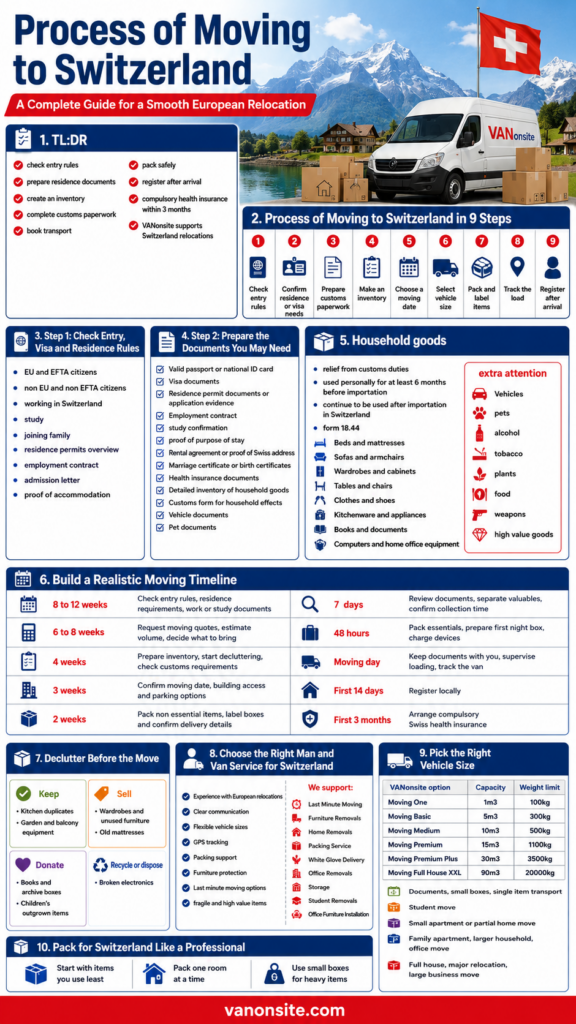
- The process of moving to Switzerland usually includes checking entry rules, preparing residence documents, creating an inventory, completing customs paperwork, booking transport, packing safely and registering after arrival.
- EU and EFTA citizens follow different residence rules from non EU citizens, so always check official Swiss guidance before setting a final moving date.
- Household goods may qualify for relief from duties if they meet Swiss customs conditions, including prior personal use and continued use after import.
- A clear inventory, customs form 18.44 and accessible personal documents can reduce the risk of border delays.
- In many Swiss communes, newcomers are generally expected to register with the local authority within 14 days of moving.
- People settling in Switzerland must usually arrange compulsory health insurance within 3 months after taking up residence.
- VANonsite supports Switzerland relocations with man and van transport, GPS tracked loads, packing, furniture removals, white glove delivery, student moves, office removals and vehicle sizes from 1m3 to 90m3.




What Is the Process of Moving to Switzerland?
The process of moving to Switzerland is the complete sequence of actions needed to relocate your life and belongings into Switzerland legally, safely and efficiently. It includes checking your right to enter and stay, preparing documents, organising customs paperwork, packing your goods, choosing transport, crossing the border, receiving delivery and completing local registration after arrival.
Many people think the move is mainly about distance. In reality, distance is only one part of it. A relocation from France, Germany, Italy, Spain, Poland, the Netherlands or Belgium to Switzerland can look simple on a map, yet the practical details matter. Switzerland is not part of the European Union, which means customs rules must be treated seriously. Residence requirements also depend on nationality, employment status, study plans, family situation and the canton where you will live.
The process of moving to Switzerland usually depends on 4 key factors:
- Your nationality and entry rights
- Your reason for moving
- The type and volume of belongings you bring
- Your final destination in Switzerland
Someone moving to Zurich for a new job will have different priorities from a student moving to Geneva, a family relocating to Lausanne or a company moving office furniture to Basel. Still, the core process remains similar. You prepare documents, sort your belongings, declare household goods where required, choose the right vehicle, move safely and complete Swiss formalities after arrival.
A professional man and van company can make the practical side much easier. VANonsite helps with European removals by combining flexible vehicle options, careful handling and GPS tracking. Instead of wondering where your sofa, boxes, desk or family heirlooms are, you can track the load and focus on the next step of your move.
Quick Overview: Process of Moving to Switzerland in 9 Steps
| Step | What to do | Why it matters | How VANonsite helps |
|---|---|---|---|
| 1 | Check entry rules | Requirements vary by nationality and purpose of stay | You can plan transport around realistic dates |
| 2 | Confirm residence or visa needs | Work, study and family moves can require different documents | Moving dates can match your legal timeline |
| 3 | Prepare customs paperwork | Switzerland has specific rules for household goods | Organised loading supports smoother inspection |
| 4 | Make an inventory | It shows what you are importing | It helps match boxes and furniture to the load |
| 5 | Choose a moving date | Timing affects keys, work, storage and access | Last Minute Moving can support urgent moves |
| 6 | Select vehicle size | Wrong volume can cause extra cost or extra trips | VANonsite offers options from 1m3 to 90m3 |
| 7 | Pack and label items | Clear packing reduces damage and confusion | Packing Service protects fragile goods |
| 8 | Track the load | Visibility lowers stress during transport | Every VANonsite load can be GPS tracked |
| 9 | Register after arrival | Local registration is part of settling in | Fast delivery helps you meet early deadlines |
A move to Switzerland rewards preparation. Even a small delay can affect hotel bookings, storage costs, work start dates, handover appointments or school schedules. That is why the process of moving to Switzerland should be treated as a structured relocation plan, not a rushed collection of last minute decisions.
Step 1: Check Entry, Visa and Residence Rules
The first step in the process of moving to Switzerland is confirming whether you can enter, live and work in Switzerland under the right conditions. This should happen before you book transport, sign a final lease or arrange a delivery date.
EU and EFTA citizens usually follow different rules from non EU and non EFTA citizens. Even within those groups, the reason for the move matters. Working in Switzerland, studying at a Swiss university, joining a spouse, moving with family or living without gainful employment can each involve different requirements.
Official Swiss sources should always be your starting point:
- FDFA entry and stay in Switzerland
- SEM information for EU and EFTA citizens living and working in Switzerland
- Swiss residence permits overview
If you are moving for work, you may need an employment contract and residence related paperwork. If you are moving to study, keep your admission letter and proof of accommodation ready. If you are moving with family, prepare marriage certificates, birth certificates and any documents requested by the relevant authority.
This legal preparation may feel less urgent than packing, but it is more important. A van can wait. Customs and residence rules cannot be solved by hope. A calm relocation starts when the paperwork is clear.
For VANonsite customers, the transport plan can then be built around real dates, not guesswork. That matters when you are coordinating collection, delivery, ferry or tunnel routes, border timing, property access and your first day in Switzerland.
Step 2: Prepare the Documents You May Need
Good documents make the process of moving to Switzerland smoother, faster and less stressful. The exact list depends on your nationality, canton, reason for moving and goods, but most people should prepare a core relocation folder.
Keep printed copies and digital copies. Do not pack originals inside the van. Carry essential documents with you, ideally in a small folder or secure bag that stays within reach throughout the journey.
You may need:
- Valid passport or national ID card
- Visa documents, if required
- Residence permit documents or application evidence
- Employment contract, study confirmation or proof of purpose of stay
- Rental agreement or proof of Swiss address
- Marriage certificate or birth certificates for family moves
- Health insurance documents, if already arranged
- Detailed inventory of household goods
- Customs form for household effects
- Vehicle documents, if importing a car
- Pet documents, if moving with animals
- Receipts or proof of prior use for certain high value items, where relevant
For official relocation guidance, check ch.ch moving to Switzerland. For customs rules, use BAZG moving household effects and BAZG relocation import procedure.
A detailed inventory is one of the most useful documents in the process of moving to Switzerland. It helps customs understand what you are bringing. It helps your moving team organise the load. It also helps you check delivery at the end.
A good inventory does not need to be poetic. It should be clear.
| Item category | Example details to include |
|---|---|
| Furniture | Sofa, bed frame, wardrobe, dining table, shelves |
| Electronics | TV, computer, monitor, printer, speakers |
| Kitchen items | Dishes, pans, coffee machine, small appliances |
| Personal goods | Clothes, books, decor, sports equipment |
| Fragile goods | Mirrors, glassware, lamps, artwork |
| Office items | Desks, chairs, files, IT equipment |
| Student items | Books, bedding, laptop, bike, small furniture |
| Family items | Toys, baby equipment, school materials, seasonal clothing |
The clearer the list, the less room there is for confusion. During a border crossing or delivery check, that clarity can save time, nerves and money.
Step 3: Understand Swiss Customs for Household Goods
Swiss customs is one of the most important parts of the process of moving to Switzerland. Switzerland is highly organised, and customs requirements should be taken seriously, especially when bringing furniture, personal items, office equipment, vehicles, pets or valuable goods.
In many relocation cases, household goods may be imported under relief conditions when you transfer your residence to Switzerland. Swiss customs guidance explains that personal effects can qualify as removal goods when certain requirements are met. One key rule is that imported articles must generally have been used personally for at least 6 months before importation and must continue to be used after importation in Switzerland.
That rule matters. A relocation shipment should look like a genuine household move, not a commercial import of newly purchased goods. If you have recently bought expensive electronics, new designer furniture or multiple identical items, check the rules before transport.
Swiss customs may also require form 18.44 for household effects. You can find official information and the form through BAZG resources, including BAZG moving household effects and form 18.44.
Common household goods include:
- Beds and mattresses
- Sofas and armchairs
- Wardrobes and cabinets
- Tables and chairs
- Clothes and shoes
- Kitchenware and appliances
- Books and documents
- Computers and home office equipment
- Student materials
- Family belongings and decor
Some items may need extra attention. Vehicles, pets, alcohol, tobacco, plants, food, weapons and certain high value goods can involve specific rules. Do not rely on forum advice for these categories. Use official Swiss guidance and prepare before the moving day.
VANonsite can support the physical relocation by keeping the load organised, protected and traceable. With a clear inventory and GPS tracking, the transport side becomes easier to control. That gives you more space to focus on the legal and administrative side of the process of moving to Switzerland.
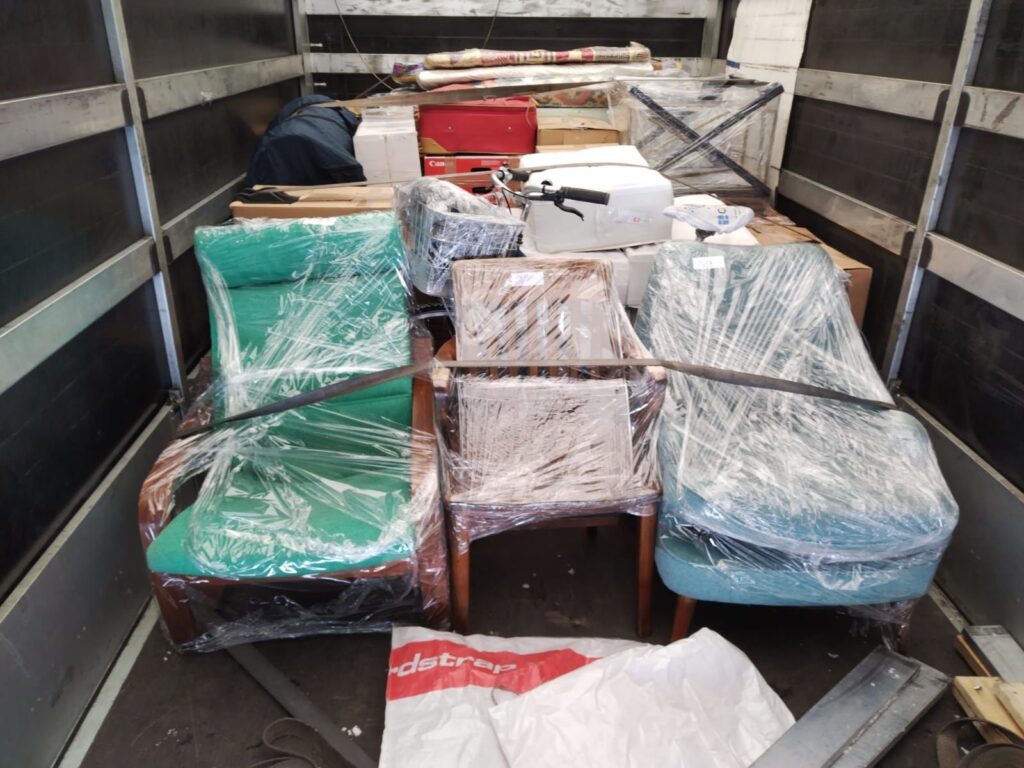
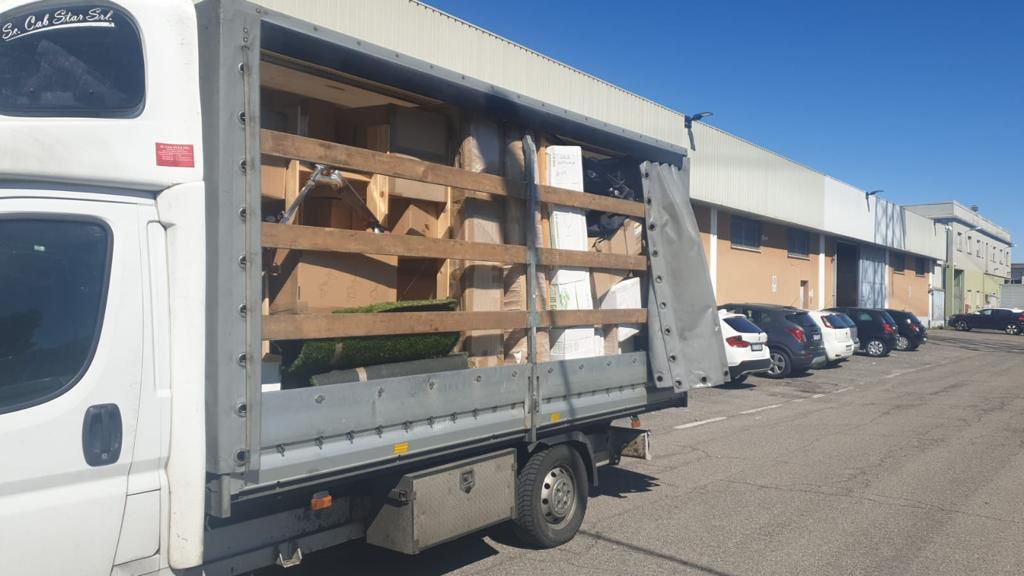
Step 4: Build a Realistic Moving Timeline
Time is the quiet hero of a successful move. Give yourself enough of it, and the relocation feels calmer. Leave everything until the final week, and even a simple move can become messy.
The process of moving to Switzerland should ideally begin at least 8 weeks before the planned moving date. More complex moves may need 12 weeks or more, especially when children, pets, vehicles, office equipment or large furniture are involved.
| Time before moving | What to do |
|---|---|
| 8 to 12 weeks | Check entry rules, residence requirements, work or study documents |
| 6 to 8 weeks | Request moving quotes, estimate volume, decide what to bring |
| 4 weeks | Prepare inventory, start decluttering, check customs requirements |
| 3 weeks | Confirm moving date, building access and parking options |
| 2 weeks | Pack non essential items, label boxes and confirm delivery details |
| 7 days | Review documents, separate valuables, confirm collection time |
| 48 hours | Pack essentials, prepare first night box, charge devices |
| Moving day | Keep documents with you, supervise loading, track the van |
| First 14 days | Register locally where required and check delivered items |
| First 3 months | Arrange compulsory Swiss health insurance if applicable |
Access should be checked early. Swiss buildings may have narrow staircases, underground parking limits, lift restrictions, strict noise rules or fixed delivery windows. If your new apartment is in a city centre, parking permission can be as important as the van itself.
A 15m3 vehicle arriving at the wrong entrance can cause more stress than a 1000 kilometre journey. Measure, ask, confirm and share details with your mover. This is especially important for large items such as wardrobes, sofas, dining tables, beds and office desks.
VANonsite offers flexible vehicle sizes and professional European moving support, which helps match the move to real access conditions. With Last Minute Moving available for urgent situations, the company can also support customers whose timelines change quickly because of work, housing or family circumstances.
Step 5: Declutter Before the Move
Decluttering is one of the most underrated parts of the process of moving to Switzerland. Every unnecessary item adds volume, weight, packing time and handling risk. When you remove what you no longer need, the move becomes lighter in every sense.
Start by dividing items into 4 groups:
- Keep
- Sell
- Donate
- Recycle or dispose
Be honest. A broken chair that has followed you through 2 apartments does not need a Swiss postcode. Clothes you have not worn in 3 years do not become more useful after crossing the border. Old cables, duplicate kitchen tools and forgotten boxes in the attic can quietly add hundreds of litres to your load.
Decluttering also helps you choose the correct vehicle size. A small apartment move may drop from 15m3 to 10m3 after a serious clear out. A family move may avoid needing extra storage. A student move may fit into 5m3 instead of 10m3.
Focus first on bulky categories:
- Wardrobes and unused furniture
- Old mattresses
- Books and archive boxes
- Kitchen duplicates
- Children’s outgrown items
- Garden and balcony equipment
- Broken electronics
- Office furniture you will not need
This does not mean stripping your home of personality. It means moving with intention. Switzerland is known for clean systems and efficient living. Arriving with fewer unnecessary items can make your new home feel sharper from day one.
Step 6: Choose the Right Man and Van Service for Switzerland
A good international move is not just a van with wheels. It is timing, communication, careful handling, route planning, documentation awareness and trust. The right man and van service should feel calm and capable from the first message to the final delivery.
When choosing a moving company for Switzerland, look for:
- Experience with European relocations
- Clear communication before moving day
- Flexible vehicle sizes
- GPS tracking
- Packing support
- Furniture protection
- Last minute moving options
- Ability to handle small, medium and large loads
- Careful approach to fragile and high value items
- Support for student, home and office moves
VANonsite is built for this kind of practical, flexible relocation. The company offers Last Minute Moving, Furniture Removals, Home Removals, Packing Service, White Glove Delivery, Office Removals, Storage, Student Removals and Office Furniture Installation. That means the service can fit different situations, from a small student room to a full house or business relocation.
A reliable man and van service should not make you chase updates. VANonsite offers GPS tracking for every load, which is a powerful advantage during the process of moving to Switzerland. You are not left guessing where your boxes are while you wait for keys, call a landlord or prepare for your first working day.
For dedicated Switzerland transport, visit VANonsite removals to Switzerland.
Step 7: Pick the Right Vehicle Size
Choosing the right vehicle size is one of the most practical decisions in the process of moving to Switzerland. Too small, and you may need a second trip. Too large, and you may pay for unused space. The goal is to choose a vehicle that fits your real volume and weight.
VANonsite offers several vehicle sizes:
| VANonsite option | Capacity | Weight limit | Best for |
|---|---|---|---|
| Moving One | 1m3 | 100kg | Documents, small boxes, single item transport |
| Moving Basic | 5m3 | 300kg | Student move, small studio, light personal goods |
| Moving Medium | 10m3 | 500kg | Small apartment or partial home move |
| Moving Premium | 15m3 | 1100kg | One bedroom move or furniture heavy relocation |
| Moving Premium Plus | 30m3 | 3500kg | Family apartment, larger household, office move |
| Moving Full House XXL | 90m3 | 20000kg | Full house, major relocation, large business move |
A student with 12 boxes, a chair, a suitcase and a bike may only need Moving Basic. A couple moving a bed, sofa, dining table, desk and 35 boxes may need Moving Premium. A family relocating a full home with wardrobes, beds, kitchen goods and children’s items may need Moving Premium Plus or Moving Full House XXL.
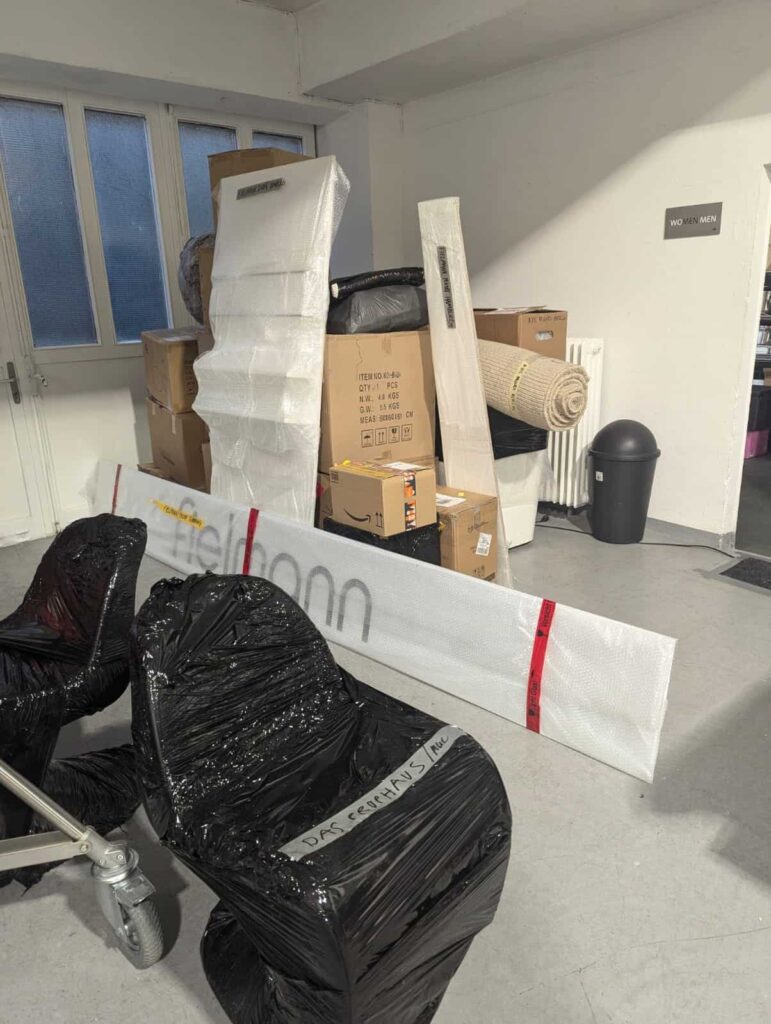
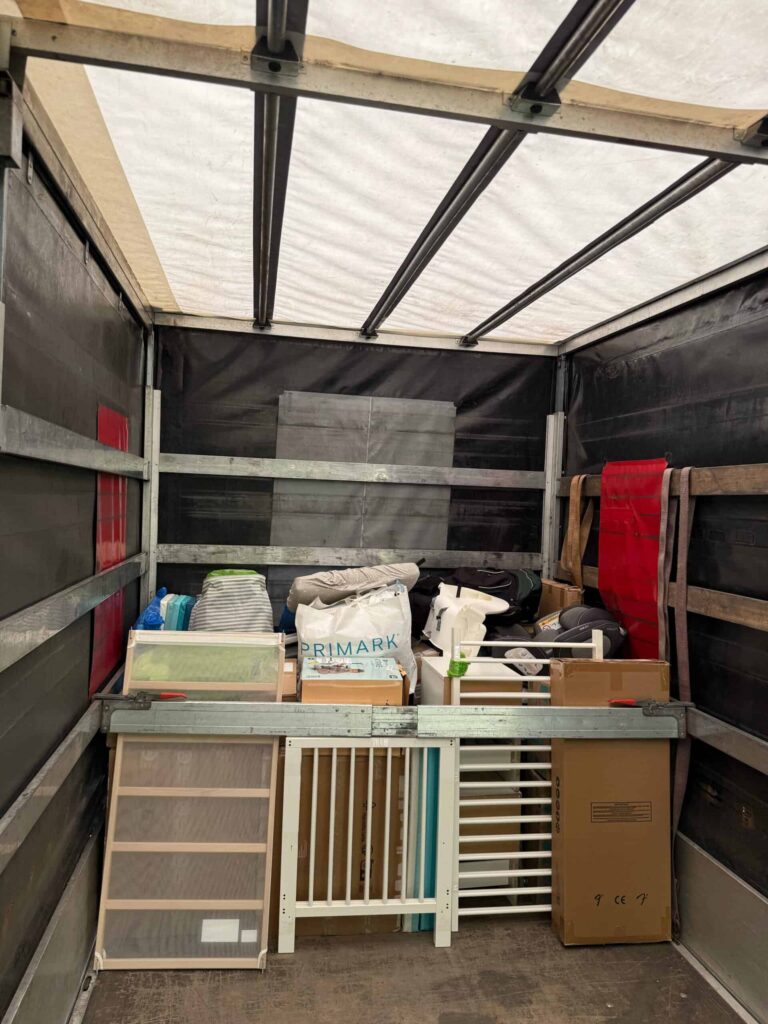
Volume can surprise people. Soft items compress. Furniture does not. Mirrors, tables, wardrobes and office desks need room for safe protection. Fragile items should not be crushed into a van like a puzzle with no air.
To estimate volume, walk room by room and list:
- Large furniture
- Medium furniture
- Number of boxes
- Fragile items
- Electronics
- Outdoor items
- Bikes or sports equipment
- Office equipment
- Items needing disassembly
Weight matters too. Books, tools, files, gym equipment and appliances can be heavy even when they look compact. A small load can still exceed the weight limit if it contains dense items.
VANonsite can help customers match the right vehicle to the move, making the process of moving to Switzerland more efficient, safer and more cost aware.
Step 8: Pack for Switzerland Like a Professional
Packing is where the move becomes real. Suddenly, your life is measured in cardboard, tape and marker pen. A good packing system protects your belongings, speeds up loading and makes arrival far less exhausting.
The best method is simple: pack by room, label clearly and protect anything that can crack, scratch, bend or leak.
Use this packing approach:
- Start with items you use least.
- Pack one room at a time.
- Use small boxes for heavy items.
- Use strong cartons for fragile goods.
- Wrap glass, ceramics and mirrors carefully.
- Label every box with room, contents and priority.
- Photograph valuable or fragile items before packing.
- Keep key documents outside the moving load.
- Prepare a first night box.
- Do not overload boxes beyond safe lifting weight.
Your first night box should include:
- Passport or ID
- Residence and customs documents
- Phone charger
- Medication
- Toiletries
- Fresh clothes
- Basic kitchen items
- Bedding
- Laptop
- Keys and access cards
- Snacks and water
- Basic cleaning items
The first night box is small, but it can save your evening. After a long journey, nobody wants to open 18 cartons just to find a towel, phone charger or toothbrush.
If you are moving fragile or expensive goods, VANonsite Packing Service can be a smart investment. Professional packing is especially useful for artwork, glassware, designer furniture, electronics, office equipment, antiques and high value personal items.
During the process of moving to Switzerland, packing is not only about preventing damage. It is about protecting your first days. When bedding, documents and essentials are easy to find, your new home starts feeling liveable much sooner.
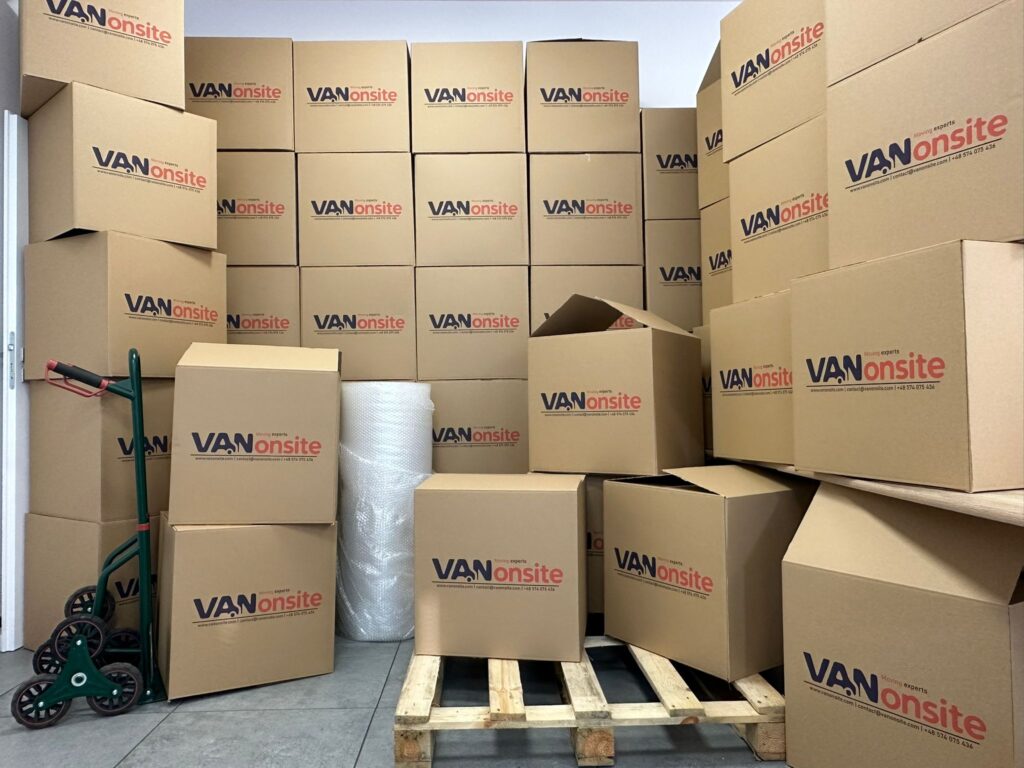
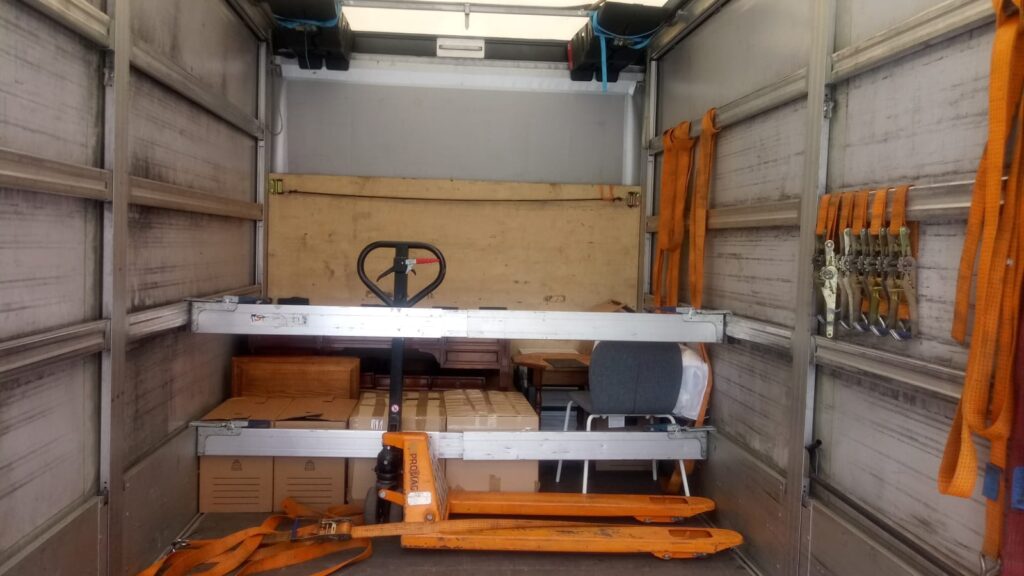


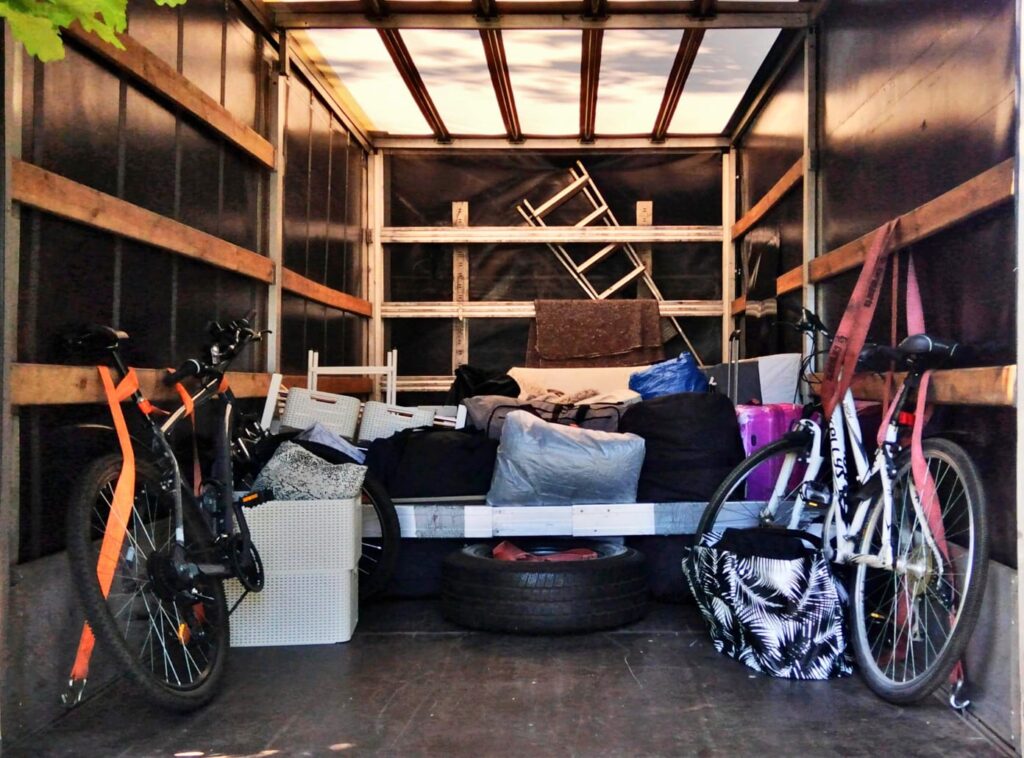
Step 9: Moving Furniture, Fragile Items and White Glove Goods
Some belongings are not valuable only because of their price. They are valuable because of what they carry. A dining table that hosted family dinners. A chair from your first apartment. A mirror you searched for during 2 years. A desk where your business began. These items deserve more than rough handling.
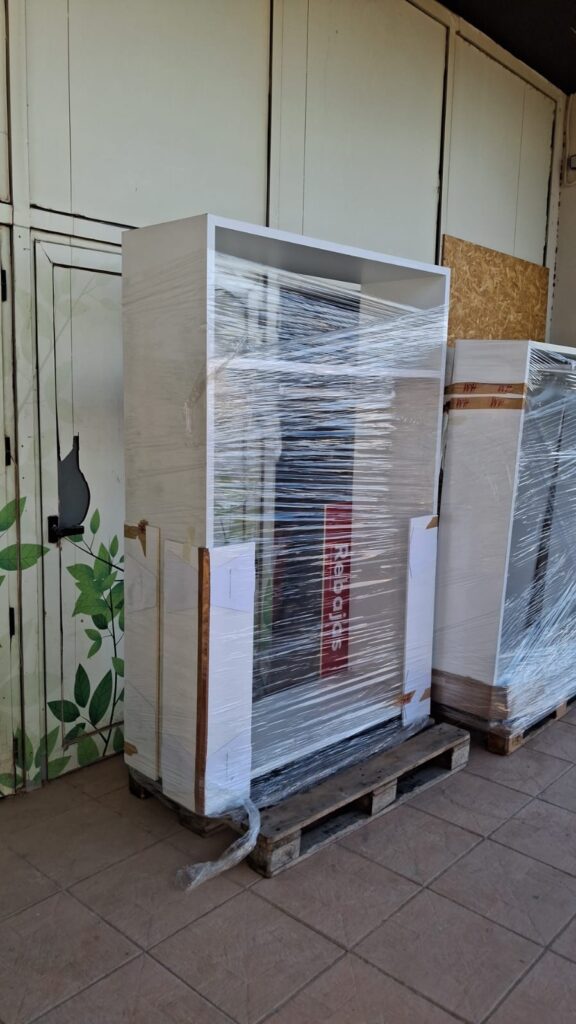
Furniture moves require planning. Measure doors, staircases, lifts and hallways. Check whether large items need to be dismantled. Keep screws and fittings in labelled bags. Photograph furniture before loading, especially if it is delicate, expensive or sentimental.
Items that often need extra care include:
| Item | Risk | Best protection |
|---|---|---|
| Mirrors | Cracking and corner damage | Corner guards, padding, upright transport |
| Sofas | Fabric marks and frame strain | Covers, careful lifting, clear access |
| Dining tables | Scratches and leg damage | Disassembly, blankets, secure loading |
| Wardrobes | Panel cracks and access issues | Disassembly where needed |
| Electronics | Shock and moisture | Original boxes or padded cartons |
| Artwork | Surface damage | Specialist wrapping and stable placement |
| Designer chairs | Scratches and pressure marks | Soft wrapping and careful stacking |
| Lamps | Bent frames and broken shades | Separate packing and rigid boxes |
VANonsite White Glove Delivery is useful for premium items that need a higher level of care. Furniture Removals and Home Removals are also valuable when your move includes bulky or delicate household goods.
Furniture planning is a decisive part of the process of moving to Switzerland. This is especially true in Swiss cities where apartment access, parking, lifts and building rules can be strict. A calm moving day begins with measurements, not muscle.
Step 10: Moving to Switzerland for Work
Many people move to Switzerland for work, and this type of relocation often comes with fixed dates. Your contract starts on a specific Monday. Your apartment is available from a specific Friday. Your laptop, work clothes and home office setup need to arrive before the first serious meeting.
For work related moves, prepare early:
- Employment contract
- Residence or permit related documents
- Rental agreement
- Work clothing
- Laptop and work devices
- Home office furniture
- Chargers and adapters
- Important certificates
- First week essentials
If your job involves remote or hybrid work, treat your home office as a priority zone. Pack screens, keyboards, chairs, desks and cables with clear labels. Photograph cable setups before disconnecting them. Keep your laptop and essential work documents with you.
The process of moving to Switzerland for work should also consider timing around payroll, banking, health insurance and local registration. These practical steps can affect your first weeks more than you expect.
A GPS tracked man and van service is especially reassuring when professional deadlines are tight. VANonsite gives customers better visibility over the load, which helps reduce uncertainty during a busy relocation week.
Step 11: Moving to Switzerland as a Student
Student moves are often smaller, faster and more budget sensitive. You may be moving into a shared flat, a student residence or a compact studio. The key is to avoid paying for more space than you need while still protecting your essentials.
A typical student move may include:
- Clothes
- Books
- Laptop and monitor
- Bedding
- Small furniture
- Kitchen basics
- Bike
- Sports equipment
- Study materials
- Personal items
For many student moves, a 5m3 or 10m3 vehicle may be enough. VANonsite Student Removals can support compact relocations where timing, cost and simplicity matter.
Students should also prepare documents carefully. Admission letters, proof of accommodation, ID documents and insurance information may be needed depending on the situation. Check official Swiss sources before arrival, especially if you are staying long term.
A student relocation can feel intense because everything happens quickly. One week you are packing at home. The next week you are navigating a new city, new language, new lectures and new routines. A reliable man and van service can remove one heavy problem from that first chapter.
Step 12: Moving to Switzerland with Family
Family moves are larger and more emotional. You are not only moving furniture. You are moving routines, comfort, school plans, toys, kitchen habits and the small objects that make children feel safe.
A family move to Switzerland should be planned with priority boxes. Not every box matters equally on the first day. Bedding, medicine, school items, baby equipment and kitchen basics should be easy to find.
Prepare family essentials such as:
- Passports or ID cards
- Birth certificates
- Marriage certificate, where relevant
- School records
- Health records
- Medication
- Favourite toys
- Baby supplies
- Bedding
- First week clothes
- Kitchen basics
- Chargers and devices
A family relocation often needs a larger vehicle. Moving Premium Plus at 30m3 may suit a bigger apartment or family household, while Moving Full House XXL at 90m3 can support large and complex moves.
The process of moving to Switzerland with children should also include emotional preparation. Talk through the move. Show photos of the new area. Pack a comfort bag for each child. Make the first evening simple: beds, food, showers, quiet.
VANonsite helps by keeping transport structured and traceable. When the load is GPS tracked and professionally handled, parents can focus on the family, not on chasing updates.
Step 13: Office Removals and Business Relocation to Switzerland
For companies, the process of moving to Switzerland is not only a logistics task. It is a continuity test. Every delayed monitor, missing office chair, unlabelled file box or damaged desk can slow the team down.
Office moves need structure. Before collection, assign departments, label workstations and separate priority equipment. IT hardware should be packed and tracked carefully. Archive boxes should be numbered. Furniture should be measured and, where necessary, dismantled before moving day.
Business relocation may include:
- Desks
- Office chairs
- Meeting room tables
- Storage cabinets
- Computers and monitors
- Printers
- Archive boxes
- Reception furniture
- Display equipment
- Break room items
- Office decor
VANonsite supports Office Removals and Office Furniture Installation, making it easier for businesses to move, unload and set up efficiently. This can reduce downtime and help employees return to work faster.
For office moves, GPS tracking is a strong operational advantage. Managers can plan around delivery status instead of relying on vague estimates. In a business relocation, clear information is not a luxury. It protects productivity.
Step 14: Storage Options During a Switzerland Move
Sometimes dates do not line up. Your old lease ends on the 28th. Your Swiss apartment starts on the 5th. The renovation runs late. The keys are delayed. The office fit out needs one more week. In these moments, storage can prevent panic.
Storage may help when:
- There is a gap between old and new accommodation
- Your Swiss home is not ready
- You are downsizing
- You are renovating
- You are relocating in stages
- Your office installation has multiple phases
- You want to move non essential items later
- You need time to decide what belongs in the new home
Storage gives breathing room. It prevents rushed decisions and protects belongings while your final address, handover or schedule comes together.
In the process of moving to Switzerland, storage can also be useful for people who arrive before their full household. For example, a worker may move first with essentials, then bring larger furniture later. A family may move in 2 phases because of school dates. A company may store furniture while the Swiss office is being prepared.
VANonsite can support flexible relocation planning, including situations where transport and storage need to work together.
Step 15: Arrival in Switzerland: What to Do First
Once the van arrives, resist the urge to open every box at once. Start with a calm delivery check. The first hour after delivery can save problems later.
Use this arrival checklist:
- Confirm delivered items against your inventory.
- Inspect fragile and high value items.
- Place boxes in the correct rooms.
- Assemble priority furniture first.
- Keep customs and moving documents safe.
- Register with your commune where required.
- Arrange compulsory health insurance if applicable.
- Set up utilities, internet and banking.
- Update your address with employers, schools and service providers.
- Keep receipts and relocation documents in one folder.
In general, people moving within Switzerland are expected to register with the new commune within 14 days of moving. For people arriving from abroad, local registration requirements can depend on the commune, canton and residence status, so check with the relevant authority. You can start with ch.ch notification of departure and registration.
People settling in Switzerland must usually take out compulsory health insurance within 3 months after taking up residence. You can check official information through BAG health insurance for people resident in Switzerland.
The process of moving to Switzerland does not end when the last box enters the hallway. It ends when your home starts working. Bed assembled. Documents filed. Internet ordered. Insurance in progress. First meal cooked. First morning coffee made. That is when the move becomes a life.
Cost Factors in the Process of Moving to Switzerland
The cost of moving to Switzerland depends on practical details. Exact pricing should be based on your route, volume, weight, timing and service level. A small student move and a full family relocation are completely different projects.
The main cost factors include:
| Cost factor | Why it affects the price |
|---|---|
| Distance | Longer European routes require more time, fuel and planning |
| Volume | More m3 means a larger vehicle or more loading space |
| Weight | Heavy goods affect handling and vehicle choice |
| Urgency | Last minute moving may require faster coordination |
| Packing | Professional packing adds labour and materials |
| Furniture assembly | Dismantling and reassembly take time |
| Access | Stairs, lifts and parking restrictions affect loading |
| Customs complexity | More detailed goods may need more preparation |
| Storage | Temporary storage adds flexibility but affects cost |
| White glove handling | Premium goods need extra care and protection |
The cheapest quote is not always the cheapest move. A broken cabinet, a second trip, a missed delivery slot or poor communication can cost far more than careful planning. VANonsite focuses on safe, fast and transparent European transport, which is exactly what Switzerland relocations demand.
If your load is small, a man and van option can be highly efficient. If your relocation is large, choosing the correct vehicle from the start can prevent unnecessary stress and cost.
The best approach is to describe your move honestly. Share your inventory, access details, timing needs and fragile items. The more accurate the information, the better the transport plan.
How to Reduce Stress During the Process of Moving to Switzerland
A move to Switzerland can be exciting, but it can also stretch your patience. The key is not to eliminate every challenge. That is impossible. The key is to reduce surprises.
Here are practical ways to make the process calmer:
- Start documents before packing
- Create one relocation folder
- Use a room by room inventory
- Label boxes clearly
- Photograph fragile and high value items
- Keep essentials with you
- Confirm parking and access
- Choose the right vehicle size
- Use GPS tracked transport
- Prepare a first night box
- Keep communication simple and written
Stress often comes from uncertainty. Where is the van? Which box has the documents? Will the sofa fit? Did customs need another paper? The more you answer before moving day, the lighter the day feels.
VANonsite reduces one of the biggest sources of uncertainty by offering GPS tracking for every load. This gives you visibility during transport and helps you plan around real movement, not vague hope.
Common Mistakes When Moving to Switzerland
Most moving mistakes begin quietly. A missing form. An unlabelled box. A sofa that nobody measured. A folder packed at the bottom of a van. Then moving day arrives, and small details become expensive.
Avoid these common mistakes:
- Booking transport before checking entry or residence rules
- Forgetting to prepare a customs inventory
- Packing original documents inside the van
- Underestimating volume in m3
- Choosing a van without GPS tracking
- Leaving parking permission too late
- Ignoring lift or staircase limits
- Packing fragile goods without proper protection
- Assuming every canton has identical local procedures
- Not arranging storage as a backup
- Buying new goods shortly before import without checking customs rules
- Forgetting to prepare a first night box
- Not checking building rules at the delivery address
- Using weak boxes for heavy books or files
- Leaving disassembly decisions until moving day
The process of moving to Switzerland becomes easier when every detail has a place. That does not mean overcomplicating the move. It means building a plan strong enough to carry pressure.
A professional man and van service helps because it brings structure to the physical side of relocation. The right vehicle, careful loading, clear timing and GPS tracking can make the entire journey feel more controlled.
Why Choose VANonsite for Your Move to Switzerland?
VANonsite is a strong choice for people who want their Switzerland relocation to feel safe, fast and well managed. The company combines European transport experience with flexible man and van solutions, careful handling and clear visibility through GPS tracking.
Here is what makes VANonsite valuable during the process of moving to Switzerland:
- GPS tracking for every load
- Vehicle sizes from 1m3 to 90m3
- Last Minute Moving for urgent relocations
- Furniture Removals for careful household transport
- Home Removals for complete private moves
- Packing Service for safer preparation
- White Glove Delivery for premium items
- Office Removals for business moves
- Storage options for flexible timing
- Student Removals for smaller moves
- Office Furniture Installation for faster setup
A move to Switzerland deserves more than vague promises. You need careful hands, clear communication and transport that respects both your schedule and your belongings.
Whether you are moving 1m3 of essentials or 90m3 of full household contents, VANonsite can shape the service around your real needs. That is the difference between simply moving things and moving with confidence.
For dedicated Switzerland transport, visit VANonsite removals to Switzerland.
FAQ About the Process of Moving to Switzerland
What is the first step in the process of moving to Switzerland?
The first step is checking your entry, visa or residence requirements. Your nationality and reason for moving will influence the documents you need. Once that is clear, you can plan housing, customs paperwork and transport.
Can I bring my household goods to Switzerland?
Yes, in many relocation cases household goods can be imported under relief conditions. You should prepare a clear inventory and check official Swiss customs rules before moving.
What documents do I need for moving to Switzerland?
You may need a passport or ID card, visa or residence documents, proof of work or study, rental agreement, inventory of goods, customs form 18.44, family documents, pet documents and health insurance paperwork.
Do I need customs form 18.44?
For household effects imported during relocation, Swiss customs may require form 18.44. Always check the official BAZG guidance before your move.
How soon do I need to register after moving to Switzerland?
In general, people are expected to register with the new commune within 14 days of moving. Requirements can vary depending on your situation, so check with your commune or canton.
How soon do I need health insurance in Switzerland?
People settling in Switzerland must usually take out compulsory health insurance within 3 months after taking up residence. Check official BAG information and compare approved insurance options early.
Is a man and van service good for moving to Switzerland?
Yes. A man and van service can be ideal for small and medium moves, student relocations, urgent transport, furniture removals and direct European routes. VANonsite also offers larger vehicle options for full households and office moves.
Does VANonsite offer GPS tracking?
Yes. VANonsite offers GPS tracking for every load, giving customers better visibility and peace of mind during European transport.
Can VANonsite help with last minute moving to Switzerland?
Yes. VANonsite offers Last Minute Moving, subject to availability, route and vehicle size. This can be useful when work dates, rental agreements or urgent family situations change quickly.
What is the best vehicle size for moving to Switzerland?
It depends on your volume and weight. VANonsite options range from Moving One at 1m3 and 100kg to Moving Full House XXL at 90m3 and 20000kg. A small student move may need 5m3, while a family move may need 30m3 or more.
Is Switzerland hard to move to?
Switzerland is not hard to move to when you prepare properly, but the rules are precise. Documents, customs, registration and insurance should all be checked early.
How can I make the process of moving to Switzerland easier?
Start early, prepare documents, create an inventory, choose the correct vehicle size, pack carefully and use a professional GPS tracked man and van service such as VANonsite.
Ready to Make Your Move to Switzerland Feel Effortless?
The process of moving to Switzerland can be calm, structured and surprisingly smooth when you prepare early. Check the rules. Build your inventory. Keep documents close. Choose the right vehicle. Protect the things that matter.
Then let the journey begin.
VANonsite brings speed, care and clarity to European relocations. With GPS tracked loads, flexible man and van options, professional packing, furniture removals, white glove delivery and vehicle sizes from 1m3 to 90m3, your move can feel less like chaos and more like a confident new chapter.
Request your VANonsite quote today and make the process of moving to Switzerland safer, simpler and far less stressful.