Switzerland has a quiet pull. Clean streets, precise trains, strong salaries, safe cities, mountain weekends and schools with a serious reputation. For many people, the move begins with a job offer, a family decision or a study plan. Then, after a few years, the question changes. It is no longer only “Can I live in Switzerland?” It becomes “How do I stay here long term?”
If you are asking how to get permanent residency in Switzerland, the short answer is this: permanent residency usually means obtaining a Swiss C permit, also called a settlement permit. In most cases, foreign nationals become eligible after 5 or 10 years of continuous legal residence, depending on nationality, permit history, integration, language skills and the canton where they live.
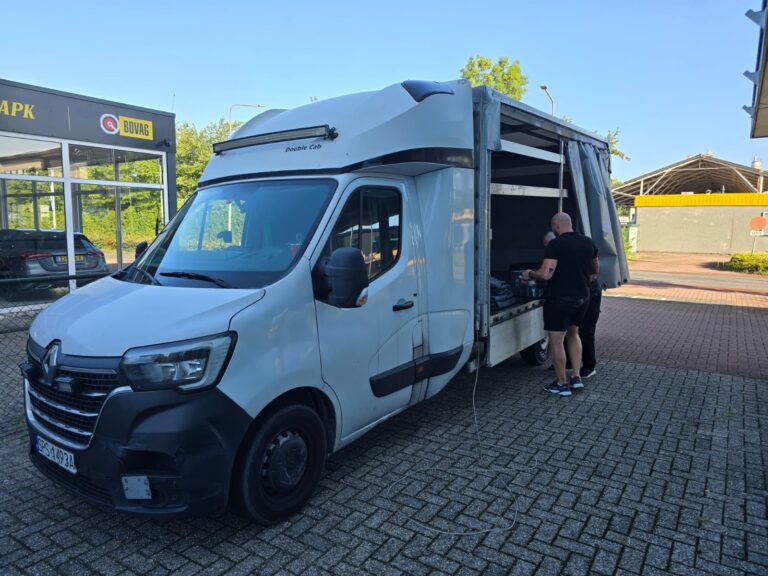
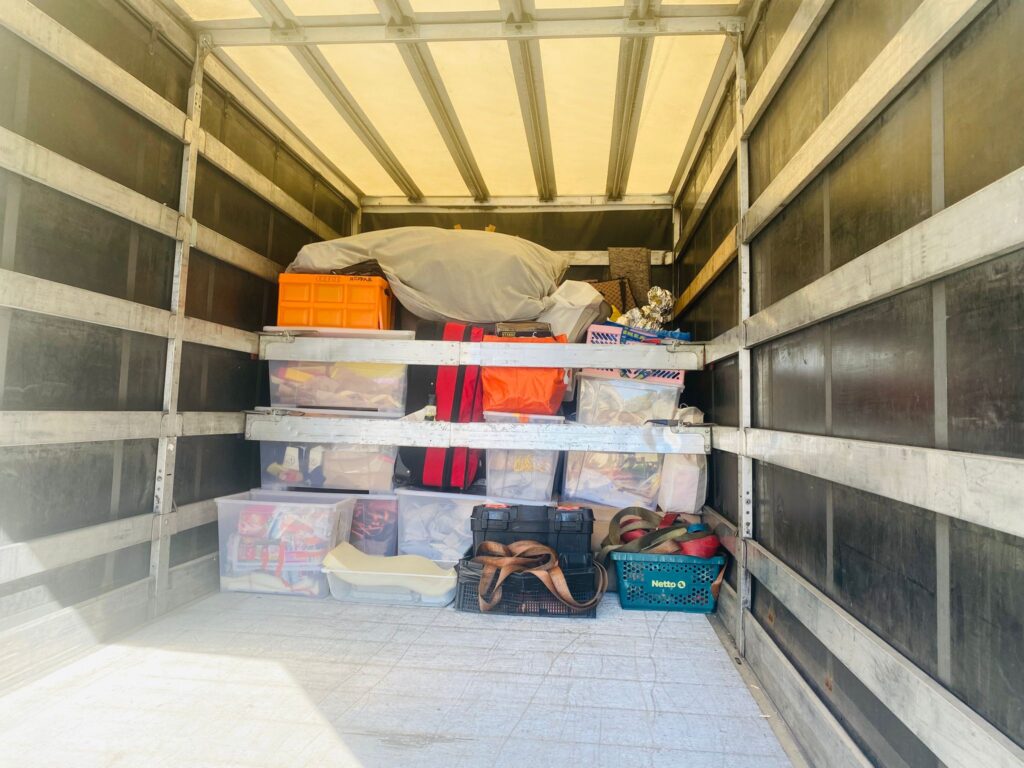
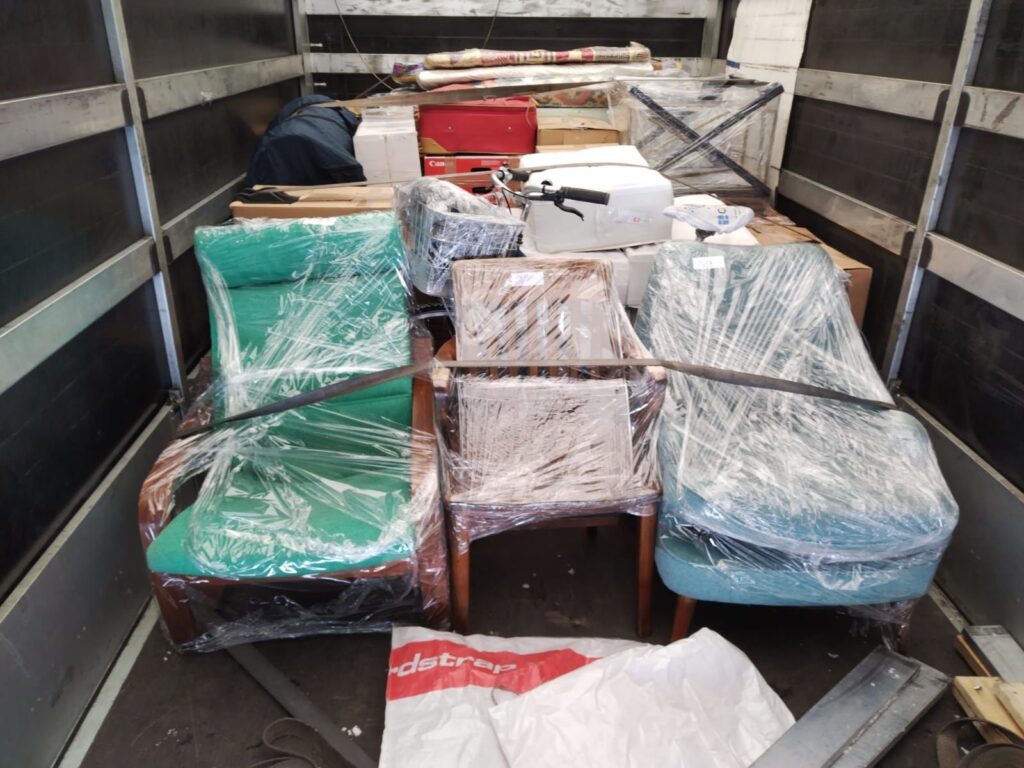
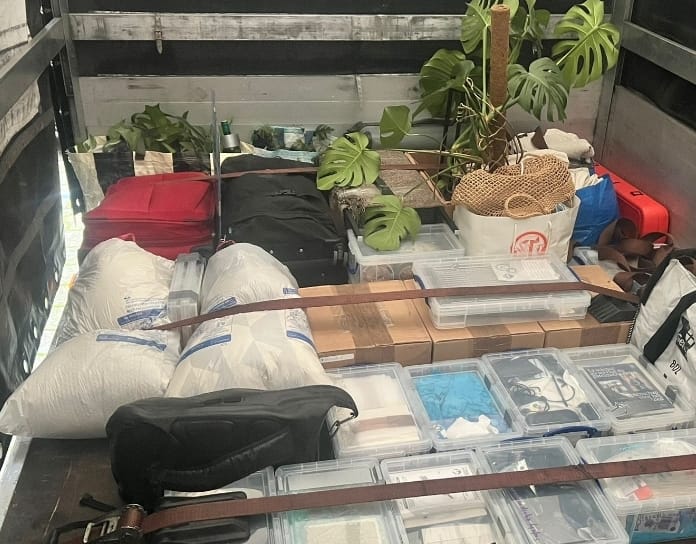
The legal route matters, but so does the physical move. A calm arrival gives you time to register, organise insurance, start work, settle children into school and keep your documents in order. VANonsite supports removals to Switzerland with secure European transport, GPS tracking for every load, flexible van sizes and reliable man and van services for small, urgent and full household moves.
TL:DR
- Permanent residency in Switzerland usually means getting a Swiss C permit, also known as a settlement permit.
- Many applicants qualify after 5 or 10 years of continuous legal residence, depending on nationality, integration and canton rules.
- Anyone staying in Switzerland for more than 3 months, or working there, generally needs the correct Swiss permit.
- Language proof, financial stability, a clean record and successful integration can strongly affect your application.
- Swiss permanent residency is not Swiss citizenship. Citizenship is a separate legal process.
- When moving household goods to Switzerland, customs rules matter, including Form 18.44 and proof of relocation.
- A GPS tracked man and van move with VANonsite helps you arrive organised, protected and ready for Swiss life.




What Permanent Residency Means in Switzerland
Permanent residency in Switzerland is most often connected with the C permit. This is the Swiss settlement permit. It gives foreign nationals a stronger and more stable status than temporary or annual residence permits.
A C permit is not a Swiss passport. It does not make you a Swiss citizen. However, it can give you long term security and a stronger foundation for work, family, housing and future planning.
Think of it as the point where Switzerland stops feeling like a temporary chapter and starts becoming a rooted life. For anyone researching how to get permanent residency in Switzerland, this distinction is essential.
| Permit type | Common meaning | Typical role |
|---|---|---|
| L permit | Short term residence | Temporary stay or short term work |
| B permit | Residence permit | Common route before settlement |
| C permit | Settlement permit | Usually treated as permanent residence |
| G permit | Cross border commuter permit | For people living outside Switzerland and working there |
| Swiss citizenship | Nationality | Separate process after meeting naturalisation rules |
You can check the official Swiss permit overview on ch.ch.
Permit C: The Main Answer to Permanent Residency
The Swiss C permit is the key answer to how to get permanent residency in Switzerland. Officially, it is a settlement permit. In everyday language, many people call it permanent residency.
According to the Swiss State Secretariat for Migration, settled foreign nationals may be granted a settlement permit after 5 or 10 years of residence in Switzerland. Once granted, the right to settle is not subject to time restrictions or conditions. You can read the official SEM information on the C EU/EFTA permit.
That does not mean the process is automatic. Switzerland is structured, local and detail driven. Your canton matters. Your nationality matters. Your permit history matters. Your language certificates, tax record, debt record and integration can also matter.
A strong C permit profile often includes:
- continuous lawful residence in Switzerland
- a valid current residence permit
- stable housing
- employment or reliable income
- correct tax behaviour
- no serious criminal issues
- no problematic debt record
- language ability in the relevant local language
- evidence of integration into Swiss life
The safest approach is simple: prepare early and keep every important document.
5 Years or 10 Years: How Long Does It Take?
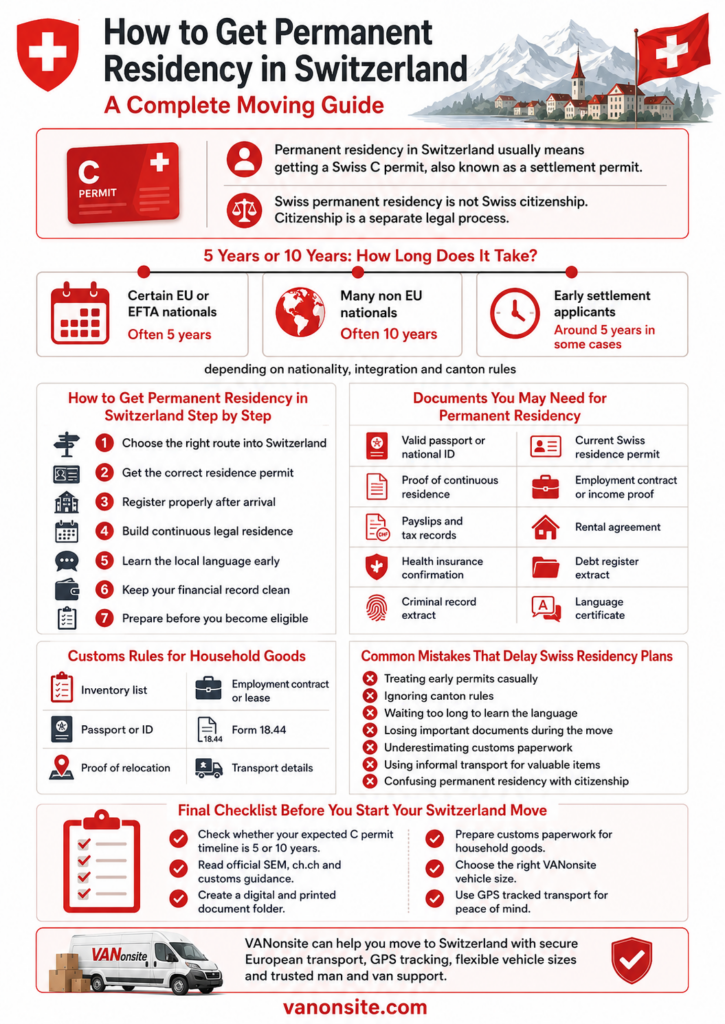
The timeline is one of the biggest concerns for people asking how to get permanent residency in Switzerland. In many cases, applicants must live in Switzerland legally for 10 years before receiving a C permit. Some applicants, including certain EU or EFTA nationals and people from countries with specific arrangements, may qualify after 5 years.
Some well integrated applicants may also be able to request early settlement after around 5 years, depending on their situation and cantonal practice. This is why no serious guide should promise one universal answer.
| Applicant profile | Common timeline | What to check |
|---|---|---|
| Certain EU or EFTA nationals | Often 5 years | Nationality, agreement rules and canton practice |
| Some non EU nationals | May be 5 years | Specific agreements and integration route |
| Many non EU nationals | Often 10 years | Lawful residence, permit history and local rules |
| Early settlement applicants | Around 5 years in some cases | Language proof, integration and clean records |
| Citizenship applicants | Separate timeline | Naturalisation has different requirements |
Do not treat these dates casually. A gap in residence, missing proof or careless renewal can damage the timeline. Switzerland likes clean records, exact dates and quiet consistency.
How to Get Permanent Residency in Switzerland Step by Step
Learning how to get permanent residency in Switzerland becomes easier when the journey is broken into practical stages.
1. Choose the right route into Switzerland
Before permanent residency, you need a lawful reason to live in Switzerland. Common routes include employment, family reunification, study, self employment where permitted, retirement or residence without gainful employment.
The route shapes your permit and your future options. A professional moving for a Swiss job may follow a different path from a student, spouse, retiree or cross border worker.
2. Get the correct residence permit
Anyone who wants to work or live in Switzerland for more than 3 months needs a short stay permit, residence permit or permanent residence permit. Cantonal migration authorities are responsible for granting, renewing and revoking permits. Official guidance is available from SEM.
3. Register properly after arrival
After arrival, you usually need to register with the local commune or cantonal authority. Deadlines can be strict. Keep your passport, lease, work contract, insurance documents and permit papers easy to access.
This is where a well organised move helps. If your documents are buried in a random box behind a sofa, the first week can feel chaotic. A careful man and van service keeps essentials separated, labelled and traceable.
4. Build continuous legal residence
Your permit history is the backbone of your future application. Save copies of every permit, renewal confirmation, lease, employment contract, payslip, tax document and insurance record.
Create a Swiss residence folder from day one. Keep it both digital and printed. After 5 or 10 years, this folder can become one of the most valuable assets in your relocation journey.
5. Learn the local language early
Switzerland has 4 national languages: German, French, Italian and Romansh. The language that matters most usually depends on your canton. Language is not only a requirement. It is the key to the pharmacy, the school meeting, the tax letter and the neighbour’s front gate.
SEM publishes a regularly updated list of recognised language certificates for immigration and naturalisation procedures. Check the official SEM language requirements before choosing a test.
6. Keep your financial record clean
Debt problems, unpaid taxes or heavy reliance on social assistance can weaken an application. You do not need to look wealthy. You need to look stable, reliable and well organised.
Useful evidence may include payslips, tax assessments, employment contracts, rental payment proof, bank documents where requested and debt register extracts.
7. Prepare before you become eligible
Do not wait until the final month. Start checking canton requirements 6 to 12 months before your expected eligibility date. Ask which forms, certificates and extracts are needed. Confirm whether your language certificate is accepted. Make sure your residence timeline is clear.
Documents You May Need for Permanent Residency
The exact document list depends on your canton and personal situation. Still, most applicants asking how to get permanent residency in Switzerland should expect a document heavy process.
| Document | Why it matters |
|---|---|
| Valid passport or national ID | Confirms identity |
| Current Swiss residence permit | Shows legal status |
| Proof of continuous residence | Supports the 5 or 10 year timeline |
| Employment contract or income proof | Shows stability |
| Payslips and tax records | Shows financial reliability |
| Rental agreement | Confirms accommodation |
| Health insurance confirmation | Supports residence compliance |
| Debt register extract | May show financial discipline |
| Criminal record extract | May be required by authorities |
| Language certificate | Proves language ability |
| Marriage, birth or family documents | Relevant for family based cases |
| School documents for children | Useful for family relocation history |
Always check your canton before submitting anything. Switzerland is precise, and a missing certificate can slow down an otherwise strong application.
Moving to Switzerland Before Permanent Residency
Most people move to Switzerland years before they qualify for permanent residency. The first move may be for work in Zurich, study in Lausanne, family life in Geneva, a new role in Basel or a long planned lifestyle change near the Alps.
That first move matters. It sets the tone for your Swiss life.
A smooth relocation gives you time to focus on:
- registration
- health insurance
- banking
- school enrolment
- work onboarding
- language learning
- tax and residence documents
- housing setup
VANonsite helps with this practical side of the journey. The company offers Last Minute Moving, Furniture Removals, Home Removals, Packing Service, White Glove Delivery, Office Removals, Storage, Student Removals and Office Furniture Installation.
For smaller moves, a man and van option can be the smartest choice. It avoids paying for unused truck space while still giving you professional handling, route planning and accountability. For larger moves, VANonsite can scale up to full household capacity.
Customs Rules for Household Goods
When you move to Switzerland, your household goods may need proper customs handling. Swiss customs rules are practical, but they are not optional.
For household effects, you may need to show that the goods belong to you, are linked to your relocation and are intended for continued personal use. Swiss customs guidance also refers to Form 18.44 for clearance of household effects. You can check the official pages on moving household effects and the relocation import procedure.
Prepare these items before moving day:
| Customs item | Why it matters |
|---|---|
| Inventory list | Shows what you are importing |
| Passport or ID | Confirms identity |
| Proof of relocation | Shows a genuine transfer of residence |
| Employment contract or lease | May support your relocation file |
| Form 18.44 | Used for household effects customs clearance |
| Transport details | Connects your goods to the move |
| Purchase records for valuable items | Useful if customs asks questions |
A professional transport partner helps keep the physical move organised, but you should still verify customs requirements before your delivery date.
Choosing the Right VANonsite Vehicle
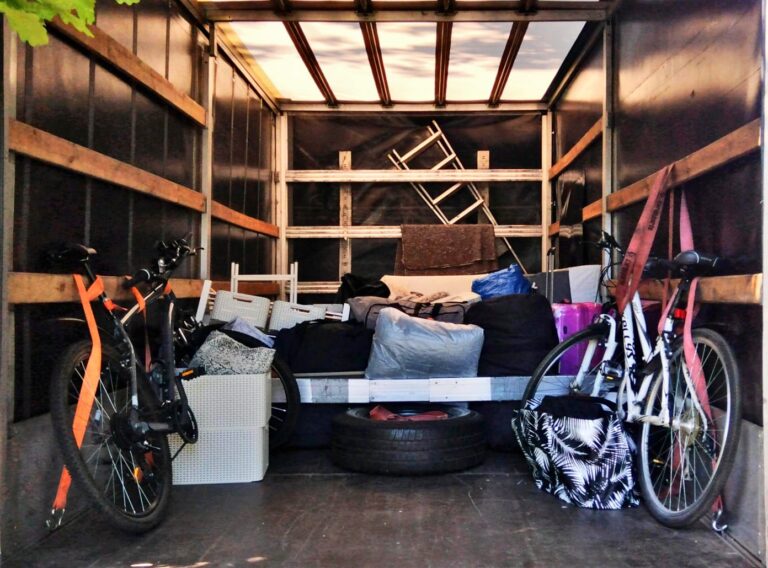
Not every Swiss move needs a giant truck. Some people bring a laptop, 12 boxes and a coffee machine they refuse to leave behind. Others bring wardrobes, bikes, desks, toys, kitchen equipment and a family dining table with history in every scratch.
VANonsite offers flexible vehicle sizes, so the transport matches your real volume.
| VANonsite option | Capacity | Weight limit | Best for |
|---|---|---|---|
| Moving One | 1 m3 | 100 kg | Documents, essentials and small urgent loads |
| Moving Basic | 5 m3 | 300 kg | Student moves, studio items and compact man and van jobs |
| Moving Medium | 10 m3 | 500 kg | Small apartments or partial furniture moves |
| Moving Premium | 15 m3 | 1,100 kg | One bedroom moves and larger furniture |
| Moving Premium Plus | 30 m3 | 3,500 kg | Family moves, apartment relocations and office items |
| Moving Full House XXL | 90 m3 | 20,000 kg | Full house moves and major European relocations |
The right vehicle reduces transfers, protects timing and gives your move a cleaner rhythm. If you are unsure between two sizes, think about access, weight, fragile items, delivery windows and how much you want to unpack on day one.

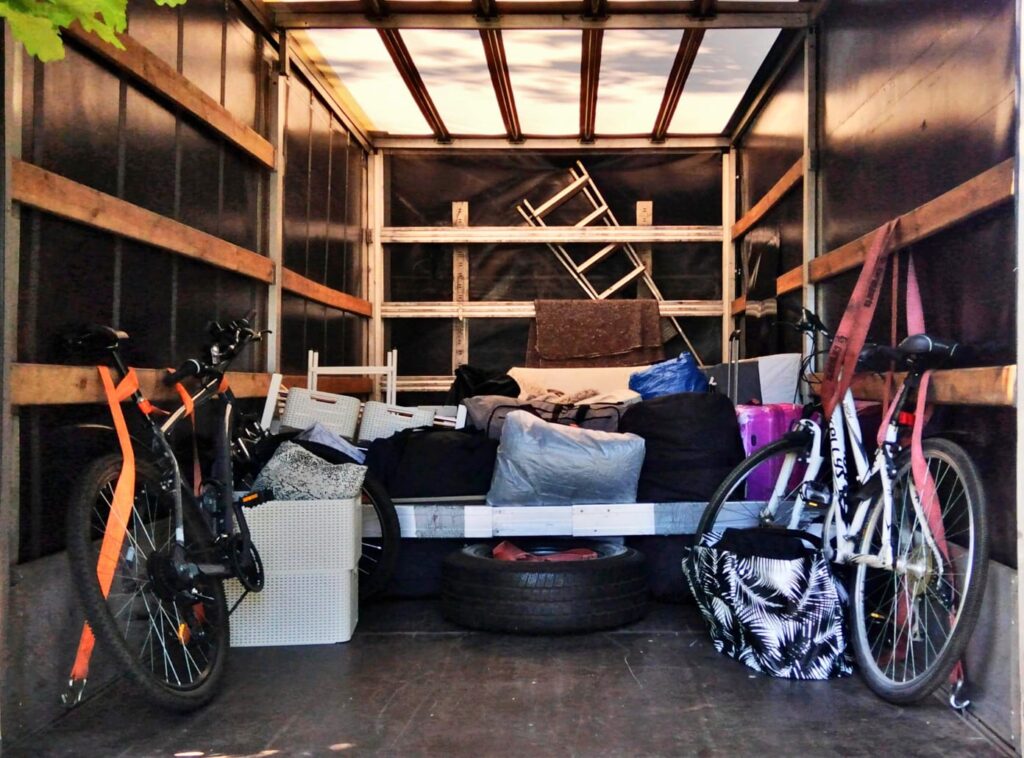
Why Man and Van Works Well for Switzerland Moves
A man and van service is ideal when you need flexibility without the weight of a full removal truck. It works especially well for student removals, small apartment moves, urgent job relocations, furniture removals, last minute moving, single item transport and cross border essentials.
Switzerland routes can be demanding. Border procedures, city access rules, mountain roads, parking limits and strict building schedules can turn a simple delivery into a tense day.
With VANonsite, GPS tracking gives extra reassurance. You know where your load is while you deal with registration, housing and the first rush of Swiss paperwork.
That clarity matters. When you are building a long term life and learning how to get permanent residency in Switzerland, every controlled detail helps.
Common Mistakes That Delay Swiss Residency Plans
Avoiding mistakes can be as important as following the right steps.
Treating early permits casually
Your first permit is part of your long term record. Save copies and track every renewal date.
Ignoring canton rules
Switzerland has 26 cantons, and local processes matter. Always check your cantonal migration authority.
Waiting too long to learn the language
Language certificates take time. Start early, even if your move feels temporary at first.
Losing important documents during the move
Passports, contracts, civil records and permit papers should travel separately from ordinary boxes.
Underestimating customs paperwork
A weak inventory can slow down the border process. Prepare your list before loading begins.
Using informal transport for valuable items
A cheap move can become expensive if furniture is damaged, delayed or undocumented.
Confusing permanent residency with citizenship
The C permit and Swiss citizenship are different. Citizenship has separate federal, cantonal and communal requirements.
Cost Planning Before Moving to Switzerland
Switzerland rewards preparation. It is beautiful, efficient and expensive enough to punish guesswork.
Plan for these cost categories:
| Cost category | Why to budget for it |
|---|---|
| Residence permit fees | Costs may vary by canton and permit type |
| Language courses or exams | May support integration and permit steps |
| Certified translations | Useful for civil, family or education documents |
| Health insurance | A key part of Swiss life |
| Rental deposit | Often a major upfront expense |
| Temporary accommodation | Helpful if housing dates do not match |
| Moving service | Depends on volume, route, timing and handling |
| Customs preparation | Inventory and forms take time |
| Storage | Useful when delivery and move in dates differ |
For a lean first move, a man and van option can be efficient. For a full family relocation, a larger vehicle can reduce transfers and keep the process calmer.
Final Checklist Before You Start Your Switzerland Move
Use this checklist before you begin:
- Confirm your legal route into Switzerland.
- Check whether your expected C permit timeline is 5 or 10 years.
- Identify your canton and migration authority.
- Read official SEM, ch.ch and customs guidance.
- Start learning the relevant local language early.
- Create a digital and printed document folder.
- Keep permits, leases, contracts, tax records and insurance documents.
- Prepare customs paperwork for household goods.
- Build a clear inventory before loading.
- Choose the right VANonsite vehicle size.
- Keep vital documents with you during the move.
- Use GPS tracked transport for peace of mind.
Permanent residency is not won in one afternoon. It is built through lawful residence, clean records, language, patience and practical decisions made early.
FAQ
How to get permanent residency in Switzerland as an EU citizen?
Some EU and EFTA citizens may qualify for a C permit after 5 years of residence, depending on nationality, agreements, residence history and canton practice. Always check official SEM guidance and your canton.
How to get permanent residency in Switzerland as a non EU citizen?
Many non EU citizens usually need around 10 years of legal residence. Some exceptions or accelerated routes may exist, especially where strong integration or specific agreements apply.
Is Swiss permanent residency the same as citizenship?
No. Permanent residency usually means holding a C permit. Swiss citizenship is a separate legal process with its own rules.
Can I move to Switzerland before getting permanent residency?
Yes. Most people move first through work, study, family reunification or another approved route. Permanent residency comes later, after the required residence period.
Can VANonsite help with my Swiss residence permit?
VANonsite does not provide immigration legal services. It supports the physical relocation with European transport, packing, furniture removals, student moves, office moves, storage, white glove delivery and man and van services.
What is the best VANonsite option for a small move to Switzerland?
Moving One, Moving Basic or Moving Medium may suit small moves, students, urgent essentials and compact apartments.
What is the best VANonsite option for a family move to Switzerland?
Moving Premium Plus or Moving Full House XXL may be better for larger family moves, furniture and full household relocations.
Ready to Move to Switzerland?
If you are researching how to get permanent residency in Switzerland, you are already thinking long term. That is the right mindset.
Start with the legal route. Respect the permit process. Learn the local language. Keep clean records. Prepare your documents before you need them.
Then make the physical move with the same care.
VANonsite can help you move to Switzerland with secure European transport, GPS tracking, flexible vehicle sizes and trusted man and van support. Whether you are carrying a few essential boxes or a full family home, the goal is the same: arrive safely, settle faster and begin your Swiss chapter with confidence.