
Moving to Switzerland is exciting, but it is rarely simple. The country is clean, safe, precise and famously well organised. Yet that same precision means one thing: preparation matters.
Switzerland immigration is not only about a visa or a residence permit. It is about timing, documents, work rights, housing, health insurance, customs and the moment your life is packed into boxes and sent across Europe. One missing form or one poorly planned delivery can turn a beautiful new chapter into a stressful race against the clock.
For many people, immigration to Switzerland begins with a job offer, a university place, a family decision or the dream of a safer, calmer lifestyle. Then practical questions arrive fast. Which permit do you need? Can you work straight away? How do you bring your furniture? What happens at the Swiss border? How early should you book your removal?
This guide gives you a clear, practical answer. It explains the main switzerland immigration routes, the documents you may need, the difference between short stays and long stays, and how to plan your relocation with fewer delays. It also shows how VANonsite can support the physical move with trusted European transport, GPS tracking, careful handling and flexible man and van solutions for moves of every size.
TL:DR
- Switzerland immigration depends on your nationality, length of stay and reason for moving, such as work, study, family or private residence.
- Stays over 90 days usually require the correct long stay route, residence permit or national visa.
- EU/EFTA citizens often have a more flexible path, while non-EU/EFTA citizens usually face stricter work and residence requirements.
- Keep passports, visas, permits, contracts, insurance papers and customs documents with you, not inside moving boxes.
- Used household goods can often be moved more smoothly when you prepare a detailed inventory and follow Swiss customs rules.
- VANonsite supports immigration to Switzerland with GPS-tracked removals, packing, furniture transport, home removals, office removals and man and van services.
- The safest move combines two tracks: correct switzerland immigration paperwork and a professional removals plan based on timing, capacity and border readiness.
What Does Switzerland Immigration Actually Mean?
Switzerland immigration is not one single form, office or decision. It is a chain of steps that must fit together. Your nationality matters. Your purpose of stay matters. Your planned stay length matters. In some cases, the canton where you will live also matters, because local registration and residence procedures can vary.
In practical terms, switzerland immigration usually includes five layers:
- Permission to enter Switzerland.
- Visa status, if a visa is required.
- Residence permit or registration for a longer stay.
- Work authorisation, if you plan to work.
- Customs and moving rules for your personal belongings.
That last point is often forgotten. People spend weeks thinking about permits, then leave the actual move until the final sprint. This can create expensive delays. A missing inventory, the wrong van size or a rushed border plan can cause problems when you have the least energy left to solve them.
That is why immigration to Switzerland should be treated as both a legal process and a physical relocation project. You need the paperwork. You also need your furniture, clothes, electronics, work equipment and treasured possessions to arrive safely.
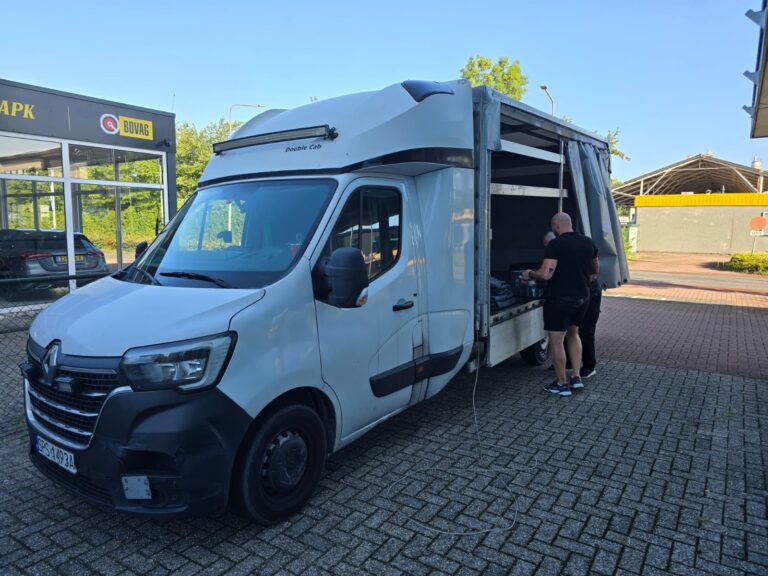
VANonsite helps with the relocation side of that journey. The company provides professional European removals, GPS tracking for every load and flexible transport options from small man and van moves to full house relocations.
Switzerland Immigration Policy: The Big Picture
The switzerland immigration policy is shaped around nationality, economic need, residence purpose and public administration. The system is clear, but it is not identical for everyone.
A person moving from Germany, France, Poland, Italy or another EU/EFTA country will usually face a different path than someone moving from India, South Africa, the United States or another non-EU/EFTA country. A student has different documents than a senior executive. A family reunification case is different from an office relocation.
At a high level, there are four common reasons for immigration to Switzerland:
| Main reason | Typical applicant | What usually matters most |
|---|---|---|
| Work | Employee, specialist, manager, contractor | Job contract, work rights, permit route |
| Study | University student, school student, trainee | Admission letter, funds, accommodation |
| Family | Spouse, partner, child or eligible relative | Family relationship and sponsor status |
| Private residence | Retiree or financially independent person | Funds, insurance, housing and canton rules |
Switzerland immigration rewards precision. The more complete your documents are, the calmer the process becomes. The same applies to your move. A detailed inventory, properly packed goods and a GPS-tracked vehicle reduce uncertainty when your belongings cross borders.
EU/EFTA Citizens: A More Flexible Route, But Still a Process
For EU/EFTA nationals, switzerland immigration is generally more accessible because of free movement rules. However, accessible does not mean automatic in every detail. Your reason for staying still matters. You may be moving for a job, looking for employment, studying, joining family or living in Switzerland without working.
Before moving, EU/EFTA citizens should check the official Swiss guidance from the State Secretariat for Migration: EU/EFTA citizens living and working in Switzerland.
A smart EU/EFTA moving plan usually includes:
- A valid passport or national ID.
- Employment contract, study confirmation or proof of financial means.
- Accommodation details.
- Health insurance planning.
- Local registration after arrival, where required.
- A household goods inventory for customs.
- A transport plan that matches your actual load size.
For many EU/EFTA movers, the pressure is not only legal. It is practical. Swiss rental apartments can have strict move in dates. Some buildings have narrow staircases. City parking can be limited. If your job starts on Monday, your removal cannot feel like guesswork.
This is where a reliable man and van service becomes valuable. VANonsite can help you move essential belongings, furniture or a full home load to Switzerland with GPS tracking, careful handling and a vehicle size that fits the real volume of your move.
Non-EU/EFTA Citizens: Stricter Rules and More Planning
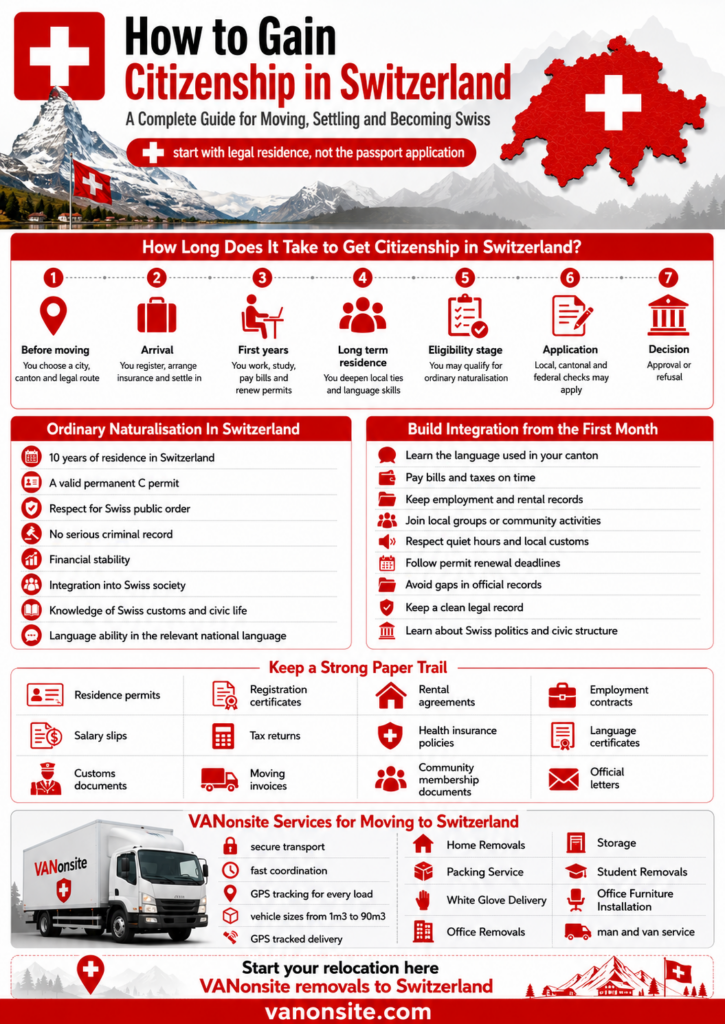
For non-EU/EFTA citizens, switzerland immigration is usually more selective. Work related immigration often depends on qualifications, the role, employer involvement and approval from the relevant authorities. In many cases, Switzerland gives priority to senior managers, specialists and other qualified workers.
You can check the official Swiss information here: SEM working in Switzerland.
This is the part where patience matters. Do not treat immigration to Switzerland like a simple flight booking. If you are a non-EU/EFTA national, your permit and work authorisation may need to be clear before you commit to shipping your whole household.
A practical sequence looks like this:
- Confirm your job, study, family or residence route.
- Check visa requirements through official Swiss sources.
- Gather documents before booking major transport.
- Confirm expected permit timing.
- Prepare a moving inventory.
- Book removals once your arrival window is realistic.
That does not mean waiting until the final day. It means planning in layers. You can request quotes, measure furniture, sort belongings and prepare your customs list early. Once your switzerland immigration route becomes firm, VANonsite can help move quickly with Last Minute Moving, Packing Service, Furniture Removals, Home Removals or a tailored man and van option.
Short Stay vs Long Stay: Why 90 Days Matter
One of the simplest ways to understand switzerland immigration is to divide your stay into two categories: short stay and long stay.
A short stay is usually up to 90 days within a 180 day period. A longer stay is more than 90 days and normally requires a different route. Depending on your nationality and purpose, you may need a Schengen visa type C for a short stay or a national visa type D for a longer stay.
Check the official FDFA visa page before making decisions: Visa requirements for entry into Switzerland.
The 90 day point is crucial because it changes the level of preparation. A weekend visit to explore Zurich is not the same as moving your life to Lausanne. A short language course is not the same as a two year degree. A business trip is not the same as a permanent job.
If your move includes work, study or long term residence, do not rely on assumptions. Switzerland immigration rules can be specific, and the correct route depends on your personal details.
Swiss Residence Permits: The Basics
All foreign nationals staying in Switzerland for more than three months generally need a residence permit. The exact permit depends on nationality, purpose and duration of stay. You can start with the official ch.ch overview: Swiss residence permits.
Here is a simplified table for orientation:
| Permit type | Common meaning | Why it matters for movers |
|---|---|---|
| L permit | Short term residence | Useful for temporary assignments or shorter stays |
| B permit | Residence permit | Common for longer work, study or family stays |
| C permit | Settlement permit | Usually linked to longer residence history |
| G permit | Cross border commuter permit | Relevant if living outside Switzerland and working there |
| Ci permit | Residence with gainful employment | Applies in specific family and diplomatic contexts |
A residence permit is more than a card. It can affect your employment, rental agreement, banking, insurance and registration. It can also shape your moving timeline.
For example, if your apartment is available from the first day of the month but your paperwork points to arrival two weeks later, you may need storage or a split delivery plan. VANonsite offers storage support and flexible transport options, which can help when the legal timeline and the property timeline do not line up perfectly.
Documents Needed for Switzerland Immigration
Documents are the bones of a successful switzerland immigration process. When they are missing, everything feels fragile. When they are complete, the move feels sharper, safer and more controlled.
Always check official requirements for your nationality and case. Useful starting points include ch.ch moving to Switzerland, FDFA entry and stay in Switzerland and SEM entry, residence and working.
Typical documents may include:
- Valid passport or national ID.
- Visa application documents, if required.
- Employment contract, if moving for work.
- University admission letter, if moving to study.
- Proof of accommodation.
- Proof of financial means.
- Health insurance details.
- Birth certificates or marriage certificates, where relevant.
- Family reunification documents, if applicable.
- Residence permit approval or application confirmation, where relevant.
- Inventory of household goods.
- Receipts or proof of ownership for valuable items.
- Rental agreement or Swiss address, if available.
Keep your most important documents in a folder that travels with you. Never pack passports, permits, contracts, certificates, medicine, laptops, jewellery or essential chargers deep inside a moving box. It sounds obvious, but under pressure even careful people make rushed choices.
VANonsite can transport your boxes and furniture. Your irreplaceable papers should stay close to your hand.
Bringing Household Goods to Switzerland
The legal side of switzerland immigration is only half the story. The physical move has its own rules. When moving personal belongings to Switzerland, customs preparation matters.
Used household goods may be handled more smoothly when you follow the correct process and prepare the right documentation. Swiss official guidance on moving and personal belongings is available here: Moving to Switzerland.
Before the moving van leaves, prepare:
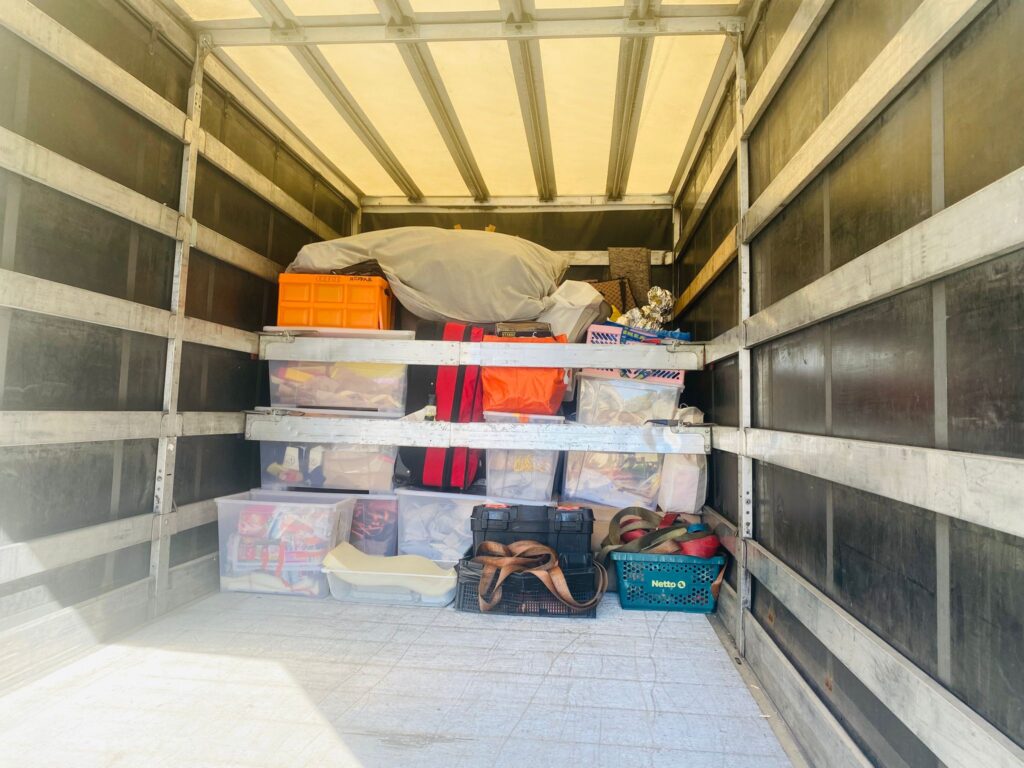
- A clear inventory of boxes and furniture.
- Approximate value of household goods.
- Proof that the goods are personal and used, where relevant.
- Swiss address or temporary accommodation details.
- Passport or ID copy.
- Permit, visa or residence application documents, if available.
- Details of restricted or sensitive goods, if any.
A strong inventory is not just bureaucracy. It is protection. It helps customs understand what is being moved. It helps your mover plan space. It helps you check whether everything arrived.
VANonsite adds another layer of control with GPS tracking for every load. During immigration to Switzerland, that visibility can feel priceless. You are already dealing with permits, registration, keys, deposits and maybe a new job. Knowing where your belongings are reduces the emotional noise.
Choosing the Right Moving Service
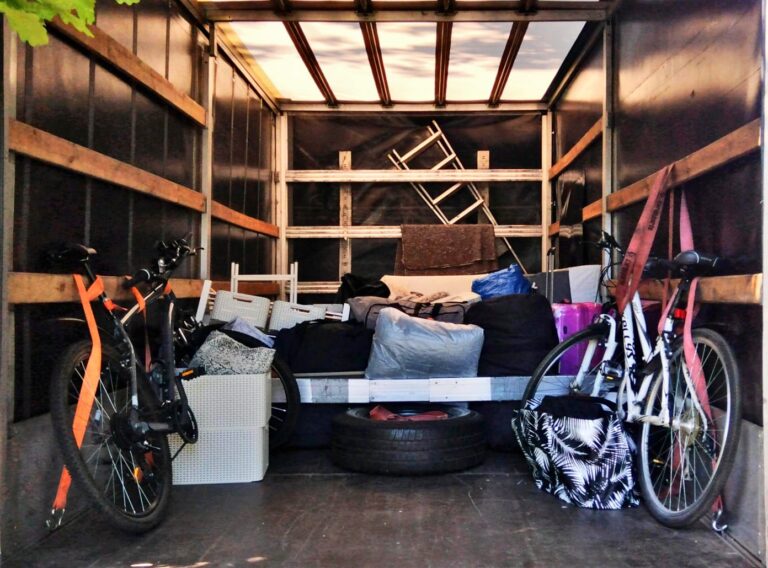
Not every move to Switzerland is the same. Some people arrive with two suitcases and ten boxes. Others bring a piano, office furniture, family heirlooms, wardrobes, desks, bikes and the contents of a full house.
VANonsite offers several services that fit different switzerland immigration scenarios:
- Last Minute Moving for urgent relocation needs.
- Furniture Removals for bulky or delicate furniture.
- Home Removals for apartment and house moves.
- Packing Service for fragile, valuable or time sensitive packing.
- White Glove Delivery for premium items and extra care.
- Office Removals for business relocations.
- Storage support when move out and move in dates do not match.
- Student Removals for university moves.
- Office Furniture Installation for workplace setup.
The right service depends on your load, schedule, building access, budget and stress level. If you are moving for a new role, speed may matter most. If you are moving antiques or designer furniture, protection may matter most. If you are a student, compact pricing and a smaller vehicle may matter most.
A flexible man and van solution can be ideal for many Switzerland moves because it keeps the relocation lean, direct and efficient.
VANonsite Vehicle Sizes for Moving to Switzerland
Choosing the wrong vehicle is one of the most expensive moving mistakes. Too small, and you risk extra trips. Too large, and you pay for space you do not need. During switzerland immigration, where timing already feels tight, capacity planning should be sharp.
| VANonsite option | Capacity | Weight limit | Best for |
|---|---|---|---|
| Moving One | 1m3 | 100kg | Documents, essentials, a few boxes |
| Moving Basic | 5m3 | 300kg | Student move, small studio, light load |
| Moving Medium | 10m3 | 500kg | Small apartment or partial home move |
| Moving Premium | 15m3 | 1100kg | One bedroom move or furniture load |
| Moving Premium Plus | 30m3 | 3500kg | Family apartment or larger relocation |
| Moving Full House XXL | 90m3 | 20000kg | Full house, office or complex move |
A student starting university in Geneva may only need Moving Basic. A couple relocating to Zurich may need Moving Medium or Moving Premium. A family moving from Paris, Berlin or Warsaw to Basel may need Moving Premium Plus. A full household or office relocation may require Moving Full House XXL.
The goal is not to book the biggest van. The goal is to book the right van. VANonsite helps match volume, weight and route, which makes the move cleaner from the first box to the final delivery.
Switzerland Immigration Timeline: What to Do and When
A strong timeline turns anxiety into action. While every case is different, this planning structure works for many people preparing immigration to Switzerland.
| Time before moving | Immigration task | Moving task |
|---|---|---|
| 3 to 6 months | Check visa, permit and work rules | Start decluttering and estimate load size |
| 2 to 3 months | Prepare documents and housing plan | Request moving quote and compare services |
| 4 to 8 weeks | Confirm permit route or registration steps | Book VANonsite transport |
| 2 to 4 weeks | Arrange insurance, banking and address updates | Pack non essential items |
| Final week | Keep key papers accessible | Confirm pickup, inventory and GPS tracking |
| Arrival week | Register locally where required | Inspect goods and unpack essentials |
The best approach is to run two tracks at once. Track one is switzerland immigration paperwork. Track two is physical relocation. When both move together, the whole project feels lighter.
Do not leave packing until the final weekend. Do not wait to measure furniture until the van arrives. Do not assume customs will be easy without documents. Calm moves are built early.
Moving to Zurich, Geneva, Basel, Bern or Lausanne
Switzerland immigration rules are national, but your arrival experience is local. A move to Zurich can feel different from a move to Geneva. Basel has its own border rhythm. Lausanne can mean hills, apartment access and student demand. Bern may require careful residential unloading.
| City | Moving challenge | Smart relocation move |
|---|---|---|
| Zurich | Busy streets, premium housing, tight delivery windows | Book early and confirm building access |
| Geneva | International arrivals and cross border traffic | Prepare documents and route details carefully |
| Basel | Border location and customs awareness | Keep inventory and address details ready |
| Bern | Residential access and timed unloading | Choose the right van size for the street |
| Lausanne | Hills, apartments and student traffic | Consider compact man and van support |
The more urban your destination, the more valuable planning becomes. Ask about parking. Check lift access. Confirm whether the building has delivery rules. If there are stairs, tell your mover. If there are fragile items, book packing or White Glove Delivery.
VANonsite’s flexible service range helps reduce friction, especially when moving into Swiss cities where access can be tight and time windows can be strict.
Cost Factors When Moving to Switzerland
The cost of moving during switzerland immigration depends on several practical factors. There is no honest single price without knowing your route, volume and service level.
The main cost drivers are:
- Distance from pickup to destination.
- Van size and weight.
- Number of movers needed.
- Packing service requirements.
- Fragile, heavy or high value items.
- Stairs, lifts and access restrictions.
- Storage needs.
- Urgency, especially for last minute moves.
- Customs preparation and waiting time risks.
- Delivery timing and route complexity.
A smaller man and van move can be efficient for light loads. A full house move needs a more robust plan. Premium items may deserve White Glove Delivery. Office moves may require installation support after arrival.
The smartest way to control cost is not to choose the cheapest option blindly. It is to choose the option with the lowest risk. Damaged furniture, missed delivery slots and poor communication can cost more than a professional move from the beginning.

Common Switzerland Immigration Mistakes
Most moving problems are not dramatic at first. They start small. One missing document. One vague moving date. One box without a label. One assumption about customs. Then the stress multiplies.
Avoid these mistakes:
- Treating switzerland immigration as only a visa issue.
- Booking removals before checking the realistic permit timeline.
- Packing official documents inside moving boxes.
- Assuming EU/EFTA and non-EU/EFTA rules are the same.
- Forgetting to prepare a household goods inventory.
- Underestimating local registration requirements.
- Ignoring health insurance planning.
- Choosing a van based on guesswork instead of volume.
- Waiting too long to book removals at the end of the month.
- Forgetting parking, lift and building access at the destination.
- Moving fragile or high value items without proper packing.
- Choosing a mover without GPS tracking or clear communication.
A move to Switzerland should feel like a new chapter, not a rescue mission. Good preparation gives the experience its shape. It makes the unknown smaller.
How VANonsite Makes the Move Safer and Easier
VANonsite is built for people who want their European move handled with speed, care and visibility. For anyone going through switzerland immigration, that combination matters.
When you move country, your belongings are more than objects. The dining table is where your family eats. The desk is where your next job begins. The armchair carries years of quiet evenings. Even simple boxes can hold the emotional weight of a whole life.
VANonsite helps protect that life in motion through:
- GPS tracking for every load.
- Multiple vehicle sizes from 1m3 to 90m3.
- Professional furniture removals.
- Home removals for apartments and houses.
- Packing service for safer transport.
- White glove delivery for premium items.
- Office removals and furniture installation.
- Student removals for smaller, budget conscious moves.
- Last minute moving for urgent relocation situations.
- Man and van services for direct, efficient transport.
This is not just about driving from one address to another. It is about making the move feel controlled. When switzerland immigration already brings paperwork, appointments and decisions, a dependable transport partner can make the whole experience feel less severe.
For dedicated support, see VANonsite Removals to Switzerland.
Switzerland Immigration and Moving Checklist
Use this checklist before you move. It brings the legal and practical sides together.
Before you confirm the move
- Check whether you need a visa.
- Check whether you need a residence permit.
- Confirm your work, study, family or private residence route.
- Read official Swiss guidance for your nationality.
- Check whether your canton has specific requirements.
- Prepare a realistic arrival date.
Before you book transport
- Estimate your load volume.
- Decide whether you need packing help.
- List fragile, heavy and valuable items.
- Check access at pickup and delivery addresses.
- Prepare a customs inventory.
- Choose the correct VANonsite vehicle size.
- Ask about GPS tracking and delivery timing.
Before the van arrives
- Label boxes by room.
- Separate documents and valuables.
- Photograph valuable furniture before transport.
- Keep medicine, chargers and essentials with you.
- Defrost and clean appliances if moving them.
- Confirm the Swiss delivery address.
- Share parking or access instructions.
After arrival
- Register locally where required.
- Check your delivered items.
- Report any issue quickly.
- Set up insurance, banking and utilities.
- Update your address.
- Unpack essentials first.
- Keep customs and moving documents in a safe folder.
This checklist is the bridge between paperwork and real life.
FAQ: Switzerland Immigration
Is immigration to Switzerland easy?
Immigration to Switzerland can be straightforward when your documents, nationality status and purpose of stay match the rules clearly. EU/EFTA citizens often have a more flexible route. Non-EU/EFTA citizens usually face stricter requirements, especially for work.
Do I need a visa for switzerland immigration?
It depends on your nationality, length of stay and reason for moving. Short stays and long stays are treated differently. For stays over 90 days, many people need a national visa type D or another long stay route. Always check official Swiss visa information before moving.
Can I move to Switzerland without a job?
In some cases, yes. People may move for study, family reunification, retirement or private residence. However, proof of financial means, insurance and accommodation may be required. The exact route depends on your nationality and personal situation.
What is the difference between a visa and a residence permit?
A visa can allow you to enter Switzerland. A residence permit allows you to stay legally for a specific purpose and period. For long term switzerland immigration, the residence permit is often one of the most important documents.
How long does switzerland immigration take?
Timelines vary. Nationality, canton, purpose of stay, document quality and employer involvement can all affect timing. Some routes may take weeks. Others may take months. Build your moving plan around realistic approval dates.
Can VANonsite help with immigration paperwork?
VANonsite focuses on the physical move, not legal immigration advice. The company helps with removals, packing, furniture transport, office relocation, storage support, GPS tracking and man and van services. For immigration paperwork, use official Swiss government sources or qualified legal advice.
What van size do I need for moving to Switzerland?
A small student move may need 1m3 to 5m3. A compact apartment may need 10m3 to 15m3. A family relocation may need 30m3. A full house or office move may require up to 90m3. VANonsite can help match the vehicle to your real load.
Is GPS tracking useful during immigration to Switzerland?
Yes. GPS tracking gives you visibility while your belongings cross Europe. It reduces stress, improves coordination and helps you plan arrival around delivery. During switzerland immigration, that level of control can make the move feel much calmer.
Move to Switzerland With Less Stress
Switzerland rewards people who prepare. The trains run on time. The paperwork has a logic. The cities are orderly. The quality of life can be exceptional. But the move itself needs discipline.
Switzerland immigration is easier to manage when you divide it into clear steps: understand your route, prepare documents, check official rules, plan customs, choose the right transport and protect your belongings with a professional moving partner.
VANonsite helps turn the physical move into something safer, faster and easier to follow. Whether you need a compact man and van service, a student move, furniture removals, home removals, office removals or a full house relocation, the service is designed for real European moves where timing and trust matter.
Your new life in Switzerland should not begin with chaos at the border or boxes lost in silence. It should begin with control, clarity and the quiet thrill of arriving ready.
Plan your move with VANonsite Removals to Switzerland.