
Furniture removals from the UK to Italy need more than a vehicle and a collection date. Sofas, wardrobes, tables, artwork and family pieces must be measured, protected for an international journey and matched to access at both properties. VANonsite builds the service around a confirmed inventory, photographs, route constraints and the handling each item actually needs.
Use the automatic calculator below for an immediate starting estimate. Enter the collection and delivery addresses, preferred date and contact details. Then send photographs, dimensions, floor and lift information, parking details and a list of anything fragile, heavy or dismantled. VANonsite uses that evidence to prepare a tailored written scope instead of treating every furniture move as the same job.

Start with the furniture, not a rough room count
A two-bedroom flat can contain less furniture than a studio with a large book collection and modular storage. List individual pieces and count cartons rather than relying on the property label. Include items from lofts, garages, balconies and storage units. Measure the widest, highest and deepest points of sofas, tables, cabinets and appliances, and note which parts can be removed.
Photograph large pieces beside doorways and show stair turns, landings and lifts. This helps the team assess volume, protection and the practical loading method. An accurate inventory also makes it easier to compare part-load removals to Italy with a dedicated vehicle without hiding a capacity difference inside the quotation.
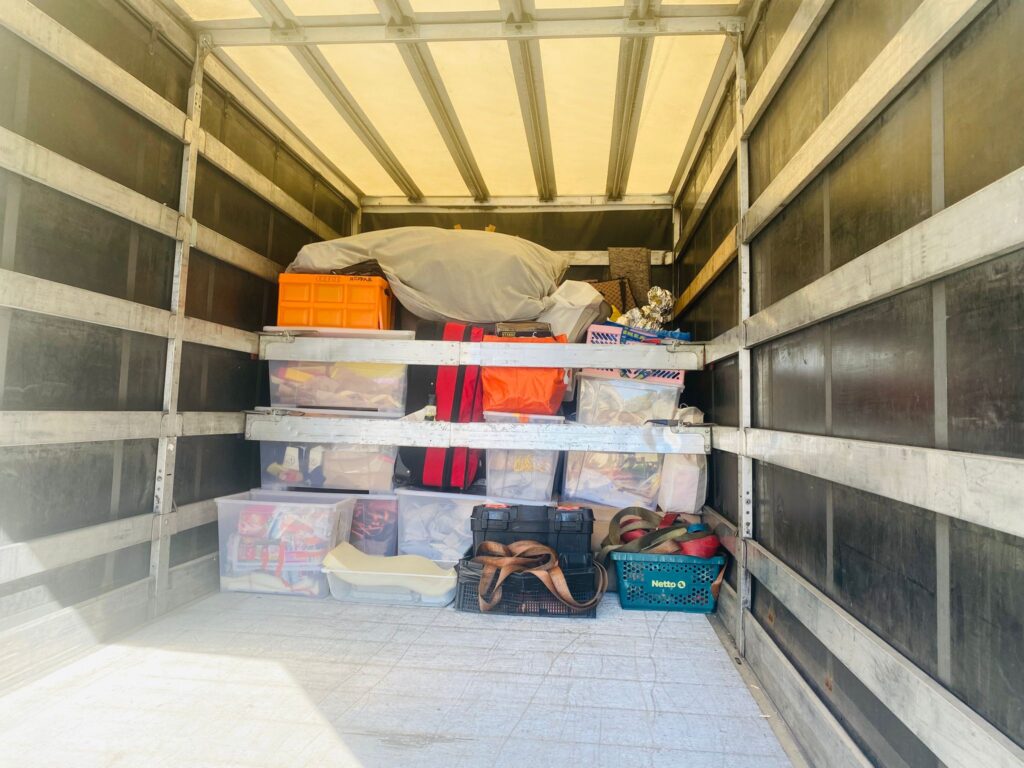
What a furniture removal quotation should define
| Part of the move | Detail to confirm |
|---|---|
| Inventory | Furniture, cartons, dimensions, photographs and declared special items |
| Packing | Who supplies materials, packs cartons, wraps furniture and dismantles pieces |
| UK collection | Parking, carrying distance, floors, lift, stairs and time restrictions |
| Transport | Part-load or dedicated capacity, planned handling stages and delivery range |
| Customs | Customer documents, inventory format and named declaration responsibilities |
| Italian delivery | ZTL, permits, vehicle access, floors, lift or external-hoist requirements |
| Changes | How additional goods, changed access or revised dates affect the service |
A single headline figure cannot show whether two quotations cover the same work. One may include professional furniture protection and carrying to rooms, while another assumes customer packing and straightforward ground-floor access. The written scope should make those differences visible before booking.
Protection should match the object and the journey
Corner protectors, moving blankets, stretch film and purpose-made covers perform different jobs. Soft upholstery needs clean protection that does not trap moisture. Polished or painted surfaces need abrasion and impact protection. Glass panels, mirrors and stone tops need rigid support and clear handling instructions. Drawers and doors should be secured without applying adhesive directly to a delicate finish.
Cartons should close flat, carry a destination-room label on at least two sides and remain within a safe handling weight. Books and dense kitchenware need smaller boxes than bedding or cushions. Photograph cable connections before disconnecting equipment, remove loose shelves where appropriate and label every component so reassembly in Italy does not depend on memory.
Tell VANonsite about antiques, artwork, musical instruments, unusually dense pieces and anything with a vulnerable mechanism before the proposal is finalised. The team can then say whether the item fits the standard service, needs extra preparation or requires a specialist solution. Undeclared special items should never be discovered only when the vehicle arrives.
Dismantling decisions affect both safety and volume
Large wardrobes, bed frames and tables may travel more securely when dismantled, but not every piece is designed for repeated assembly. Check manufacturer instructions and photograph the item before work starts. Put fittings in labelled bags, identify the parent item and protect long panels from flexing. If VANonsite is expected to dismantle or reassemble furniture, include that labour in the agreed scope.
Measure the final packed dimensions rather than the visible footprint in the room. Removable legs and cushions can reduce wasted capacity, while protective layers add space. These details are especially important when a smaller consignment is being matched to shared route capacity.
UK export and Italian import documents
Furniture leaving Great Britain for Italy crosses a customs border. A useful file normally starts with a clear, numbered inventory and accurate information about the owner, residence, goods and move. The exact declaration route and any relief depend on the customer’s circumstances; transport does not automatically establish eligibility.
The Italian Customs and Monopolies Agency publishes current citizen guidance about personal property and transfers of normal residence. Its requirements and exceptions should be checked for the individual move through the official Italian customs guidance. HMRC likewise tells travellers and movers to check how personal goods are declared and to confirm the destination country’s rules; use the current GOV.UK personal-goods guidance as an official starting point.
VANonsite confirms the transport information included in its service and identifies what is needed before collection. Final customs treatment remains a decision for the relevant authorities. Avoid vague descriptions such as “house contents”; connect each numbered carton and furniture item to a readable inventory.
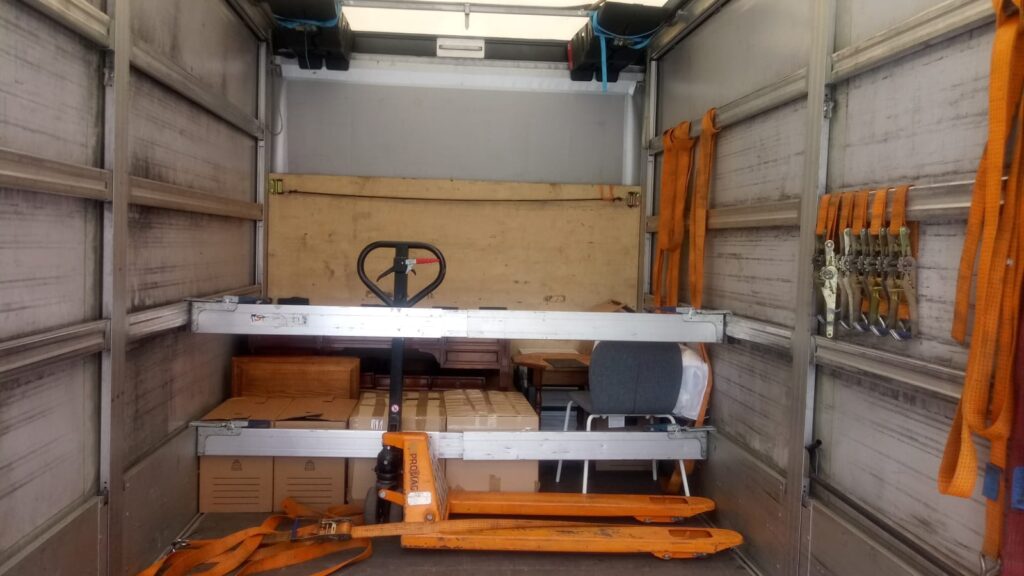
Property access can change the whole operating plan
At the UK address, record the legal parking position, distance to the door, steps, floor, lift dimensions and narrow turns. A long carry or restricted loading window changes the crew time even when the furniture list stays the same. If keys or building access are controlled by another person, agree who will meet the team.
Italian deliveries can involve ZTL limited-traffic zones, historic streets, arches, steep approaches and condominium rules. A large vehicle may not be able to reach the entrance. Some apartments require a booked lift or an external hoist, and local permission may be needed for the loading area. Provide street and entrance photographs before routing so a transfer vehicle or different handling method can be costed in advance.
Part-load or dedicated furniture transport?
Part-load transport uses compatible shared route capacity and can suit selected furniture, cartons or a smaller home when dates have genuine flexibility. Dedicated transport reserves capacity around one customer’s consignment and can be more appropriate for a larger household, controlled access slot, direct handling requirement or fixed handover date.
Choose from the real constraints rather than assuming that one label is always cheaper or faster. Compare inventory, handling stages, date range, access, storage exposure and the cost of a missed deadline. The main UK to Italy removals page explains the complete route, while the separate cost of moving to Italy guide shows which inputs shape a usable estimate.
Small loads still need a complete plan
A sofa, several boxes and a bicycle may be a small removal, but the collection, customs and delivery facts still determine whether the service works. The term “small” describes volume, not the transport format. A small consignment can use part-load capacity or a dedicated vehicle depending on timing and route availability.
If the load is mainly cartons and selected possessions, compare the dedicated small removals to Italy guidance. Keep one final inventory version and update it before collection whenever an item is added or removed.
Mainland Italy, Sicily and Sardinia are not one access profile
Milan, Turin, Rome and southern mainland destinations create different route and urban-access considerations. Sicily and Sardinia add ferry schedules and port capacity; smaller islands can require another transfer. Mountain locations may add seasonal access constraints. State the complete delivery address from the start so the proposed service covers the final approach, not only the international linehaul.
The broader removals to Italy hub connects the relevant route, planning and destination guides. Use a city or island guide as supporting information, but keep the furniture quotation tied to the exact property and load.
Loading day: keep decisions visible
- Use the dated final inventory and tick each numbered item as it is loaded.
- Keep passports, keys, medicines, valuable documents and immediate-arrival essentials with you.
- Point out existing damage and vulnerable surfaces before wrapping begins.
- Confirm which furniture is dismantled and where its labelled fittings are stored.
- Keep access routes clear and reserve the agreed legal loading position.
- Record any scope change before extra goods are loaded.
This discipline reduces ambiguity at delivery. The receiving person should have the inventory, room instructions and authority to sign the handover. Visible issues should be recorded through the agreed contact route before packing is discarded or furniture is moved again.
The VANonsite furniture-removal process
- Estimate: enter both addresses, date and contact details in the calculator.
- Measure: send the item list, carton count, dimensions and photographs.
- Qualify access: document parking, carries, stairs, lifts and local restrictions.
- Select service: compare available part-load and dedicated options against the real deadline.
- Prepare: agree packing, dismantling, labelling and customs responsibilities.
- Confirm: receive a written scope covering collection, transport, delivery and changes.
That sequence is how VANonsite turns a list of furniture into an executable international move. It gives the customer a clear basis for deciding, while giving the operational team the detail needed to protect the goods and plan both addresses.
Urgent 1-3 day transport is a separate Last-Minute option
VANonsite’s Last-Minute Moving service can sometimes support delivery in 1-3 days. Availability depends on the vehicle, route and crossing, both properties’ access, readiness of the customs documents and the agreed collection slot. It is not a universal transit-time guarantee and should not be presented as the standard timing for every furniture removal.
For an urgent assessment, send the complete inventory and both addresses immediately. VANonsite can then check whether a dedicated vehicle or other available solution fits the actual constraints without weakening packing, documentation or access planning.
Frequently asked questions
Can VANonsite move only a few pieces of furniture to Italy?
Yes, subject to the route, inventory, access and available service format. Send dimensions and photographs so the team can compare suitable shared capacity with a dedicated option.
Should flat-pack furniture be dismantled?
It depends on the construction, condition, access and manufacturer guidance. Some pieces travel more safely dismantled; others may not tolerate repeated assembly. Confirm the decision and responsibility before collection.
Can furniture be delivered to an Italian city-centre apartment?
Often yes, but ZTL rules, parking, street width, floors, lift dimensions and any hoist requirement must be checked for the exact address. A smaller transfer vehicle or local arrangement may need to be included.
Is customs relief automatic for used household furniture?
No. Eligibility and documentation depend on the customer’s circumstances and the applicable rules. Use current official guidance and provide accurate information; the authorities decide the final treatment.
Calculate your UK to Italy furniture removal
Use the calculator near the top for an immediate starting estimate, then send the complete furniture list, photographs, dimensions and access details. State which pieces need packing or dismantling and how flexible the dates really are. VANonsite can then recommend the appropriate service and provide a clear, route-specific scope.