
Moving to Italy from the UK is thrilling in the way a brand new notebook is thrilling. Fresh pages. New streets. New habits.
But behind the romance, there is the real stuff. Cardboard. Bubble wrap. Furniture that suddenly feels heavier than it ever did. Deadlines, border rules, and that tiny, stubborn fear that something important will disappear into the blur.
If you have ever moved house, you already know the truth. The stress rarely comes from the big things. It comes from the small surprises. The missing screwdriver. The cracked plate. The “we did not think of that” moment when you are tired and everything is already taped shut.
This guide turns that fear into a plan.
You will learn how to organise your relocation step by step, including moving boxes from UK to Italy, shipping furniture safely, handling customs after Brexit, and arriving in Italy ready to live, not just survive.
If you want the fast, careful option with GPS tracking for every load and a friendly man and van crew who treats your belongings like they matter, start here:
TL:DR
- Choose your move style early: dedicated van for speed, part load for savings
- Build a clean inventory with realistic values, it protects you at customs and helps insurance stay painless
- Pick the right van size based on volume and weight, then add a buffer for wrapping and protection
- Pack smart, label hard, and separate your first night essentials so arrival feels human
- Confirm paperwork and border steps before pickup, not the day before, it prevents delays
- Plan access in Italy, especially city centres, tight staircases, and older buildings with narrow turns
- Choose a trusted man and van team with GPS tracking, so you never have to guess where your life is




Moving from UK to Italy after Brexit: what’s actually different
Brexit did not make moving impossible. It made moving more official.
The biggest change is simple: your belongings now travel with paperwork. Customs wants a coherent story. What the goods are, who owns them, where they are going, and why.
When that story is consistent, the border is usually just another checkpoint on the route.
When it is messy, the move can slow down in all the wrong places.
Brexit in plain English
Before, many moves felt like driving from one city to another.
Now, moving from the UK to Italy is closer to an international relocation process. It is still absolutely doable. You just need clarity.
Three things matter most:
- Your inventory needs to match the load
- Your addresses and names should be consistent across documents
- Your timing should respect real admin steps, not wishful thinking
If you are planning a longer stay, it is smart to align your removals plan with your residency timeline. It keeps everything cleaner and calmer.
Official starting points:
- UK guidance on living in Italy: https://www.gov.uk/guidance/living-in-italy
- Italy visa portal: https://vistoperitalia.esteri.it/
What customs actually wants from you
Customs does not want drama. It wants detail.
Think of your paperwork like a map. The clearer it is, the less anyone has to ask.
A strong customs pack usually includes:
- An inventory that is specific, not vague
- Values that feel realistic for used personal effects
- A clear destination address in Italy
- A clear reason the shipment exists, personal relocation
A small but powerful tip: avoid lazy categories like “misc” or “kitchen stuff”. Write like someone who is trying to help a stranger understand your life in ten seconds.
Why tracking matters more than you think
The second change is psychological. Many people underestimate how much calmer they feel when they can track their load.
VANonsite provides GPS tracking for every shipment, which removes the worst part of long distance moving: the silence.
Because the silence is where your brain writes horror stories.
Tracking replaces that with something better.
Certainty.
Common mistakes that create delays
These are the classic traps that turn a smooth move into a slow one:
- Inventory lines that are too vague
- Big batches of brand new, boxed items that look like commercial goods
- Last minute paperwork, created under stress
- Access issues in Italy, where the van cannot stop close to the entrance
The fix is not complicated. It is early planning, honest details, and a team that knows the route.
If you want a broader view of the route and expectations, keep these pages open while you plan:
- https://vanonsite.com/italy-removals/uk-to-italy-removals/
- https://vanonsite.com/italy-removals/removals-uk-to-italy/
- https://vanonsite.com/italy-removals/uk-to-italy-removals/
- https://vanonsite.com/italy-removals/moving-to-italy-from-uk/
Choose your removals style: dedicated van, part load, or staged
This decision sets the mood of your whole move.
If your move is date-sensitive, you want your own space on the route. If your move is lighter and you can be flexible, sharing space can feel like a quiet financial win. Either way, the goal is the same: fewer surprises, fewer touch points, and a delivery day that feels controlled.
Dedicated van
A dedicated van means your belongings travel together, under one plan. Fewer stops, fewer hands, and usually faster delivery.
Choose a dedicated van if:
- Your delivery date cannot move
- You are relocating a full home or a family setup
- You have fragile or high value items
- You want maximum control and minimum handling
Part load
Part load is the smart option when you do not need an entire vehicle. You share space on an organised route corridor, and you usually pay less because you are paying for the cubic metres you use.
Choose part load if:
- Your shipment is smaller
- Your dates are flexible
- You are sending essentials first, then the rest later
- You want to reduce costs without downgrading care
Learn more here: https://vanonsite.com/european-relocations/part-load-removals-to-italy/
If you are curious how shared loads work in practice on the Italy to UK corridor, this guide is also useful: https://vanonsite.com/italy-removals/part-load-remoapart-load-removals-from-italy-to-ukvals-from-italy-to-uk-complete-2025-guide/
Staged move plus storage
Sometimes the move is not a clean straight line. Keys arrive late. Renovations drag. Flights change.
A staged move gives you breathing room:
- Ship essentials and key furniture first
- Follow with the rest once dates align
- Use storage as the buffer, not your nervous system
If you are moving in stages, these two guides help:
- Small loads and essentials: https://vanonsite.com/italy-removals/small-removals-to-italy/
- International route overview: https://vanonsite.com/european-relocations/international-removals-to-italy/
Quick comparison table
This is the fastest way to choose without overthinking.
| Option | Best for | What it feels like | What you trade |
|---|---|---|---|
| Dedicated van | Fixed dates, families, full homes | Focused and fast | Higher cost, more control |
| Part load | Smaller volumes, flexible dates | Clever and efficient | Less date precision |
| Staged | Renovations, key delays, phased relocation | Calm and flexible | More planning, more steps |
Moving boxes from UK to Italy: the smartest options
Sometimes you are not moving a whole home. Sometimes you are moving a life in boxes.
It can be the tender kind of move. Clothes, books, photos, the things that make you you. The items that turn an empty Italian room into something familiar.
Moving boxes from UK to Italy can be done in a few ways, and the best choice depends on urgency, volume, and how much you value simplicity.
Before you pick an option, do one quick reality check. It saves money and prevents chaos.
Step one: estimate your box volume in 3 minutes
Grab a note on your phone and count your boxes. If you have not bought boxes yet, estimate by room.
Then use this rough guide:
| Box count | Typical volume | Best match |
|---|---|---|
| 5 to 10 boxes | small load | small removals or part load |
| 10 to 25 boxes | medium load | part load, or dedicated if dates are strict |
| 25 to 50 boxes | large load | dedicated van is often smoother |
| 50 plus boxes | very large load | dedicated van, likely with packing support |
Now add one more detail: weight.
If your boxes are book-heavy, your shipment can be “small” in space but heavy in payload. That is why an honest estimate matters.
Step two: choose your box strategy
Some people pack like they are running a warehouse. Others pack like they are escaping a storm. Both are human.
But here is the truth. The calmer your system, the calmer your move.
Use this simple labelling formula:
- Room: Kitchen, Bedroom, Office
- Priority: P1, P2, P3
- Fragile tag: yes or no
Example: “Kitchen P2 Fragile”. Big writing. Two sides of the box.
Now you are ready to choose your shipping option.
Option A: small removals with a man and van
This is often the sweet spot. You get human handling, clear communication, and a plan that does not treat your boxes like anonymous freight.
Small removals also shine when you want speed without the cost of a full household move.
A good man and van team will:
- Help you estimate volume honestly
- Advise on packing and labelling
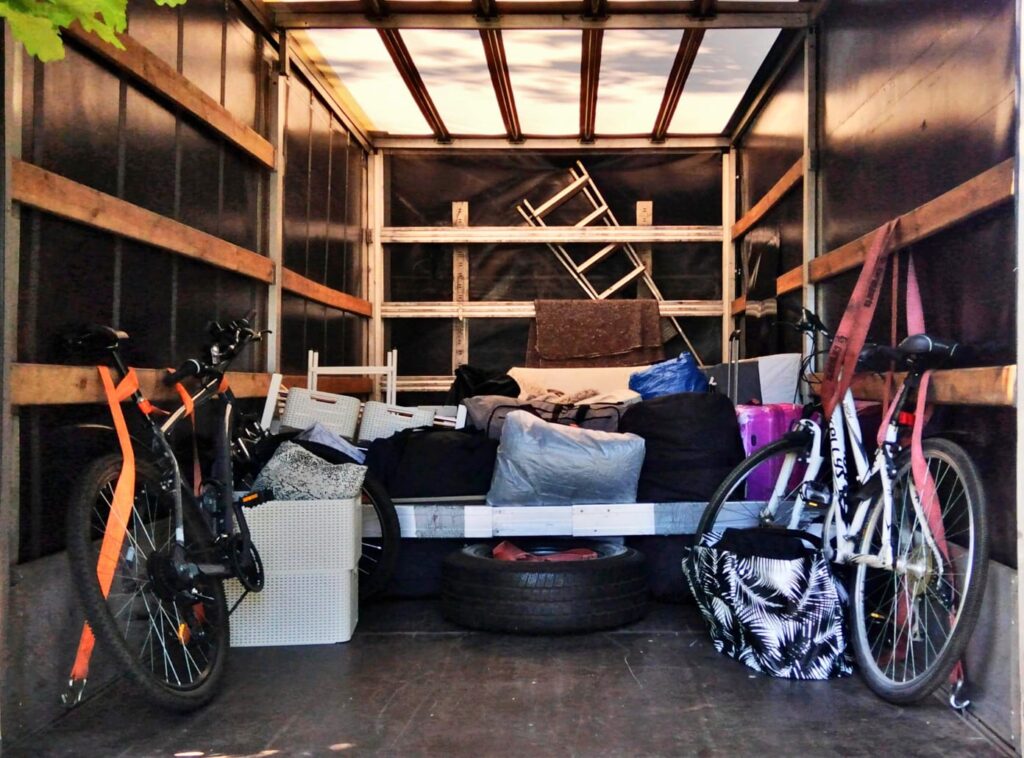
- Load for stability so boxes do not crush each other
- Protect fragile boxes with smart placement and padding
- Deliver with a defined window and real updates
If you want this style of move, start here:
Option B: part load for boxes plus a few furniture pieces
If you can be flexible on dates, part load is usually the best way to reduce cost while keeping professional handling.
It is a strong choice for people who are relocating in stages, or who are moving boxes from UK to Italy first, then furniture later.
Part load tends to work best when:
- Your delivery window can be flexible
- You want to pay for space used, not empty van space
- You have a clear inventory and consistent packing
Guide:
Option C: dedicated van when timing is sacred
If you need your boxes to arrive by a specific date, or you are coordinating keys, contracts, and travel, dedicated transport is the simplest path.
It is also the easiest option emotionally. Your shipment is not waiting for other pickups. Your boxes move with a clear, private plan.
Dedicated is often the right call when:
- You have a fixed move-out date
- You are starting work or school soon
- You cannot afford hotel days waiting for delivery
- You are moving fragile, high value items
If you are unsure which style fits, this route hub makes it clearer fast:
Option D: upgrade the calm with packing support
If you are time-poor, or you simply do not want to gamble with breakables, professional packing can be a quiet superpower.
It reduces damage risk. It speeds up loading. It also gives you that rare feeling on moving day: you are not drowning.
Packing support:
What not to put in your boxes
This is a safety rule, not a suggestion.
Keep these with you:
- passports and original documents
- cash, jewellery, and small valuables
- laptops, drives, and personal data
- medicines and essentials for the first week
It is the difference between a smooth arrival and an awful one.
Timeline: a calm plan that keeps you in control
A relocation gets easier the moment you give it micro-deadlines.
Think of your timeline like a zipper. Pull it up slowly and smoothly, and everything aligns. Rush it, and it snags.
Your relocation timeline at a glance
| When | Your focus | What to finish |
|---|---|---|
| 10 to 8 weeks before | direction | choose the move style, shortlist providers, set a target date |
| 8 to 6 weeks before | clarity | inventory, declutter, access checks, draft paperwork folder |
| 5 to 3 weeks before | logistics | confirm quote, book services, start packing non-essentials |
| 14 to 7 days before | precision | final inventory values, customs steps confirmed, labels done |
| 48 hours before | readiness | pathways clear, essentials separated, moving kit ready |
| Moving day | control | calm loading, box priorities protected, paperwork on hand |
10 to 8 weeks before
This is where you choose your path.
- decide dedicated vs part load
- choose whether you will move in one go or in stages
- outline your ideal move week, then add a backup week
If you are moving boxes from UK to Italy only, this is also the moment to decide whether you want small removals, part load, or dedicated.
8 to 6 weeks before
This is your clarity phase.
- Set your moving window, plus a backup window
- Decide: dedicated or part load
- Start a living inventory, rough is fine
- Declutter hard, do not pay to move guilt
- Confirm access at both ends: stairs, lift, parking, distance to door
5 to 3 weeks before
Now you turn ideas into logistics.
- Confirm quotes and service level
- Book packing support if needed
- Photograph valuable items
- Start packing non-essentials by room
If you want professional packing that protects fragile items and speeds up loading:
14 to 7 days before
This is paperwork and precision.
- Finalise inventory and values
- Confirm customs steps
- Label every box with room and priority
- Create an essentials kit for the first 48 hours
48 hours before
Make the route easy.
- Clear the path from door to van parking
- Separate what travels with you: documents, valuables, medication
- Keep tape, scissors, and markers accessible
Moving day: the simple rule that saves your nerves
Keep three things accessible, always.
- paperwork folder
- essentials kit
- a box cutter and marker
It sounds small. It prevents the frantic search when everyone is already in motion.
Packing that protects your move and your mood
Packing is not a chore. It is risk control.
Long routes create vibration and drift. Boxes rub. Furniture corners bite. Glass can turn into glitter.
The fix is simple. Prevent movement. Prevent friction. Label like you want future you to be happy.
And here is the part most people miss. Packing is also a confidence play.
When you pack with a clear system, your move feels lighter. When you pack in panic, every box becomes a mystery you will have to solve later.
The packing mindset that saves items and sanity
Treat packing like you are building a safe little world inside each box.
- Nothing should rattle
- Nothing should rub
- Nothing should be crushed
- Nothing important should be hard to find
That is it. Simple rules. Big impact.
A packing rhythm that works
Use this five-step rhythm for every room. It keeps you consistent, and consistency is what protects your shipment.
- Heavy items low, always
- Fill gaps so nothing shifts
- Use double wall boxes for books and kitchenware
- Wrap fragile items with layers, not optimism
- Label two ways: room plus priority
Packing materials checklist
You do not need a warehouse. You need the right tools.
| Material | Best for | Small tip that helps |
|---|---|---|
| Double wall boxes | books, plates, kitchenware | keep them smaller so they do not become too heavy |
| Bubble wrap | glass, ceramics, framed items | wrap, then tape the wrap, do not tape the item |
| Packing paper | filling gaps, wrapping fragile items | paper stops scratches better than loose plastic |
| Stretch film | drawers, sofa cushions, bundled items | locks things together without leaving sticky residue |
| Furniture blankets | tables, wardrobes, appliances | prevents friction during long routes |
| Strong tape | everything | tape the bottom twice, then a cross for strength |
| Labels or marker | sanity | write big. two sides. always |
If you want this done professionally, packing support turns a stressful weekend into a controlled process:
Room by room packing tips that actually work
A quick guide that prevents the classic damage points.
Kitchen
Kitchen breakage usually comes from movement, not impact.
- plate stacks should be tight and vertical, not laid flat
- glasses should be wrapped, then packed upright, with padding between them
- small appliances should travel with cables bagged and taped to the item
Bedroom
Clothes are your soft armour.
- use clothing to cushion fragile items
- keep one suitcase as your P1 kit for the first 48 hours
- pack bedding last, it becomes instant comfort in an empty room
Living room
This is where surfaces get scratched.
- wrap corners first, then cover full surfaces
- remove legs from tables when possible
- protect TV screens with a rigid layer, then a soft layer
Office
Do not gamble with your work.
- keep laptops and external drives with you
- back up data before moving day
- label one box “Office P1” so you can work within 24 hours
How to pack furniture for a long UK to Italy route
Furniture suffers most from rubbing and vibration. Prevent both.
- Clean surfaces first. Dust can scratch like sandpaper.
- Wrap corners with extra padding.
- Cover large surfaces with blankets or thick layers.
- Use stretch film to lock protection in place.
- Keep hardware together. Bag screws, label the bag, tape it to the furniture.
If your move is furniture-led, this hub helps you plan the right service level:
Priority labels that make unpacking feel sane
Priority labelling is a small decision that creates a huge emotional shift on arrival.
Use a three-tier system:
- P1: first night and first morning
- P2: first week essentials
- P3: can wait
Now add one extra trick.
Put a P1 sticker on the box and the room door where it belongs. That way, a man and van crew can place it instantly, even if you are juggling keys and jet lag.
Your P1 essentials list
Your first night in Italy should feel like a landing, not a crash.
Pack a P1 box with:
- phone chargers and adapters
- toiletries and towels
- two days of clothes
- bedding for one bed
- kettle or coffee essentials
- basic plates, one pan, cutlery
- medication and important documents
When White Glove delivery makes sense
Some items deserve premium handling and careful placement inside the home. If you are moving designer furniture, glass tables, marble, or artwork, White Glove Delivery is the calm upgrade.
It is also perfect when access is tight and you want professionals to place items correctly, without scuffs or stress.
Customs and documents: the checklist that keeps borders calm
This section matters. Not because it is scary, but because it is powerful.
When your documents match your shipment, customs becomes a routine step.
Think of customs like a bouncer. It is not judging your life. It is checking your ID.
The core documents most moves need
Most UK to Italy relocations run smoothly when you prepare these early:
- Passport or ID
- Proof of address in the UK and in Italy
- Inventory and packing list with realistic values
- Statement that the items are personal effects
- Any visa or residency paperwork that applies to your situation
The document folder system that keeps you calm
Keep one physical folder and one digital folder. Mirror them.
Put these in both:
- ID documents
- address proofs
- inventory and packing list
- any visa or residency documents
- your removals confirmation and contact details
When everything is in one place, you never scramble.
UK export starting points
If you are exporting goods yourself or want to understand the official process, start here:
- Export goods from the UK, step by step: https://www.gov.uk/export-goods
- Get an EORI number: https://www.gov.uk/eori
- Making a full export declaration: https://www.gov.uk/guidance/making-a-full-export-declaration
Italy visa and entry references
For visa rules and entry requirements, use the official Italian sources:
- Italy Ministry of Foreign Affairs visa guidance: https://www.esteri.it/en/sportello_info/domandefrequenti/sezione_visti_entrare_in_italia/
- Visa portal: https://vistoperitalia.esteri.it/
UK overview for living in Italy:
If you are an EU citizen, your path is different. Use this dedicated guide:
Residence permits in Italy
If you are a non-EU national staying long term, you will likely need to apply for a residence permit after arrival, depending on your situation.
Official reference:
- Polizia di Stato residence permit guide: https://www.poliziadistato.it/articolo/how-and-where-a-foreign-national-can-obtain-a-residence-permit-in-italy
Duty relief and transfer of residence
Personal property can be eligible for relief from import duties under EU rules, subject to conditions.
Two smart principles keep this clean:
- your goods should look like used personal effects, not new commercial stock
- your inventory should be detailed enough that it reads like a real home
Official references:
- EU Regulation 1186/2009: https://eur-lex.europa.eu/eli/reg/2009/1186/oj/eng
- Italian Customs Agency allowances and forms: https://www.adm.gov.it/portale/-/franchigie-doganali
Inventory, done the smart way
A good inventory is boring on purpose. It is specific.
Write it for a customs officer who has never met you.
Use this format:
- Item or category
- Quantity
- Condition: used, personal
- Estimated value
If you want to go one level smoother, group your inventory by room. It reads like a home. It feels credible.
Here is a clean example layout:
| Room | Category | Quantity | Condition | Estimated value |
|---|---|---|---|---|
| Kitchen | plates and bowls | 1 box | used | £40 |
| Kitchen | pots and pans | 1 box | used | £60 |
| Bedroom | clothes | 3 boxes | used | £120 |
| Office | books | 2 boxes | used | £50 |
| Living room | sofa | 1 item | used | £250 |
Examples customs understands:
- 10 boxes, books, used, estimated value £50
- 1 sofa, fabric, used, estimated value £250
- 2 boxes, kitchenware, used, estimated value £80
A quick warning about new items
If you are shipping lots of brand new items in original packaging, customs may treat them differently.
If you must bring new items, list them clearly, keep receipts if you have them, and do not hide them inside vague categories.
Clarity is what keeps borders calm.
Arrival in Italy: access, ZTL zones, and your first week setup
Italy can be effortless on delivery day, or it can be a maze. The difference is access planning.
This is where good preparation feels like magic.
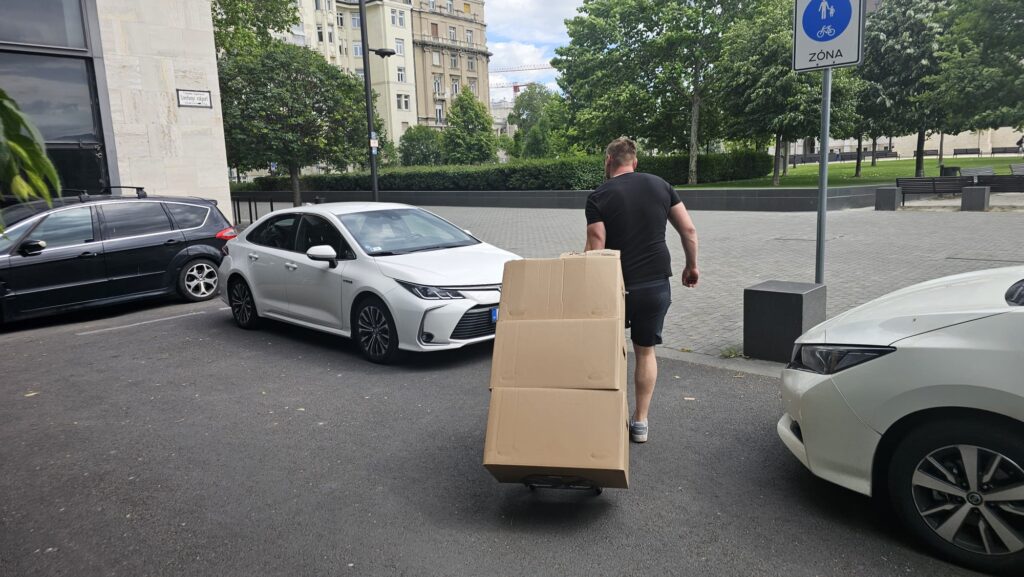
Because when the van arrives, you do not want to discover that the street is too tight, the lift needs booking, or the nearest legal stopping point is three blocks away.
You want a smooth handover. Box by box. Room by room.
The last 30 metres rule
Most problems happen at the end: narrow streets, stairs, no parking, tight lifts, and old doors that were built for a different century.
Think of delivery like a relay race. The long route is the easy part. The final 30 metres is where things can wobble.
Do this before you book:
- Measure the tightest doorway and stair turn at both ends
- Confirm where a van can legally stop, and how long it can stay there
- Ask about lift booking and delivery hours, some buildings require a reservation
- Send photos of the entrance, stairwell, and corridor
Now add these two extra checks, because they are the ones people forget:
- Confirm how far the walk is from legal parking to your front door
- Confirm whether items need disassembly to fit, especially wardrobes, sofa beds, and large tables
The access questions that prevent a bad surprise
If you are moving into an Italian building, ask the owner, the agent, or the concierge these questions:
- Is there a lift, and what are its internal dimensions
- Are there quiet hours, delivery hours, or booking rules
- Can you temporarily reserve the building entrance area
- Is there a loading bay, courtyard, or private driveway
- Are there stairs with tight turns, and which floor is the apartment
If you can answer those, your man and van crew can plan properly, which means less time carrying and less risk of scuffs.
ZTL zones
Many Italian city centres have restricted traffic areas called ZTL. Plan delivery timing and legal stopping points early, especially in historic centres.
If your new home is inside a ZTL, you may need a permit or you may need to arrange delivery at the edge of the zone, then carry items in.
Do not leave this to luck.
A simple way to handle it:
- check if your address is inside a ZTL
- ask your building or landlord what delivery rules apply
- plan the time window, early mornings are often calmer
- confirm the closest legal unloading point
If you are moving to a tricky destination, these guides help:
- Venice: https://vanonsite.com/italy-removals/moving-to-venice-italy/
- Turin: https://vanonsite.com/italy-removals/moving-to-turin-italy/
Venice is its own world
Venice deserves its own note because logistics there are different.
Delivery often becomes a combination of road transport and water transport, plus more carrying, plus more coordination.
If Venice is your destination, get very specific early:
- where the van can legally stop on the mainland
- which boat or water access route applies
- how far items must be carried, and whether there are bridges on the path
Use the Venice guide above to plan the details properly.
The first 72 hours checklist
Your first days in Italy can feel like a blur, so make it simple.
Focus on three priorities:
- A working phone and internet
- A place to sleep and eat
- Your essential admin tasks started
Here is a practical first 72 hours checklist:
- buy a local SIM or activate your Italian plan
- confirm your address details and doorbell name
- unpack your P1 box first
- locate the nearest supermarket and pharmacy
- save local emergency numbers and key contacts
First week essentials beyond boxes
A practical life hack: set up admin tasks like stepping stones.
The goal is not to do everything at once. The goal is to create traction.
Start with the essentials that unlock other essentials.
Codice fiscale
This number shows up everywhere, from contracts to healthcare.
Official reference:
- Codice fiscale and Tessera Sanitaria info: https://www.agenziaentrate.gov.it/portale/codice-fiscale-tessera-sanitaria-partita-iva
SPID
SPID is a digital identity used to access many public services online. It can make life faster once you are settled.
Official reference:
- SPID information: https://www.spid.gov.it/
Healthcare setup
If you are registering for healthcare, start from the official Ministry of Health portal.
Official reference:
- Ministry of Health: https://www.salute.gov.it/
Residency and registration
If you need to register residency, your local Comune handles it. The steps vary by municipality, but the logic is consistent.
Official reference for public administration access:
- Public services portal: https://www.interno.gov.it/
If you are a non-EU national
You may need to apply for a residence permit after arrival, depending on your visa.
Official reference:
- Polizia di Stato residence permit guide: https://www.poliziadistato.it/articolo/how-and-where-a-foreign-national-can-obtain-a-residence-permit-in-italy
A simple first week plan
Use this as a calm rhythm.
- Day 1 to 2: sleep, SIM, food, basics unpacked
- Day 3: start admin tasks, codice fiscale if needed
- Day 4: bank appointment or account setup, plus utilities if required
- Day 5: local registration steps, plus healthcare information
- Weekend: finish unpacking P2 boxes, explore your new area
If you want more practical context before you arrive, these guides pair well with this section:
- What to know before moving: https://vanonsite.com/italy-removals/what-to-know-before-moving-to-italy/
- Moving to Italy overview: https://vanonsite.com/italy-removals/moving-to-italy/


Costs and van sizes: how quotes are really built
Pricing is not random. It is math plus risk.
But it is also psychology.
A good quote feels transparent. You can see what you are paying for. A bad quote feels like a guess. It might be cheap, but it can become expensive fast, especially if access and packing are not accounted for.
Your quote usually depends on volume, weight, access, service type, packing level, and urgency.
If a quote is suspiciously cheap, it often means details are missing, not that you found a miracle.
For a deeper breakdown of cost drivers, start here:
The biggest cost drivers
If you want to understand pricing in a single glance, focus on these levers:
- Dedicated vs part load
- Total volume in m3
- Total weight, especially for book-heavy loads
- Access complexity at pickup and delivery
- Packing level and fragile handling
- Distance from legal parking to the door
- Timing, last minute moves usually cost more
The questions to answer before you request a quote
If you can answer these, your quote becomes accurate and your moving day becomes calmer.
- How many boxes, and what is inside them
- How many large furniture items, and their rough dimensions
- Floor level, lift availability, and stair turns
- Is the property on a narrow street
- Is the destination inside a ZTL
- Is there a delivery time restriction
VANonsite vehicle options
Choosing the right vehicle size is one of the fastest ways to protect your budget.
Too small, and you risk a second trip or stressful repacking. Too big, and you can pay for empty space.
| Package | Capacity | Payload | Ideal for |
|---|---|---|---|
| Moving Basic | 5 m3 | 300 kg | Boxes, suitcases, student essentials |
| Moving Medium | 10 m3 | 600 kg | Studio moves, boxes plus small furniture |
| Moving Premium | 15 m3 | 1000 kg | One bedroom moves with real furniture |
| Moving Premium Plus | 30 m3 | 3500 kg | Larger flats, families, staged relocation loads |
| Moving Full House XXL | 90 m3 | 20000 kg | Big homes and full household relocations |
A quick way to choose the right size
If you do not know your m3, use this practical shortcut:
- 10 standard moving boxes usually sit around 1 to 1.5 m3 depending on packing style
- a small sofa often takes 2 to 3 m3
- a wardrobe can take 1.5 to 3 m3 depending on size and disassembly
Then add a buffer for protection materials.
When in doubt, aim for calm, not perfect packing Tetris.
What to ask for when comparing quotes
Do not compare price alone. Compare clarity.
- Is it dedicated or part load
- What is included in labour and access
- Is packing optional or included
- What protection is used for furniture and fragile items
- Will you get GPS tracking and real updates
- What happens if access is harder than expected
The three quote traps to avoid
These are common, and they can be expensive.
- A quote that does not mention access, floors, or parking
- A quote that does not confirm whether it is dedicated or part load
- A quote that ignores the weight of boxes, especially books
If you avoid those three traps, you are already ahead.
Why VANonsite is built for this move
A relocation is personal. You want a team that treats it that way.
Because when you are moving from UK to Italy, you are not shipping random items. You are moving your routines. Your comfort. Your sense of home.
VANonsite is built for cross border moves that demand speed, care, and clear communication. You get a professional man and van crew, plus GPS tracking for every load, so you are never left guessing where your life is.
What you actually get with VANonsite
You do not need fancy promises. You need a move that feels controlled.
- GPS tracked transport so you can follow progress and breathe
- Careful loading and protection to reduce rubbing, shifting, and breakage
- Flexible options for small box moves, part load, and dedicated transport
- Packing support when you want speed and higher protection
- White Glove delivery when items deserve premium handling and placement
- A clear plan from pickup to delivery, with practical advice that prevents delays
If you are comparing international removals to Italy, this is the simplest way to start:
How the process works
This is the flow that keeps everything calm.
- Share your basics: pickup, delivery, rough inventory, and your preferred dates
- Choose your move style: dedicated van for speed, part load for savings
- Confirm access details at both ends so the crew arrives prepared
- Pack yourself or add packing support for maximum protection
- Track your shipment with GPS updates while it travels
- Deliver room by room, with careful placement where you need it
If you want a cost driven view first, this guide makes pricing logic clear:
Choose the right service in one click
Explore services that match real life situations:
- Furniture removals: https://vanonsite.com/furniture-removals/
- Home removals: https://vanonsite.com/home-removals/
- Packing service: https://vanonsite.com/packing-services/
- White glove delivery: https://vanonsite.com/white-glove-delivery-service/
- Office removals: https://vanonsite.com/office-removals/
- Student removals: https://vanonsite.com/student-removals/
If you are planning the full route, these pages connect the dots:
- https://vanonsite.com/italy-removals/moving-to-italy/
- https://vanonsite.com/italy-removals/moving-to-italy-from-uk/
- https://vanonsite.com/italy-removals/uk-to-italy-removals/
FAQs
What is the best way to handle moving boxes from UK to Italy?
If your load is boxes plus a few essentials, small removals or part load is often the smartest blend of cost and care.
Choose based on what matters most:
- If you need speed and a firm delivery date, go dedicated
- If you want a lower cost option and you have a delivery window, go part load
- If you are sending essentials first and the rest later, consider a staged plan
A reliable man and van team makes a huge difference because boxes are handled with intention, not tossed like parcels.
Start here:
- https://vanonsite.com/italy-removals/small-removals-to-italy/
- https://vanonsite.com/european-relocations/part-load-removals-to-italy/
Can I move furniture and boxes together?
Yes, and it is often the simplest plan.
The secret is the loading order and protection. Heavy items first, stable base. Fragile items last, secured and separated. Furniture wrapped so surfaces do not rub during the route.
If you have valuable pieces, White Glove delivery can be the calm upgrade, especially for glass, marble, artwork, and high end furniture:
Furniture hub:
Do you handle removals back to the UK later?
Yes, plans change. Sometimes work pulls you back. Sometimes the dream becomes a new chapter.
If you need the reverse route later, these guides make it easier:
- https://vanonsite.com/italy-removals/removals-from-italy-to-uk/
- https://vanonsite.com/italy-removals/moving-to-uk-from-italy-after-brexit/
I need to move quickly, do you help with urgent dates?
Yes. If your timeline just collapsed, speed matters, but so does control.
A quick move works best when you do two things right:
- Keep your inventory simple and honest
- Separate your essentials so you are not stuck without chargers, documents, or bedding
Start with the main route overview and request a tailored plan:
Do you offer dedicated transport and part load UK to Italy removals?
Yes. Dedicated is the focused option for firm dates and full home moves. Part load is the clever option for smaller volumes and flexible delivery windows.
If you want to understand part load in detail:
Can you help with packing if I do not have time?
Yes. Packing support is ideal when you want fewer breakages, faster loading, and a calmer moving week.
Summary
Moving to Italy from the UK is not just transport. It is a controlled handover between two lives, and the calmer you plan, the lighter it feels.
This guide walked you through the whole journey. First, it explained what changed after Brexit and why paperwork now matters more than ever. Then it helped you choose the right removals style, dedicated for speed and firm dates, part load for smart savings, or a staged move when keys and timelines do not line up.
You also got practical support for the real moving day stuff.
- How to estimate volume and weight for moving boxes from UK to Italy
- How to label with priorities so unpacking feels human, not chaotic
- A timeline that turns the next 10 weeks into simple, manageable steps
- Packing rules that prevent damage on a long route, plus when to upgrade to packing support or White Glove delivery
- A clear documents checklist, official links, and an inventory format that keeps customs calm
- Arrival planning for tight streets, stairs, and ZTL zones, plus a first week setup plan in Italy
- Cost drivers and vehicle sizes, so quotes make sense and your budget stays protected
The big takeaway is simple. When your inventory is clear, your access details are confirmed, and your packing is intentional, border steps become routine and delivery day becomes predictable.
If you want a fast, careful man and van team with GPS tracking for every load, start here: