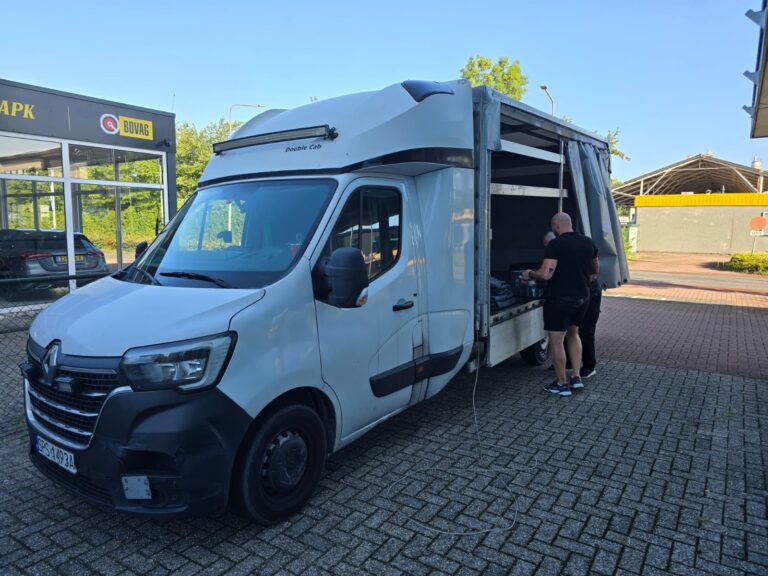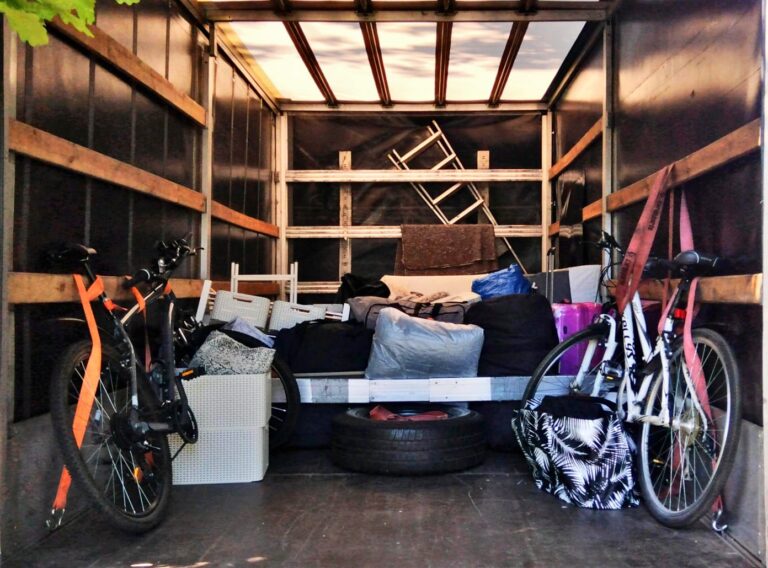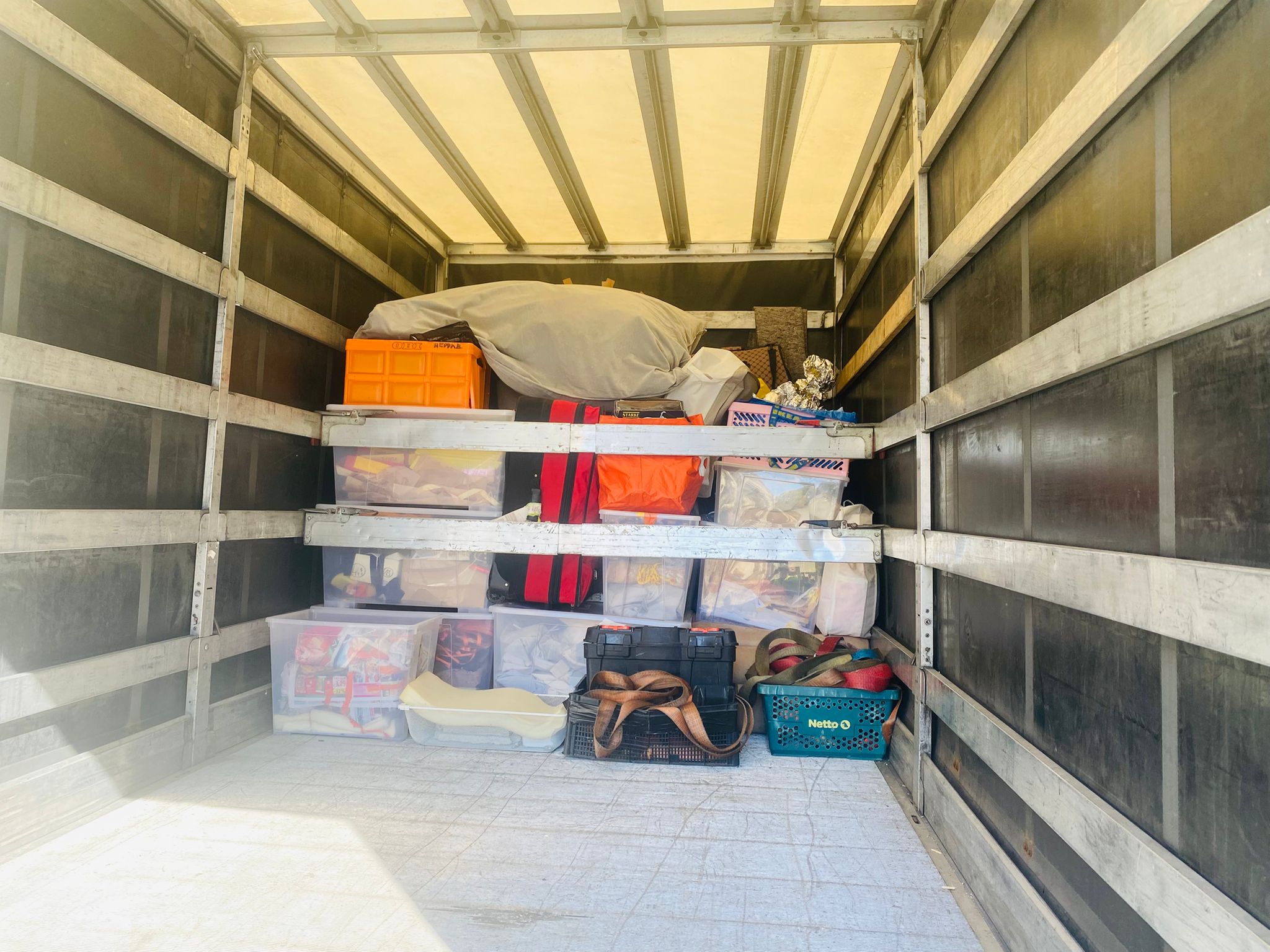

Part-load removals to Italy use shared route capacity for a measured consignment rather than reserving an entire vehicle for one customer. They can work well for boxes, selected furniture, smaller homes and phased relocations when collection and delivery dates are genuinely flexible. VANonsite confirms the load, access and customs scope before matching it with a compatible route.
Use the automatic calculator below for an immediate starting estimate. Enter both addresses, the intended date and contact details, then describe the box count, furniture, floors, lifts and parking. Photographs and dimensions help the team qualify the volume and prepare a tailored part-load proposal.

How a part-load removal to Italy works
The service starts with a declared consignment and two complete addresses. VANonsite assesses the usable volume, handling needs, route, dates and access, then checks whether compatible capacity is available. The proposal should state the collection arrangement, delivery window, packing responsibilities, customs scope and what happens if the load changes.
Shared capacity does not mean an unrecorded pile of boxes. Each consignment needs a final inventory, clear identification and suitable protection. The operating plan must keep ownership and delivery instructions distinct throughout collection, consolidation, transport and handover.
When shared transport is the right choice
- Your load is smaller than the capacity of a dedicated vehicle.
- The final inventory can be confirmed before routing.
- You can accept an agreed collection and delivery range.
- Neither property has a deadline that requires a dedicated schedule.
- The goods can be packed and labelled for consolidated transport.
- The customs file can be ready before the allocated departure.
Part-load can be cost-efficient because the route capacity is shared, but it is not automatically the best option for every small consignment. Compare timing, access, handling stages, storage and the cost of waiting. A dedicated service can be the better overall decision when a missed handover creates larger consequences.
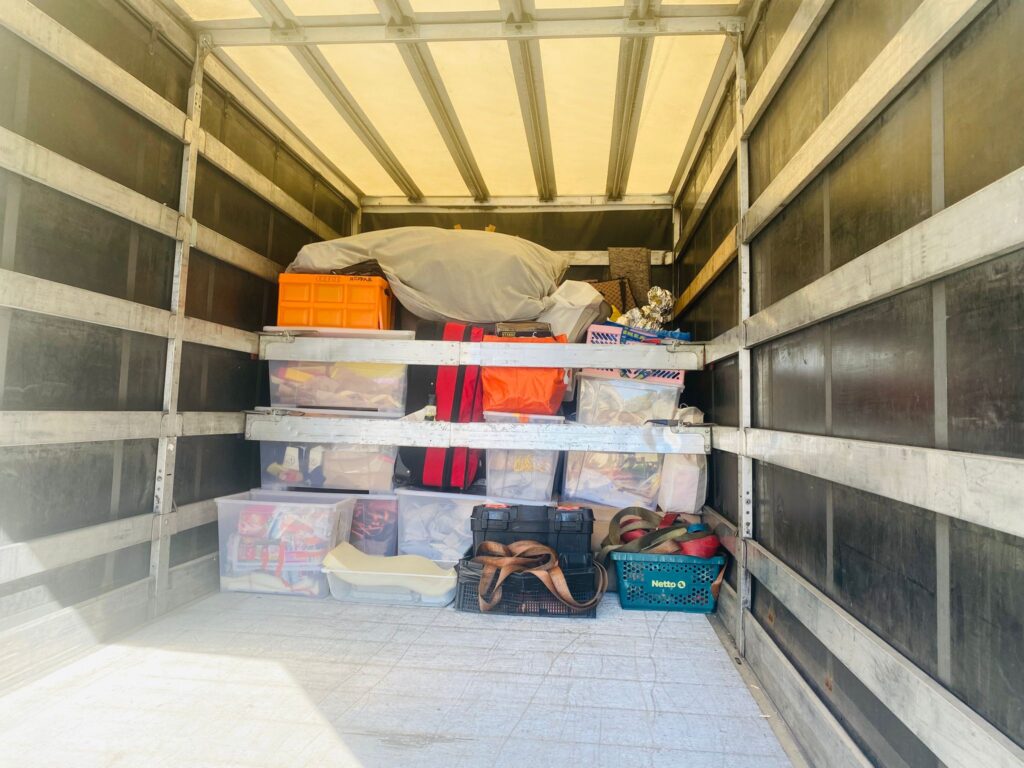
Volume accuracy determines whether the plan works
Count boxes and measure sofas, tables, wardrobes, mattresses and irregular pieces. Mark what will be dismantled. Inventory garages, lofts and storage units separately because these spaces often contain the items missed during the first estimate. Photographs help confirm shape and protection needs, but they should support rather than replace dimensions.
Part-load capacity is allocated to the declared consignment. Adding furniture after booking may change compatibility with the planned route, while understating a dense load can affect payload and handling. Use one dated inventory version and update it before the final service confirmation.
What the quotation should show
| Quote item | Detail to confirm |
|---|---|
| Capacity | Declared volume, weight assumptions and inventory version |
| Collection | Address, access, carrying distance and agreed range |
| Delivery | Address, access, room or kerbside scope and window |
| Handling | Loading, consolidation, protection and any transfer stages |
| Packing | Customer or VANonsite materials and labour |
| Customs | Named document and declaration responsibilities |
| Changes | Effect of altered volume, access, goods or dates |
A headline price cannot show whether two offers describe the same work. Compare the inventory, number of handling stages, access allowances, timing and customs responsibilities. For broader budgeting methodology, use the separate cost of moving to Italy guide.
Ask whether the quoted capacity is exclusive to the listed goods or whether a tolerance has been included. Confirm how the company will handle an item that was described incorrectly, a lift that becomes unavailable or a collection that exceeds its agreed time. Written change rules let the customer make an informed decision before shared route space and other customers’ schedules are affected.
Customs remains part of a shared load
A part-load consignment from Great Britain still enters the EU customs territory. Each customer’s goods must remain identifiable, and the correct person must supply accurate ownership, residence and goods information. Shared transport does not combine separate customers into one legal household or remove declaration responsibilities.
The Italian Customs and Monopolies Agency explains that personal property connected with a transfer of normal residence can qualify for duty and VAT relief when the legal conditions are met. Its current citizen guidance refers, subject to exceptions, to prior residence outside the EU and prior use of the goods. Check the applicable procedure with the competent office using the live Italian customs guidance.
HMRC advises movers to check additional requirements for household goods and the destination country’s rules. The current GOV.UK personal-goods guidance is a useful starting point. VANonsite confirms transport information included in the service, but eligibility for relief and final declaration treatment are decisions for the relevant authorities.
Packing for consolidation and repeated handling risk
Use strong, consistently sized cartons and close every box completely. Label two sides with the customer reference, box number, destination room and handling note. Protect furniture corners before wrapping the full item, keep fittings in labelled bags and connect dismantled parts to the inventory. Loose bags and unlisted pieces are difficult to allocate safely.
Ask how many physical handling stages the proposed route includes. Direct shared capacity and a multi-stage warehouse arrangement do not create the same risk profile. The quotation should explain the planned process so protection can match it. For valuable or bulky items, see furniture removals to Italy.
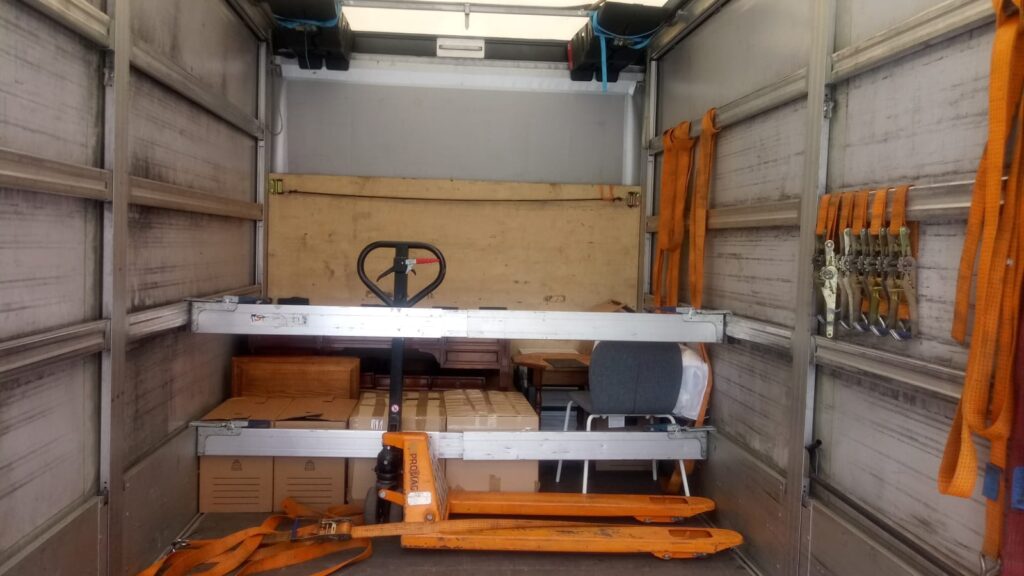
Italian delivery access must be checked before routing
Italian city centres can include ZTL limited-traffic zones, pedestrian streets, narrow arches, steep approaches and restricted loading periods. Apartment buildings may require a lift booking, condominium approval or an external hoist. A postcode cannot confirm whether the vehicle can reach the entrance.
Provide photographs of the street and entrance, the legal stopping location, walking distance, floor, lift dimensions and stair turns. If a smaller transfer vehicle or local permit may be needed, include that decision in the service scope. Part-load savings disappear quickly when access was assumed incorrectly.
Mainland routes, Sicily and Sardinia
Northern Italy can fit a different shared route from Rome, the south or an island destination. Sicily and Sardinia add ferry schedules and port capacity; smaller islands may require another transfer. State the complete destination before requesting a part-load match so the proposed timing reflects the whole journey.
Season, mountain conditions and local access can also affect route compatibility. VANonsite assesses the addresses and available capacity together rather than promising a standard country-wide schedule.
Collection and delivery windows need clear rules
A shared route normally uses a collection and delivery range rather than two isolated appointment times. The written proposal should explain how wide each range is, when the customer receives the next update, who confirms access and what contact method will be used on the day. “Flexible” should never mean that the customer has no information or that keys, lifts and parking cannot be coordinated.
Identify any hard boundary before the capacity match: the last day of a tenancy, a building’s permitted loading hours, a ferry connection, a flight, the first day at work or the date when someone can receive the goods in Italy. VANonsite can then decide whether the available shared route respects that boundary. If it does not, a dedicated option or different date is a more honest recommendation.
The receiving person should have the inventory, property instructions and authority to sign the handover. If the customer will not be present, provide the representative’s full contact details and agree where each item should be placed. Keep immediate-arrival essentials, medicines, passports, keys and irreplaceable documents outside the shared consignment. At delivery, check numbered boxes against the final list before opening them and record any visible issue through the agreed contact route.
When dedicated transport is the better decision
- The collection or delivery date cannot move.
- The property has a tightly controlled access slot.
- The load occupies most of a suitable vehicle.
- Direct handling is important for fragile or high-value pieces.
- A delayed delivery would trigger storage, accommodation or contractual costs.
- The route or destination does not match current shared capacity.
The main UK to Italy removals page compares service formats within the complete route plan. Use it when the move is not yet clearly part-load or when the household and dates require a broader assessment.
Part-load versus small removals
“Small removal” describes the size of the consignment; “part-load” describes how transport capacity is allocated. A small load may travel in shared capacity or on a dedicated vehicle. The right answer depends on timing, access, goods and route availability, not the label alone.
For boxes and selected items where size is the main question, use the small removals to Italy page. The broader removals to Italy hub remains the country-level starting point.
The VANonsite part-load process
- Estimate: enter the route, date and contact details.
- Measure: confirm boxes, furniture, dimensions and photographs.
- Check access: document parking, carries, floors, lifts and restrictions.
- Prepare documents: finalise the inventory and named customs responsibilities.
- Match capacity: assess compatible route space and realistic windows.
- Confirm scope: agree packing, handling, collection, delivery and change rules.
This sequence protects the advantage of shared transport: efficient use of route capacity without hiding uncertainty from the customer. VANonsite can only match a load accurately when the operational facts are complete.
The 1-3 day Last-Minute option is a separate service
VANonsite’s Last-Minute Moving service can sometimes support delivery in 1-3 days. It depends on vehicle availability, the route and crossing, both properties’ access, customs-document readiness and the agreed collection slot. It is not a universal transit-time guarantee and should not be assumed to use part-load capacity.
If timing is urgent, provide the complete inventory and both addresses immediately. VANonsite can then assess whether a dedicated urgent option, available shared route or another workable plan fits the actual constraints.
Frequently asked questions
Are part-load removals to Italy always cheaper?
They can reduce transport cost when a measured load and flexible dates match available route capacity. Compare storage, accommodation, handling stages and deadline risk before deciding which option is cheaper overall.
How accurate must the inventory be?
Capacity is allocated from the declared load, so boxes, furniture, dimensions and unusual pieces should be confirmed before booking. Report changes before collection so compatibility can be reassessed.
Can a part-load go to Sicily or Sardinia?
It may be possible when route and ferry capacity, timing, customs readiness and final access align. The exact island address must be assessed rather than treated as an ordinary mainland delivery.
Does shared transport remove customs formalities?
No. Each consignment and owner must remain identifiable, and the applicable declaration and relief requirements still depend on the goods and the customer’s circumstances.
Calculate your Italy part-load
Use the calculator near the top, then send the final inventory, photographs and access details. State how flexible the collection and delivery dates really are and whether the customs file is ready. VANonsite can then decide whether shared capacity fits the move and provide a clear written scope.