
The cost of moving your belongings to Germany depends on what is being collected, where the journey starts and how the crew can reach each property. This guide covers the removal bill: transport, vehicle space, handling and optional services. Keep rent, a tenancy deposit and everyday living expenses in a separate budget, so they do not get confused with the price of moving your furniture and boxes.
To estimate the cost of moving to Germany for your own load, start with the quote form on our removals to Germany service page. Enter the collection and delivery addresses and your preferred pickup date. In Notes, describe the furniture and boxes, stairs or lifts, parking distance and any packing help needed. The emailed calculation is a starting estimate; the inventory, access and agreed service scope need checking before booking.
TL:DR
- Published VANonsite 20 m³ route examples include EUR 574.28 for Belgium and EUR 4,775.00 for Greece. They are indicative examples, not current offers, a market average or minimum and maximum prices for every move.
- VANonsite’s public route examples are based on estimated prices for a 20 m³ van, so they should be treated as price anchors, not fixed universal quotes.
- The final price usually depends on five things most: origin country, route length, moving volume, access at both properties, and timing.
- A man and van option can suit a smaller load. Compare the crew, handling tasks and delivery window before assuming it is cheaper than another service.
- Choosing the wrong van size can increase the total moving cost, either by overpaying for unused space or by creating problems with capacity.
- Extra services such as packing, white glove delivery, storage, urgent scheduling, and fragile-item handling can all raise the quote.
- The smartest way to avoid overpaying is to request a realistic quote based on exact route, load size, and access details.




What is the average cost of moving to Germany?
There is no verified market-wide average in these examples. VANonsite publishes indicative route prices for a 20 m³ van: the table below includes EUR 574.28 from Belgium, EUR 1,247.82 from the United Kingdom and EUR 4,775.00 from Greece. These are published planning examples, not current offers for every address in those countries.
A country name is not enough to price a removal. Collection in a rural house and delivery to a fourth-floor city flat require different planning from a move between two ground-floor properties. Give both addresses before using a route example as a budget reference.
The table does not explain how each example was calculated. It cannot tell you whether a price difference comes from availability, access, handling or another assumption. Use your own inventory and property details to obtain a comparison that is relevant to your move.
Treat these as estimated examples for a 20 m³ van, not a price list or a guaranteed upper limit. Ask for the currency, tax treatment, included work and validity period of your own quotation. A smaller load is not automatically priced as a fixed fraction of a full vehicle.
Estimated removals to Germany prices from VANonsite
The following figures reproduce the route examples published by VANonsite. The distances are also example values, not door-to-door mileage for your addresses. They provide an initial reference; they are not evidence of completed customer moves or a statistical average across the market.
| Country | Example distance (km) | Published example (EUR) |
|---|---|---|
| Belgium | 650.6 | 574.28 |
| Netherlands | 576.1 | 856.08 |
| France | 877.5 | 963.44 |
| Italy | 1,182.5 | 976.84 |
| Poland | 517.2 | 1,173.53 |
| United Kingdom | 931.6 | 1,247.82 |
| Spain | 1,869.1 | 1,630.97 |
| Switzerland | 752.6 | 1,768.78 |
| Finland | 1,105.3 | 1,958.28 |
| Greece | 1,802.9 | 4,775.00 |
To use the table, find your collection country, note the 20 m³ assumption and then check whether your actual load fits that assumption. If you are only moving selected furniture or boxes, request a price for that inventory rather than budgeting for a full van.
For instance, the UK row lists EUR 1,247.82. It does not specify your collection postcode, German delivery address, floor access or packing requirements. Those missing details need resolving before you can compare the example with an emailed calculation or another mover’s offer.
Do not use the lowest and highest rows as minimum and maximum prices for all removals to Germany. Your route and service scope may sit outside those examples. Keep the table alongside your inventory, not in place of it.
What affects the cost of moving to Germany the most?
A useful quote describes a particular job. Before comparing totals, check that each mover has the same addresses, item list, weight information, access details and dates. Otherwise you may be comparing one price for transport only with another that includes carrying, packing or a second crew member.
The main price factors are:
- pickup country and route length
- total moving volume
- total weight
- property access at both ends
- packing and protection level
- urgency and last minute timing
- whether the move is direct, express, or grouped
- fragile, bulky, or premium items
Collection and delivery addresses determine the actual route. Include postcodes and any additional collection point. Ask whether applicable ferry, tunnel or toll costs are included in the quoted total, rather than assuming that an advertised distance covers every part of the journey.
Moving volume is the space needed by the packed load, including protective materials and furniture that cannot be stacked. Measure larger pieces and say whether they travel assembled or dismantled. A photograph can clarify an awkward shape that a room count does not capture.
Moving weight needs a separate check. Books, tools and appliances can reach a payload limit before the available space is full. Give known item weights, and flag particularly dense boxes or heavy furniture. Do not choose a vehicle using cubic metres alone.
Access at both properties affects the work required. State the floor, lift dimensions, stair turns and distance from legal parking to the door. If a lift or loading bay must be reserved, provide the available time slot before agreeing collection and delivery.
Packing and furniture preparation must have a named responsibility. Explain which items need wrapping, dismantling or reassembly, and which tasks you will complete yourself. Ask whether materials and labour are included or priced separately; a service label does not settle those details.
Urgency changes the availability question. VANonsite offers last-minute moving as one service option, but a short notice period does not establish a price or guarantee a delivery date. State the deadline and ask which vehicle and crew arrangement can actually meet it.
Dedicated and shared transport have different scheduling requirements. Ask whether the collection and delivery windows are fixed or flexible, whether the load shares vehicle space and whether additional handling is planned. Compare the confirmed arrangements, not just the words express or economy.
Bulky or fragile pieces need details before pricing. For a sofa, cabinet, mirror or appliance, provide dimensions, approximate weight and photographs of difficult access. Do not assume that unusual items are accepted or that special equipment is included without checking.
If one offer is much lower, ask which tasks it excludes. The difference might be a smaller inventory, customer-assisted loading, a flexible delivery window or less packing work. A lower price can be suitable, provided those conditions match what you need.
A practical way to compare quotes is to ask a few direct questions:
- Is this price based on the exact route and exact load?
- Does it include the real access conditions at both properties?
- Is the service direct, grouped, or partially flexible?
- How are fragile items protected?
- Are there any likely add-ons that may appear later?
Keep the answers with the quotation. If an item is added or a delivery address changes, ask for an updated scope before booking. Written assumptions give you a practical basis for understanding a revised total.
How much space do you actually need for a move to Germany?
Start with an item list rather than a bedroom count. Record the dimensions of furniture, the number and size of boxes, and items stored in the cellar, attic or garage. Then check both volume and payload against the vehicle option being considered.
The vehicle options below show the published capacities and load limits. Room-based suggestions are only a starting point: furniture dimensions, packing and total weight must be checked for your inventory before a vehicle is confirmed.
| Vehicle option | Capacity | Max load |
|---|---|---|
| Moving One | 1 m3 | 100 kg |
| Moving Basic | 5 m3 | 300 kg |
| Moving Medium | 10 m3 | 600 kg |
| Moving Premium | 15 m3 | 1,100 kg |
| Moving Premium Plus | 30 m3 | 3,500 kg |
| Moving Full House XXL | 90 m3 | 20,000 kg |
A practical reading of these options looks like this:
- Moving One works well for documents, essentials, and a few boxes.
- Moving Basic suits student moves, essentials-only relocations, and very compact loads.
- Moving Medium fits many compact flat moves with a modest furniture set.
- Moving Premium is a strong option for many standard 1 to 2 bedroom household moves.
- Moving Premium Plus suits larger family relocations or heavier furniture combinations.
- Moving Full House XXL is built for major home or business moves where volume and weight both matter.
Here is a more real-life mapping:
| Move scenario | Typical load shape | Option to check |
|---|---|---|
| A few boxes, bags, and essentials | light and minimal | Moving One |
| Student room or compact studio | lighter, budget-conscious | Moving Basic |
| Small flat with selected furniture | moderate volume | Moving Medium |
| 1 to 2 bedroom home | balanced household move | Moving Premium |
| Larger family move | bulky furniture and more boxes | Moving Premium Plus |
| Full home or major mixed move | very large and complex | Moving Full House XXL |
Walk through each room and list what is actually leaving. Measure the sofa, bed parts, wardrobes and large appliances; count boxes by size rather than calling them all standard. State which furniture will be dismantled before collection, since that changes its packed footprint.
Review large items before requesting a quote. If you decide not to move a wardrobe or appliance, remove it from every inventory you send. Do not reduce the declared load merely to obtain a lower estimate; the crew still has to accommodate the goods that appear on collection day.
A few practical checkpoints can make the estimate more accurate:
- Count major furniture items first.
- Add appliances and electronics.
- Estimate your number of standard boxes honestly.
- Include hallway, attic, cellar, and storage items.
- Add a margin for the things you always forget until the final week.
Include the items outside the main rooms: bicycles, balcony furniture, cleaning equipment, lamps and stored seasonal boxes. If the inventory is not final, mark the uncertain items and update it before booking rather than hiding them inside a general allowance.
Is a man and van to Germany cheaper than a traditional move?
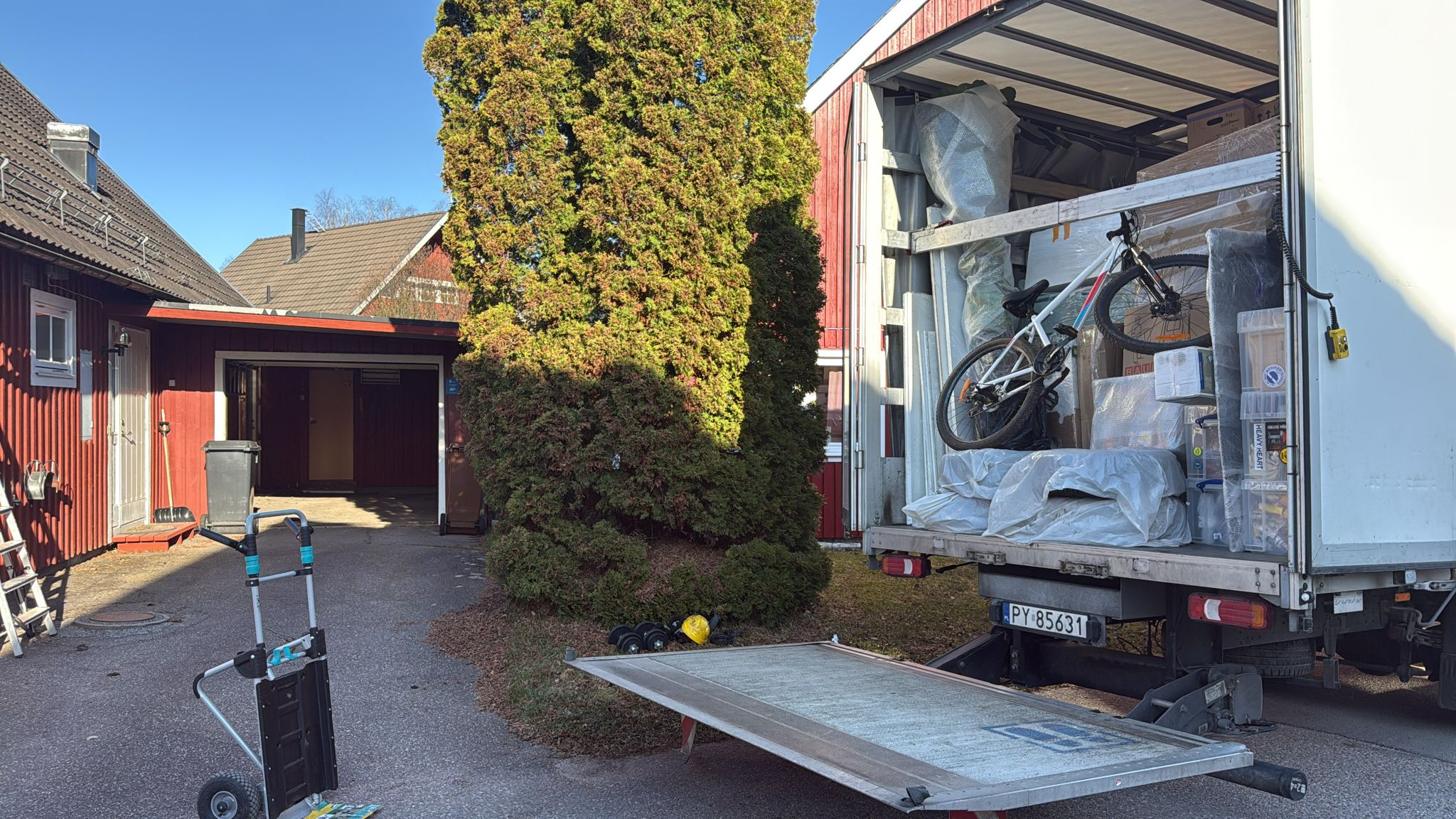
A man and van option can suit a smaller load, but it is not automatically cheaper. Compare the same inventory, crew size, carrying work and delivery window. A low transport-only price may not include the help needed to move a sofa upstairs.
Check what man and van means in the particular offer. How many people will attend? Who loads and unloads? Is delivery to the door or into the agreed room? These answers matter more than whether the vehicle is called a van or a lorry.
A man and van setup works especially well for:
- student moves
- compact apartment moves
- furniture transport
- urgent relocations
- part-load household moves
For a dedicated vehicle, ask whether your goods remain in it from collection to delivery. For shared transport, ask about the delivery window and any transfer or storage arrangement. Neither option should be assumed to have fewer handling stages without that confirmation.
For a few boxes or selected furniture, compare part-load removals to Germany with a dedicated vehicle before deciding. Shared capacity may suit a smaller load if collection and delivery dates can be flexible. If a tenancy handover or building access slot fixes the deadline, ask which transport option can meet it and what the handling price includes. A lower headline price is only useful if the service fits the job.
If a tenancy handover fixes your schedule, give the latest acceptable delivery time before comparing prices. A flexible service can be unsuitable even when its headline cost is lower. Last-minute availability should be confirmed for the route, load and access conditions you provide.
When discussing a VANonsite quote, identify the vehicle option, handling tasks and contact arrangements. Ask which journey updates are available for that service. Do not treat live tracking, extra crew or room placement as standard unless the offer confirms them.
If you are asked to help load, assess that requirement honestly. Stairs, heavy furniture or limited mobility may make a one-person arrangement inappropriate. Request the crew support you need and compare the resulting total instead of planning around an assumption.
Cost of moving to Germany by type of move
Not every relocation behaves the same way. A student moving with bedding, boxes, and a desk chair is not facing the same cost structure as a family relocating a full household. That is why the cost of moving to Germany is easier to understand when you break it down by move type.
Student removals to Germany
For a student move, separate personal boxes from furniture. Books can make a small load heavy, while a desk or bed frame can be awkward even after dismantling. Check volume and weight before considering Moving Basic or Moving Medium; the size of the room alone is not enough.
Provide the accommodation access rules and the dates when keys are available. A university hall may have a booking window or a designated loading area. Tell the mover about these constraints rather than treating a small inventory as a simple collection by default.
A useful student inventory lists the desk dimensions, bed parts, chair, box count, bicycle and suitcases separately. State whether the bed and desk will be ready to load. This is an example checklist, not a claim that a particular student move fits a specific vehicle.
If term dates or travel plans are fixed, request availability before making transport assumptions. Earlier enquiry gives more time to resolve the details, but does not guarantee a discount. If booking late, ask for the actual available service and its conditions.
Typical student cost drivers include:
- route and pickup country
- whether furniture is included
- timing around term dates and lease dates
- number of boxes and bulky extras
- urgency of booking
For a small move, compare customer-prepared transport with any packing or carrying help you need. Keep the delivery deadline and crew requirement the same in both requests. That makes the price difference useful instead of merely comparing different service labels.
Home removals to Germany
A household quote needs the full furniture and box inventory, not just the number of bedrooms. Include appliances, outdoor items and storage areas. Explain which wardrobes or beds need dismantling and whether the crew is expected to carry goods into individual rooms.
Check the largest pieces against the narrowest access point at each property. Doorways, stair turns and lift dimensions can determine whether furniture must be dismantled. Tell the mover about these restrictions before the vehicle and crew are planned.
As a planning example, a small flat with four flights of stairs may need more carrying time than a larger ground-floor collection. That is not a price comparison or a customer case study. It illustrates why inventory and access should be assessed together.
A practical way to think about home removals is this:
| Home move type | Typical pressure point | Main pricing risk |
|---|---|---|
| Studio or 1-bedroom | limited budget, selective furniture | wrong van size |
| 1 to 2 bedroom home | balanced furniture and box count | underestimating volume |
| Family move | bulky furniture and more boxes | access and timing complexity |
| Full-home relocation | very large load | planning, capacity, and coordination |
Agree where the crew will leave furniture and who will reassemble it. Keep the first-night essentials separate from the main load. These decisions help define the work you are paying for without assuming that every home-removal offer includes unpacking or installation.
Office removals to Germany
Office moves are shaped not only by volume but also by continuity. Timing matters more because disruption costs money. Desks, screens, files, cabinets, and equipment all need to arrive in the right condition and often in the right order.
Budget for the transport service separately from the business work needed around it. Ask your own team to confirm equipment shutdown, data protection and setup responsibilities. Do not assume that removal labour includes IT installation or reconnection.
That is why office pricing is often influenced by:
- timing sensitivity
- sequencing needs
- technical equipment protection
- access at both commercial properties
- how quickly the new site needs to become operational
For an office move, name a contact at each site and mark items by destination room or workstation. Agree loading-bay access and any building booking window. If delivery must happen in a particular sequence, describe it in the request and obtain confirmation.
Furniture removals to Germany
Furniture-only moves can look simple at first and still become costly if the items are bulky, fragile, premium, or awkward to carry. This is where handling risk starts affecting the quote more directly.
Measure each furniture piece and note its packed dimensions. Say whether glass panels, legs or shelves can be removed, and who will do that work. Photographs of the item and stair turns are more useful than a description such as one large cabinet.
The most common price drivers in furniture moves are:
- item size and shape
- fragility and finish quality
- stair access and carrying distance
- whether dismantling or special wrapping is needed
- whether the route is direct or time-sensitive
Ask VANonsite which furniture-removal or white-glove option matches the item. Confirm the handling crew, wrapping, room placement and any reassembly separately. The service name is a starting point for that discussion, not a substitute for an agreed scope.
What extra costs should you expect when moving to Germany?
Even when the base transport quote looks clear, additional services and real-world conditions can still change the final number. Knowing this early makes the cost of moving to Germany feel far more predictable.
Common extras include:
- packing materials
- professional packing help
- storage
- white glove delivery
- customs-related costs for non-EU routes if relevant
- delays caused by difficult building access
- oversized or very heavy items
For packing help, ask what will be packed, when the work will happen and whether materials are included. If you pack yourself, ask about the protection required for delicate items. Do not assume that paying for packing removes every risk or changes the cover automatically.
If there is a gap between addresses, request the storage arrangement separately. Check the storage period, handling in and out, and who can arrange final delivery. For white-glove handling, define the item and the work required rather than assuming the same package applies to every piece.
For non-EU routes, customs-related handling or coordination may also create added costs depending on the case. The key point is not to assume every move includes the same extras. It does not.
It also helps to split extras into two groups: planned extras and surprise extras.
Planned extras
Choose planned extras before accepting the quote. Specify the items needing packing, the storage dates and any room-placement or assembly work. Ask for those tasks to appear in the service description, including whether they are part of the total or additional charges.
Surprise extras
Changes to the original assumptions can require a revised quote. Extra boxes, a heavier item, a lift that cannot be used or an unavailable loading bay should be reported promptly. Ask how waiting time or rescheduling would be charged, rather than assuming either is included.
A useful way to think about extra costs is this:
| Extra cost type | Usually planned or surprise | Why it appears |
|---|---|---|
| Packing materials | planned | protection and organisation |
| Professional packing | planned | time-saving and damage reduction |
| Storage | planned or semi-planned | timing gap between properties |
| White glove delivery | planned | premium handling need |
| Access difficulty | often surprise | stairs, parking, narrow entry |
| Oversized or heavy items | planned if disclosed early | handling and space demand |
| Non-EU customs handling | planned if route is known | route and paperwork complexity |
Use the table to identify questions for your own move. It is not a schedule of VANonsite surcharges. The amount and treatment of an extra must be checked in the individual offer.
If circumstances change after booking, describe the change in writing and ask whether it affects the agreed work, timing or price. This keeps the original quote and any revision distinguishable.


How to lower the cost of moving to Germany without taking risky shortcuts
Everyone wants to save money. The smart move is saving without increasing stress, damage risk, or confusion.
The most effective ways to lower the cost of moving to Germany are:
- reduce volume before booking
- choose the right van size
- prepare access details early
- pack clearly and logically
- avoid last-minute booking if possible
- keep fragile items properly protected
- request a realistic quote based on exact details
Finalize what you want to move before selecting capacity. Removing a large item may change the load, but does not guarantee a proportional price reduction. Ask for a revised estimate based on the new inventory rather than subtracting a guessed amount yourself.
Select capacity by packed volume and payload together. Leave the mover to confirm how the inventory fits, especially where furniture cannot be stacked. The smallest advertised option is only useful if it can carry the actual load safely and within its limits.
Describe access at both addresses in the first request. Include floor number, lift size, parking distance and any building time restriction. If you are unsure whether a piece will pass a stair turn, provide dimensions or photographs rather than waiting until collection.
Packing clearly and logically also saves money in indirect ways. Well-labelled boxes, protected fragile items, and grouped essentials reduce loading confusion and help the move stay efficient.
Enquire as soon as the route and likely dates are known. Ask about the options for a fixed date and for a flexible window. Earlier planning can help resolve access or packing issues; it should not be presented as a promise of cheaper transport.
Keeping fragile items properly protected does not increase the cost in the same way damage does. A cracked mirror, dented table, or broken screen can wipe out any savings created by weaker preparation.
Before accepting a quote, read it against the inventory you submitted. Check addresses, dates, vehicle capacity and handling tasks, then resolve any missing assumption. Keep the calculation and the confirmed booking details together.
A few practical habits can help reduce costs without creating risk:
| Saving action | Why it works | What to avoid |
|---|---|---|
| Reduce load volume | lowers space and handling pressure | cutting essential items blindly |
| Book earlier | reduces urgency pressure | waiting until the final week |
| Share exact access details | improves quote accuracy | hiding difficult access |
| Use the right van size | avoids wasted cost or capacity issues | guessing too optimistically |
| Protect fragile items well | lowers damage risk | treating protection as optional |
Do not save by understating weight, omitting furniture or leaving fragile goods unprotected. Compare only options that can meet the real load and deadline. A lower estimate for a different job is not a saving on your move.
What documents may affect the cost of moving to Germany?
Keep transport documents and post-arrival administration in separate checklists. The removal quotation concerns moving the goods; residence registration concerns where you live. Neither should be assumed to cover the other.
For a non-EU collection, check the official customs requirements before agreeing transport. Any relief depends on the circumstances and eligible goods. Do not assume that used household belongings are automatically duty-free.
Useful official pages include:
- Bundesportal: Register residence
- BMI: Registration in Germany
- Make it in Germany: Housing and registration
- German customs
Ask who prepares the transport paperwork and, where required, who coordinates customs clearance. State the addresses and dates consistently. Keep the necessary records available during the journey rather than packing your only copy inside a box.
Use the official links to check which rules apply to your situation. A removal company can discuss the transport arrangement, but a quote does not establish your immigration status or confirm entitlement to a customs exemption.
A practical way to think about documents is this:
Documents that affect timing
For timing, identify documents that need to be ready before collection and those needed after moving in. Confirm the property handover and any access authorisation with the relevant owner or building manager.
Documents that affect complexity
German customs explains the conditions for relief when transferring residence from outside the EU. Its guidance includes prior residence and use requirements, an import period and declaration form 0350. Check eligibility and the goods concerned with Zoll; this guide does not calculate duties or guarantee relief.
Documents that affect post-arrival costs
For post-arrival registration, Make it in Germany explains the local registration process and tenancy confirmation. Arrange those requirements separately from the removal booking and check the instructions for your destination municipality.
A short rule of thumb works well here:
- keep key paperwork accessible
- check official requirements early
- avoid assuming that someone else will handle it
- make sure names, addresses, and dates are consistent across documents
Keep official administration costs outside the transport total unless the quotation explicitly includes a particular coordination task. If something is unclear, ask the relevant authority and the mover separately so responsibility is not left implicit.
Why people choose VANonsite when comparing the cost of moving to Germany
A VANonsite quote is most useful when it explains how your particular load will be handled. Use the published vehicle options and route examples to start the discussion, then check the inventory, access and service scope behind the calculation.
Use the following service points as questions to confirm for your booking, rather than assuming that every option includes all of them:
- Ask which tracking and journey updates are available for your chosen transport service
- flexible support for urgent and planned relocations
- scalable vehicle sizes
- careful handling of fragile and bulky items
- European moving experience
- useful add-ons such as packing and storage
For each point, ask what is included and who is responsible. If your priority is a fixed delivery window, extra carrying help or packing a fragile item, make that explicit in the request.
Before booking, confirm who will update you during the journey, the collection and delivery windows, and whether a live tracking link is available for the selected service. Also check the space and payload against your inventory. Books, appliances and dense furniture can reach a weight limit before the vehicle looks full; choosing capacity on volume alone can leave the quote incomplete.
For delicate furniture, confirm the protection and handling plan before collection. Ask about the applicable cover, exclusions and reporting process without assuming that every service has identical terms. Keep photographs and an item list for your own records.
Compare quotes against the same item list and access details, not just the total. Ask whether carrying upstairs, dismantling furniture, protective packing, waiting time and storage are included or quoted separately. Record the delivery arrangement and contact person before accepting an offer. These are practical checks that make a transport price easier to compare, without assuming that every moving service includes the same work.
If two quotes include different work, ask for a like-for-like version before deciding. For example, room placement and customer-assisted unloading are not equivalent arrangements. Resolve that difference while planning, not after the vehicle arrives.
A useful way to think about value is this:
| What people compare first | What often matters more later |
|---|---|
| base price | route clarity |
| van size | correct capacity match |
| estimated timing | real delivery reliability |
| service label | actual handling quality |
| headline savings | total stress and disruption avoided |
Choose an offer that meets the load, access and deadline you have actually described. If the lowest total requires flexibility you do not have, request a suitable alternative rather than hoping the original conditions can change later.
Before booking, record the accepted inventory, service tasks, contact details and collection and delivery arrangement. These are the details you will need if the plan changes.

Cost of moving to Germany checklist
A simple checklist can save money before the move even begins.
- estimate your load size honestly
- choose the right van size
- compare route examples
- check access at both properties
- decide whether you need packing help
- separate fragile and priority items
- prepare documents early
- avoid unnecessary volume
- confirm timing clearly
- request a realistic quote
Use the checklist with your quote, marking unanswered points rather than treating every item as already included. Update the inventory if you add goods or change the address.
A practical way to use the checklist is to break it into stages.
Before requesting quotes
- reduce the load to what you genuinely want to move
- identify bulky, fragile, and high-priority items
- decide whether you need basic transport only or extra services too
Before booking
- confirm access at both properties
- choose the most realistic van size
- compare route examples without treating them as fixed quotes
In the final run-up to the move
- finish packing and labelling clearly
- keep documents accessible
- confirm timing, contacts, and any special instructions
Before collection, review any changes since the quote was accepted. Tell the mover if the lift, parking arrangement, item count or delivery deadline has changed. Keep the latest agreed details available to both contacts.
FAQ about the cost of moving to Germany
What is the average cost of moving to Germany?
There is no verified market-wide average here. The published VANonsite 20 m³ examples range from EUR 574.28 for Belgium to EUR 4,775.00 for Greece, with a UK example of EUR 1,247.82. These are budget references, not live offers or limits on your final price. Request a calculation for your addresses, inventory and service scope.
Why does the cost of moving to Germany vary so much?
Because route length is only one part of the quote. Volume, access, timing, service level, and handling needs all shape the final number. A smaller move with difficult stairs and urgent timing can cost more than a larger move with easier access and calmer scheduling. The price changes because the real work changes.
Is moving to Germany cheaper with a man and van?
It can be suitable for a smaller load, but there is no automatic price advantage. Compare vehicle capacity, crew support, carrying work and delivery windows on the same basis. Ask which tasks a man and van offer includes, especially if you need help upstairs or cannot assist with loading.
How do I know what van size I need?
Start with volume, then think about weight and bulky items. A studio move is very different from a 2-bedroom household. The clearer the inventory, the easier the size decision. The safest method is to count large furniture first, then boxes, then all the smaller items hidden in storage spaces, cupboards, and utility corners.
What is included in a removals quote to Germany?
That depends on the provider and service level. A quote may reflect route, van size, handling, timing, and any extras such as packing, storage, or white glove delivery. The most useful quotes also reflect real access conditions rather than generic assumptions, because that is where many pricing differences begin.
Are public price examples fixed quotes?
No. They are indicative route examples for a 20 m³ van, not offers for every collection and delivery address. The emailed calculation also needs checking against the inventory, access, capacity and agreed tasks before booking. Ask how long your quotation is valid and what changes would require revision.
What usually makes a quote rise unexpectedly?
The most common reasons are underestimated volume, difficult building access, urgent timing, and late changes to the inventory. Fragile or bulky items can also push the quote up if they require extra protection or more careful handling than originally expected.
Can I lower the cost of moving to Germany without taking risks?
Review the inventory, compare appropriate capacity and provide access details early. Ask about a flexible transport window only if your schedule allows it. Do not omit heavy items or reduce packing protection to make an estimate look lower; request comparable offers for the job you actually need.
Final thoughts on the cost of moving to Germany
Before choosing transport to Germany, prepare an inventory and check access at both properties. Those details let you compare a quoted service with the work needed, rather than relying on a country-level price example.
Use one set of addresses, dates and item details for every quotation. Where offers differ, clarify the crew, packing, carrying and delivery arrangements before comparing totals.
Keep any fixed deadline visible in the request. If shared transport cannot meet it, ask for an option that can. If packing or assembly help is essential, have it confirmed rather than treating it as an extra to resolve on the day.
Ready to price your move? Use the Germany removals quote form with both addresses and a pickup date, then add an item list and access details in Notes. Mention heavy or fragile items, packing requirements and any fixed delivery deadline. Keep the public examples as budget guidance, not a guaranteed price: ask VANonsite to confirm the inventory, vehicle capacity, handling scope and timing before you book.
Before accepting, check that the written offer matches your final inventory and the agreed work. Keep unanswered questions open until they are resolved; an indicative calculation is not the same as a confirmed removal plan.