
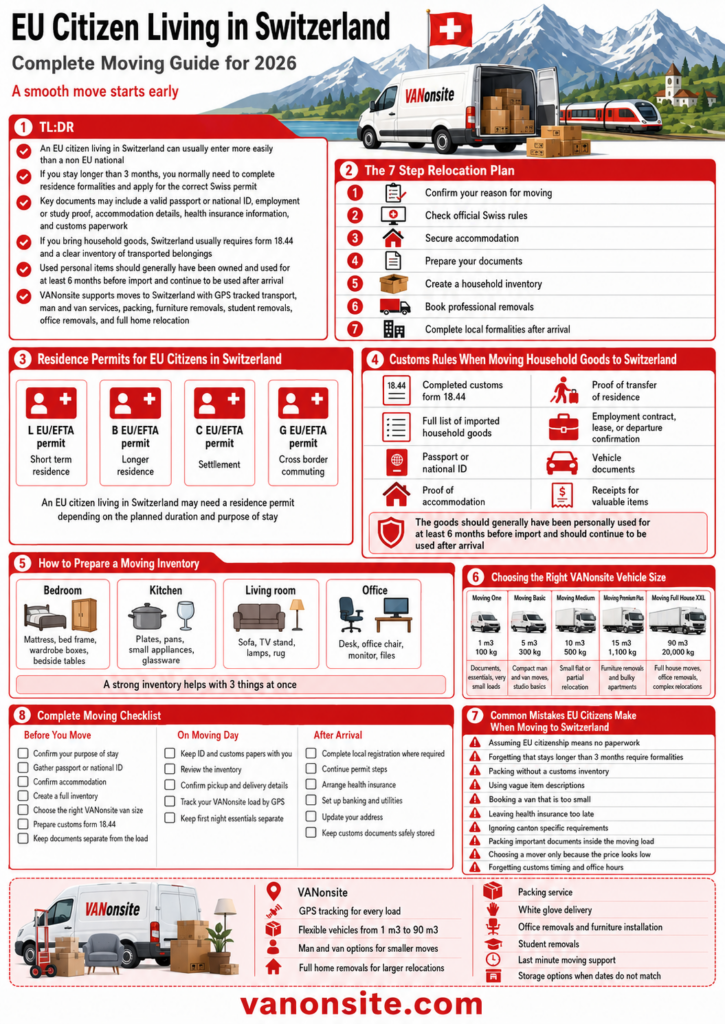
An EU citizen living in Switzerland can enjoy one of Europe’s most stable, scenic, and well organised places to build a new life. The country offers strong salaries, safe cities, clean public transport, dazzling landscapes, and a level of everyday efficiency that feels almost cinematic. Yet Switzerland is also precise. Paperwork matters. Customs matters. Registration matters. A move that looks simple on paper can become stressful if you arrive without the right documents, inventory, insurance plan, or transport support.
If you are an EU citizen moving to Switzerland, your route is usually more straightforward than it is for many non EU nationals. Still, it is not automatic. Your right to stay depends on why you are moving, how long you plan to remain, and whether you are working, studying, joining family, retiring, or living from private means.
This guide gives you a clear, practical answer. It covers documents, permits, customs, furniture removals, moving costs, van sizes, arrival tasks, and the first steps of living in Switzerland as EU citizen. It also explains how VANonsite can support your relocation with safe European transport, flexible vehicle sizes, man and van options, and GPS tracking for every load.
TL:DR
- An EU citizen living in Switzerland can usually enter more easily than a non EU national, but long term residence depends on the purpose of stay.
- If you stay longer than 3 months, you normally need to complete residence formalities and apply for the correct Swiss permit.
- Key documents may include a valid passport or national ID, employment or study proof, accommodation details, health insurance information, and customs paperwork.
- If you bring household goods, Switzerland usually requires form 18.44 and a clear inventory of transported belongings.
- Used personal items should generally have been owned and used for at least 6 months before import and continue to be used after arrival.
- VANonsite supports moves to Switzerland with GPS tracked transport, man and van services, packing, furniture removals, student removals, office removals, and full home relocation.
- A smooth move starts early: prepare documents, choose the right van size, label boxes clearly, and book removals to Switzerland before your timeline becomes tight.




Can an EU Citizen Live in Switzerland?
Yes, an EU citizen can live in Switzerland, but the rules depend on the length and purpose of the stay. A short visit is different from moving for work. A student relocation is different from retiring with private funds. Joining family is different from arriving to search for employment.
For an EU citizen living in Switzerland, the most common residence routes are employment, self employment, study, family reunification, retirement, or residence without gainful activity. Each route has its own documents and practical requirements.
If you plan to stay for more than 3 months, you should check the official Swiss rules before arrival. The State Secretariat for Migration explains residence and work rules for EU and EFTA citizens. You can also review residence permit information on ch.ch.
The key point is simple: moving to Switzerland as EU citizen is easier with preparation. You need a clear reason for your stay, a valid document, a place to live, and a plan for moving your belongings through the border.
EU Citizen Moving to Switzerland: What to Prepare Before Arrival
A successful relocation begins before the first box is packed. Switzerland rewards order, so it helps to treat the move as a project with documents, transport, customs, and arrival tasks all connected.
Before departure, prepare:
- Valid passport or national identity card
- Employment contract, if moving for work
- University admission or study confirmation, if moving to study
- Proof of sufficient financial resources, if not working
- Rental agreement or accommodation confirmation
- Health and accident insurance information
- Marriage or birth certificates, if relevant
- Household goods inventory
- Customs form 18.44 for personal effects
- Vehicle documents, if importing a car
- Digital copies of important paperwork
Keep these documents with you during travel. Do not pack them inside the moving van. When an EU citizen living in Switzerland starts registration, permit steps, customs clearance, or housing formalities, easy access to documents can save hours of frustration.
The 7 Step Relocation Plan
An EU citizen moving to Switzerland should plan the relocation in a clear sequence. The goal is to arrive with fewer loose ends and fewer expensive surprises.
- Confirm your reason for moving
Work, study, family, retirement, and private means can lead to different requirements. - Check official Swiss rules
Review national guidance and the website of the canton or commune where you plan to live. - Secure accommodation
A rental agreement or written accommodation confirmation can support registration and customs steps. - Prepare your documents
Keep identity documents, contracts, insurance details, and civil status documents together. - Create a household inventory
List furniture, boxes, electronics, bikes, office equipment, and valuable items clearly. - Book professional removals
A reliable man and van service or full removals team can protect your timeline and belongings. - Complete local formalities after arrival
Handle registration, residence permit steps, health insurance, banking, utilities, and address updates.
The move becomes easier when every stage feeds the next one. Your inventory helps customs. Your van size affects the quote. Your delivery date affects registration, work, school, and your first week at home.
Residence Permits for EU Citizens in Switzerland
An EU citizen living in Switzerland may need a residence permit depending on the planned duration and purpose of stay. Switzerland uses several permit types for EU and EFTA citizens.
| Permit type | Common use | Practical meaning |
|---|---|---|
| L EU/EFTA permit | Short term residence | Often linked to temporary work or shorter stays |
| B EU/EFTA permit | Longer residence | Often used for longer employment or qualified residence |
| C EU/EFTA permit | Settlement | Usually connected with longer lawful residence |
| G EU/EFTA permit | Cross border commuting | For people working in Switzerland while living elsewhere |
For many workers, the employment contract is central. For students, study confirmation and proof of means can matter. For people without paid work, sufficient financial resources and adequate insurance are especially important.
Rules can vary by canton, so do not rely only on general advice. Before moving, check the local migration office for your destination. Switzerland is beautifully organised, but it expects you to follow the correct channel.
Moving to Switzerland as EU Citizen for Work
If you are moving to Switzerland as EU citizen for a job, your employment contract is one of your strongest documents. Keep it accessible during the move. You may need it for residence formalities, registration, housing, customs, and banking.
Work moves often carry pressure. You may have a start date, onboarding schedule, rental handover, and delivery window all packed into the same week. A delayed wardrobe or missing office chair may not sound dramatic, but it can make the first working days feel uncomfortable and improvised.
Prepare these items before departure:
- Signed employment contract
- Employer details
- Swiss work location
- Accommodation confirmation
- Passport or national ID
- Health insurance plan
- Inventory of household goods
- Confirmed moving date
VANonsite can support work relocations with secure transport, furniture removals, and man and van options for smaller loads. GPS tracking also gives you visibility while your belongings travel across Europe.
Moving to Switzerland as EU Citizen for Study
Student moves are usually lighter, faster, and more budget conscious. They can still be stressful. A student might need to move bedding, books, clothes, kitchen basics, a bike, a monitor, a desk chair, and personal items into a small Swiss room with a strict handover time.
For students, a compact man and van option can be ideal. VANonsite Student Removals can help with university halls, shared flats, studios, and smaller personal loads.
Before moving, students should prepare:
- University admission or enrolment confirmation
- Accommodation details
- Passport or national ID
- Proof of financial means, where required
- Insurance information
- Personal goods inventory
- First week essentials bag
Living in Switzerland as EU citizen student can feel exciting and intense. Admin portals, lectures, permits, housing, and banking all arrive quickly. When transport is handled properly, the first week feels lighter.
Moving to Switzerland Without Work
Living in Switzerland as an EU citizen without paid work may be possible, but it must be supported by the right conditions. This can apply to pensioners, people of private means, some students, or people joining family.
The main issue is proof. Swiss authorities may want to see that you have sufficient financial resources and adequate health and accident insurance. If you cannot show that your stay is financially stable, the process can become difficult.
Useful documents may include:
- Bank statements
- Pension documents
- Proof of savings or regular income
- Health and accident insurance details
- Accommodation confirmation
- Family documents, if relevant
- Valid passport or national ID
This is also where moving costs deserve careful planning. A vague low quote can become expensive if it excludes access issues, waiting time, customs delays, packing, or bulky furniture. A transparent removals plan is usually safer than a tempting bargain.
Customs Rules When Moving Household Goods to Switzerland
Customs is one of the most important parts of moving to Switzerland. If you bring furniture, household goods, personal belongings, a bike, collections, or a vehicle, you need to prepare before reaching the border.
For an EU citizen moving to Switzerland, the usual goal is to import used household goods as part of a genuine transfer of residence. The Swiss Federal Office for Customs and Border Security explains the procedure for moving household effects and provides information about the relocation import procedure.
In many cases, personal household effects can qualify for relief from duties if the conditions are met. The goods should generally have been personally used for at least 6 months before import and should continue to be used after arrival.
Prepare:
- Completed customs form 18.44
- Full list of imported household goods
- Passport or national ID
- Proof of accommodation
- Proof of transfer of residence
- Employment contract, lease, or departure confirmation, where relevant
- Vehicle documents, if importing a vehicle
- Receipts for valuable items, where useful
Avoid vague inventory descriptions. “Kitchenware, 6 boxes” is better than “miscellaneous.” “1 sofa, 1 bed frame, 1 mattress, 2 bedside tables” is better than “furniture.” Clear details help both customs and your removals provider.
How to Prepare a Moving Inventory
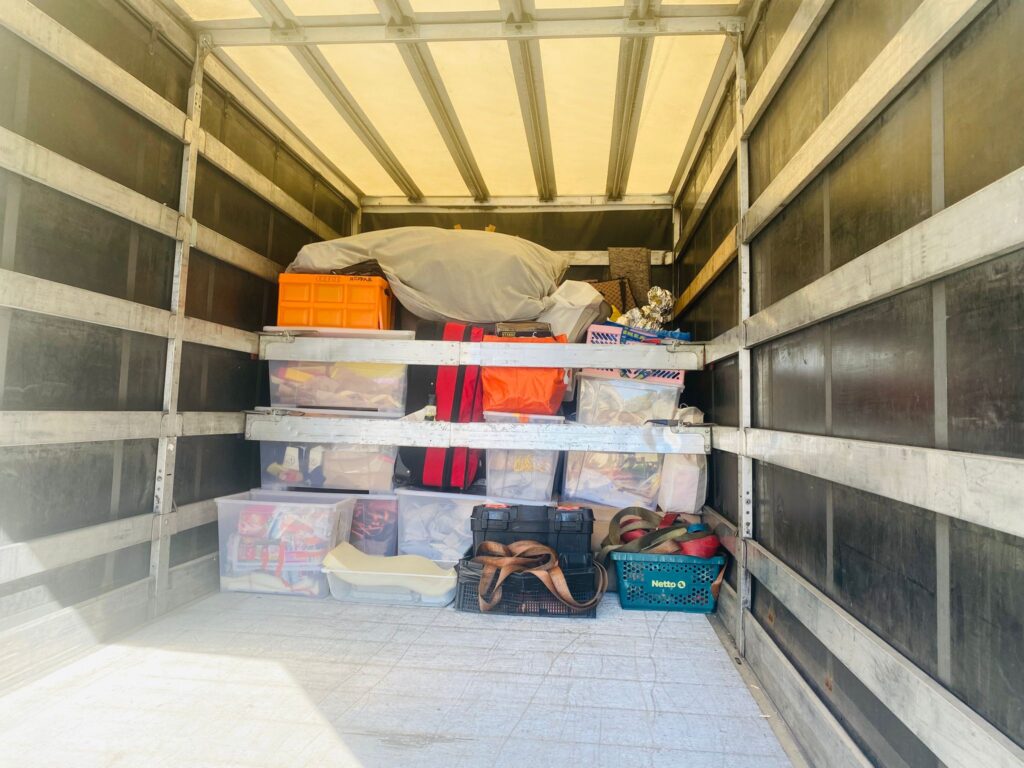
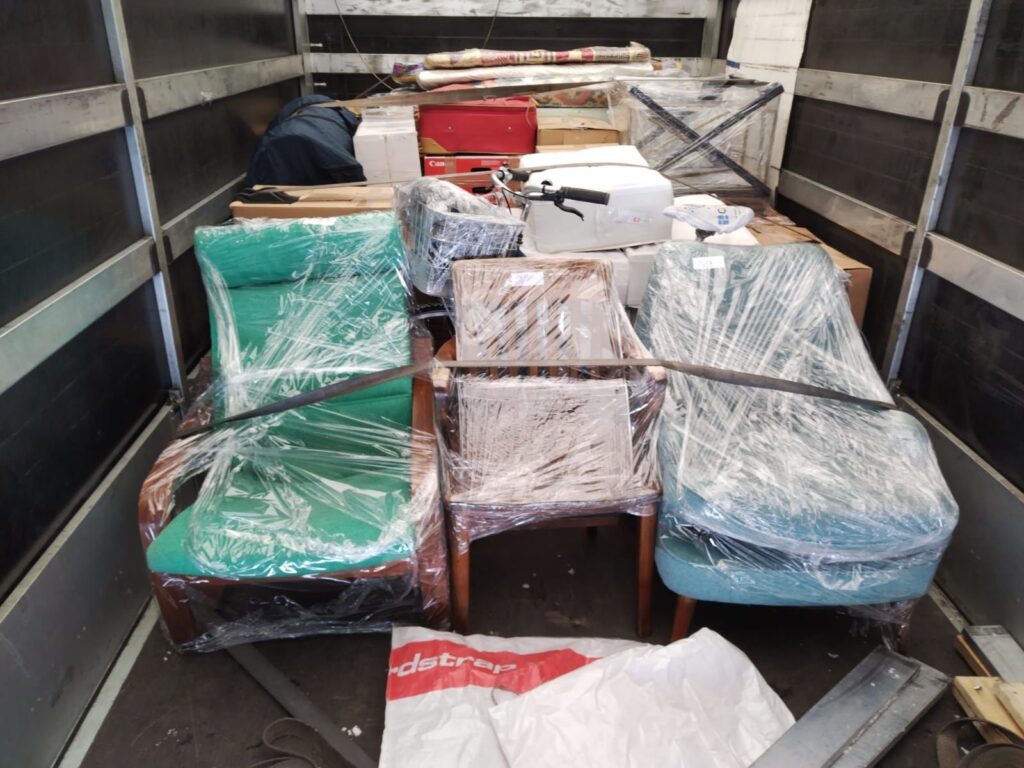
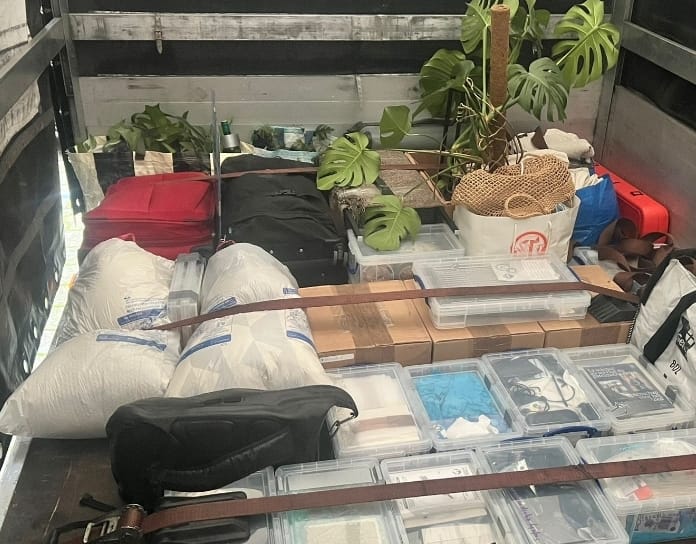
A moving inventory should be simple, accurate, and useful. It does not need to describe every spoon, but it should give a clear picture of what is entering Switzerland.
| Room | Example items | Notes |
|---|---|---|
| Bedroom | Mattress, bed frame, wardrobe boxes, bedside tables | Protect mattress and label textile boxes |
| Kitchen | Plates, pans, small appliances, glassware | Mark fragile items clearly |
| Living room | Sofa, TV stand, lamps, rug | Pack electronics separately |
| Office | Desk, office chair, monitor, files | Protect screens and cables |
| Storage | Bike, tools, suitcases, seasonal items | List bikes and tools separately |
A strong inventory helps with 3 things at once. It supports customs clearance, helps VANonsite recommend the right vehicle, and makes unloading more organised.
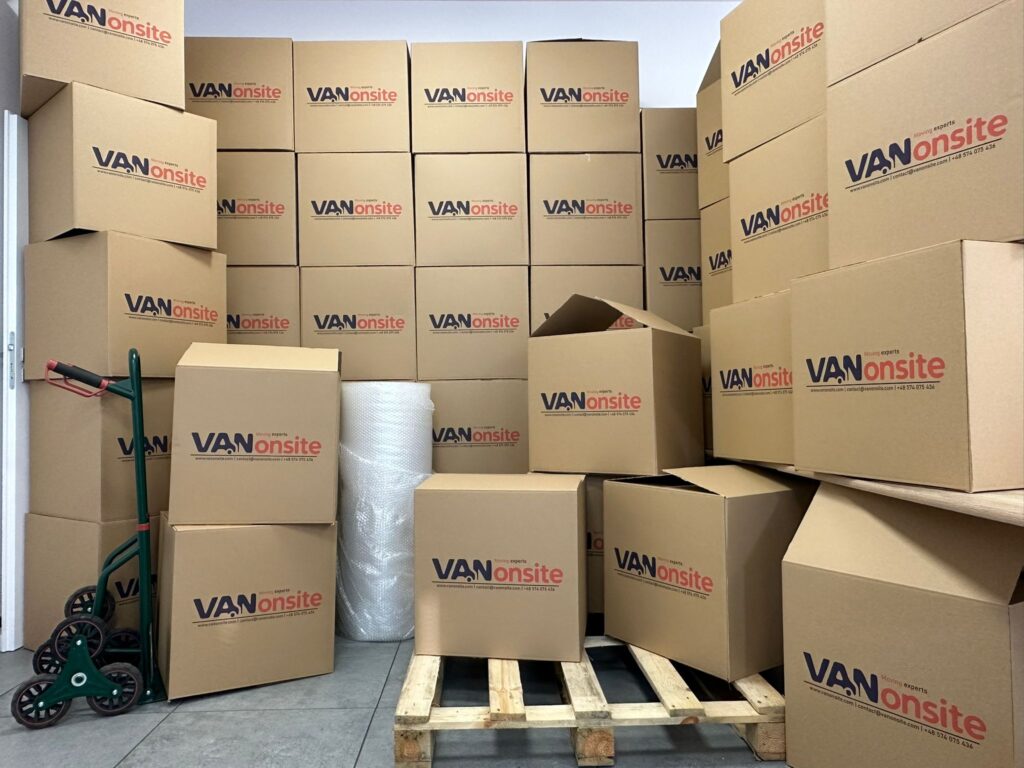
Photograph valuable items before moving day. Label boxes by room. Keep essentials separate. If you are using a packing service, share any fragile or high value items in advance.
Choosing the Right VANonsite Vehicle Size
The right vehicle size can protect your budget and your belongings. Too small, and the move may need extra trips or painful compromises. Too large, and you may pay for unused space.
VANonsite offers vehicle options for everything from a tiny load to a full house relocation.
| VANonsite option | Capacity | Weight limit | Best for |
|---|---|---|---|
| Moving One | 1 m3 | 100 kg | Documents, essentials, very small loads |
| Moving Basic | 5 m3 | 300 kg | Compact man and van moves, studio basics |
| Moving Medium | 10 m3 | 500 kg | Small flat or partial relocation |
| Moving Premium | 15 m3 | 1,100 kg | Furniture removals and larger apartments |
| Moving Premium Plus | 30 m3 | 3,500 kg | Bigger homes and bulky household loads |
| Moving Full House XXL | 90 m3 | 20,000 kg | Full house moves, office removals, complex relocations |
A single professional moving to Zurich may only need Moving Basic or Moving Medium. A family relocating to Geneva with beds, wardrobes, toys, bikes, kitchenware, and a sofa may need Moving Premium Plus. A business relocation may require Moving Full House XXL.
For an EU citizen living in Switzerland, the smartest option is not always the biggest van. It is the right van, matched to real volume, weight, access, and urgency.
How VANonsite Helps with Removals to Switzerland
A Swiss move deserves more than guesswork. It needs careful loading, clear timing, safe transport, and visibility on the road. VANonsite provides removals to Switzerland for customers moving from across Europe, with flexible options for different load sizes and lifestyles.
Every load can be GPS tracked, which means you are not left wondering where your belongings are. That visibility is valuable when delivery timing affects a rental handover, work start date, family arrival, or customs schedule.
VANonsite services include:
- Furniture Removals for sofas, beds, wardrobes, tables, chairs, and fragile pieces
- Home Removals for apartments, houses, and full household moves
- Packing Service for safer wrapping, boxing, and loading
- White Glove Delivery for premium, delicate, or high value items
- Office Removals for company and workplace relocations
- Student Removals for smaller, efficient moves
- Office Furniture Installation for desks, chairs, meeting rooms, and workplace setup
- Last Minute Moving for urgent timelines
- Storage support when move out and move in dates do not match
Whether you need a man and van service for a compact load or a full removals plan for a house, VANonsite can shape the transport around your actual move.
Packing for a Move to Switzerland
Packing is where a move is either protected or quietly damaged. Switzerland rewards neat boxes, accurate labels, and honest inventory. Fragile glassware should not rattle in half empty cartons. Heavy books should not be packed into huge boxes. Important documents should not travel somewhere deep in the van.
Use this packing system:
- Label every box by room
- Add a short content note to each box
- Mark fragile items clearly
- Use smaller boxes for heavy items
- Keep documents in a separate folder
- Photograph valuable items before loading
- Pack a first night bag
- Keep chargers, medication, keys, and permits with you
- Match your box list to your customs inventory
VANonsite Packing Service can help if you want a safer and more polished moving day. It is especially useful for kitchenware, electronics, artwork, fragile decor, office equipment, antiques, and premium furniture.
Furniture Removals to Switzerland
Furniture often carries more than weight. A dining table holds birthdays. A sofa holds tired evenings. A wardrobe may have followed you through 3 apartments. When moving to Switzerland as EU citizen, bringing familiar pieces can make a new place feel like home faster.
VANonsite Furniture Removals can support bulky, awkward, and fragile furniture moves across Europe.
Common furniture items include:
- Sofas and armchairs
- Beds and mattresses
- Wardrobes and chests of drawers
- Dining tables and chairs
- Desks and office chairs
- Cabinets and shelving
- Mirrors and framed items
- Lamps and delicate decor
Good furniture removals depend on protection, loading order, space planning, and careful unloading. A professional man and van team can make a major difference, especially when staircases are narrow, lifts are small, or Swiss access rules are strict.
Cost Factors When Moving to Switzerland
The cost of moving to Switzerland depends on more than distance. Volume, weight, access, packing, urgency, and service level all matter.
| Factor | Why it affects price |
|---|---|
| Distance | Longer European routes require more time and fuel |
| Volume | More m3 may require a larger vehicle |
| Weight | Heavy loads affect vehicle choice and handling |
| Access | Stairs, narrow streets, and no lift increase labour |
| Packing | Professional packing adds protection and service time |
| Fragile items | Special care may be needed for high value goods |
| Customs complexity | Border paperwork can affect planning |
| Urgency | Last minute moving may require faster scheduling |
| Storage | Useful when dates do not line up |
| Delivery type | White glove delivery needs extra care |
The cheapest quote is not always the best quote. If it excludes packing, waiting time, difficult access, customs timing, or bulky furniture, the final experience can become expensive. A clear quote with realistic volume, accurate access details, and the right vehicle is usually the better choice.
First 30 Days of Living in Switzerland as EU Citizen
The first month in Switzerland can feel intense. Everything is clean, beautiful, and efficient, but there are still forms to complete and appointments to book. A good arrival plan gives you room to breathe.
| Timeframe | What to do |
|---|---|
| Before arrival | Confirm documents, housing, inventory, van size, and moving date |
| Moving week | Keep ID, customs papers, and essentials separate |
| Arrival week | Register locally where required and start permit steps |
| First 14 days | Organise health insurance, banking, utilities, and phone access |
| First 30 days | Track permit progress, update addresses, and file documents |
| First 3 months | Make sure health insurance is arranged within the required timeframe |
| First 6 months | Keep customs and transport documents safely stored |
For an EU citizen living in Switzerland, the goal is not only to arrive. It is to arrive with enough order that daily life can begin quickly.

Family, Student, and Office Moves to Switzerland
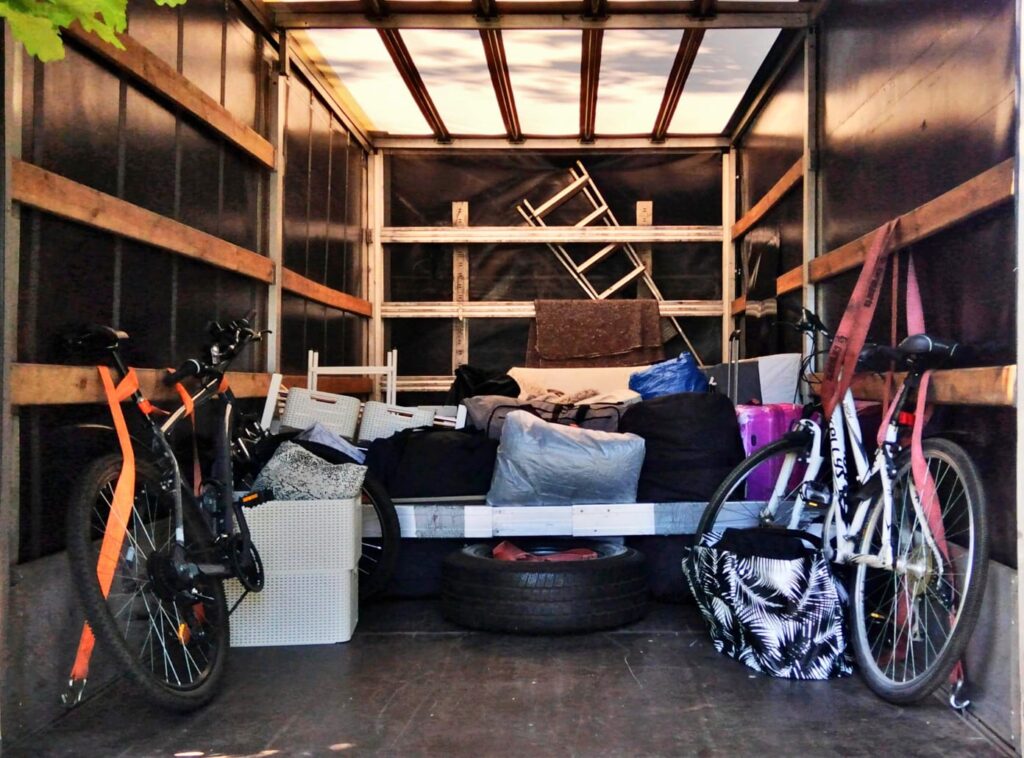
Different people need different moving plans. A student may only need a few boxes and a bike. A family may need beds, kitchenware, toys, clothes, furniture, and school documents. A company may need desks, chairs, files, monitors, and meeting room equipment delivered without costly downtime.
For families, VANonsite Home Removals can support larger household moves with better control and fewer handovers. For students, Student Removals can keep the move lean, practical, and budget aware. For businesses, Office Removals and Office Furniture Installation can help teams restart work faster after delivery.
Business moves can be especially sensitive. Even 1 lost working day can hurt productivity, client service, and team confidence. That is why planning, clear inventory, correct vehicle size, and punctual delivery matter.
Last Minute Moving to Switzerland
Sometimes life moves faster than your calendar. A job offer lands. A rental contract starts next week. A family situation changes. A university room becomes available. Suddenly, the Swiss move is no longer an idea. It is happening now.
Last Minute Moving can help when an EU citizen moving to Switzerland has a tight timeline. Speed is important, but urgency should not mean careless transport.
For urgent moves, prepare:
- Pickup and delivery addresses
- Access details at both locations
- Inventory list
- Photos of bulky items
- Preferred moving dates
- Customs documents
- Contact phone number
- First night essentials
A fast move still needs a clean plan. VANonsite can help keep urgency from turning into panic.
Common Mistakes EU Citizens Make When Moving to Switzerland
Most relocation problems are avoidable. They usually happen when people treat Switzerland like a simple domestic move.
Avoid these mistakes:
- Assuming EU citizenship means no paperwork
- Forgetting that stays longer than 3 months require formalities
- Packing without a customs inventory
- Using vague item descriptions
- Bringing new commercial goods without checking customs rules
- Booking a van that is too small
- Leaving health insurance too late
- Ignoring canton specific requirements
- Packing important documents inside the moving load
- Choosing a mover only because the price looks low
- Forgetting customs timing and office hours
An EU citizen living in Switzerland will have a smoother start if the relocation is planned as a cross border move from the beginning.
Complete Moving Checklist
Before You Move
- Confirm your purpose of stay
- Check official Swiss residence information
- Gather passport or national ID
- Prepare work, study, family, or financial documents
- Confirm accommodation
- Research health insurance
- Create a full inventory
- Choose the right VANonsite van size
- Book removals to Switzerland
- Prepare customs form 18.44
- Label boxes by room
- Photograph valuable items
- Keep documents separate from the load
On Moving Day
- Keep ID and customs papers with you
- Review the inventory
- Confirm pickup and delivery details
- Check fragile labels
- Keep phone available
- Track your VANonsite load by GPS
- Keep first night essentials separate
- Make sure keys and access codes are ready
After Arrival
- Complete local registration where required
- Continue permit steps
- Arrange health insurance
- Set up banking and utilities
- Update your address
- Check delivered items against your inventory
- Keep customs documents safely stored
- Unpack essentials first
- Book storage or installation support if needed
Why Choose VANonsite for Moving to Switzerland?
VANonsite is a strong choice for an EU citizen living in Switzerland because it combines European removals experience with speed, safety, and visibility. Your belongings are not just loaded and forgotten. They can be GPS tracked, moved in the right sized vehicle, and handled according to the type of relocation you need.
VANonsite gives you:
- GPS tracking for every load
- Flexible vehicles from 1 m3 to 90 m3
- Man and van options for smaller moves
- Full home removals for larger relocations
- Furniture removals for bulky items
- Packing service for safer transport
- White glove delivery for premium goods
- Office removals and furniture installation
- Student removals for lighter loads
- Last minute moving support
- Storage options when dates do not match
A Swiss move should feel controlled, not improvised. With VANonsite, you can move with more clarity and less stress.
Get a Quote for Removals to Switzerland
Moving to Switzerland can mean a better job, sharper education, safer family life, or a fresh chapter in one of Europe’s most breathtaking countries. But the move itself needs structure.
If you are an EU citizen living in Switzerland soon, do not leave your transport to chance. Choose the right van size. Prepare your documents. Build a proper inventory. Then let VANonsite move your belongings with care, speed, and GPS tracked confidence.
Request a quote for removals to Switzerland and make your Swiss move feel less like a gamble and more like a plan.
FAQ About EU Citizen Living in Switzerland
Can an EU citizen live in Switzerland permanently?
An EU citizen can live in Switzerland long term if they meet the relevant Swiss residence conditions. The correct route depends on work, study, family, retirement, financial means, or another recognised purpose of stay.
Does an EU citizen need a visa for Switzerland?
EU citizens generally benefit from easier entry and residence conditions than many non EU nationals. However, living in Switzerland for more than a short stay is not the same as visiting. Residence formalities may still apply.
What documents do I need when moving to Switzerland as EU citizen?
You may need a valid passport or national ID, proof of work or study, accommodation documents, health insurance details, proof of financial resources if not working, family documents if relevant, customs form 18.44, and a full inventory of goods.
Can I bring my furniture to Switzerland?
Yes. Many people bring furniture and household goods when relocating. Used personal belongings may often qualify for customs relief when transferring residence, provided Swiss customs conditions are met.
Is a man and van service enough for moving to Switzerland?
A man and van service can be ideal for students, single professionals, small apartments, and partial loads. Larger homes, offices, or heavy furniture may need a bigger VANonsite vehicle.
What is the best VANonsite van size for Switzerland?
It depends on your volume and weight. Moving One suits tiny loads up to 1 m3 and 100 kg. Moving Basic suits compact moves up to 5 m3 and 300 kg. Moving Premium Plus can handle 30 m3 and 3,500 kg, while Moving Full House XXL offers 90 m3 and 20,000 kg for major relocations.
Can VANonsite help with last minute moving to Switzerland?
Yes. VANonsite offers Last Minute Moving for urgent relocation dates. To move faster, prepare your addresses, inventory, access details, customs documents, and contact information before requesting a quote.