
Life in Switzerland has a powerful appeal. Clean cities, precise public transport, calm streets, high salaries and mountain views that can make an ordinary Monday feel cinematic. For many people, Switzerland represents a safer, more ordered and more rewarding way to live.
Yet life in Switzerland is not only about lakes, chocolate and punctual trains. Moving there also means paperwork, housing pressure, health insurance, customs rules, canton differences and the practical challenge of transporting your belongings across a border without chaos.
That is why preparation matters.
This guide gives you a clear, practical and answer focused overview of life in Switzerland before you move. You will learn what daily life feels like, how expensive Switzerland is, where to live, what documents may be required, how customs work and how to plan your move with less stress. If you are already preparing your relocation, VANonsite can support your move with secure, fast and GPS tracked removals to Switzerland, from compact man and van transport to full house removals across Europe.
TL:DR
- Life in Switzerland is safe, clean, organised and comfortable, but the cost of living is high and the first 90 days require careful budgeting.
- How is life living in Switzerland? For prepared newcomers, it is calm, efficient and rewarding, especially if they value safety, nature, strong careers and structure.
- You may need a residence permit if you work in Switzerland or stay longer than three months, so check official Swiss guidance before moving.
- Household goods can often be imported when relocation conditions are met, but customs paperwork and a clear inventory are essential.
- Housing is competitive in major cities such as Zurich, Geneva, Lausanne, Basel and Bern, so start early and prepare your rental documents.
- Healthcare is high quality, but residents usually need mandatory health insurance, which should be arranged quickly after arrival.
- VANonsite supports moves to Switzerland with GPS tracked loads, flexible vehicle sizes from 1 m3 to 90 m3, packing help, furniture removals, student removals, office removals and man and van options.




Quick Answer: How Is Life Living in Switzerland?
How is life living in Switzerland? In simple terms, life in Switzerland is secure, efficient and beautiful, but it is also expensive and highly structured. The country rewards people who plan ahead, keep documents organised and respect local rules.
Daily life often feels calm. Trains run reliably. Streets are clean. Public spaces are well maintained. Nature is close, even when you live in a city. A lunch break can happen beside a lake. A weekend can mean hiking above the clouds.
However, life in Switzerland can also feel demanding at the beginning. Rent, deposits, health insurance, groceries and services can surprise newcomers. Housing applications can be strict. Administrative steps must be completed on time. Social life may feel reserved until you build trust and routine.
Life in Switzerland is especially attractive for professionals, families, students and anyone who values personal safety, outdoor living and long term stability. The key is to arrive with a plan, not just a suitcase.
Life in Switzerland at a Glance
| Category | What to Expect |
|---|---|
| Safety | Very high personal safety in most cities, towns and villages |
| Cost of living | High, especially rent, food, insurance and services |
| Salaries | Strong compared with many European countries |
| Housing | Competitive rental market with detailed applications |
| Transport | Excellent trains, trams, buses and regional connections |
| Languages | German, French, Italian and Romansh, depending on canton |
| Healthcare | High quality system with mandatory insurance for residents |
| Moving difficulty | Moderate to high because of customs, access rules and paperwork |
| Best moving solution | Professional GPS tracked transport with the right vehicle size |
Life in Switzerland has rhythm. People plan, register, sort, insure, recycle and arrive on time. At first, that structure can feel intense. After a while, it becomes one of the country’s greatest comforts.
For a newcomer, the first big victory is simple: arrive with the right documents and have your belongings delivered safely. A calm move gives you space to handle everything else.
Is Switzerland a Good Place to Live?
Yes, Switzerland is a very good place to live for many people. It is especially appealing to those who value safety, career opportunities, clean surroundings, excellent public transport and access to nature. However, life in Switzerland is not effortless. It is premium living with premium expectations.
The advantages are clear. Cities feel tidy and controlled. Public transport is dependable. Wages can be attractive. Healthcare is strong. Children can grow up near lakes, forests and mountains. For many families and professionals, life in Switzerland feels like stepping away from noise and into order.
The challenges are just as real. Housing can be difficult to secure. Upfront costs can be heavy. Social life may feel formal or reserved at the beginning. Administration can be strict. Even small local rules, such as quiet hours, recycling instructions or building access requirements, can matter.
A good way to think about life in Switzerland is this: the country gives back what you put into preparation. If you arrive organised, you feel the benefits quickly. If you arrive casually, the system can feel expensive and unforgiving.
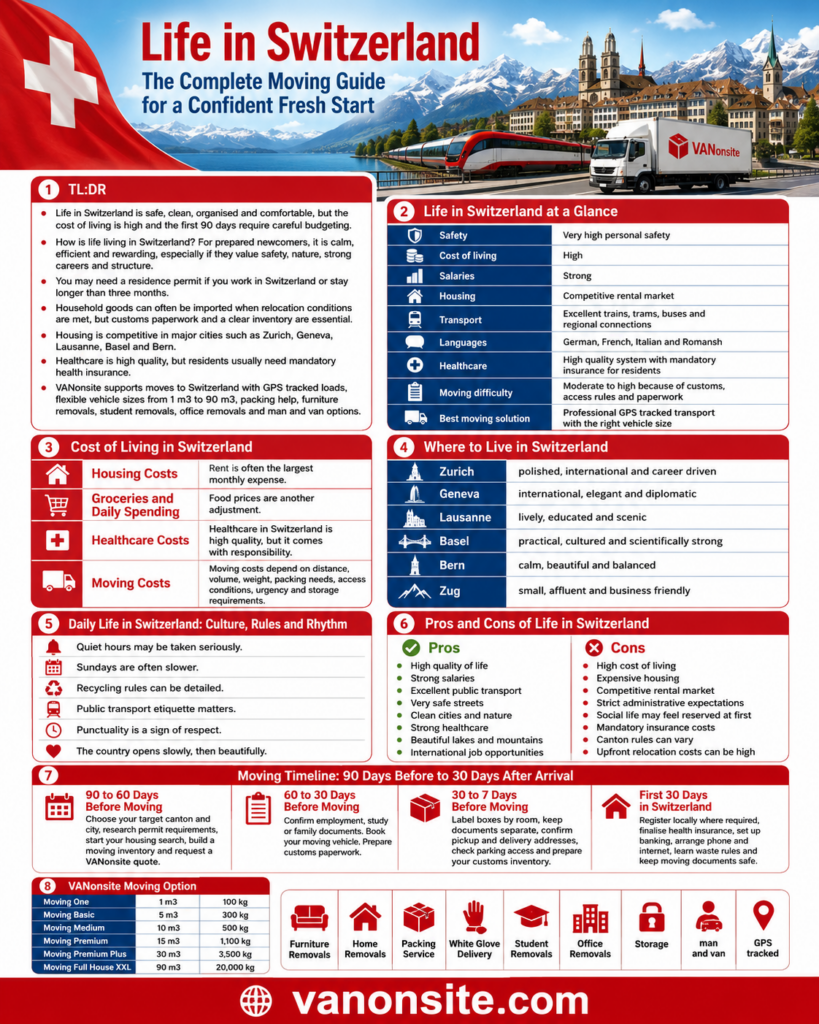
Cost of Living in Switzerland
Life in Switzerland is expensive compared with many European countries. The quality of life is high, but newcomers should prepare for a serious first year budget.
The main costs usually include rent, housing deposits, health insurance, groceries, transport, moving costs, furniture, household setup and possible childcare or study expenses.
Housing Costs
Rent is often the largest monthly expense. In popular areas such as Zurich, Geneva, Lausanne, Basel and Zug, competition can be fierce. Many landlords or agencies expect detailed applications, proof of income and references. A deposit may also be required before move in.
Life in Switzerland becomes easier when your housing plan is realistic. A central apartment may sound perfect, but expanding your search area can reduce pressure and improve value.
Before moving day, confirm lift access, staircase width, parking permission, delivery time windows and building rules. This matters because even a well planned move can become stressful if the van cannot park or large furniture cannot fit through the entrance.
Groceries and Daily Spending
Food prices are another adjustment. Supermarkets, restaurants, coffee, meat, dairy and household products can cost more than newcomers expect. During the first 60 to 90 days, it is wise to keep a buffer for unexpected expenses.
A realistic budget makes life in Switzerland feel less intimidating. The country is easier to enjoy when money has been planned instead of guessed.
Healthcare Costs
Healthcare in Switzerland is high quality, but it comes with responsibility. Residents generally need health insurance, and monthly premiums can become a major household cost.
Do not leave healthcare documents until the last moment. Keep medical paperwork, insurance research and personal records accessible during the move. In life in Switzerland, documents are not a formality. They are part of settling in properly.
Moving Costs
Moving costs depend on distance, volume, weight, packing needs, access conditions, urgency and storage requirements. A student move may be simple. A family relocation with furniture, fragile items and customs paperwork needs more planning.
VANonsite offers several vehicle sizes, allowing customers to match the move to the real load.
| VANonsite Moving Option | Volume | Weight Capacity | Best For |
|---|---|---|---|
| Moving One | 1 m3 | 100 kg | Suitcases, boxes, small student loads |
| Moving Basic | 5 m3 | 300 kg | Studio items and compact man and van moves |
| Moving Medium | 10 m3 | 500 kg | Small flat or partial home move |
| Moving Premium | 15 m3 | 1,100 kg | One bedroom apartment or larger furniture load |
| Moving Premium Plus | 30 m3 | 3,500 kg | Family move or larger apartment |
| Moving Full House XXL | 90 m3 | 20,000 kg | Full house, office or major relocation |
Choosing the correct vehicle protects timing, reduces damage risk and helps avoid unnecessary second trips. With VANonsite, every load is GPS tracked, giving customers more control while their belongings move across Europe.
Where to Live in Switzerland
Life in Switzerland changes by canton, city and language region. Zurich is not Geneva. Lugano is not Basel. A village in Valais will feel very different from central Lausanne.
Zurich
Zurich is polished, international and career driven. It is a strong choice for finance, technology, consulting, insurance and corporate roles. Life in Switzerland can feel fast paced here, but also highly efficient.
The city offers excellent transport, lake access and strong job opportunities. The trade off is cost. Housing is expensive, and competition can be intense.
Geneva
Geneva has a diplomatic and international character. It is French speaking, elegant and close to France. Many people move here for international organisations, finance, NGOs, luxury sectors and global business.
Life in Switzerland in Geneva can feel cosmopolitan and refined. It can also be costly, especially when it comes to rent and everyday services.
Basel
Basel is attractive for people working in pharmaceuticals, research, life sciences, art and culture. Its location near Germany and France gives it a cross border feeling.
Life in Switzerland in Basel can be practical, creative and slightly more understated than Zurich or Geneva. It is also appealing for families and professionals who want strong opportunities without the same level of intensity.
Lausanne
Lausanne is youthful, scenic and energetic. It has a strong student population, lake views and international institutions. Life in Switzerland in Lausanne feels active, outdoorsy and connected to the French speaking region.
It is a strong option for students, young professionals and families who want access to Lake Geneva and a lively cultural scene.
Bern
Bern is calm, elegant and quietly impressive. It is the Swiss capital, but it does not shout. Life in Switzerland in Bern feels slower, stable and graceful. The old town, river and public spaces make it attractive for people who want quality without constant speed.
Lugano
Lugano offers Italian speaking Switzerland, lakeside beauty and a warmer atmosphere. It suits people who want proximity to Italy, a softer climate and a slightly different cultural rhythm while still enjoying Swiss order.
Documents You May Need Before Moving to Switzerland
The documents required for life in Switzerland depend on your nationality, employment status, family situation, canton and length of stay. Requirements can vary, so always check official Swiss sources before moving.
Useful official pages include moving to Switzerland on ch.ch, Swiss residence permits on ch.ch, residence information from SEM and moving household effects from Swiss customs.
In general, you may need:
- Valid passport or national ID
- Employment contract or proof of self employment
- Rental agreement or temporary Swiss address
- Birth certificate, marriage certificate or family documents, if relevant
- Health insurance documents or insurance research
- School or university confirmation, if studying
- Inventory list for household goods
- Customs documents for personal effects
- Vehicle documents, if importing a car
- Pet documents, if moving with animals
If you plan to work or stay longer than three months, check permit requirements carefully. The Swiss system is precise, and life in Switzerland becomes easier when documents are treated as part of the move, not as an afterthought.
Customs Rules When Bringing Household Goods to Switzerland
Customs preparation is one of the most important parts of moving to Switzerland. Many people can bring used household effects when relocation conditions are met, but the process requires correct paperwork and a clear inventory.
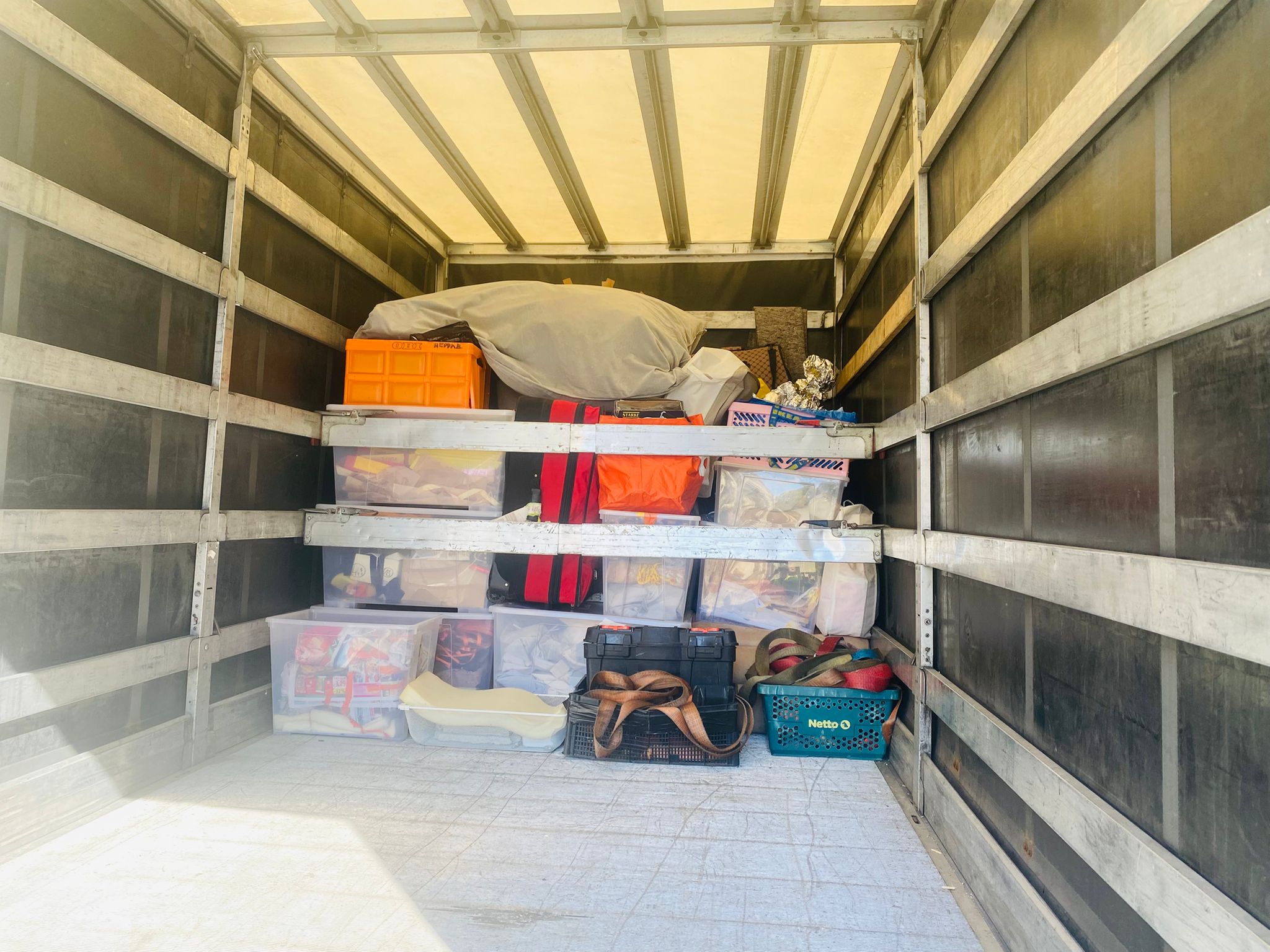
Your moving inventory should be simple, readable and organised. It should show what is being transported and help customs understand that the items are personal household goods.
| Category | Example Items |
|---|---|
| Furniture | Sofa, bed, table, chairs, wardrobe |
| Kitchen | Plates, pans, cutlery, small appliances |
| Personal items | Clothes, books, decorations |
| Electronics | TV, monitor, computer, speakers |
| Student items | Desk, chair, bedding, books |
| Office items | Desks, chairs, filing cabinets, IT equipment |
Keep passports, permits, contracts and customs documents with you. Do not pack them inside moving boxes. Border paperwork should be accessible and ready when needed.
This is where professional transport helps. VANonsite supports cross border moving with planning, careful loading, suitable vehicle selection and GPS tracking for every load.
Moving Your Belongings to Switzerland with VANonsite
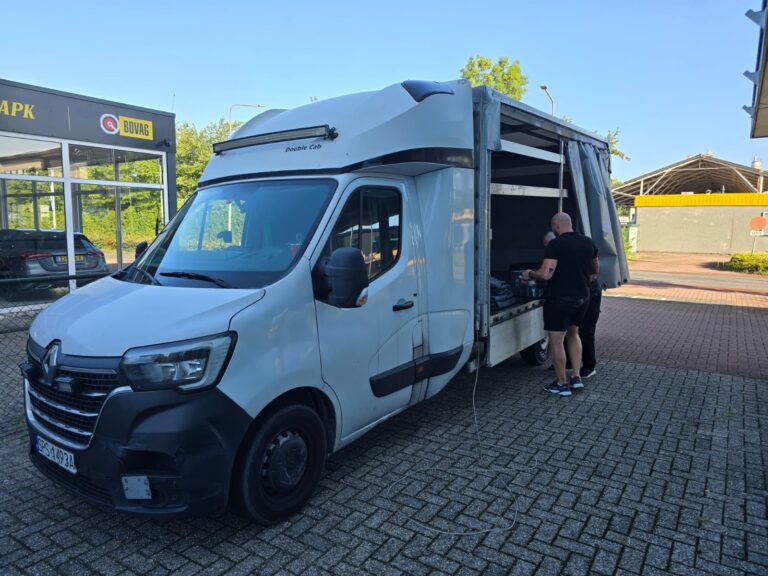
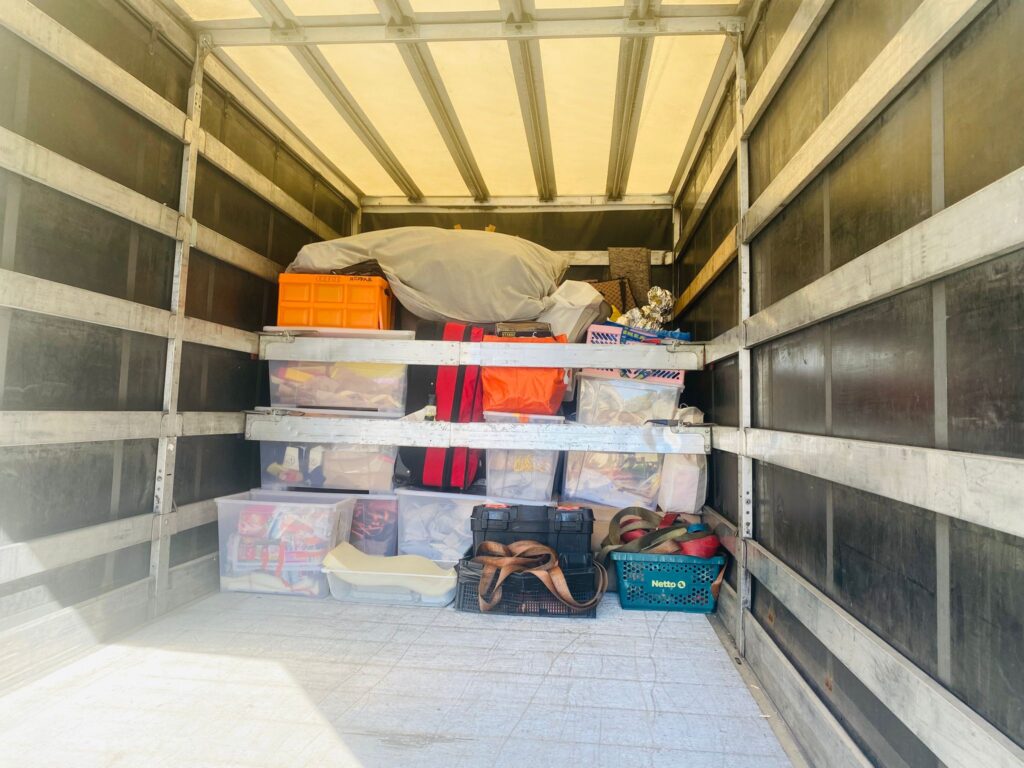
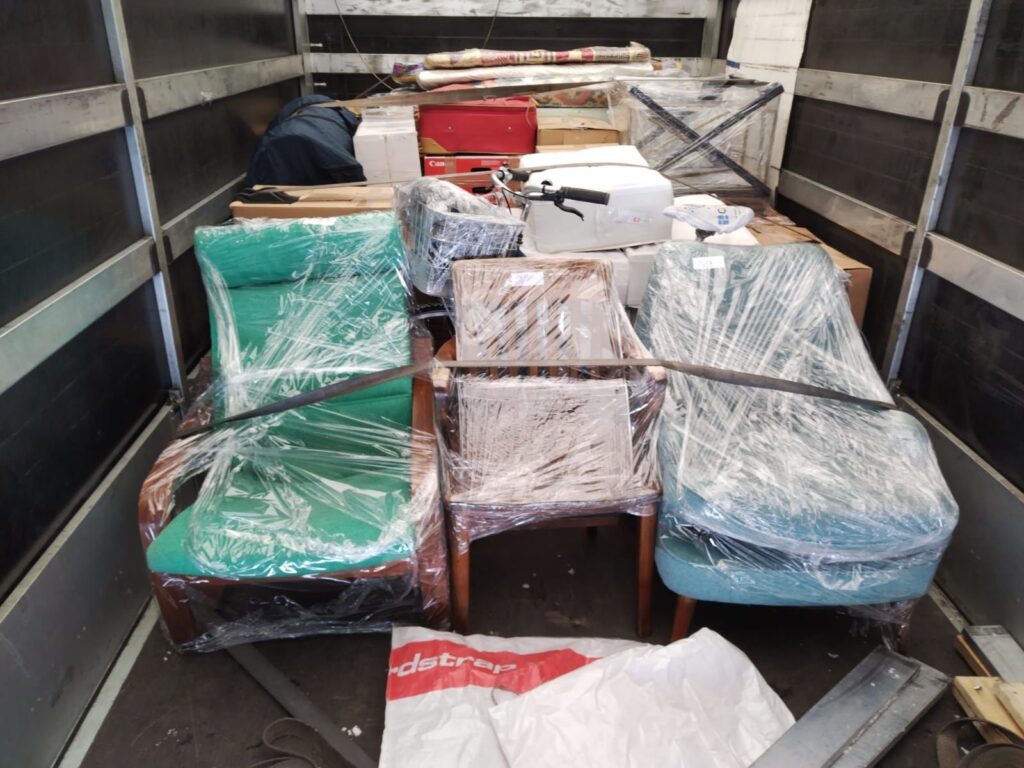
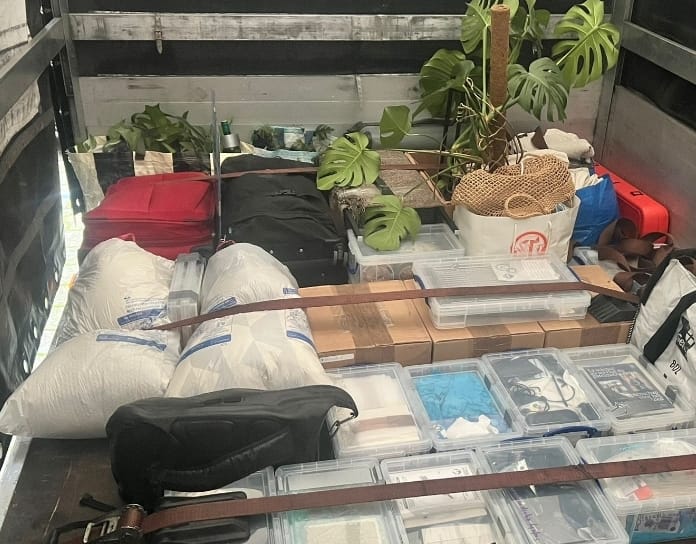
A move to Switzerland is not just a drive from one address to another. It is a controlled transition between countries, homes and systems. Furniture needs protection. Boxes need labelling. Access needs checking. Customs needs attention. Timing needs to be sharp.
VANonsite offers secure European moving services for many relocation needs, including Last Minute Moving, Furniture Removals, Home Removals, Packing Service, White Glove Delivery, Office Removals, Storage, Student Removals, Office Furniture Installation and man and van transport for smaller moves.
For people starting life in Switzerland, GPS tracking is especially valuable. Your belongings are not invisible. You can follow the progress of your load and feel more in control during an emotional and busy time.
A small move may only need Moving One or Moving Basic. A larger apartment may need Moving Medium or Moving Premium. A family home may need Moving Premium Plus. A major relocation or office move may need Moving Full House XXL.
For tailored support, visit VANonsite removals to Switzerland.
Choosing the Right Moving Vehicle for Switzerland
The right vehicle can make the difference between a smooth moving day and a difficult one. Life in Switzerland often means precise access rules, narrow streets, underground parking limits, apartment buildings, mountain roads and strict delivery windows.
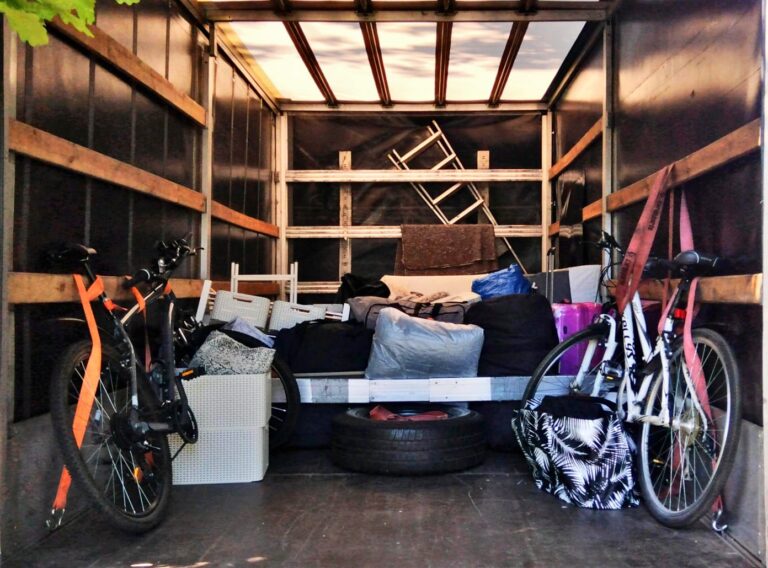
A smaller man and van option may be perfect for students, room moves, suitcases, boxes, small furniture, temporary accommodation and last minute moving. A larger vehicle may be better for full apartment relocations, family homes, office removals, large furniture, storage transfers or multiple rooms.
| Move Type | Suggested VANonsite Option |
|---|---|
| Suitcases and boxes only | Moving One |
| Student move or compact load | Moving Basic |
| Small apartment | Moving Medium |
| One bedroom or larger apartment | Moving Premium |
| Family relocation | Moving Premium Plus |
| Full house or office | Moving Full House XXL |
Do not choose based on hope. Choose based on inventory. Measure large furniture. Count boxes. Think about stairs, parking and lift access. A well matched van protects your schedule and your nerves.
Housing in Switzerland: Renting Your First Apartment
Housing is one of the toughest parts of life in Switzerland for newcomers. The market can be competitive, and good properties may attract many applications quickly.
To improve your chances, prepare a clean rental file. Depending on your situation, it may include ID, employment contract, proof of income, residence status, references and a short introduction. Landlords and agencies usually value reliability.
Apartments may be unfurnished. In some cases, you may need to arrange items that newcomers from other countries assume are included. Always check what comes with the property before your moving van is booked.
Before delivery day, confirm whether there is a lift, where the van can park, whether loading restrictions apply and whether the building has quiet hours. Also check whether large furniture can fit through doors, stairs and corridors.
Life in Switzerland works beautifully when details are respected. One polite email to the building manager can save hours of stress on moving day.
Healthcare and Insurance in Switzerland
Healthcare is one of the strongest parts of life in Switzerland, but it requires quick action from residents. Newcomers should research health insurance early and understand their responsibilities after arrival.
The system can feel unfamiliar because insurance premiums, deductibles and provider choices matter. Do not wait until you need a doctor to understand how it works.
A practical first step is to compare insurance options before moving, keep personal medical documents accessible and check canton specific expectations. Once your healthcare setup is complete, daily life in Switzerland feels more secure.
Working in Switzerland
Many people choose life in Switzerland because of work. The country has strong sectors such as finance, pharmaceuticals, engineering, technology, logistics, hospitality, research and international business.
Swiss work culture often values punctuality, clarity, competence and reliability. Meetings tend to be structured. Deadlines matter. Communication can be direct but respectful. For people who enjoy professionalism, this can feel refreshing.
Before moving for work, check your employment contract, permit requirements, salary after deductions, commuting time, language expectations and trial period conditions. Your job may bring you to Switzerland, but your comfort will depend on the full setup: home, insurance, transport, documents and belongings.
Student Life in Switzerland
Student life in Switzerland can be exciting, international and intense. Universities and research institutions attract ambitious people from across the world. Cities such as Zurich, Lausanne, Geneva, Basel and Bern offer strong academic environments and a high quality of daily life.
Still, students need a sharp budget. Rent, food, insurance, transport and deposits can add up quickly. Shared flats are popular, but competition can be strong.
A student move often does not need a giant truck. A compact man and van solution may be enough for suitcases, books, bedding, a desk, a chair, kitchen basics and boxes. VANonsite Student Removals can help students move without paying for unnecessary space.
Family Life in Switzerland
For families, life in Switzerland can feel deeply reassuring. Clean streets, safe public spaces, strong schools, playgrounds, lakes and mountain weekends create a powerful sense of stability.
But family relocation needs careful planning. Children do not only move house. They move routines, rooms, toys, schools, friendships and a sense of safety. A chaotic moving day can affect the whole family.
Plan early for school registration, childcare costs, neighbourhood choice, commute times, healthcare insurance, delivery timing and furniture setup. VANonsite helps families protect the fragile middle part of relocation, when the old home is packed, the new home is not ready yet and everything familiar is inside a van. GPS tracking gives parents one less thing to worry about.

Daily Life in Switzerland: Culture, Rules and Rhythm
Daily life in Switzerland is calm, but it has rules. Some are written. Some are social. Newcomers adjust faster when they observe carefully.
Quiet hours may be taken seriously. Sundays are often slower, and many shops close. Recycling rules can be detailed. Public transport etiquette matters. Punctuality is a sign of respect. Local language helps, even where English is common.
Life in Switzerland can feel reserved at first. People may not become close overnight. But respect, consistency and small local efforts go a long way. Say hello. Learn basic phrases. Follow building rules. Sort your recycling. Arrive on time.
The country opens slowly, then beautifully.
Pros and Cons of Life in Switzerland
| Pros | Cons |
|---|---|
| High quality of life | High cost of living |
| Strong salaries | Expensive housing |
| Excellent public transport | Competitive rental market |
| Very safe streets | Strict administrative expectations |
| Clean cities and nature | Social life may feel reserved at first |
| Strong healthcare | Mandatory insurance costs |
| Beautiful lakes and mountains | Canton rules can vary |
| International job opportunities | Upfront relocation costs can be high |
The honest answer is simple. Life in Switzerland is excellent for prepared people. It can be frustrating for people who expect everything to work without documents, money or planning.
Moving Timeline: 90 Days Before to 30 Days After Arrival
A relocation to Switzerland becomes easier when you divide it into clear stages.
90 to 60 Days Before Moving
Choose your target canton and city, research permit requirements, start your housing search, build a moving inventory and request a VANonsite quote. This is also the right time to decide whether you need packing service, storage or white glove delivery.
60 to 30 Days Before Moving
Confirm employment, study or family documents. Book your moving vehicle. Prepare customs paperwork. Research health insurance and confirm temporary accommodation if needed. Start packing items you do not use every day.
30 to 7 Days Before Moving
Label boxes by room, keep documents separate, confirm pickup and delivery addresses, check parking access and prepare your customs inventory. Share important access details with VANonsite before moving day.
First 30 Days in Switzerland
Register locally where required, finalise health insurance, set up banking, arrange phone and internet, learn waste rules and keep moving documents safe. Life in Switzerland does not need to be mastered in one week. The first month is for building stability.
Common Mistakes When Moving to Switzerland
The most painful relocation mistakes are usually avoidable. Newcomers often underestimate the cost of the first 90 days, book removals too late, forget customs paperwork, choose the wrong van size or pack important documents inside moving boxes.
Other common mistakes include not checking apartment access, assuming every canton works the same way, ignoring parking rules, bringing too much unnecessary furniture and relying on vague advice instead of official sources.
A move to Switzerland should feel exciting, not frantic. VANonsite helps turn the process into a controlled sequence: quote, vehicle match, packing options, loading, GPS tracked transport and delivery.
Why Choose VANonsite for Your Move to Switzerland?
Starting life in Switzerland is a big step. The transport part should not feel like a gamble.
VANonsite supports European relocations with GPS tracking for every load, vehicle options from 1 m3 to 90 m3, secure transport for furniture and personal belongings, fast support for planned and last minute moves, man and van flexibility, packing service, White Glove Delivery, Student Removals, Office Removals and Storage.
The real value is control. When your belongings are crossing borders, control matters. You want to know where your items are. You want the right vehicle. You want careful handling. You want communication that does not disappear the moment the van leaves.
That is the standard VANonsite aims to deliver.
FAQ: Life in Switzerland and Moving There
Is life in Switzerland expensive?
Yes, life in Switzerland is expensive compared with many European countries. Rent, groceries, health insurance, restaurants and services can be costly. However, salaries are often strong, public services are efficient and quality of life can be exceptional for people with a realistic budget.
How is life living in Switzerland for foreigners?
How is life living in Switzerland for foreigners? It is usually safe, comfortable and rewarding, but the beginning can feel administrative and expensive. Foreigners adjust faster when they prepare documents early, research permits, choose housing carefully and learn local rules.
Do I need a residence permit to live in Switzerland?
If you work in Switzerland or stay longer than three months, you may need a residence permit. Requirements depend on nationality, reason for stay and canton. Always check official Swiss guidance before moving.
Can I bring household goods to Switzerland?
Yes, many people bring household goods when relocating to Switzerland. Used personal belongings may qualify for import under relocation rules when conditions are met, but customs documents and an inventory are important.
What is the best way to move furniture to Switzerland?
The best way is to use a professional European removals company with secure loading, the correct vehicle size, customs awareness and GPS tracking. VANonsite offers Furniture Removals, Home Removals, Packing Service and man and van options for different move sizes.
Can VANonsite help with small moves to Switzerland?
Yes. VANonsite offers smaller man and van options such as Moving One and Moving Basic, which can be ideal for students, room moves, suitcases, boxes and compact relocations.
Start Life in Switzerland with Less Stress
Life in Switzerland can be crisp, secure and deeply rewarding. It can give you clean mornings, quiet streets, strong opportunities and weekends that smell of pine, lake water and fresh bread.
But a good start does not happen by accident.
Your documents need order. Your budget needs honesty. Your housing search needs patience. Your customs paperwork needs attention. Your moving transport needs to be safe, traceable and properly sized.
VANonsite helps you move across Europe with speed, care and GPS tracked confidence. Whether you need a small man and van move, careful Furniture Removals, Home Removals, Student Removals, Packing Service, White Glove Delivery, Office Removals, Storage or a full house relocation, your move to Switzerland can begin with one clear step.
Plan your move today with VANonsite removals to Switzerland.